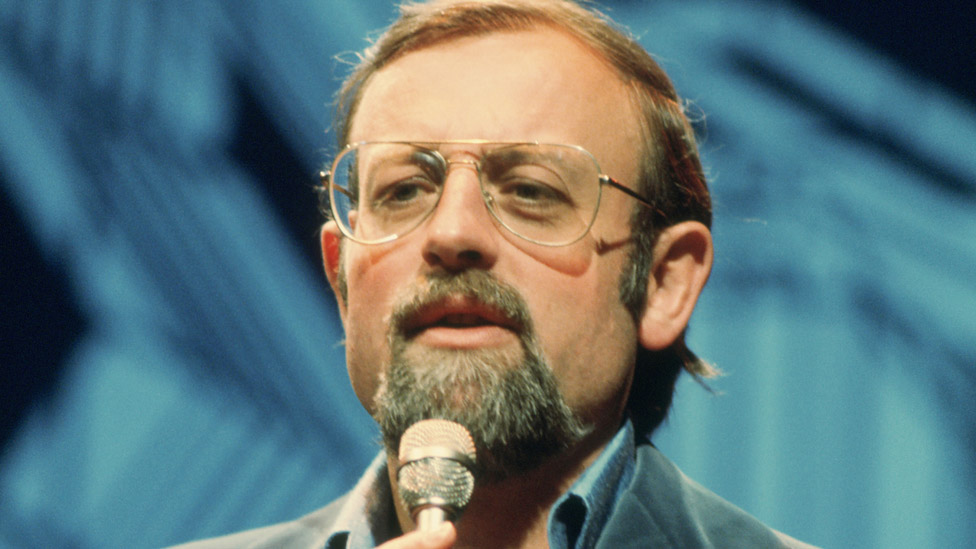
Roger Henry Brough Whittaker (22 March 1936 – 13 September 2023) was a Kenyan-born British singer-songwriter and musician celebrated worldwide for his rich baritone voice, expert guitar playing, and trademark whistling skills. Blending folk, pop, and schlager, he rose to international acclaim with classics such as “Durham Town (The Leavin’),” “I Don’t Believe in If Anymore,” and his signature global hit “The Last Farewell.”
With a career spanning five decades (1962–2013), Whittaker became one of the most beloved folk performers, selling 50–60 million records globally. His fan base stretched from Europe and Africa to the United States and Asia, and his music earned him over 250 silver, gold, and platinum awards.
Early Life and Education
Roger Whittaker was born on 22 March 1936 in Nairobi, Kenya Colony, to English parents, Vi and Edward Whittaker. His childhood was shaped by music—his father played the violin, and his grandfather sang in clubs. At age 12, he taught himself guitar on an instrument built by an Italian prisoner of war.
He attended Prince of Wales School (now Nairobi School) and sang in the Nairobi Cathedral Choir. Called up for national service, he served in the Kenya Regiment during the Mau Mau uprising, an experience that deeply impacted him.
After demobilization, Whittaker enrolled at the University of Cape Town to study medicine but left after 18 months. He later joined the Kenya civil service as a teacher before moving to the UK in 1959. At Bangor University in Wales, he studied zoology, biochemistry, and marine biology, while performing in clubs and releasing flexi-disc singles.
Music Career
Roger Whittaker’s recording career began in 1962 with “The Charge of the Light Brigade” under Fontana Records. His breakthrough came in 1969 with “Durham Town (The Leavin’)”, followed by “New World in the Morning” (1970), which topped international easy listening charts.
In 1971, his timeless ballad “The Last Farewell” became a worldwide sensation, charting in 11 countries and selling over 11 million copies. In the United States, it hit No. 1 on the Adult Contemporary chart and remains his best-known song.
Through the 1970s–80s, Whittaker became a superstar in Germany, releasing 25 albums and winning multiple awards. His German-language schlager songs, including “Abschied ist ein scharfes Schwert”, cemented his fame across Europe. He also had UK success with “The Skye Boat Song” (duet with Des O’Connor, 1986).
Not only a recording artist, Whittaker was a renowned live performer, touring globally across the US, UK, Europe, and Africa, and appearing regularly on TV shows like ZDF-Hitparade.
He officially retired in 2013 but remained admired worldwide for his gentle storytelling voice and unique whistling style.
Personal Life
In 1964, Roger married Natalie O’Brien, and the couple had five children—Emily, Lauren, Jessica, Guy, and Alexander—plus several grandchildren and great-grandchildren.
His life was marked by both triumph and tragedy. In 1989, his father was tragically killed in a robbery in Nairobi, an event that profoundly affected him. Despite personal hardship, he remained committed to humanitarian causes, particularly wildlife conservation in Kenya, supporting efforts to save the black rhino.
After years living in Ireland, Whittaker retired with his wife to France in 2012, where he lived until his passing in September 2023, aged 87.
Discography Highlights
- Durham Town (The Leavin’) – 1969
- I Don’t Believe in If Anymore – 1970
- New World in the Morning – 1970
- The Last Farewell – 1971
- All My Best (Greatest Hits) – 1977
- The Skye Boat Song (with Des O’Connor) – 1986
Awards and Recognition
- Over 250 gold, silver, and platinum records worldwide
- Goldene Stimmgabel (Germany, 1986) – for record sales and popularity
- British Academy BASCA Gold Badge Award (1988) – for contributions to music
- Knokke Music Festival Press Prize (1967) – Belgium
- Subject of This Is Your Life (1982, UK)
Legacy
Roger Whittaker’s music transcended generations, bringing comfort, nostalgia, and joy to millions. His deep baritone, masterful whistling, and folk-inspired ballads made him a household name across continents.
From Nairobi beginnings to worldwide acclaim, Whittaker’s journey represents not just artistic brilliance but also resilience, humility, and dedication. Even after retirement, his songs—especially “The Last Farewell”—remain cherished classics that continue to inspire audiences globally.