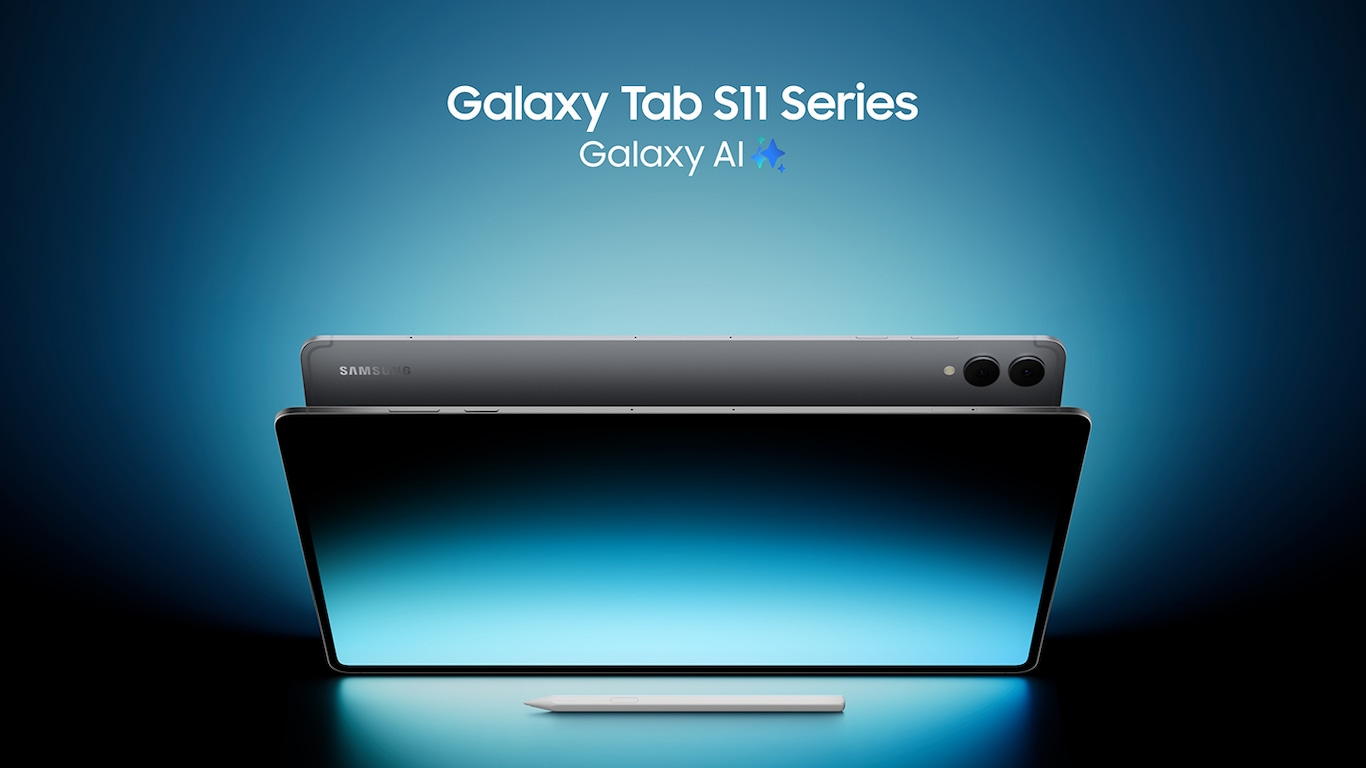
The Samsung Galaxy Tab S11 Ultra sits in a very small category. Large-screen Android tablets exist, but very few try to be everything at once. This one does. Samsung is aiming at people who want a serious media screen, a drawing surface, a travel workstation, and a light laptop alternative in one device. That is not a casual brief, and it explains why the Tab S11 Ultra remains such a specialized product.
This generation does not rewrite the formula. Instead, it refines it. The tablet is thinner and lighter than before, the notch is smaller, the battery is slightly larger, and the new Dimensity 9400+ gives it a meaningful performance lift. Just as important, Samsung keeps the parts that already worked: the 14.6-inch AMOLED panel, IP68 protection, DeX support, microSD expansion, and bundled S Pen. The result is a premium tablet that feels more mature than radically new.
Specifications Table
| Category | Details |
|---|---|
| Display | 14.6-inch Dynamic AMOLED 2X, 1848 x 2960, 120Hz, HDR10+ |
| Chipset | MediaTek Dimensity 9400+ |
| RAM & Storage | 12GB/128GB, 12GB/256GB, 12GB/512GB, 16GB/1TB, microSD |
| Rear Camera | 13MP main + 8MP ultrawide |
| Front Camera | 12MP ultrawide |
| Battery | 11,600mAh |
| Charging | 45W wired |
| OS | Android 16, One UI 8 |
| Build | Glass front, aluminum frame and back, IP68 |
| Connectivity | 5G, eSIM, Wi-Fi 7, Bluetooth 5.4, USB-C 3.2 |
Design and Build Quality
The Tab S11 Ultra is a large tablet, but Samsung has done a good job making it feel less bulky than its size suggests. At 5.1mm thick and 692g, it is still not a device you casually hold one-handed for long, yet it feels impressively slim given the screen size and battery capacity. That thinness is part of the appeal. It makes the tablet feel more premium and more portable than many big-screen rivals.
Build quality is excellent. The aluminum body feels rigid, the finish is clean, and the tablet has the understated look Samsung usually gets right. The IP68 rating also remains a real strength. Water and dust resistance are still rare in tablets, especially large ones, and it adds practical durability rather than just spec-sheet value.
There are a few compromises. The notch is smaller than before, but it is still there, and on a tablet this expensive it remains hard to defend. The optical fingerprint reader works reliably, though it is not as fast or as premium-feeling as the ultrasonic units found on top phones. The new passive S Pen is comfortable to hold and still very responsive, but losing Bluetooth means losing remote controls and air gestures. Some users will not care. Others will notice.
Compared with the previous Tab S10 Ultra, the changes are subtle but worthwhile. It is thinner, lighter, and visually cleaner from the front. The overall design still prioritizes slimness and display area over pure ergonomic comfort, which makes sense for a device like this.
Display Performance
The Samsung Galaxy Tab S11 Ultra display is the main reason many people will want this tablet. It is a 14.6-inch Dynamic AMOLED 2X panel with 120Hz refresh rate and HDR10+ support. That immediately gives it an advantage over many Android tablets that still rely on LCD panels, even expensive ones. Contrast is excellent, black levels are effectively perfect, and the screen has the kind of depth that suits films, comics, editing, and stylus work.
Brightness is strong in auto mode. The panel reaches around 1,058 nits on a large bright area and about 1,600 nits on a smaller highlight window. Manual brightness is much lower, which is typical, but the practical point is simple: in normal bright indoor use and most outdoor use, the tablet has enough headroom to remain comfortable. HDR content also benefits from the extra peak brightness.
Refresh rate behavior is well handled. Adaptive mode scales intelligently, dropping as low as 1Hz for static content and matching frame rates properly for video. That helps both fluidity and battery life. Scrolling feels smooth, pen input feels immediate, and the screen does not waste power chasing 120Hz when it is not needed.
The weak point is not image quality. It is the notch. On a tablet built around visual immersion, a cutout still feels intrusive. It is smaller now, but it has not disappeared, and that remains one of the few things that stop the Samsung Galaxy Tab S11 Ultra display from feeling completely uncompromised.
Performance and Benchmarks
Samsung moves to the Dimensity 9400+, and the change works. This is a flagship-class chip with an all-big-core CPU design and an Immortalis-G925 GPU. In tablet terms, that gives the Tab S11 Ultra more than enough power for heavy multitasking, large documents, complex note libraries, photo edits, and demanding games.
Benchmark results place it near the top of the Android tablet segment. It does not beat every Snapdragon 8 Elite device, but it is close enough that the difference matters less in practice than on a chart. More importantly, the device feels consistently fast rather than selectively fast.
Real-world performance
App launches are immediate. Split-screen work, floating windows, DeX multitasking, and stylus-heavy apps all run without friction. That matters more on a tablet than on a phone because big-screen devices are often pushed into more desktop-like use. The Tab S11 Ultra has the processing headroom to support that style of work.
Gaming is also strong. The GPU is capable enough for demanding titles, and the large OLED display makes games look excellent. This is not a gaming-first tablet, but it does not feel underpowered in that role either.
Thermal performance
Thermal behavior is one of the more reassuring parts of the package. The tablet keeps around 78% of peak CPU performance and about 71% of peak GPU performance under stress, which is good for a passively cooled device. Just as important, it does not become unpleasantly hot. That matters because a large tablet is often held across a wide area or rested on the lap. Heat comfort is more noticeable here than on smaller devices.
In other words, the Samsung Galaxy Tab S11 Ultra has enough power for serious work, and it sustains that power well enough to feel dependable rather than benchmark-driven.
Camera Performance
Camera quality is rarely the reason to buy a premium tablet, and Samsung seems to understand that. The rear setup consists of a 13MP main camera and an 8MP ultrawide, while the front uses a single 12MP ultrawide.
Main camera analysis
The main camera is fine for a tablet. It captures decent photos in good light, and autofocus helps with document scans, whiteboards, and quick reference shots. Detail is acceptable, colors are natural enough, and the 2x crop remains usable for practical tasks. It is not a creative camera system, but it is competent.
Low-light performance
Low-light output is predictably limited. Noise rises quickly, detail softens, and the small sensors do not have much margin. Still, for a tablet camera, it remains serviceable. The rear cameras are there to support productivity and convenience more than photography.
Video performance
Video tops out at 4K30 on the main rear camera and front camera, while the ultrawide rear module is limited to 1080p30. Stabilization is decent, and that makes the tablet useful for light recording, calls, or presentation work. The front camera is the more relevant one for most buyers. Its ultrawide view is useful in meetings, and image quality is solid enough for video calls.
Overall, the cameras are better than they need to be, but they are not a differentiator.
Battery and Charging
Battery life is one of the strongest arguments for the Tab S11 Ultra. The 11,600mAh battery delivers an Active Use Score of 13 hours 25 minutes, which is excellent for a device with a screen this large. That means the tablet can genuinely get through a long workday of mixed productivity, video, browsing, and note-taking without drama.
In real use, that makes a major difference. Large tablets are often used in bursts across the day rather than continuously, and this one should have enough reserve to feel low-maintenance. That suits travel, office use, campus use, and sofa use equally well.
Charging is good, but not especially fast by tablet standards. With Samsung’s 45W charger, it reaches 21% in 15 minutes, 38% in 30 minutes, and full in about 95 minutes. That is acceptable for the battery size, though some Chinese rivals are much quicker. The bigger issue is value rather than speed: Samsung still does not include the charger in the box.
Heat during charging appears controlled, and the usual battery care options are present, including adaptive charging and charge limits. So the charging experience is sensible, but not generous.
Software and User Experience
The Samsung Galaxy Tab S11 Ultra runs Android 16 with One UI 8, and this remains one of the strongest software environments available on an Android tablet. Samsung understands tablet workflows better than most Android brands. Split-screen is easy, floating windows are well integrated, and the overall interface takes advantage of the large display rather than merely scaling up a phone UI.
DeX remains central to the experience. It is now visually closer to the standard tablet UI, which may divide opinions, but the core strength remains: windowed multitasking works well, external display support is useful, and the tablet can handle office-style tasks far better than most Android tablets.
The S Pen still matters a lot here. Latency is low, Samsung Notes remains excellent, and pen shortcuts are useful without feeling forced. Drawing Assist, quick note creation, screen annotation, and handwriting workflows all make sense on a tablet this large. The only real disappointment is the loss of Bluetooth functions on the pen.
Software support is also one of Samsung’s biggest long-term advantages. While the exact update promise is not spelled out here, Samsung’s recent flagship track record gives buyers more confidence than most Android tablet brands. That matters when you are spending this much.
Connectivity and Extras
Connectivity is strong. The tablet supports optional 5G, eSIM, Wi-Fi 7, Bluetooth 5.4, USB-C 3.2, GPS on cellular models, and microSD expansion. That is a very complete package, and it makes the Tab S11 Ultra more practical for travel and field work than many Wi-Fi-only tablets.
Samsung DeX, Circle to Search, and the bundled S Pen all count as meaningful extras rather than filler. The pogo pins for keyboard covers are also important because this is the kind of device that makes the most sense with a keyboard attached.
The missing item is the charger. At this level, it should be included. Samsung’s accessory pricing also pushes the total cost high very quickly once you add the official keyboard and power brick.
Audio and Multimedia
Media use is one of the Galaxy Tab S11 Ultra’s natural strengths. The four-speaker setup earns an Excellent loudness rating, and the sound has real weight. Vocals are clear, bass is deeper than expected for a tablet, and the overall tuning suits films, music, and games well.
That audio performance pairs perfectly with the giant AMOLED display. Watching films, streaming shows, reading, or playing games all feel premium here. The notch remains a visual annoyance, but the broader multimedia experience is still one of the best you can get on an Android tablet.
This is not just a big screen with speakers attached. It is a genuinely strong entertainment device.
Competition and Market Position
The Tab S11 Ultra sits at the very top of Samsung’s tablet range, and it is priced like it. That means buyers are not just comparing it to tablets. They are also comparing it to lightweight laptops and 2-in-1 devices.
Against Android rivals, it remains in a strong position. The OnePlus Pad 3 offers excellent performance and may undercut it on value, but Samsung fights back with OLED, water resistance, microSD, 5G options, and a more mature software environment. Huawei’s MatePad Pro models can compete on hardware in some areas, but app ecosystem limitations still matter. Xiaomi and Honor offer cheaper big-screen tablets, though they do not match Samsung’s overall polish.
The bigger challenge is not another tablet. It is the question of whether a buyer needs a premium Android tablet at all. At this price, the Tab S11 Ultra must justify itself against full laptops and convertibles. It can do that, but only for the right user.
Verdict
The Samsung Galaxy Tab S11 Ultra is a very good premium tablet. The AMOLED display is excellent, battery life is strong, performance is flagship-grade, DeX remains genuinely useful, and the speaker system is among the best on any tablet. Samsung also keeps advantages that matter in daily use, such as IP68 protection, microSD support, bundled S Pen input, and optional 5G.
Its weaknesses are mostly about value and design choices. The notch still feels unnecessary. The S Pen loses Bluetooth features. The charger is not included. And once you add official accessories, the total cost climbs very quickly.
Even so, this is one of the most complete Android tablets available right now.
Why This Phone Matters in Africa
The Samsung Galaxy Tab S11 Ultra matters in African markets for a few practical reasons. First, battery life and 5G flexibility matter more when users rely heavily on mobile connectivity, travel often, or work away from fixed desks. Second, the large display and pen support make it useful for education, design, note-taking, media work, and presentations.
Pricing sensitivity remains the biggest issue. This is a premium device, and many buyers will compare it directly to laptops. That means it will appeal more to professionals, creators, executives, and institutions than to mainstream tablet buyers. Samsung’s stronger service footprint, brand trust, and resale value help it more than some Chinese rivals in these markets.
Repair and resale also favor Samsung. For a high-cost purchase, that matters. A device like this needs long-term confidence, not just good hardware.
Final Thoughts
The Samsung Galaxy Tab S11 Ultra is best for buyers who want a large-screen Android tablet for media, pen input, multitasking, travel productivity, and occasional laptop-style work. It also suits users already invested in Samsung’s ecosystem, where DeX, Notes, cloud sync, and accessories make more sense.
People who should skip it are those looking for simple tablet value, those who dislike notches on principle, and those who can get more practical work done from a similarly priced laptop. The long-term outlook is strong because the hardware is powerful, battery life is excellent, and Samsung’s software support is usually better than most Android tablet brands. The main question is not whether the tablet is good. It is whether your workflow really needs a device like this.
The Review
Samsung Galaxy Tab S11 Ultra
The Galaxy Tab S11 Ultra starts at €1,139. And if you opt for the original Samsung power adapter and Keyboard Cover, you are easily looking at €1,500 or more, which is quite a steep price.
PROS
- All-metal unibody, IP68-rated, thin and relatively lightweight.
- Superb AMOLED screen, bright, dynamic, HDR10+ support.
- Excellent battery life.
- Very nice speakers.
- Top-notch performance.
- Android OS with One UI and DeX is a very powerful combination.
- S-Pen in the retail package, low-latency support.
- 5G, Wi-Fi 7, microSD.
CONS
- No charger in the box.
- Screen notch on a tablet is not OK.
- The S-Pen is no-longer Bluetooth-enabled.
Review Breakdown
-
Our Rating
 Samsung