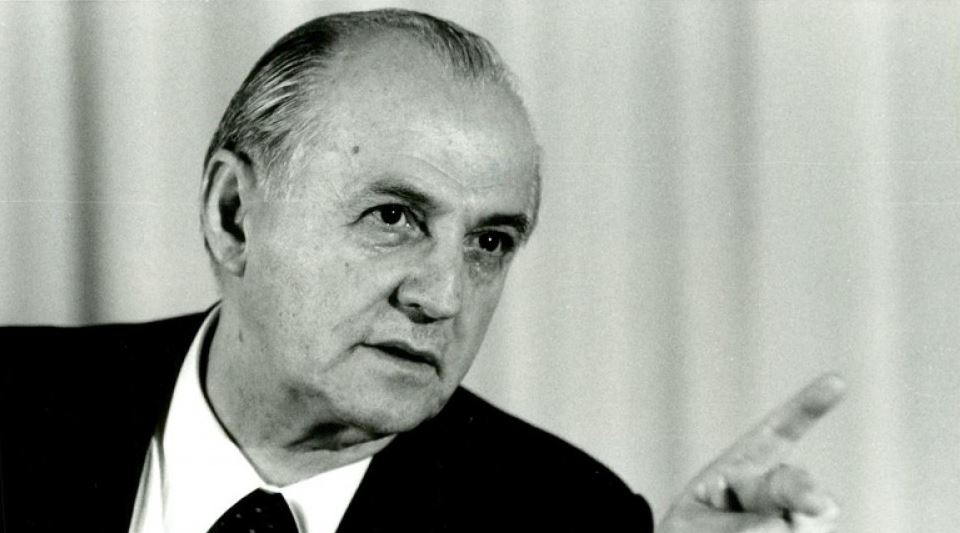
Ramiz Alia (born October 18, 1925, Shkodër, Albania—died October 7, 2011, Tirana) was the president of Albania from 1982 to 1992 and the last communist leader of the country. As the successor to Enver Hoxha, Alia presided over Albania’s final years of strict Marxist rule while cautiously steering the nation toward reforms and multiparty democracy.
Early Life and Rise in the Communist Party
Born to Muslim parents from Kosovo, Alia attended a French secondary school in Tirana before joining the National Liberation Movement during World War II. In 1943, at just 19 years old, he became a political commissar with the rank of lieutenant colonel in the Albanian Partisan forces.
Following the war, Alia rose quickly within the Communist Party of Albania (renamed the Party of Labour of Albania in 1948). He led the party’s youth and propaganda divisions before completing studies in the Soviet Union in 1954. Backed by Hoxha, he became minister of education (1955–58) and a Politburo member by 1961, placing him in Albania’s ruling elite.
Leadership and Presidency
When Hoxha died in April 1985, Alia became first secretary of the Party of Labour, consolidating power as Albania’s effective leader. His tenure marked a shift from Hoxha’s rigid isolationism to cautious engagement with Europe.
As president (1982–92), Alia attempted limited reforms:
- Relaxed strict cultural controls and censorship.
- Introduced modest economic reforms to address inefficiencies.
- Expanded ties with both Western and Eastern European states.
By the late 1980s, mounting economic hardship and public discontent fueled opposition movements. In 1991, the Party of Labour was rebranded as the Socialist Party of Albania, and Albania held its first multiparty elections. On April 3, 1992, Alia resigned as president following the electoral success of the Democratic Party of Albania.
Later Life and Legacy
In 1993, Alia and other senior communists were convicted of corruption and sentenced to prison. He served two years before being released in 1995, and his conviction was overturned in 1997 amid political turmoil.
Alia lived quietly until his death in 2011, remembered both as the last defender of Hoxha’s authoritarian legacy and the transitional figure who oversaw Albania’s shift to democracy.
Key Facts at a Glance
| Year | Event | Outcome |
|---|---|---|
| 1925 | Born in Shkodër | Albanian family of Kosovo origin |
| 1943 | Joined Communist Party | Became political commissar |
| 1955–58 | Minister of Education | Oversaw education reforms |
| 1961 | Politburo member | Rose to Hoxha’s inner circle |
| 1982 | Elected President | Titular head of state |
| 1985 | Became First Secretary | Assumed full leadership after Hoxha |
| 1991 | Allowed multiparty system | Socialist Party succeeded PLA |
| 1992 | Resigned presidency | Replaced by democratic government |
| 1993 | Convicted of corruption | Sentenced, later released |
| 2011 | Died in Tirana | Age 85 |
Conclusion
Ramiz Alia played a pivotal role in Albania’s modern history. As Hoxha’s successor, he maintained communist authority but also permitted the reforms that led to the end of one-party rule. His leadership bridged the era of isolation and repression with the birth of Albania’s democracy, making him a central—if controversial—figure in the country’s political evolution.