Construction Companies in the United States are operating in one of the world’s most competitive, capital-intensive, and strategically important markets. From airports, highways, bridges, hospitals, data centers, energy facilities, manufacturing plants, and commercial towers, the sector supports nearly every part of the American economy. The industry has gained even more attention as federal infrastructure funding, reshoring of manufacturing, clean energy investment, semiconductor facilities, and data center expansion continue to drive demand.
The United States construction market is not only large; it is highly specialized. A company that excels in hospital construction may not be the same company best suited for a rail tunnel, nuclear facility, chip plant, logistics hub, or renewable energy project. That is why buyers, investors, developers, and public agencies need more than a simple list of names. They need to understand each company’s track record, project strengths, technical capabilities, geographic reach, and delivery model.
Recent rankings from Engineering News-Record show Turner Construction, Bechtel, STO Building Group, Kiewit, Whiting-Turner, MasTec, DPR Construction, HITT Contracting, Fluor, and Mortenson among the leading U.S. contractors by revenue. ENR’s 2026 Top 400 Contractors list places Turner at No. 1, followed by Bechtel, STO Building Group, Kiewit, and Whiting-Turner.
This guide profiles the best Construction Companies in the United States, explains how the industry works, highlights major market trends, and provides a practical buyer’s guide for choosing the right contractor.
Industry Overview: Construction Companies in the United States
The U.S. construction and infrastructure sector is being shaped by four major forces: federal infrastructure spending, private-sector industrial expansion, digital transformation, and growing pressure for resilient, sustainable development.
The Bipartisan Infrastructure Law authorized about $1.2 trillion in federal infrastructure funding, including major investment in transportation, energy, broadband, water, and climate-related infrastructure. That has created opportunities for contractors involved in roads, bridges, rail, ports, water systems, power infrastructure, and public facilities.
At the same time, private demand has shifted toward data centers, advanced manufacturing, semiconductor plants, life sciences facilities, logistics campuses, and energy transition projects. This favors contractors with strong safety systems, technical engineering capacity, supply-chain control, and experience managing complex projects.
Key challenges remain. Labor shortages, higher material costs, permitting delays, insurance pressure, project financing risk, and tariff uncertainty continue to affect project delivery. The strongest companies are responding with prefabrication, digital project controls, design-build delivery, sustainability expertise, and stronger subcontractor management.
Ranking Methodology: Best Construction Companies
This directory considers public rankings, industry reputation, project complexity, geographic reach, technical capability, market specialization, service quality, innovation, and relevance to U.S. infrastructure and construction buyers.
ENR’s contractor and design-firm rankings were used as a key reference point because they track major U.S. construction and engineering firms by revenue and sector performance. ENR’s 2025 Top 500 Design Firms ranking listed AECOM, Jacobs, Tetra Tech, WSP USA, Fluor, HDR, Burns & McDonnell, Kimley-Horn, Stantec, and Arcadis North America among the top design firms.
Top Construction Companies in the United States
Turner Construction
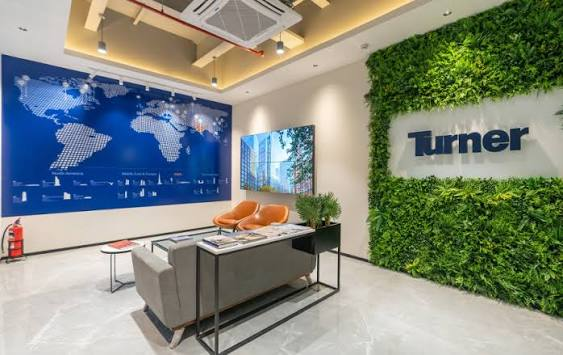
Turner Construction is one of the most influential building contractors in the United States and ranks No. 1 on ENR’s 2026 Top 400 Contractors list. Headquartered in New York City, Turner is widely known for large commercial, healthcare, education, sports, aviation, data center, and institutional projects.
Services offered include general contracting, construction management, preconstruction, design-build support, procurement planning, cost estimating, safety management, and project controls. Turner serves developers, universities, hospitals, corporations, public agencies, and technology companies.
Its competitive advantage is scale combined with deep sector specialization. Turner is often selected for complex vertical construction projects that require strict coordination, high safety standards, and fast delivery schedules. The company’s national footprint also makes it attractive to clients with multi-state building programs.
Headquarters: New York City, New York
Website: turnerconstruction.com
Why it stands out: Turner combines revenue leadership, national reach, and strong experience in complex building sectors.
Bechtel
Bechtel is one of America’s most recognized engineering, procurement, construction, and project management companies. ENR ranked Bechtel No. 2 among U.S. contractors in 2026. Founded in 1898, Bechtel works on some of the world’s most technically demanding projects, including energy, transportation, defense, mining, manufacturing, infrastructure, and environmental projects.
The company describes itself as an engineering, construction, procurement, and project management firm that delivers complex projects in challenging environments. Its services include EPC delivery, project controls, engineering, procurement, construction, commissioning, and program management.
Bechtel stands out because of its ability to manage mega-projects that require technical depth, security discipline, global logistics, and long-term execution. It is especially relevant for clients building energy facilities, industrial plants, rail systems, infrastructure corridors, and national-security-related assets.
Headquarters: Reston, Virginia
Website: bechtel.com
Why it stands out: Bechtel is a top choice for mega-projects requiring engineering depth and global execution capacity.
Kiewit Corporation
Kiewit is one of the most important infrastructure contractors in North America and ranked No. 4 on ENR’s 2026 Top 400 Contractors list. Headquartered in Omaha, Nebraska, the company is known for transportation, power, water, industrial, mining, oil and gas, and heavy civil construction.
Kiewit’s services include construction, engineering, procurement, design-build, public-private partnership delivery, heavy civil works, tunneling, bridges, highways, rail, power generation, and water infrastructure. Its industries include transportation, energy, water, industrial, and public infrastructure.
Kiewit stands out because of its self-perform capabilities, engineering integration, and heavy civil expertise. Public agencies often need contractors that can manage technical risk, field execution, environmental constraints, and schedule pressure. Kiewit’s long history in infrastructure makes it one of the strongest choices for complex civil works.
Headquarters: Omaha, Nebraska
Website: kiewit.com
Why it stands out: Kiewit is one of the strongest U.S. infrastructure contractors for heavy civil and energy projects.
STO Building Group
STO Building Group ranked No. 3 on ENR’s 2026 Top 400 Contractors list. Based in New York, the group includes multiple construction brands and has a strong presence in commercial interiors, mission-critical facilities, healthcare, life sciences, hospitality, education, and corporate construction.
Its services include construction management, general contracting, preconstruction, fit-outs, renovation, program management, and specialty project delivery. The company is especially relevant for clients that need sophisticated building delivery in dense urban markets or highly technical commercial environments.
STO’s competitive advantage is its portfolio of specialized firms, allowing it to serve different market segments while maintaining national scale. For corporate real estate teams, healthcare systems, technology firms, and institutional owners, this flexibility can be valuable.
Headquarters: New York City, New York
Website: stobuildinggroup.com
Why it stands out: STO combines national scale with specialized building-sector expertise.
The Whiting-Turner Contracting Company
Whiting-Turner ranked No. 5 on ENR’s 2026 Top 400 Contractors list. Based in Baltimore, Maryland, the company is one of the largest privately held construction firms in the United States and is known for commercial, healthcare, education, life sciences, technology, industrial, and public-sector projects.
Services include construction management, general contracting, design-build, preconstruction, scheduling, budgeting, value engineering, and safety management. The company serves universities, hospitals, research institutions, manufacturers, public agencies, and private developers.
Whiting-Turner stands out for its broad national presence and reputation for owner-focused project delivery. Its portfolio covers both complex institutional projects and private-sector developments, making it a versatile option for buyers seeking an experienced general contractor.
Headquarters: Baltimore, Maryland
Website: whiting-turner.com
Why it stands out: Whiting-Turner offers national reach, private ownership stability, and strong institutional experience.
MasTec
MasTec ranked No. 6 on ENR’s 2026 Top 400 Contractors list. Headquartered in Coral Gables, Florida, MasTec is a major infrastructure construction company serving communications, energy, utility, pipeline, power delivery, and renewable energy markets.
Its services include infrastructure construction, engineering, installation, maintenance, utility construction, communications networks, clean energy projects, and power delivery systems. MasTec serves telecom operators, utilities, energy companies, government agencies, and infrastructure owners.
MasTec stands out because U.S. infrastructure demand is increasingly tied to power, broadband, grid modernization, and energy transition. Contractors with experience in distributed infrastructure networks are becoming more important as the country expands connectivity and modernizes aging systems.
Headquarters: Coral Gables, Florida
Website: mastec.com
Why it stands out: MasTec is highly relevant for telecom, utility, power, and energy infrastructure growth.
DPR Construction
DPR Construction ranked No. 7 on ENR’s 2026 Top 400 Contractors list. Based in California, DPR is widely known for technically complex projects in healthcare, life sciences, advanced technology, commercial, and higher education.
Services include general contracting, construction management, design-build, preconstruction, virtual design and construction, self-perform work, and lean construction. DPR’s industries include hospitals, laboratories, data centers, pharmaceutical facilities, semiconductor-related facilities, and corporate campuses.
DPR stands out for its technical building expertise and innovation-driven delivery culture. Buyers with highly sensitive facilities often need contractors that understand clean rooms, complex MEP systems, strict commissioning, and operational continuity. DPR is particularly strong in those environments.
Headquarters: Redwood City/Santa Clara, California region
Website: dpr.com
Why it stands out: DPR is a strong choice for complex healthcare, life sciences, data center, and advanced technology projects.
HITT Contracting
HITT Contracting ranked No. 8 on ENR’s 2026 Top 400 Contractors list. Headquartered in Falls Church, Virginia, HITT is known for commercial construction, corporate interiors, base building, healthcare, hospitality, technology, government, and mission-critical facilities.
The company offers preconstruction, general contracting, construction management, design-build support, site logistics planning, renovation, and tenant improvement services. HITT serves corporate clients, developers, healthcare providers, public-sector clients, and technology companies.
HITT stands out because it combines strong East Coast roots with a broader national construction platform. Its experience in corporate interiors and commercial projects makes it especially useful for clients managing office, workplace, healthcare, and technology-related building programs.
Headquarters: Falls Church, Virginia
Website: hitt.com
Why it stands out: HITT is highly competitive in commercial, corporate, and mission-critical construction.
Fluor
Fluor ranked No. 9 on ENR’s 2026 Top 400 Contractors list and also appeared among ENR’s top U.S. design firms. Based in Irving, Texas, Fluor is an engineering, procurement, construction, and project management company with deep experience in energy, chemicals, infrastructure, mining, manufacturing, and government projects.
Services include EPC delivery, engineering, procurement, fabrication, construction, program management, maintenance, and project controls. Fluor serves energy companies, industrial owners, infrastructure agencies, mining clients, and government customers.
Fluor stands out because it bridges engineering and construction at industrial scale. For buyers planning technically complex energy, chemicals, manufacturing, or infrastructure projects, Fluor’s integrated delivery model can reduce coordination risk and improve project accountability.
Headquarters: Irving, Texas
Website: fluor.com
Why it stands out: Fluor is a major EPC leader for industrial, energy, and infrastructure projects.
Mortenson
Mortenson ranked No. 10 on ENR’s 2026 Top 400 Contractors list. Headquartered in Minneapolis, Minnesota, the company is known for commercial, renewable energy, sports, healthcare, data centers, education, and advanced manufacturing projects.
Services include general contracting, construction management, design-build, development, preconstruction, energy construction, and virtual design support. Mortenson serves public agencies, private developers, sports organizations, healthcare systems, universities, and energy clients.
Mortenson stands out for its presence in renewable energy and complex building markets. As demand grows for clean power, grid-connected assets, large venues, and high-performance facilities, Mortenson’s diverse portfolio gives it a strong position in the U.S. market.
Headquarters: Minneapolis, Minnesota
Website: mortenson.com
Why it stands out: Mortenson combines building expertise with strong energy and sustainability-related capabilities.
Industry Trends Shaping Construction Companies
Technology is changing how large projects are planned, priced, built, and maintained. Leading Construction Companies now use building information modeling, drone surveys, digital twins, scheduling software, field productivity tools, and real-time project dashboards.
Sustainability is also becoming central. Owners increasingly ask contractors to reduce waste, source lower-carbon materials, improve energy performance, and design for climate resilience. Public infrastructure projects are also being influenced by resilience funding and climate adaptation needs.
The biggest market disruption is demand for data centers and advanced manufacturing. Artificial intelligence, cloud computing, semiconductor investment, and reshoring are creating major construction opportunities, but they also strain labor availability, electrical equipment supply, and permitting systems.
Buyer’s Guide: How to Choose Construction Companies
Choosing a contractor should start with project fit, not brand size. A company may be excellent nationally but unsuitable for a specific hospital renovation, highway interchange, laboratory, data center, or water-treatment project.
Ask these questions before shortlisting a contractor:
Does the company have direct experience in this project type?
Can it provide references from similar owners?
Does it self-perform critical work?
How does it manage safety, schedule risk, and cost escalation?
What technology does it use for project controls?
Does it understand local permitting, labor markets, and subcontractor capacity?
How transparent is its pricing model?
Pricing should not be judged only by the lowest bid. A low initial price can become expensive if the contractor lacks planning discipline, misses scope details, or relies on weak subcontractors. Buyers should compare preconstruction quality, risk management, staffing depth, procurement strategy, and change-order history.
Red flags include vague estimates, weak safety records, poor communication, limited sector experience, unclear subcontractor plans, missing licenses, and unwillingness to provide references.
Why This Industry Matters
Construction Companies play a central role in U.S. economic growth. They build the physical systems that support trade, housing, healthcare, education, manufacturing, transportation, digital infrastructure, energy production, and public safety.
The industry also supports millions of jobs across contractors, engineers, architects, material suppliers, equipment companies, logistics providers, skilled trades, and professional services. When construction activity expands, the impact spreads across local economies.
Infrastructure quality also affects national competitiveness. Reliable roads, bridges, ports, airports, broadband, power systems, and water networks help businesses operate efficiently and communities grow safely. As the United States invests in modernization, the best contractors will influence how quickly and effectively that transformation happens.
Conclusion
The best Construction Companies in the United States are not just builders. They are risk managers, engineering partners, logistics experts, technology adopters, and long-term infrastructure enablers. Turner Construction, Bechtel, Kiewit, STO Building Group, Whiting-Turner, MasTec, DPR, HITT, Fluor, and Mortenson stand out because of their scale, specialization, reputation, and ability to deliver complex projects.
For buyers, the key lesson is simple: choose based on project fit, not name recognition alone. The right contractor should have relevant experience, strong safety systems, transparent pricing, proven delivery methods, and a clear understanding of local market conditions.
FAQs
What are the best Construction Companies in the United States?
The best Construction Companies in the United States include Turner Construction, Bechtel, STO Building Group, Kiewit, Whiting-Turner, MasTec, DPR Construction, HITT Contracting, Fluor, and Mortenson. ENR’s 2026 Top 400 Contractors ranking places Turner, Bechtel, STO, Kiewit, and Whiting-Turner among the top five U.S. contractors. The best choice depends on the project type, location, budget, timeline, and technical requirements.
Which U.S. construction company is ranked No. 1?
Turner Construction is ranked No. 1 on ENR’s 2026 Top 400 Contractors list. The company is especially strong in commercial buildings, healthcare, education, aviation, sports, data centers, and institutional projects. Its national reach and deep preconstruction capabilities make it a frequent choice for major private and public-sector building programs.
Is Bechtel bigger than Turner Construction?
Bechtel and Turner are both major U.S. construction leaders, but they serve different strengths. Turner is ranked No. 1 on ENR’s 2026 U.S. contractor list, while Bechtel is ranked No. 2. Turner is especially dominant in vertical building construction, while Bechtel is known for engineering-led megaprojects in energy, infrastructure, industrial, mining, transportation, and government sectors.
How should I choose a construction company?
Start by matching the contractor to the project type. Review similar completed projects, safety performance, financial strength, staffing plan, subcontractor network, licensing, insurance, and references. A hospital, data center, bridge, airport, or manufacturing plant requires different expertise. The best contractor is not always the largest; it is the one with the most relevant experience and strongest execution plan.
What is the difference between a contractor and an EPC company?
A general contractor usually manages construction delivery, subcontractors, scheduling, safety, and site execution. An EPC company handles engineering, procurement, and construction under a more integrated model. EPC delivery is common in energy, industrial, infrastructure, and manufacturing projects where design, equipment procurement, and construction must be tightly coordinated.
Why is U.S. infrastructure construction growing?
U.S. infrastructure construction is supported by federal investment, aging public assets, energy transition needs, broadband expansion, water-system upgrades, and transportation modernization. The Bipartisan Infrastructure Law authorized about $1.2 trillion in infrastructure-related funding, including major new investment across transportation, power, broadband, and water systems.
Are the largest construction companies always the best?
Not always. Large companies offer scale, systems, bonding capacity, and national reach, but specialized mid-sized firms may be better for niche projects. Buyers should evaluate sector experience, local knowledge, project team quality, safety record, and delivery method. A contractor’s ranking is useful, but it should not replace project-specific due diligence.
What sectors are driving construction demand in the U.S.?
Major demand drivers include data centers, advanced manufacturing, healthcare, infrastructure, renewable energy, grid modernization, logistics, airports, public works, and life sciences facilities. AI and cloud computing are increasing demand for mission-critical facilities, while federal programs are supporting transportation, broadband, water, and energy infrastructure.
What questions should I ask before hiring a contractor?
Ask about similar completed projects, safety performance, change-order history, subcontractor relationships, project controls, staffing, procurement strategy, insurance, bonding, and dispute history. Also ask who will manage the project day to day. Many problems happen when a strong proposal team is replaced by a weaker delivery team after award.
What are common mistakes when hiring a construction company?
Common mistakes include choosing only the lowest bid, failing to verify similar project experience, ignoring safety records, accepting vague cost estimates, overlooking local permitting issues, and not reviewing the contractor’s subcontractor plan. Buyers should also avoid rushing preconstruction because early planning often determines whether a project stays on budget.
Read Also: Technopolis Development Authority Expands Konza Vision