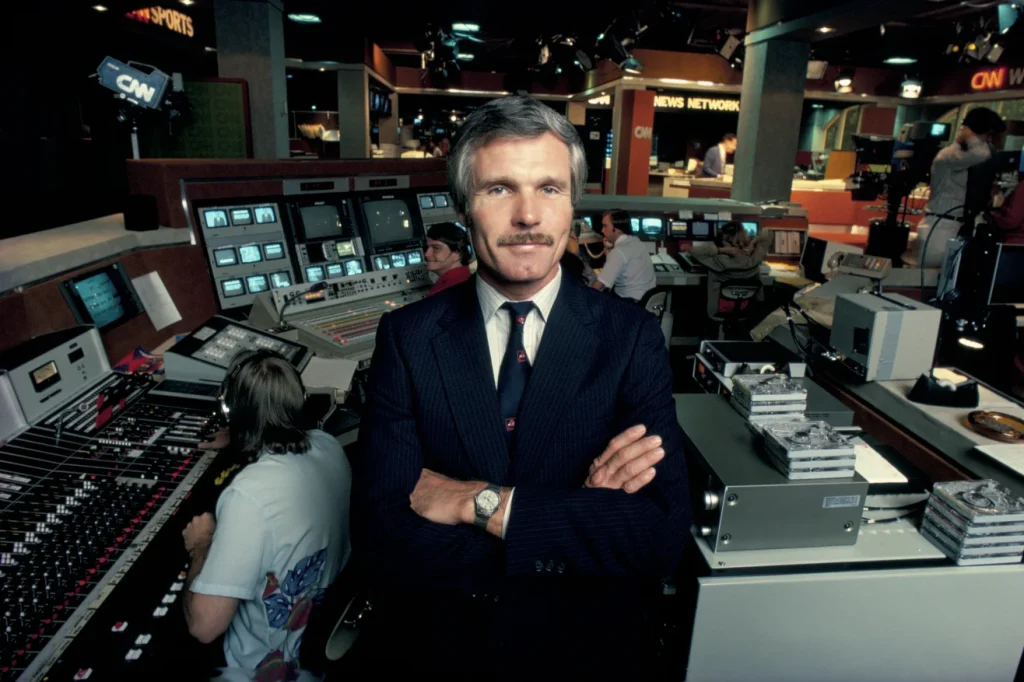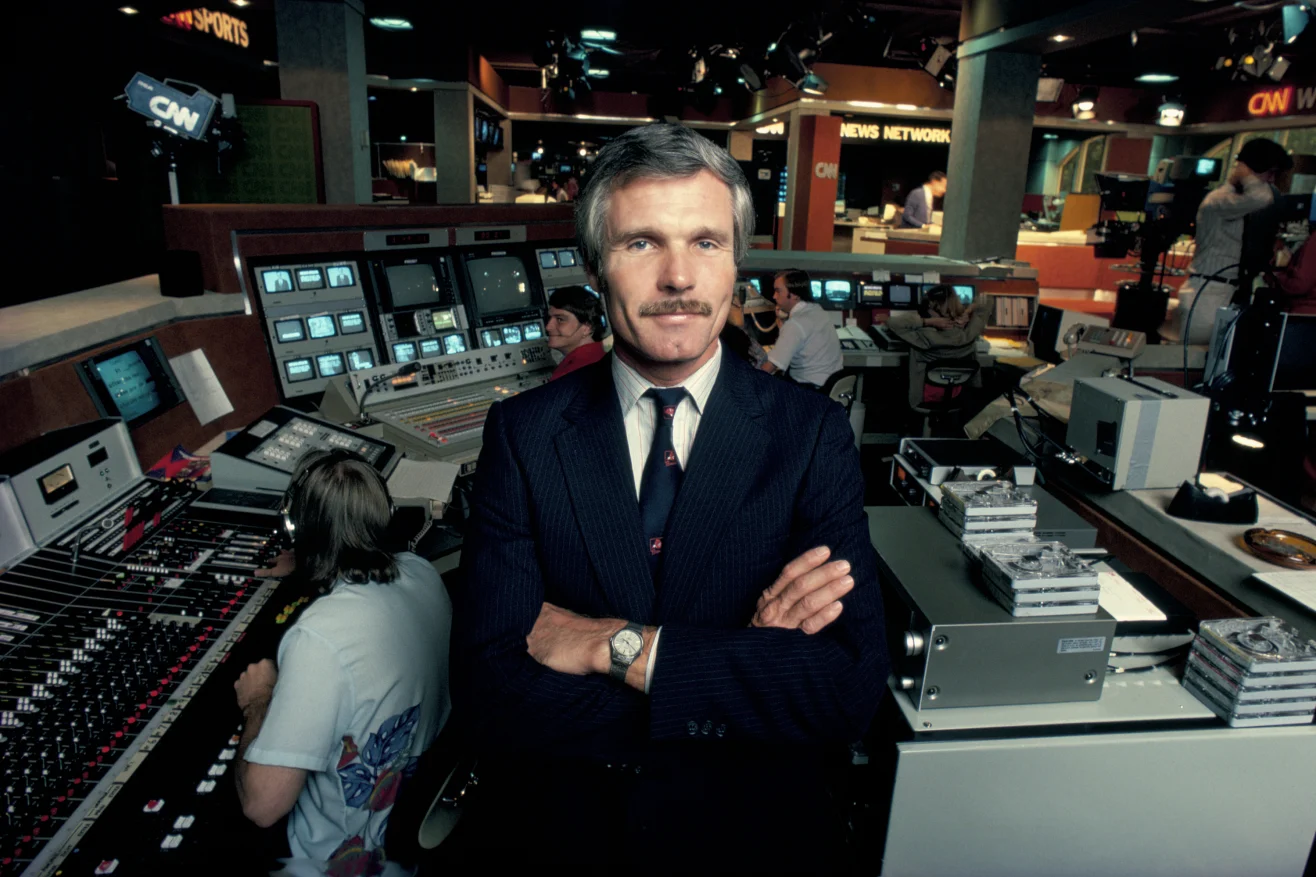
Ted Turner, the outspoken media entrepreneur who founded CNN and revolutionized global television news, has died at the age of 87. Turner passed away peacefully surrounded by family, according to a statement released by Turner Enterprises.
Widely regarded as one of the most influential figures in modern media history, Turner transformed cable television through bold ideas that many critics initially dismissed as impossible. His launch of CNN in 1980 created the world’s first 24-hour television news network and permanently changed how people consumed breaking news.
Beyond broadcasting, Turner became known as a philanthropist, environmental advocate, sports owner, and conservationist whose influence extended far beyond television.
Read Also: Victoria Rubadiri CNN Anchor Background
The Birth of CNN
On June 1, 1980, Turner launched Cable News Network (CNN), the first all-news television channel operating around the clock. At a time when traditional networks only aired scheduled evening news broadcasts, the idea of nonstop news coverage was viewed by many industry insiders as unrealistic.
Turner believed audiences wanted immediate access to information rather than waiting for nightly bulletins.
His gamble eventually reshaped journalism forever.
CNN gained worldwide prominence during major global events, especially the 1991 Persian Gulf War when audiences watched live wartime coverage in real time. The network later expanded globally through CNN International and additional channels such as Headline News.
Turner would later describe CNN as the “greatest achievement” of his life.
Ted Turner Building a Media Empire
Before CNN, Turner had already built a growing media business by acquiring struggling television and radio stations.
In the 1970s, he transformed Atlanta’s Channel 17 into WTBS, cable television’s first “superstation,” by using satellite technology to broadcast nationally.
His business empire later expanded to include:
- Turner Network Television (TNT),
- Turner Classic Movies (TCM),
- Cartoon Network,
- and ownership of sports franchises such as the Atlanta Braves and Atlanta Hawks.
In 1996, Turner sold Turner Broadcasting to Time Warner in a deal worth billions of dollars, though he remained closely associated with CNN for years afterward.
Read Also: Stephen A. Smith – American Sports Media Personality and Journalist
Early Life and Personal Struggles of Ted Turner
Born Robert Edward Turner III in Cincinnati, Ohio, in 1938, Turner endured a difficult childhood marked by family tragedy and a strained relationship with his father.
His father later died by suicide in 1963, leaving the young Turner to take over the family billboard company at just 24 years old.
That turning point shaped Turner’s relentless work ethic and ambition as he expanded the company into a major communications enterprise.
Throughout his life, Turner openly discussed the emotional impact of family loss and personal hardship.
Marriage to Jane Fonda
Turner’s relationship with actress Jane Fonda became one of America’s most high-profile celebrity marriages during the 1990s.
The pair married in 1991 and remained together for a decade before separating in 2001. Despite their divorce, both maintained mutual respect and continued appearing together at philanthropic events over the years.
Philanthropy and Environmental Work
In later life, Turner increasingly focused on philanthropy and conservation.
He pledged $1 billion to the United Nations and became one of America’s largest private landowners, owning millions of acres across the United States and Argentina.
Turner also became known for:
- restoring bison populations,
- supporting nuclear disarmament initiatives,
- environmental activism,
- and launching educational projects such as Captain Planet.
His charitable organizations included:
- the United Nations Foundation,
- the Nuclear Threat Initiative,
- the Captain Planet Foundation,
- and the Turner Endangered Species Fund.
Health and Final Years
In 2018, Turner publicly revealed that he had been diagnosed with Lewy body dementia, a progressive neurological disorder. Earlier in 2025, he had reportedly recovered from a mild case of pneumonia.
He is survived by his children, grandchildren, and great-grandchildren.
A Lasting Global Legacy
Ted Turner’s impact on global media remains enormous.
His decision to create a nonstop television news network fundamentally altered journalism, politics, war coverage, and international broadcasting. Modern live news culture, breaking-news television, and global cable journalism all trace part of their origins to Turner’s vision.
For millions around the world, CNN became synonymous with live global events because of the foundation he built.
Even decades after launching the network, Turner continued to be remembered as one of the boldest and most unconventional media innovators of the modern era.