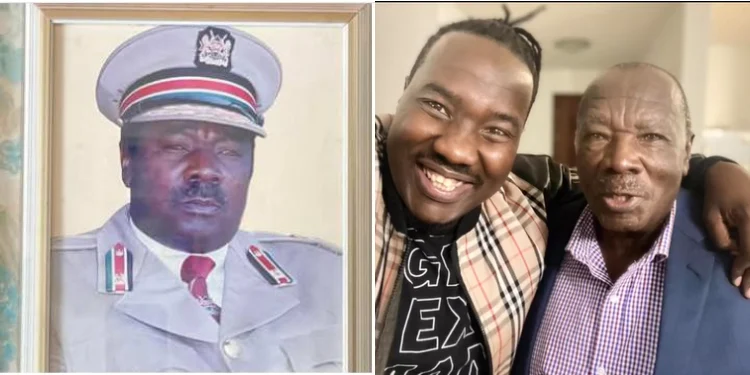
Peter Raburu Otieno is a retired Kenyan civil servant who served as a Provincial Commissioner during a transformative period in Kenya’s political history. The Peter Raburu profile reflects a career that spanned the final years of the one party era and extended into the early years of multi party governance. Over three decades, he rose from junior administrative roles to one of the most powerful provincial positions in the country.
Known to many as the father of media personality Willis Raburu, Peter Raburu built his own identity long before his son entered the public spotlight. His service in Nyanza, Rift Valley and Central Province placed him at the center of security management, political transition and regional governance during complex times.
Understanding Peter Raburu requires examining his civil service record, spiritual transformation and family legacy. His journey illustrates the evolution of Kenya’s provincial administration system and the personal convictions that shaped his leadership style.
Early Career in Kenya’s Civil Service
Rise Through the Provincial Administration
Peter Raburu served in Kenya’s civil service for approximately 30 years. He began his career as a District Officer III and steadily advanced through the ranks. His ascent culminated in his appointment as Provincial Commissioner, a role that historically held significant authority in regional governance.
During the presidency of Daniel arap Moi, Provincial Commissioners oversaw security, administration and coordination of national government functions within provinces. Peter Raburu operated within this framework during a period marked by political realignment and security challenges.
District Commissioner in Wajir
In the early 1990s, he was appointed District Commissioner of Wajir District in North Eastern Kenya. The region faced frequent security challenges, including bandit attacks and inter communal tensions.
As chair of the District Security Committee, he coordinated responses aimed at maintaining order and stability. His tenure in Wajir coincided with broader national debates about governance and security in marginalized regions.
Provincial Commissioner and National Visibility
Service in Nyanza Province
Peter Raburu later served as Provincial Commissioner in Nyanza Province. In that capacity, he became known for his firm administrative approach and public defense of the presidency.
At times, his actions generated public debate, particularly when he ordered arrests of leaders accused of insulting the Head of State. His tenure reflected the centralized administrative style characteristic of that era.
Role in Rift Valley and Central Province
In the Rift Valley ahead of the 2002 General Election, Peter Raburu emphasized peace building and civic responsibility. He publicly urged communities to maintain ethnic harmony during a period of political transition.
From 2003 onward, while serving in Central Province, he engaged in efforts aimed at persuading members of the Mungiki sect to renounce the movement. His approach combined administrative authority with spiritual messaging.
Spiritual Transformation and Pastoral Leadership
Conversion and Faith
In 1991, during his tenure in Wajir, Peter Raburu underwent a spiritual transformation and embraced Christianity more deeply. This experience influenced both his leadership style and personal philosophy.
Following retirement, he formalized his theological education. He earned a First Class Honours Degree in Theology from the Great Lakes University of Kisumu.
Ministry and Community Work
After retiring from public service, Peter Raburu settled in Kisumu County. He became a pastor and church elder, focusing on mentorship and spiritual guidance.
His pastoral work includes organizing crusades, mentoring youth and supporting orphans. He frequently speaks at churches and community gatherings across Nyanza and Western Kenya.
Through sermons that emphasize integrity, service and peace, he continues to influence community leadership.
Family and Personal Life
Peter Raburu is married to Ruth Raburu. Together, they have four children. Their youngest son, Willis Raburu, is a well known Kenyan media personality and entrepreneur.
Family narratives often highlight Peter Raburu’s strict yet principled parenting style. Stories shared publicly describe a household guided by discipline, early morning prayer and strong Christian values.
The Raburu family originates from Kano in Nyando District, Kisumu County. They maintain strong ties to the Luo community and remain active in local church networks.
Net Worth and Financial Record
Public financial disclosures regarding Peter Raburu are limited. As a retired civil servant, he receives pension benefits accrued during his three decades of government service.
He is not publicly associated with commercial ventures or active political campaigns. His income sources are understood to derive from retirement benefits and pastoral activities.
No verified public records detail his net worth. His profile remains centered on service rather than business or private enterprise.
A Career Bridging Administration and Faith
The Peter Raburu profile reflects a life shaped by provincial administration, political transition and spiritual leadership. From District Officer to Provincial Commissioner and later pastor, his journey mirrors broader changes within Kenya’s governance structures.
His legacy extends beyond public office into community mentorship and family influence. Through decades of service and subsequent ministry, Peter Raburu continues to be recognized as a figure associated with discipline, faith and administrative authority within Kenya’s public history.