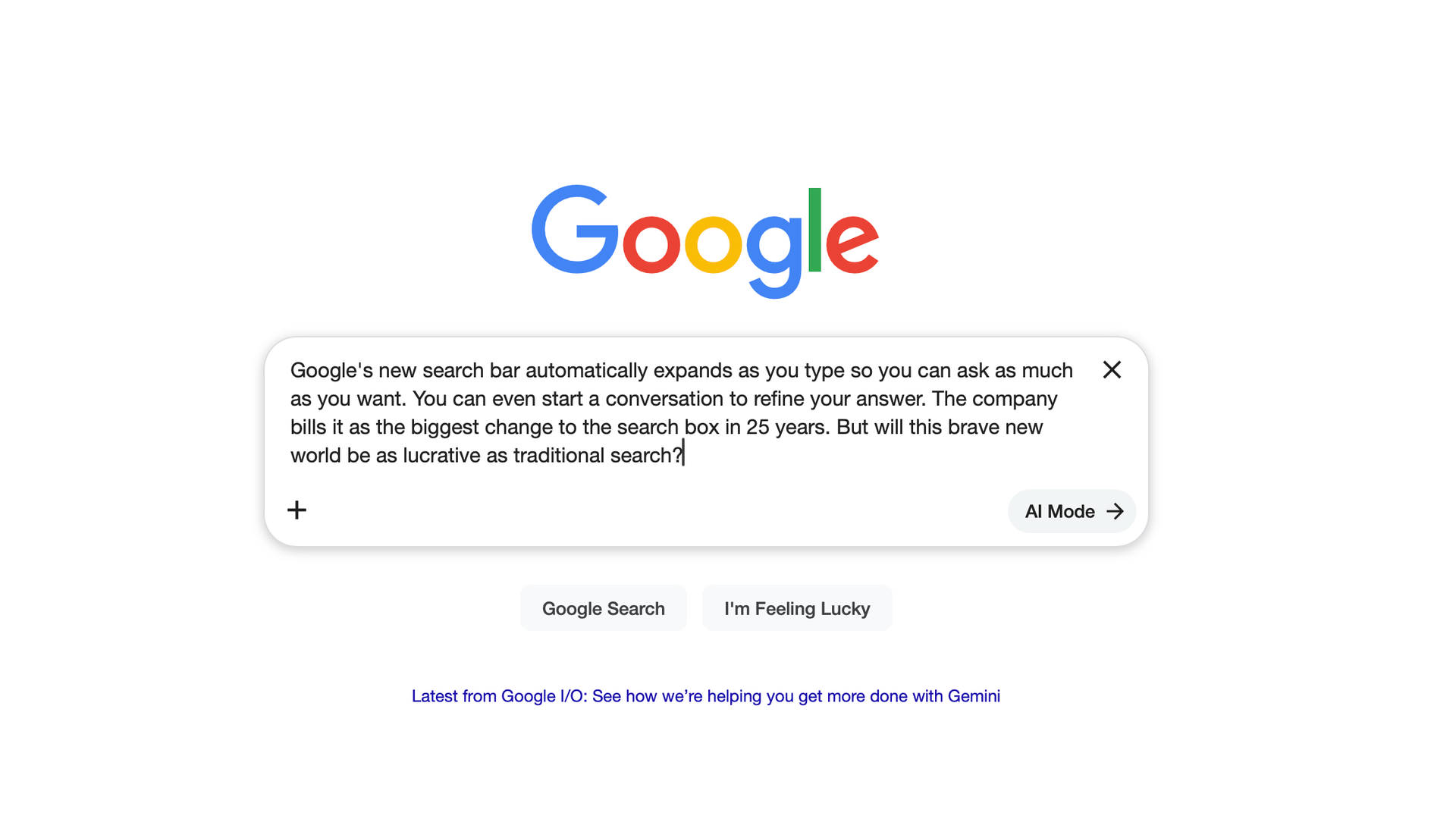
Google has unveiled one of the biggest transformations in the history of its search engine, introducing a redesigned AI-powered search experience centered around Gemini artificial intelligence technology.
Announced during Google I/O 2026, the overhaul represents what Google describes as the most significant upgrade to the search box in more than 25 years.
At the center of the new experience is Gemini 3.5 Flash, which now becomes the default AI model powering Google Search globally.
The update dramatically changes how users interact with search, moving beyond traditional keyword queries toward conversational, multimodal, and context-aware AI experiences.
Read Also: Google I/O 2026: Android 17, Aluminum OS and Gemini Updates Expected
Google Search Enters the AI Era
Google says its AI Mode now has more than one billion monthly users, highlighting how rapidly AI-driven search experiences have expanded since their introduction.
The company is redesigning the search interface to feel more conversational and intuitive.
Rather than relying solely on short search terms, users can now type longer and more detailed requests into an expanded AI-powered search box designed to understand intent more naturally.
Google says the new system:
- Anticipates user intent
- Helps formulate questions
- Provides AI-powered suggestions
- Supports conversational follow-up queries
- Delivers more context-aware responses
The search box itself dynamically expands as users type, encouraging more detailed prompts and natural-language interactions.
Gemini 3.5 Flash Powers New Search Experience
Gemini 3.5 Flash now serves as the backbone of Google’s AI-enhanced search experience.
The new model is designed to improve:
- Response speed
- Context understanding
- Multimodal reasoning
- Conversational interactions
- Real-time information processing
Google says Gemini 3.5 Flash is rolling out globally across all countries and languages where AI Mode is currently supported.
The company appears to be positioning Gemini as the core intelligence layer connecting nearly all of its products and services.
Multimodal Search Expands Beyond Text
One of the biggest upgrades involves multimodal search functionality.
Users can now search using:
- Text prompts
- Images
- Files
- Videos
- Chrome browser tabs
The system can interpret multiple input types simultaneously, allowing users to combine visual and text-based information within the same search experience.
For example, users may upload an image alongside a written question or ask Gemini to analyze documents and summarize information contextually.
Google says the changes are designed to make search feel more natural and human-like.
Read Also: Google Explains Why Some New Gmail Accounts Get Only 5GB Storage
Conversational AI Search Becomes Mainstream
The updated Google Search experience now allows users to move directly from AI-generated overviews into ongoing conversational interactions.
Rather than restarting searches repeatedly, users can continue refining questions within a continuous dialogue.
This conversational format is available across:
- Desktop
- Mobile
- Global AI Mode-supported regions
The shift reflects a broader industry trend away from static search results toward interactive AI assistants capable of maintaining context over longer sessions.
AI Search Agents Arrive This Summer
Google also announced upcoming AI-powered search agents for subscribers of Google AI Pro and Google AI Ultra.
These agents will reportedly operate continuously in the background, scanning for information and updates based on user preferences.
Google describes them as persistent AI assistants capable of:
- Monitoring listings
- Tracking products
- Finding services
- Following personalized interests
- Delivering proactive notifications
One example demonstrated apartment hunting functionality, where users specify desired housing criteria and Google’s AI agents continuously search for matching listings.
The agents then notify users automatically when relevant results appear.
The feature suggests Google is moving toward a more proactive internet experience where AI systems actively search on behalf of users rather than waiting for manual queries.
Google AI Will Soon Make Calls for Users
Google is also expanding its agentic booking capabilities.
This summer in the United States, Google AI will begin supporting more real-world service interactions, including:
- Local experiences
- Beauty appointments
- Pet care bookings
- Home repair scheduling
For certain categories, Google says its AI systems may even call businesses directly on behalf of users.
The functionality builds upon earlier Google Duplex technologies but integrates them more deeply into Gemini-powered AI workflows.
The move positions Google AI as more than a search engine — potentially evolving into a fully autonomous digital assistant.
Personal Intelligence Expands Globally
Google AI Mode is also expanding its Personal Intelligence capabilities to nearly 200 countries and territories in 98 languages.
Unlike some premium AI features, Google says this rollout will not require a subscription.
Users will be able to connect AI Mode directly to services including:
- Gmail
- Google Photos
- Google Calendar (coming soon)
This deeper integration allows Gemini to personalize responses based on individual schedules, memories, communication history, and stored information.
The expansion raises both excitement and concerns surrounding privacy, personalization, and AI-driven data usage.
Read Also: Google and Apple Simplify iOS to Android Switching
Search Is Becoming an AI Assistant
The redesign signals a major philosophical shift in how Google views search itself.
For decades, Google Search primarily functioned as an index of websites and links. The new AI-driven experience transforms it into a more active assistant capable of:
- Understanding complex intent
- Managing tasks
- Maintaining conversations
- Monitoring information continuously
- Taking real-world actions
The company appears determined to position Gemini as the central layer connecting search, productivity, mobile devices, and personal assistance.
Google Faces Growing AI Competition
The aggressive AI push also comes amid intensifying competition across the artificial intelligence industry.
Companies including:
- OpenAI
- Microsoft
- Meta
- Anthropic
have all accelerated efforts to redefine how users interact with information online.
Google’s latest announcements suggest the company intends to aggressively defend its dominance in search by embedding AI deeply into every stage of the experience.
Concerns Around AI Search Continue
Despite the excitement surrounding AI-powered search, the transition also raises several concerns.
Publishers, creators, and website operators remain worried that conversational AI summaries may reduce direct traffic to websites.
Privacy advocates have also raised questions about the increasing amount of personal data connected to AI systems.
Meanwhile, concerns around AI hallucinations, misinformation, and reliability continue to shape debates around generative AI search tools.
Google says it is continuing to improve accuracy and safety systems across Gemini-powered products.
Final Thoughts
Google is fundamentally reinventing the search experience for the AI era.
The integration of Gemini 3.5 Flash into Google Search transforms the platform from a traditional search engine into a conversational, multimodal, and increasingly autonomous AI assistant.
With AI agents, multimodal queries, conversational follow-ups, and deeper personalization, Google appears focused on making search more proactive, context-aware, and deeply integrated into everyday life.
The changes announced at Google I/O 2026 may ultimately represent one of the most important evolutions in the history of internet search.