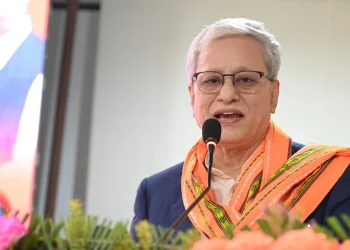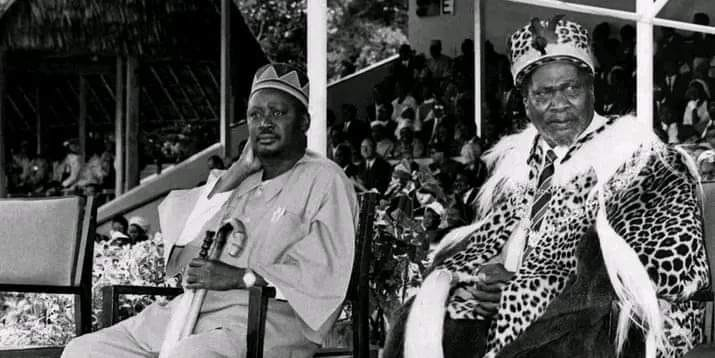
On June 4, 1962, Jaramogi Oginga Odinga, then vice-president of the Kenya African National Union (KANU), stood before a massive crowd of nearly 30,000 Africans in Nairobi and made one of the most iconic and controversial declarations of the pre-independence era.
Speaking at one of the largest public gatherings in colonial Kenya’s political history, Odinga proclaimed Jomo Kenyatta, the KANU president and nationalist leader, as the “second god” of Africans, not only in Kenya but across the entire African continent.
A Rallying Cry for Unity and Loyalty
The Nairobi rally was charged with emotion and political fervor. With Kenya’s independence on the horizon, Odinga sought to rally Africans under the banner of Kenyatta, who had become the face of the anti-colonial struggle.
“Jomo Kenyatta is the second god of Africans,” Odinga declared to roaring approval.
This declaration reflected the deification of Kenyatta in political rhetoric and public imagination, portraying him not just as a leader, but a messianic figure capable of delivering freedom from colonial bondage.
Condemnation of Europeans as “Devils”
Odinga’s speech took a sharply anti-colonial tone, aimed directly at European settlers and colonial sympathizers who remained skeptical or dismissive of Kenyatta’s leadership.
“Europeans who do not believe in Kenyatta are devils,” Odinga said.
“If they are not prepared to give him their loyalty, they would have to go.”
This was a blunt ultimatum—one that signaled the coming transfer of power and the rise of African self-governance. The rhetoric underscored a zero-tolerance approach toward any resistance to Kenyatta’s ascendancy as the symbol of African liberation.
Pan-African Symbolism Beyond Kenya
What made Odinga’s speech especially potent was his assertion that Kenyatta’s role transcended national borders. He was not merely Kenya’s liberator, but a continental symbol of African resilience and renewal.
“Kenyatta was the second god for Africans not only in Kenya but throughout the continent.”
At the time, this placed Kenyatta in the same rhetorical league as Kwame Nkrumah, Patrice Lumumba, and Julius Nyerere, figures whose leadership embodied Africa’s post-colonial awakening.
Legacy of the 1962 Declaration

Odinga’s 1962 statement became a defining moment in the mythos surrounding Jomo Kenyatta’s rise to power, solidifying his position as the unifying figure of Kenya’s independence movement.
It also set the stage for the Odinga-Kenyatta alliance, which would later disintegrate amid ideological divisions in the post-independence government.
Still, this moment captured the hope, passion, and defiance of a people on the brink of freedom—and the power of oratory in shaping historical consciousness.