The 1972 Egerton Incident: A Deadly Mistake Near President Kenyatta
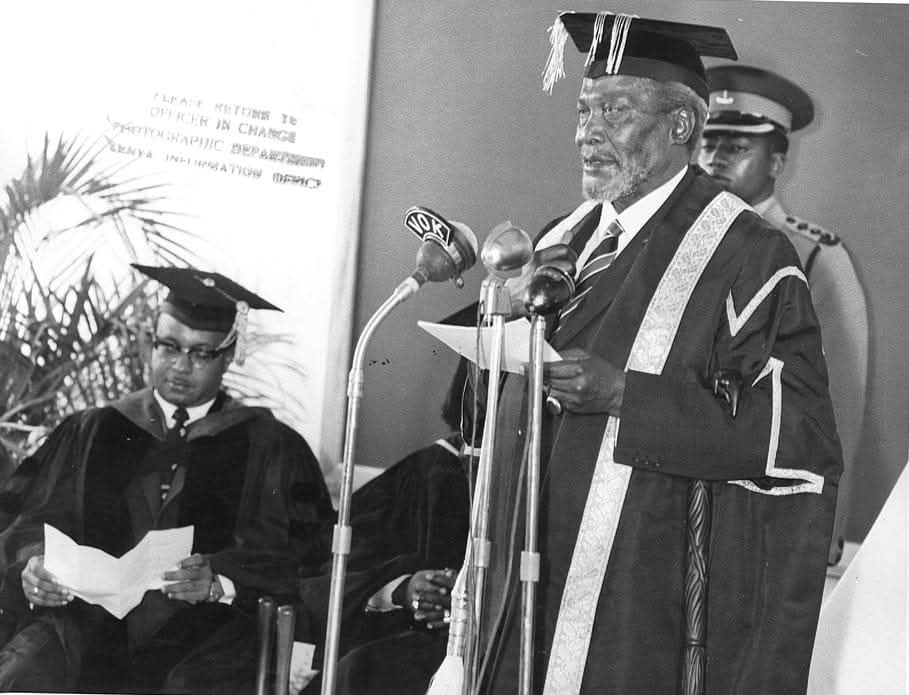
In 1972, during a routine graduation ceremony at Egerton Agricultural College, a misunderstanding would trigger one of the most tragic and misreported security incidents of President Jomo Kenyatta’s reign.
What was initially reported as an attempted assassination plot against the founding father turned out to be a case of mental illness, misjudgment, and mob justice—with an innocent man paying the ultimate price.
A Day of Celebration Turns into Chaos
President Kenyatta arrived at Egerton College to preside over the institution’s graduation ceremony—a standard, ceremonial event attended by students, parents, and local leaders. Among the crowd sat two brothers, one of whom was mentally challenged.
The mentally ill brother had been brought to the event by his well-meaning sibling, likely to experience the excitement of seeing the Head of State. As the President took his seat on the official platform, something unexpected happened.
The mentally challenged man suddenly stood and sprinted toward Kenyatta, yelling for his brother to follow him.
Swift Response, Fatal Consequences
Presidential guards, fearing for Kenyatta’s life, reacted swiftly. The man was tackled and restrained, while tension rippled through the crowd.
Tragically, the brother who remained seated calmly in the crowd became a target. Members of the Special Branch, Kenya’s elite internal intelligence agency, grabbed him, and a fearful, misinformed public—believing the two were part of a coordinated attack—set upon him violently.
The innocent man was lynched by the crowd, killed for simply being near his mentally unwell brother.
Truth Emerges Later
Initial reports in Kenyan media framed the event as a possible assassination attempt. However, after a week-long investigation, it was determined that:
- The man who had rushed the stage was mentally ill, with no intent to harm the president.
- The brother had no involvement, and his death was the result of panic and mob action.
- The police were faulted for laxity and for failing to distinguish between threat and misunderstanding.
The mentally ill man was quietly released a week later.
Lessons from a Misjudged Moment
The Egerton incident became a cautionary tale in Kenya’s political security narrative. It illustrated how fear, misinformation, and a lack of discernment in high-security environments can lead to the destruction of innocent lives.
It also exposed the extremes of crowd psychology, especially in the presence of a highly revered and heavily guarded leader like Kenyatta.
A Warning Still Relevant Today
The tragedy of the 1972 Egerton incident underscores a broader truth:
In a high-stakes security environment, the reckless behavior of one individual can bring devastating consequences to those around them.
Even decades later, similar lessons apply. In volatile political climates or around VVIPs, jokes, stunts, or misunderstandings can escalate rapidly, with life-altering consequences.
As history shows—from Egerton to contemporary political events—never take chances around a heavily guarded leader. Innocence may not be enough protection.