Mageta Island Detainees’ Letter to Argwings Kodhek: A Cry from Mau Mau Captives in 1956
On November 20, 1956, over 2,000 Mau Mau detainees held in Mageta Island, a remote detention site on Lake Victoria, penned a desperate and powerful letter to Mr. Argwings Kodhek—the only African criminal lawyer in Kenya at the time.
Branded as traitors and terrorists by the British colonial regime, these detainees were fighting for freedom and land. But in captivity, they were subjected to torture, starvation, overcrowding, and humiliation. Their handwritten plea offers a searing firsthand account of British brutality during the Mau Mau Uprising—and the resilience of a people demanding to be heard.
“We are leading such life in Mageta…”
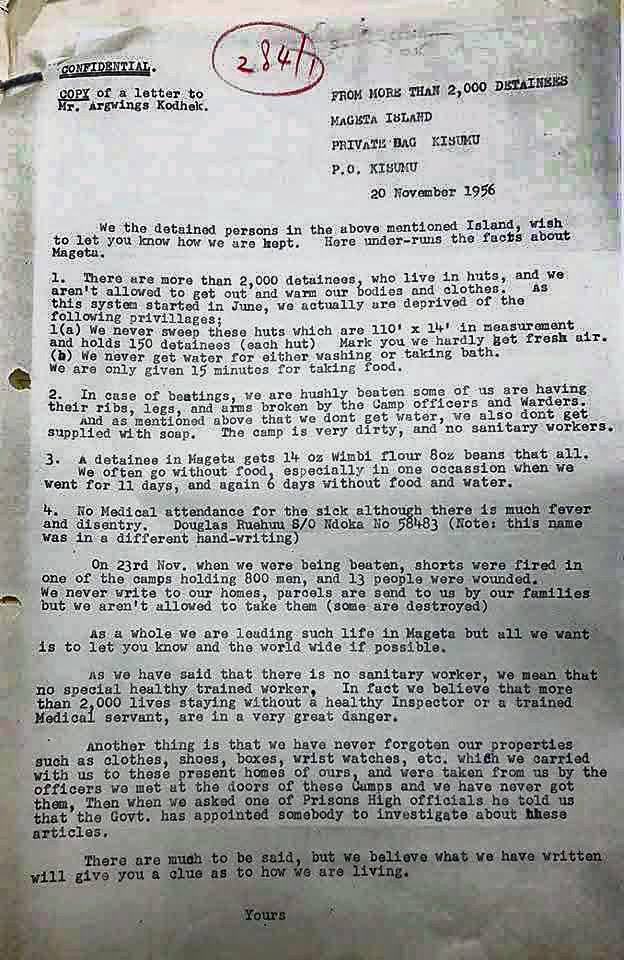
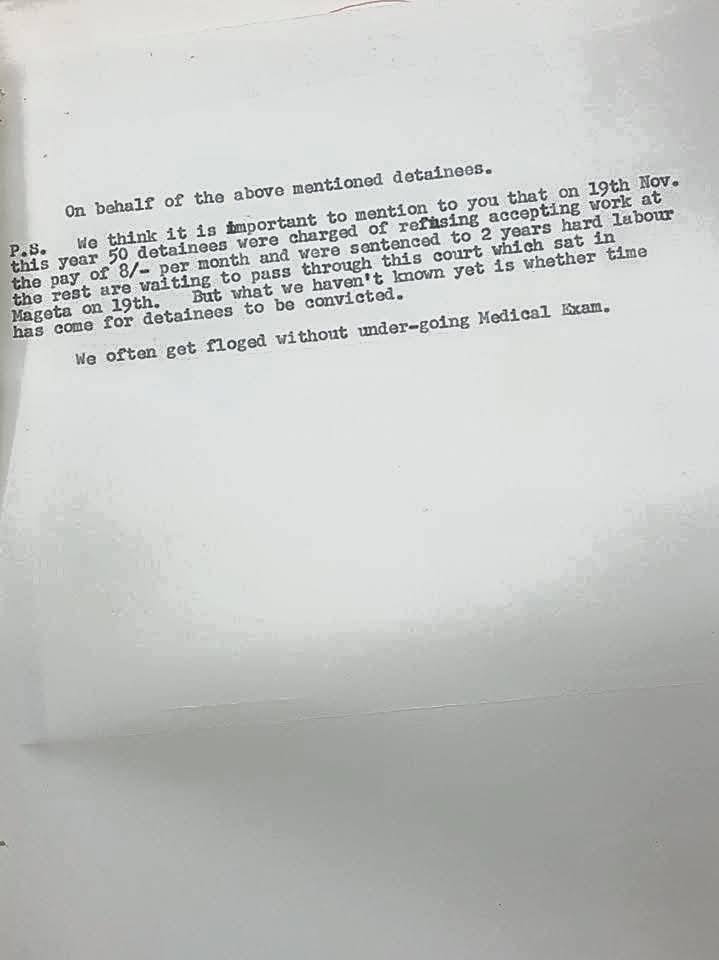
The letter, titled “CONFIDENTIAL — Copy of a Letter to Mr. Argwings Kodhek”, provides shocking insights into their lived reality:
1. Overcrowded and Unsanitary Conditions
“There are more than 2,000 detainees, who live in huts, and we aren’t allowed to get out and warm our bodies and clothes… each hut holds 150 detainees (each hut!)”
- Huts were 11×14 feet in size
- No sweeping or ventilation
- Limited water access
- Only 15 minutes for taking food
2. Systematic Beatings and Brutality
“We are harshly beaten… even for the least things.”
- Camp officers and warders flogged detainees
- No sanitary workers or medical staff
- On November 23, detainees were beaten; 13 people wounded
3. Starvation and Food Deprivation
“We often go without food… on one occasion we went for 11 days, and again 6 days without food and water.”
- Detainees received only 14 oz of flour and 5 oz of beans
- No soap, no utensils, no sanitation
- Living in famine-like conditions
4. Forced Labor and Harsh Sentences
In a postscript, the detainees revealed that 50 men had been charged with refusing to accept work at 8 shillings per month and sentenced to 2 years of hard labor.
“We often get flogged without undergoing medical exam.”
5. Health and Death
“There is much fever and dysentery… No healthy trained worker, no inspector, and over 2,000 lives are in great danger.”
- Basic medical care was non-existent
- Reports of fever, dysentery, and deteriorating health
- No doctors, no nurses—just neglect
Argwings Kodhek: A Defender of the Forgotten
At the time, Argwings Kodhek was the only African criminal lawyer in colonial Kenya, and he defended Mau Mau suspects pro bono, risking his career and safety. For this, he was constantly harassed by British authorities, barred from attending many courts, and even denied private legal practice.
To the detainees of Mageta, Kodhek was a symbol of hope—the only one with the courage to fight for African dignity through law.
Their appeal to him was not just legal—it was a plea for humanity.
A Rare Colonial Record of Resistance
The Mageta letter stands out as a rare, written testimony by African detainees under colonial imprisonment. It exposes the scale of abuse the British tried to hide behind their “civilizing mission” narrative and helps preserve the truth of Kenya’s fight for independence.
These weren’t terrorists. They were sons of the soil crying for justice.
Conclusion: The Letter That Shamed an Empire
This document is a haunting reminder of the atrocities of colonial rule, and the power of resistance even behind bars. Though many of the Mageta detainees would remain in silence, their letter lived on—and continues to echo across generations.
They said:
“There are much to be said, but we believe what we have written will give you a clue as to how we are living.”
And that clue is enough to write a chapter of Kenyan history never to be forgotten.