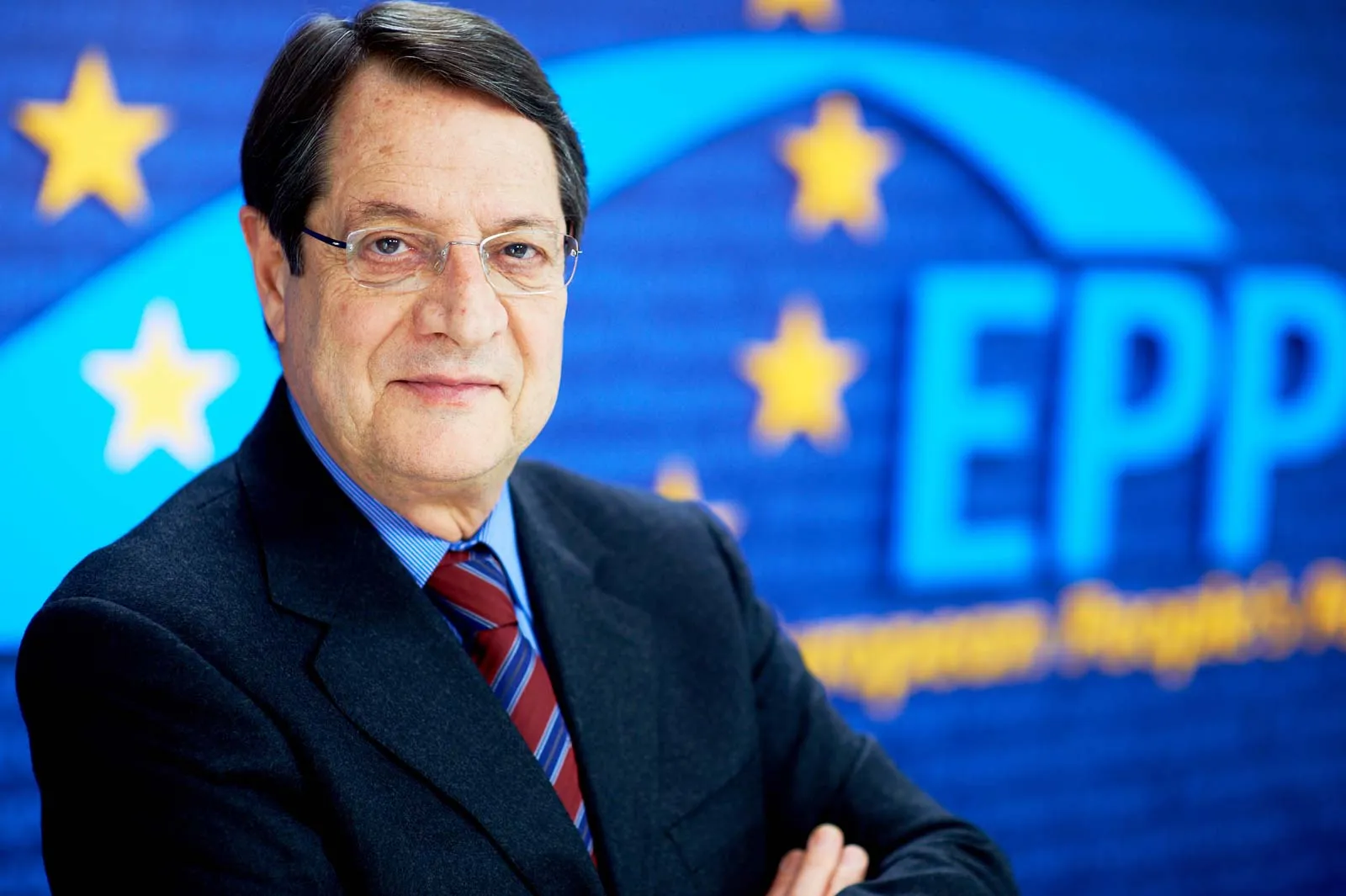
Nicos Anastasiades, born September 27, 1946, in Pera Pedi, Cyprus, is a Greek Cypriot statesman and leader of the Democratic Rally (DISY) party. He studied law at the National and Kapodistrian University of Athens and later pursued shipping law at the University of London. In 1972, he returned to Cyprus and established a law firm in commercial practice.
His political journey began in 1976, when he co-founded the Democratic Rally, a centre-right, Christian democratic party. He first gained prominence as secretary of the Limassol district youth wing and entered the House of Representatives in 1981, winning six consecutive terms. By 1997, Anastasiades had risen to become president of Democratic Rally, a position he held until 2013.
Presidency and Economic Reforms
Anastasiades was elected President of Cyprus in 2013, defeating Stavros Malas with more than 57% of the vote. His election came at the height of the euro-zone debt crisis, when the collapse of Laiki Bank and the Bank of Cyprus left the nation in severe financial distress.
He negotiated a €10 billion bailout package with the European Union, International Monetary Fund, and European Central Bank. The plan involved the closure of Laiki Bank and the restructuring of the Bank of Cyprus. The bailout also required Cyprus to raise €7 billion, largely through a controversial “bail-in” on large bank deposits. Despite the initial shock, the measures stabilized the financial system, and Cyprus successfully exited the bailout in 2016.
To boost investment, Anastasiades introduced a citizenship-by-investment (CBI) program in 2013. It allowed foreign investors to obtain Cypriot and EU citizenship by investing in real estate and business. The initiative brought significant capital into the country and revived parts of the economy, though it later drew criticism for weak oversight.
Foreign Policy and Reunification Efforts
As President of Cyprus, Anastasiades prioritized diplomacy and national reconciliation. In 2015, he reopened reunification talks with the Turkish Republic of Northern Cyprus (TRNC). His working relationship with Mustafa Akıncı, the Turkish Cypriot leader, fueled hopes for resolving the decades-long Cyprus division. Negotiations progressed but stalled in 2017 due to disagreements over power sharing and security arrangements.
On the international stage, Anastasiades strengthened Cyprus’s position in the European Union and advocated for its sovereignty over Eastern Mediterranean natural gas reserves. His government resisted pressure from Turkey to share energy management directly but proposed revenue-sharing mechanisms with the TRNC under Greek Cypriot terms.
Legacy of Nicos Anastasiades
Nicos Anastasiades President of Cyprus for a decade, is remembered as a pivotal leader who guided his country through financial turmoil and sought to heal political divisions. His presidency combined economic stabilization, international diplomacy, and efforts toward reunification, while also facing scrutiny over the citizenship-by-investment program.
His long career in politics and leadership of the Democratic Rally cemented his influence on Cypriot governance. Even after leaving office in 2023, his role in steering Cyprus through its modern challenges ensures his legacy as one of the most significant figures in the nation’s recent history.