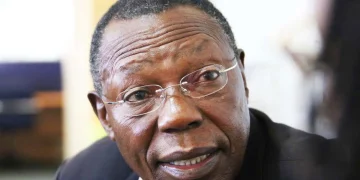
In Matili village, Bungoma, Henry Pius Masinde Muliro was born in 1922 to Muliro Kisingilie and Makinia, after whom he was lovingly called Owa Makinia or Khwa Makinia.
At a young age, he became an orphan. At the age of six, his mother passed away in 1928, and he lost his father just as he was about to enter adolescence in 1935. Owa Makinia was a reference to his mother’s side of the family, but it also hinted at his orphan status. Muliro’s early years were characterized by extreme poverty, therefore the Catholic Church was very important to him. This clarifies the names Henry and Pius that the missionaries gave him.
Muliro’s early years in a poor environment must have been a blessing in disguise. His primary schooling was provided by Catholic missionaries in Matili and Misikhu. At the latter, he took the Competitive Entrance Exam.
Being one of the few intelligent boys, the missionary educators in Misikhu recognized his deep and enduring desire in learning and sent him to Mwiri Intermediate School in Uganda. He returned to Kenya in 1944 to enrol in St. Mary’s School Yala, where he took the Kenya African Primary Education test. Muliro completed the 1948 Makerere Entrance Examination and the 1947 Cambridge School Certificate Examination before continuing on to St. Peter’s College Tororo, Uganda.
Muliro rose through the ranks of school to become well-liked in his hometown after Tororo, proving himself to be one of the few educated young men among his Bukusu people. Community leaders saw his crisscrossing across Bungoma, spreading the word about education and youth mentorship, and they donated money for his studies in Cape Town, South Africa. The missionary donors who had guided him through elementary and high school paid the remaining tuition and covered the cost of his journey.
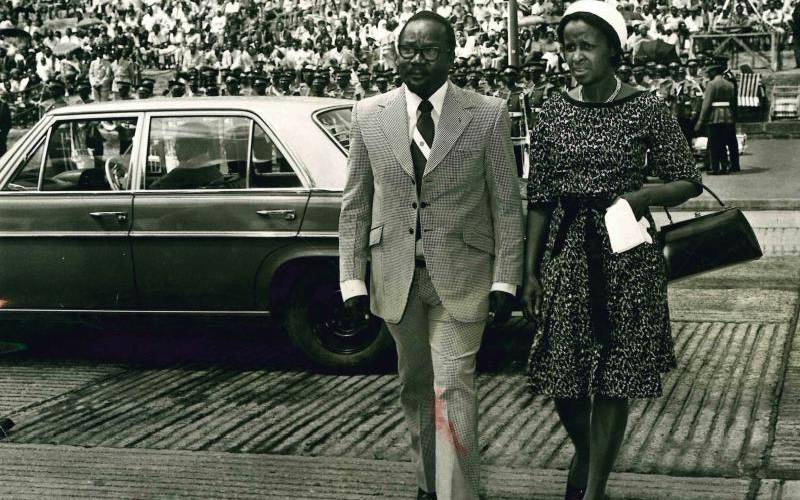
Muliro received admission to the University of Cape Town in 1949 to pursue a bachelor’s degree in political philosophy, education, English, and history. He pursued further education coursework. Muliro continued to further his study by enrolling in a political science master’s program at the same university. But when he refused to soften his thesis, which attacked South Africa’s racist government system, his freedom of thought would cost him the master’s degree. He then developed a strong interest in South African politics and joined the African National Congress, founded by Nelson Mandela.
In fact, he met Mercia, his future wife, through his involvement in ANC politics, and she has survived him to this day.
In 1954, Muliro and Mercia returned to Kenya, where he was reportedly regarded as the fourth best educated African in the colony. After being sent to Siriba Teachers Training College and Alliance Girls High School, he hung up his teaching hat and entered politics, a job he would pursue till the end of his life. Muliro defeated six candidates in the 1957 Legco elections in North Nyanza (Western Province), including Wycliffe Works Waswa (WWW), the incumbent.