
Kenyan brands ownership is a topic that quietly shapes the country’s economy, yet it rarely receives the attention it deserves. Walk through Nairobi, Mombasa, Kisumu, or any major town and you will encounter businesses that feel deeply Kenyan. They carry familiar names, employ thousands of locals, and are woven into everyday life. Many people grow up believing these companies represent homegrown success stories that rose from humble beginnings to dominate entire industries.
However, beneath the surface, the ownership structure of many iconic Kenyan brands has shifted significantly over the past two decades. While their storefronts, advertising, and leadership may still appear local, the financial power behind them increasingly comes from outside the country. Foreign private equity firms, multinational corporations, and offshore investment vehicles now control or significantly influence several of the country’s most recognizable enterprises.
This transformation did not happen overnight. It has been driven by the need for capital, regional expansion ambitions, and survival in competitive markets. As Kenyan companies scaled up, local funding sources often proved insufficient, opening the door to foreign investors with deeper pockets. The result is a new reality where some of the most trusted Kenyan brands are locally visible but globally owned.
Why Kenyan Brands Ownership Is Changing
Kenyan brands ownership has evolved largely because growth requires money, and lots of it. Expanding retail chains, telecom infrastructure, banking networks, and manufacturing plants demands billions of shillings in capital. Local investors, pension funds, and families sometimes struggle to match the scale of funding required to compete regionally or continentally.
Foreign investors step in with capital, technical expertise, and global networks. In exchange, they demand equity, board influence, and control. Over time, this leads to majority ownership shifting away from Kenyan founders and families. While this often accelerates expansion and professionalization, it also raises questions about economic sovereignty, profit repatriation, and long term national interests.
The following companies illustrate how Kenyan brands ownership has quietly changed, even as public perception remains firmly rooted in local pride.
Naivas Supermarket and Kenyan Brands Ownership in Retail
For many years, Naivas symbolized Kenyan resilience in retail. Founded by the late Peter Mukuha Kago, the supermarket chain grew from a small shop in Naivasha into the country’s largest retailer following the collapse of Nakumatt and Tuskys. To most shoppers, Naivas still feels like a family owned Kenyan success story.
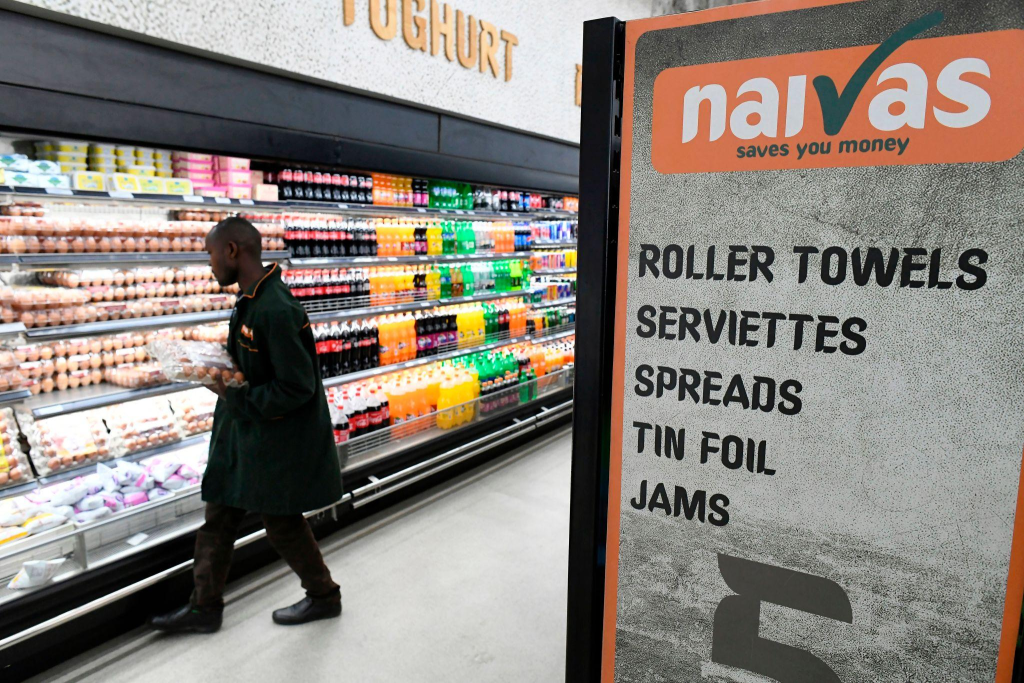
The ownership reality tells a different story. While the founding family remains involved in management and brand stewardship, control shifted in 2023 when a consortium led by a Mauritian based conglomerate acquired a majority stake. This move officially made Naivas foreign controlled, even though its branding and operations remain deeply local.
This change in Kenyan brands ownership explains Naivas’ rapid expansion, improved supply chains, and stronger balance sheet. However, it also means that strategic decisions and profit flows are now influenced heavily by offshore interests rather than purely Kenyan stakeholders.
Java House and the Myth of Kenyan Origins
Java House occupies a special place in urban Kenyan culture. It serves as a meeting point for professionals, students, creatives, and families. Many people assume it is a Kenyan founded brand that grew alongside Nairobi’s café culture.
In reality, Java House was never Kenyan owned at inception. It was founded in the late 1990s by American entrepreneurs. Over the years, ownership passed through several foreign hands, including American, Middle Eastern, and European private equity firms. Most recently, control moved to an international investment group with operations across Africa.
Java House demonstrates how Kenyan brands ownership can be misleading. While the brand identity feels local and the customer base is predominantly Kenyan, strategic decisions, expansion plans, and profit distribution are determined abroad. Kenya is the brand’s home market, but not its ownership base.
Safaricom and Kenyan Brands Ownership in Telecoms
Few companies are as emotionally tied to Kenya as Safaricom. Through mobile connectivity and digital payments, it has become embedded in daily life. Many Kenyans instinctively view it as a national asset, almost like a state corporation.
Ownership data paints a more complex picture. The Government of Kenya holds a significant minority stake, but the largest shareholders are foreign telecom giants based in Southern Africa and Europe. In addition, a substantial portion of publicly traded shares is held by foreign institutional investors.
Safaricom’s case highlights how Kenyan brands ownership can be both local and foreign at the same time. While operations, branding, and social impact are Kenyan centered, financial control and dividend flows extend well beyond the country’s borders.
Equity Group Holdings and Global Capital Influence
Equity Group built its reputation as a people focused bank, growing from a small building society into a regional financial powerhouse. Its leadership and messaging emphasize Kenyan roots and inclusion, which resonates strongly with customers.
Yet Equity’s shareholder structure reflects its transformation into a multinational institution. Its largest single shareholder is a European investment vehicle backed by development finance institutions from the Netherlands and Scandinavia. While Kenyan leadership remains prominent, major strategic influence comes from international capital.
This form of Kenyan brands ownership reflects a hybrid model. The brand identity and management remain local, but long term financial backing and governance increasingly reflect global interests.
Brookside Dairy and Strategic Foreign Partnerships
Brookside Dairy is widely associated with one of Kenya’s most powerful families and dominates the local milk market. For many consumers, it represents a quintessential Kenyan agribusiness success story.
Behind the scenes, a major European food multinational acquired a substantial minority stake years ago. This partnership provided capital and expertise to support Brookside’s regional expansion across East Africa. While Kenyan interests retain majority ownership, boardroom influence and strategic direction are shared.
Brookside illustrates how Kenyan brands ownership does not always shift fully but can still be significantly influenced by foreign partners. Such arrangements blur the line between local and foreign control.
Quickmart Supermarket and Private Equity Control
Quickmart followed a path similar to Naivas, starting as a family owned retailer before expanding rapidly. Its growth accelerated after a foreign private equity firm acquired majority control and merged it with another retail chain.
Today, Quickmart is controlled by an offshore investment structure, even though its stores, staff, and branding remain Kenyan. This shift in Kenyan brands ownership enabled aggressive expansion but also placed the company firmly under foreign financial oversight.
What Kenyan Brands Ownership Means for Consumers
For everyday consumers, changes in Kenyan brands ownership are often invisible. Stores still open, services still function, and products remain available. In some cases, service quality improves due to better funding and management systems.
However, ownership matters in the long term. Profit repatriation means that a share of wealth generated in Kenya leaves the country. Strategic decisions may prioritize regional or global interests over local needs. During economic shocks, foreign owned firms may retrench faster or redirect investment elsewhere.
Understanding Kenyan brands ownership helps consumers, policymakers, and investors make informed decisions about economic resilience and national development.
Why Brands Keep a Kenyan Face
Even after ownership shifts, companies often retain Kenyan branding deliberately. Local identity builds trust, loyalty, and market dominance. A brand perceived as Kenyan enjoys emotional goodwill that foreign brands struggle to achieve.
This strategy explains why Kenyan brands ownership changes rarely come with rebranding. The face remains Kenyan, even when the pocket is foreign. From a business perspective, it is a rational choice that preserves market share and customer loyalty.
Kenyan Brands Ownership and the Future Economy
As Kenya continues to integrate into global markets, foreign investment will remain a key driver of growth. The challenge lies in balancing capital inflows with local ownership, control, and benefit sharing.
Policy frameworks, pension fund participation, and local capital market development can help ensure that future Kenyan brands retain stronger domestic ownership. Transparency around ownership structures also empowers citizens to engage more critically with the economy they support daily.
Kenyan brands ownership is not about rejecting foreign investment. It is about understanding who holds power, where profits go, and how national interests are protected in an increasingly interconnected world.
The Takeaway on Kenyan Brands Ownership
Many companies Kenyans proudly claim as their own are no longer fully Kenyan owned. Retail giants, telecom leaders, banks, and consumer brands increasingly rely on foreign capital and control. This shift has enabled growth and stability but comes with trade offs that deserve public attention.
Recognizing the reality of Kenyan brands ownership allows for more informed conversations about economic sovereignty, investment strategy, and long term national prosperity. The brands may still feel Kenyan, but ownership tells a deeper story that shapes the future of the economy.