Village Market owners have quietly shaped one of Kenya’s most successful private commercial developments, turning a once quiet coffee farm in Gigiri into a landmark of retail, hospitality, and real estate investment. Over three decades later, the story of Village Market owners is no longer just about a shopping mall. It is about vision, long term investment, and the creation of a diversified business empire that continues to influence Nairobi’s urban landscape.
The Village Market occupies a unique place in Kenya’s commercial history. While many malls in the country were built as replicas of enclosed Western shopping centers, Village Market owners pursued a different idea. Their concept blended African market culture with modern retail convenience, creating a social and commercial hub rather than a purely transactional space. This vision resonated strongly with diplomats, expatriates, and upper middle class Kenyans living around Gigiri and nearby neighborhoods.
Today, Village Market owners are widely regarded among Kenya’s wealthiest private investors. The mall alone is valued in the tens of billions of shillings, while the surrounding land ranks among the most expensive commercial real estate in Nairobi. Yet the story behind this success is rooted in migration, resilience, and an entrepreneurial instinct that saw opportunity where others saw risk.
Who Are the Village Market Owners
Village Market owners are members of the Ehsani family, a Kenyan business family of Iranian origin. The mall is owned through Greenhills Investment, a company associated with brothers Mehraz Ehsani and Hamed Ehsani. Their journey into Kenyan business began under unexpected circumstances, following political upheaval in their country of origin.
In the early 1980s, the Ehsani family left Iran during a period of intense political and economic disruption. Kenya was initially a temporary stop as they waited for visas to relocate elsewhere. However, exposure to the country’s business environment and lifestyle gradually changed their plans. Instead of moving on, they chose to settle and invest locally.
Hamed Ehsani’s father was an established industrial businessman with experience in chemicals and manufacturing. This background shaped the family’s approach to enterprise, emphasizing long term investment rather than short term gains. Over time, Kenya became not just a place of residence, but the foundation of their commercial legacy.
How Village Market Was Established
The idea for Village Market emerged in the early 1990s when the Ehsani brothers noticed a gap in Gigiri’s commercial infrastructure. Despite being home to diplomats, expatriates, and international institutions, the area lacked a central shopping and recreation facility. At the time, Nairobi’s retail scene was still dominated by small shopping centers and standalone stores.
In 1992, the brothers acquired a seven acre parcel of land along Limuru Road, then covered with coffee bushes. Rather than building a large enclosed mall, they envisioned a space inspired by the structure of an African village. The concept emphasized openness, walkability, greenery, and communal interaction.
The initial investment was estimated at around KSh 90 million, a substantial sum at the time. Construction began with plans for a modest number of shops. Three years later, Village Market opened its doors to the public. Early success encouraged rapid expansion, and within a short period, the complex grew from a handful of outlets to dozens of stores.
Recreational amenities played a critical role in attracting visitors. Bowling alleys, water slides, and a cinema helped transform Village Market into a destination rather than a routine shopping stop. This strategy proved particularly effective with diplomats and professionals working at nearby international organizations.
Growth of Village Market Into a Retail Powerhouse
Over the years, Village Market owners consistently reinvested in the complex, expanding both retail and non retail offerings. The mall now spans more than 210,000 square feet of retail space, complemented by office areas and extensive entertainment facilities. More than 150 outlets operate within the complex, ranging from international brands to local businesses.
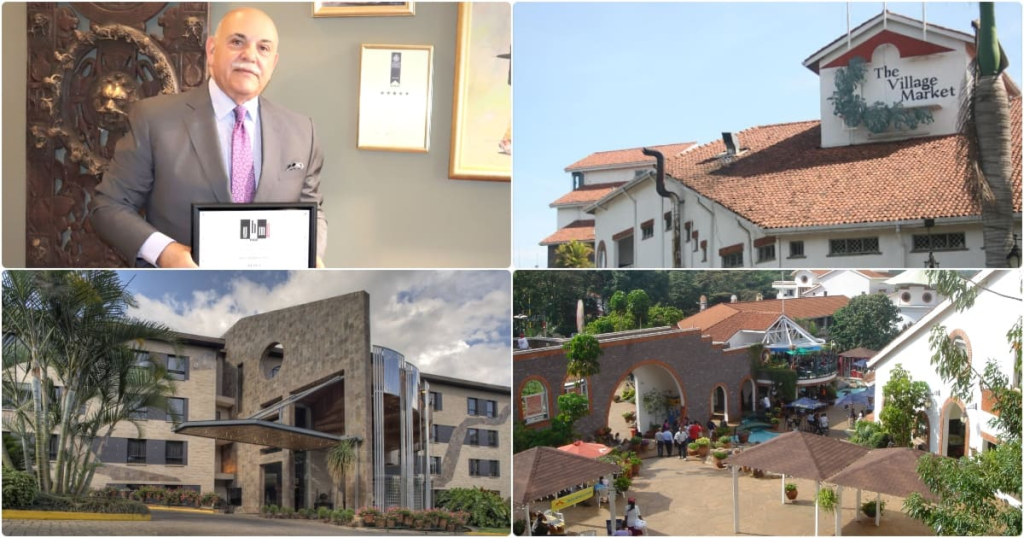
Village Market owners were also early adopters of mixed use development in Kenya. By combining shopping, dining, offices, recreation, and later hospitality within a single destination, they anticipated trends that would later become standard in Nairobi’s real estate market.
The mall’s valuation reflects this success. Estimates place Village Market’s worth at approximately KSh 15 billion, while the land alone is valued at over KSh 1.6 billion. These figures place the complex among the most valuable privately owned commercial properties in the country.
Village Market Owners and Their Role in Kenyan Retail Evolution
Village Market owners have influenced how modern retail developed in Kenya. The introduction of a centralized food court was a first for the local market, setting a precedent that many later malls adopted. Their emphasis on open air design also differentiated Village Market from enclosed shopping centers that followed more conventional global templates.
Tenant mix has remained a priority. Over time, the mall transitioned from a single anchor supermarket to hosting international grocery brands, luxury retailers, and high end dining establishments. This adaptability allowed Village Market to remain competitive even as newer malls emerged across Nairobi.
The mall’s clientele has also evolved. While diplomats and expatriates remain a significant segment, Village Market has increasingly attracted Kenyan professionals, families, and tourists seeking a premium yet relaxed shopping environment.
Other Businesses Owned by Village Market Owners
Village Market owners did not limit their ambitions to retail alone. Their success provided capital and confidence to expand into hospitality and real estate, creating a diversified portfolio that strengthened their long term financial position.
Tribe Hotel and Hospitality Investments
One of the most prominent ventures associated with Village Market owners is Tribe Hotel, a luxury hospitality property located adjacent to the mall. Tribe Hotel was developed as a five star boutique hotel designed to reflect African art, culture, and contemporary luxury.
Founded in the late 2000s by members of the Ehsani family, the hotel was built around the philosophy that humanity is a single tribe. This idea is reflected in the hotel’s architecture, interiors, and extensive collection of African art and antiques. Hundreds of curated pieces adorn the property, giving it a distinctive identity within Nairobi’s hospitality scene.
The hotel features over 120 guest rooms and suites, alongside fine dining, spa facilities, and conference spaces. Its proximity to Village Market makes it particularly attractive to business travelers, diplomats, and international visitors seeking convenience and exclusivity.
Hospitality investments further strengthened the Ehsani family’s presence in Nairobi’s premium property market, linking retail, accommodation, and lifestyle into a single ecosystem.
High Value Residential Properties Linked to Village Market Owners
Village Market owners are also associated with some of Nairobi’s most exclusive residential developments. Among the most notable is a luxury mansion reportedly valued at approximately KSh 600 million, located within the Magnolia Hills estate.
This gated community is known for its American style suburban layout, expansive green spaces, and proximity to international schools. Homes within the estate offer modern infrastructure, shared amenities, and a high level of security, catering to affluent residents.
The Ehsani family residence within this estate reportedly features multiple en suite bedrooms, large living areas, balconies, and private leisure facilities. Such properties underline the family’s preference for long term real estate assets in high value locations.
Palm Valley Estate and Real Estate Development
Another major real estate project linked to Village Market owners is Palm Valley estate, an upscale residential development in Runda. Developed under the leadership of Hooman Ehsani, the project spans approximately 20 acres and offers a mix of apartments, townhouses, and villas.
Palm Valley was designed to appeal to Nairobi’s growing demand for secure, master planned residential communities. Facilities include a clubhouse, gym, sports courts, swimming pool, and landscaped common areas. The estate targets professionals, diplomats, and investors seeking premium housing close to key business districts.
This development demonstrates how Village Market owners leveraged their understanding of Nairobi’s urban growth patterns to diversify into residential real estate with strong long term demand.
Business Philosophy Behind Village Market Owners’ Success
A defining characteristic of Village Market owners is their long term investment mindset. Rather than selling assets quickly or pursuing speculative gains, the Ehsani family has consistently focused on building, holding, and improving properties over decades.
This philosophy allowed Village Market to evolve gradually without losing its core identity. It also enabled strategic expansion into hospitality and housing at moments when Nairobi’s market conditions were favorable.
Another factor has been adaptability. Village Market owners adjusted tenant mixes, embraced new shopping trends, and modernized facilities to meet changing consumer expectations. This flexibility helped the mall remain relevant even as competition increased.
Village Market Owners and Their Place Among Kenyan Billionaires
Village Market owners are often mentioned in discussions about Kenyan billionaires, particularly those whose wealth is rooted in property and lifestyle businesses rather than extractive industries or finance. While the family maintains a relatively low public profile, their assets place them among Kenya’s most financially influential private investors.
Their wealth is largely tied to tangible assets rather than speculative ventures. Retail property, hotels, and residential estates form the backbone of their portfolio, providing stability across economic cycles.
Village Market Owners Compared to Other Kenyan Mall Investors
Kenya’s retail landscape includes several large malls, some larger in size than Village Market. However, few match its integrated lifestyle concept or long standing brand recognition. While malls like Business Bay Square dominate in scale, Village Market continues to command prestige and consistent foot traffic.
This distinction highlights the difference between size and influence. Village Market owners prioritized experience, design, and location, ensuring the complex remained a destination even as newer developments emerged.
The Enduring Influence of Village Market Owners
Village Market owners have left a lasting imprint on Nairobi’s urban and commercial development. Their work reshaped expectations around shopping malls, introduced mixed use lifestyle centers, and demonstrated the power of patient capital in real estate.
As Nairobi continues to expand, the Village Market remains a reference point for quality, innovation, and longevity. The Ehsani family’s journey from migrants to Kenyan billionaires reflects a broader narrative of opportunity, resilience, and strategic investment within the country’s evolving economy.