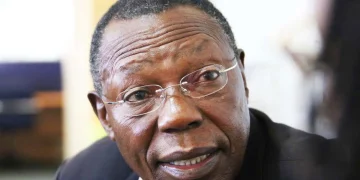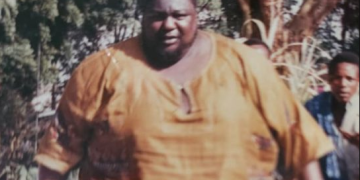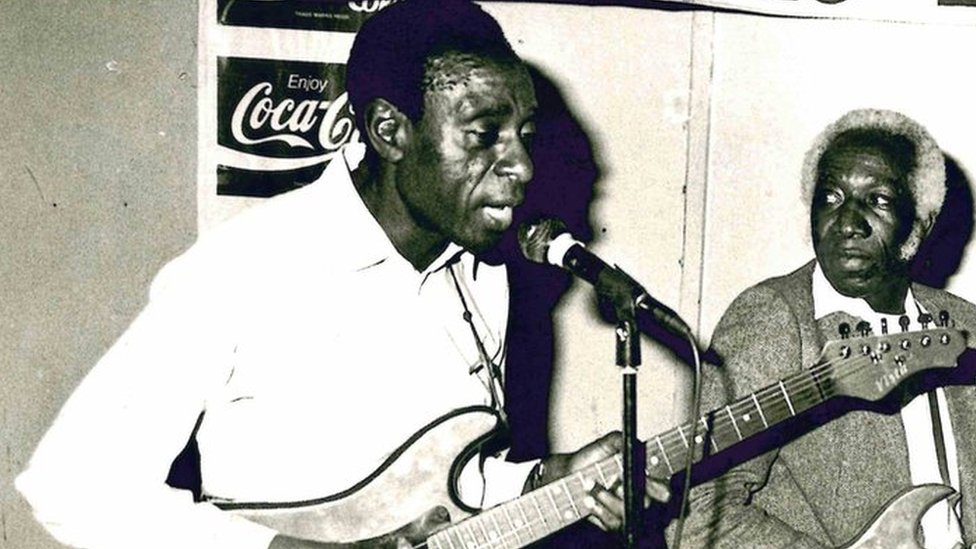
John Amutabi Nzenze (1940 – 30 May 2020) was a legendary Kenyan musician and guitarist, celebrated as one of the pioneers of the twist dance style in East Africa. Rising to fame in the early 1960s with timeless hits such as Angelike, Julieta Rudi Tuone, and Habari za Nairobi (Nairobi Twist), Nzenze became one of Kenya’s most recognized entertainers, performing across Africa, Europe, Asia, and beyond.
Early Life and Education
John Nzenze was born in Muthurwa, Nairobi Area, in 1940, though his roots trace back to Kakamega County, Kenya. A member of the Luhya community, Nzenze showed an early interest in music. At the age of 12, he began experimenting with his father’s guitar. His passion, however, worried his father, who sold the guitar after noticing how much time young John spent playing it.
Despite this setback, Nzenze’s love for music persisted. After completing his studies at St. Peter’s Primary School, he worked at the Norfolk Hotel in Nairobi, where he sharpened his performance skills and began dreaming of a music career.
Music Career
John Nzenze’s career took off in the 1960s when he teamed up with Daudi Kabaka, another iconic Kenyan musician. Together, they recorded memorable songs such as Safari Tanganyika, Bachelor Boy, and Nyumba za Tobacco. Released under Jambo Records, these tracks became instant hits, cementing his position in the East African music scene.
In 1961, Nzenze released Angelike, one of his most famous songs. Its catchy twist rhythm and Swahili lyrics made it a hit across Kenya and beyond. He followed this with songs like Julieta Rudi Tuone and Habari za Nairobi (Nairobi Twist), which became synonymous with Nairobi’s vibrant nightlife.
International Performances
- In 1968, Nzenze represented Kenya at the All African Music Festival in Algeria, finishing third. This performance caught the attention of leaders such as President Jomo Kenyatta, who honored him, and Emperor Haile Selassie of Ethiopia, who invited him to perform in Addis Ababa.
- In 1969, Nzenze and his band, Air Fiesta Matata, performed alongside Miles Davis in Germany, an encounter that led to an international tour across Europe and America.
- In 1971, his band was crowned Best Band in Africa by the BBC World Service, one of the highest honors of his career.
By the 1970s, Nzenze had become a household name not only in Kenya but across the world, touring extensively in Japan, Britain, Germany, and the United States.
Later Career and Achievements
In 1972, Nzenze left Air Fiesta Matata and pursued solo performances. He became a regular entertainer at Nairobi’s Panafric Hotel and later performed on tourist cruise ships. Even into the 2000s, he was active, playing at venues such as the Westlife Club in Kakamega.
His contributions to Kenyan music went beyond performance. Nzenze served as a board member of the Music Copyright Society of Kenya (MCSK), advocating for musicians’ rights.
In 2009, President Mwai Kibaki honored Nzenze with a Head of State Commendation alongside fellow pioneers John Katana (Them Mushrooms), David Ndung’u, and Conrad Karukenya (Tiger Power).
Personal Life and Death
Nzenze was proud of his Luhya heritage and often infused his cultural identity into his music. Despite his global fame, he remained closely tied to his roots in Kakamega and Nairobi.
In April 2020, he underwent stomach surgery. Sadly, on 30 May 2020, he passed away at the age of 79. His death marked the end of an era, but his music continues to inspire new generations.
Legacy
John Nzenze is remembered as one of Kenya’s most influential musicians, a pioneer who brought twist music into East Africa’s soundscape. His songs remain classics in Kenya’s musical history, embodying the energy, rhythm, and storytelling that defined the golden age of Kenyan popular music.
His legacy lives on through the countless musicians he inspired, his contributions to Kenya’s cultural heritage, and the timeless tracks like Angelike that continue to resonate decades after their release.
Discography (Selected)
- Angelike (1961)
- Julieta Rudi Tuone
- Habari za Nairobi (Nairobi Twist)
- Safari Tanganyika (with Daudi Kabaka)
- Bachelor Boy (with Daudi Kabaka)
- Nyumba za Tobacco (with Daudi Kabaka)