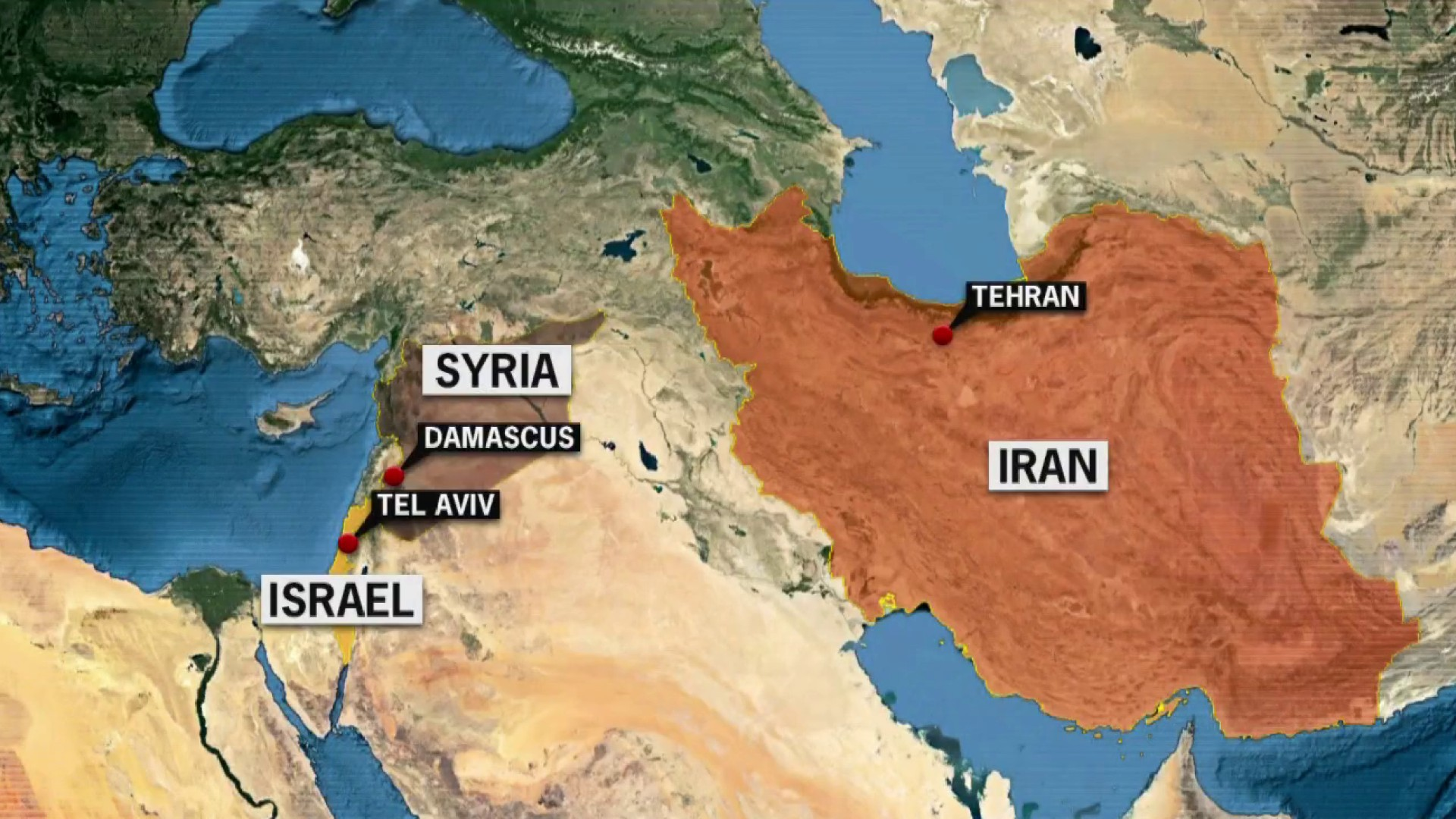
Iran has launched a wave of retaliatory strikes toward Israel, escalating regional tensions following an alleged Israeli attack on an Iranian embassy in Syria. In response to an alleged attack on its embassy in Syria, Iran has conducted extensive drone and missile strikes targeting Israel, raising concerns about potential regional conflict escalation.
Iran has initiated a series of counterstrikes aimed at Israel, stoking fears of a regional flare-up after what seemed to be an Israeli assault on an Iranian embassy complex in Syria the previous week.
A large number of drones were sent from Iran on Saturday, as reported by a high-ranking official from the US administration to CNN, whereas an officer from the Israeli military estimated the figure at over 100. The Islamic Revolutionary Guard Corps (IRGC) has acknowledged conducting widespread drone strikes on what they call “occupied territories,” according to Iran’s state media.
Both Israeli and Iranian media have reported missile launches as well.
The offensive is anticipated to reach Israel in several hours, stated Daniel Hagari, a spokesperson for the Israel Defense Forces, late Saturday local time. He urged Israelis to stay alert.
In anticipation, public shelters were made accessible in Haifa, a city in northern Israel, and the Israeli transportation ministry announced plans to shut down its airspace at 12:30 a.m. local time. Jordan and Iraq nearby also declared temporary airspace closures.
In the wake of the attack, US President Joe Biden convened a meeting with his national security team, a US official disclosed.
Adrienne Watson, a spokesperson for the US National Security Council, mentioned on Saturday that President Biden is actively liaising with Israeli officials and other global allies and partners, reasserting his unwavering support for Israel’s security.
The retaliation is in response to the bombing of the Iranian embassy complex in Syria earlier this month, which has been attributed to Israel and has heightened fears of an expanded regional conflict.
The airstrike obliterated the consulate building in Damascus, claiming the lives of at least seven officials including high-ranking IRGC commanders Mohammed Reza Zahedi and Mohammad Hadi Haji Rahimi, as per the Iranian foreign ministry.

Zahedi, an influential figure in the IRGC, was the most prominent Iranian official to be assassinated since the US ordered the killing of Gen. Qassem Soleimani in 2020.
Iran’s supreme leader, Ayatollah Ali Khamenei, vowed retaliation for the assault, while President Ebrahim Raisi warned that the strike would not remain unanswered, as reported by IRNA. The Hezbollah group, supported by Iran, also threatened retribution.
Although Israel has not officially admitted to the strike, it suggested that the targeted building was associated with the Quds forces, a unit within the IRGC focusing on foreign operations.
The US had already alerted to a serious and imminent threat of an Iranian counterattack. Following the incident, it was deemed inevitable by US and Israeli officials, prompting the US to deploy additional forces to the Middle East to reinforce regional security and protect its troops.
Israeli Prime Minister Benjamin Netanyahu, in a recent statement, declared that Israel is fully prepared for any direct assaults from Iran, with all defensive systems in place and readiness for any potential scenario.
Netanyahu emphasized Israel’s strong defensive stance, stating, “Whoever harms us, we will harm them. We are prepared to defend ourselves against any threats with a calm and determined approach.”