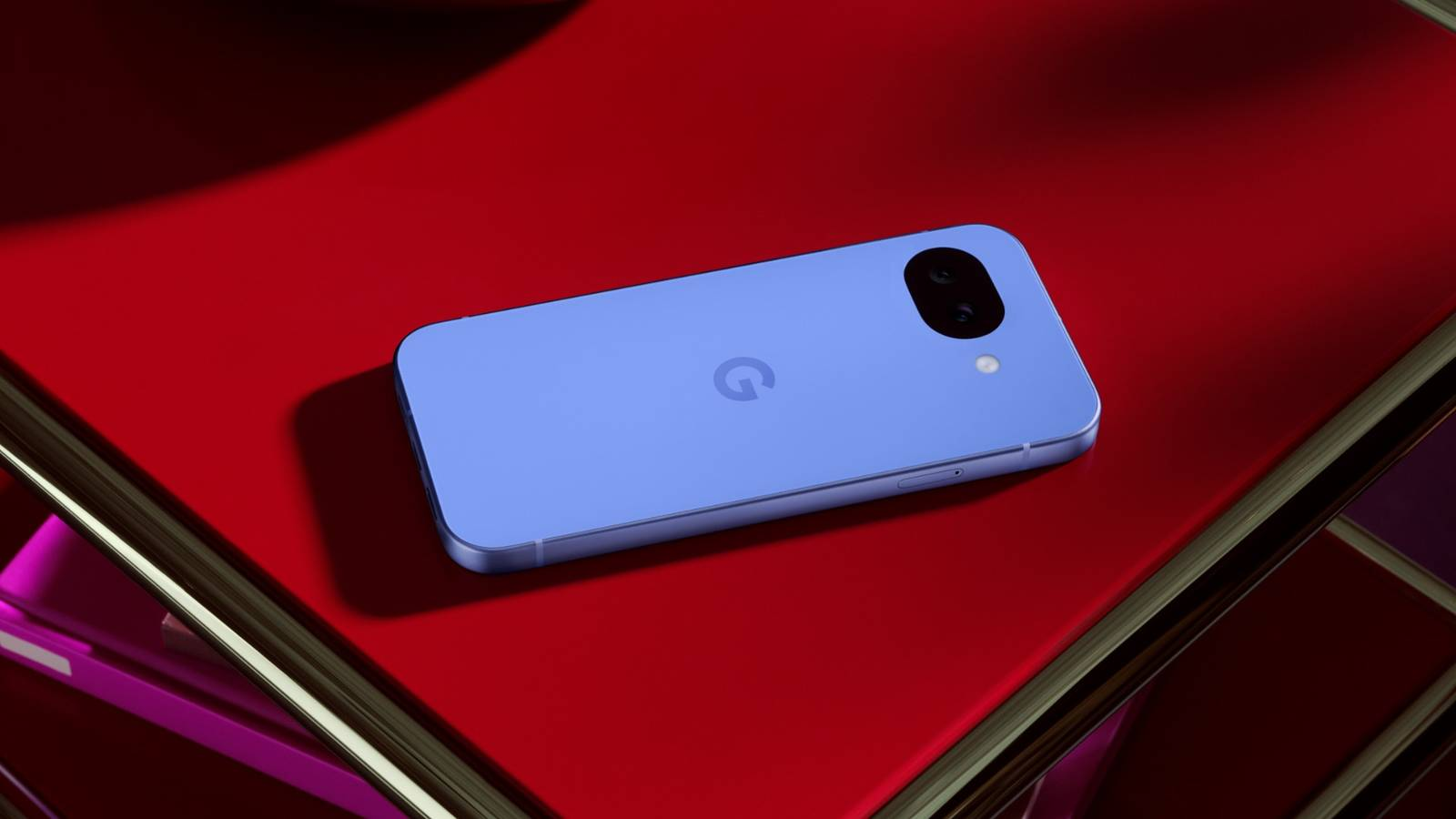
The Google Pixel 10a enters a crowded upper-midrange segment where buyers now expect clear year-over-year improvements or sharper pricing. That puts this phone in a difficult position from the start. The Google Pixel 10a does many things well, but it also arrives looking very close to the Pixel 9a in the areas that matter most.
That does not make it a bad phone. Far from it. It remains a compact, well-built Android handset with excellent software support, a bright display, strong battery life, and a camera system that continues to outperform the hardware on paper. Still, the lack of meaningful hardware progress makes price a central part of the review.
Specifications Table
| Spec | Details |
|---|---|
| Display | 6.3-inch P-OLED, 1080 x 2424, 120Hz, HDR10+, up to 2000 nits HBM, 3000 nits peak |
| Chipset | Google Tensor G4 (4nm), octa-core CPU, Mali-G715 MP7 |
| RAM & Storage | 8GB RAM, 128GB/256GB UFS 3.1, no card slot |
| Rear Camera | 48MP main with OIS + 13MP ultrawide |
| Front Camera | 13MP ultrawide |
| Battery | 5100mAh |
| Charging | 30W wired, 10W wireless, bypass charging |
| OS | Android 16, up to 7 major Android upgrades |
| Build | Gorilla Glass 7i front, aluminum frame, plastic back, IP68 |
| Connectivity | 5G, Wi-Fi 6e, Bluetooth 6.0, NFC, USB-C 3.2, nano-SIM + eSIM, Satellite SOS |
Design and Build Quality
The Google Pixel 10a does not try to reinvent the Pixel formula. It keeps the compact body, the flat surfaces, and the restrained look that now define Google’s A-series. This time, however, the rear camera housing sits flush with the back, which gives the phone a cleaner silhouette and removes the wobble that often comes with raised camera islands.
Build quality is solid. The frame is aluminum, the front now uses Gorilla Glass 7i, and the back remains plastic with a matte finish. That combination does not feel especially luxurious, yet it feels practical and durable. The device is also IP68-rated, which is still valuable at this level.
In hand, the Pixel 10a feels light enough for long use and compact enough for one-handed control. The 183g weight is well distributed, and the body is comfortable to hold. However, the matte finish on both the back and frame reduces grip. As a result, the phone feels slightly slippery. A case may be wise.
Compared with the Pixel 9a, the changes are modest. The phone is fractionally thicker, a bit lighter, and slightly shorter. The more meaningful upgrade is the newer front glass protection. On the other hand, the thick display bezels still make the design look less refined than some rivals.
Display Performance
The Google Pixel 10a uses the same 6.3-inch P-OLED panel size and resolution as its predecessor, and that is not necessarily bad news. It remains a very good display for daily use. The panel is sharp enough at 422ppi, contrast is excellent, and the OLED nature of the screen gives it deep blacks and strong perceived richness.
Brightness is one of the panel’s best qualities. Outdoor visibility is strong, and the automatic brightness behavior appears more than adequate for harsh daylight. That matters more than headline peak numbers, and in real use the display should remain easy to read in most environments.
Color tuning is measured rather than flashy. The screen does not push aggressive saturation, and whites remain fairly neutral. Google also adds Adaptive Tone, which shifts color temperature based on ambient light. It works as intended, though its value will depend on personal preference.
Refresh rate control is less impressive. The phone offers a simple Smooth Display toggle instead of more advanced manual options. With it enabled, the system moves between 60Hz and 120Hz depending on use. The interface feels smooth, but the implementation remains basic next to more premium LTPO-based panels.
Google Pixel 10a Performance and Benchmarks
The Google Pixel 10a runs on the Tensor G4, using one Cortex-X4 core, three Cortex-A720 cores, and four Cortex-A520 efficiency cores. Graphics come from the Mali-G715 MP7. This is a competent setup, but it is no longer fresh. That matters because buyers usually expect a new generation to bring either more speed or better efficiency.
Benchmark results place the Tensor G4 below current flagship silicon and also behind some strong upper-midrange alternatives. CPU performance is decent, but GPU output is clearly more limited. Even so, the Pixel 10a is not slow in any practical sense. It simply does not lead this class on raw numbers.
Google Pixel 10a real-world performance
In daily use, the Pixel 10a feels smoother than its benchmark results suggest. App loading is quick, multitasking remains stable, and Android 16 runs with the kind of clean responsiveness that Pixels usually deliver. That is partly due to Google’s lighter software layer and partly due to good memory management.
Gaming is fine, though clearly not the phone’s main strength. Casual and moderately demanding titles should run well. More demanding games will require reasonable expectations. Frame consistency appears acceptable, but this is not a phone built for sustained high-end performance. It is more comfortable with balanced settings than with performance-first profiles.
The 8GB RAM and UFS 3.1 storage are enough for the category, though not especially forward-looking. That means the phone should remain comfortable for general use, but it may not feel as future-proof as some similarly priced alternatives with stronger hardware.
Google Pixel 10a thermal performance
Thermal behavior is reasonably controlled. Under heavier sustained load, the phone gets warm, but it does not seem to become uncomfortably hot. Throttling down to around 70% under stress is visible, yet not severe for this tier.
That makes the Google Pixel 10a more predictable than impressive. It does not chase top-end performance, but it also avoids major instability. For the average user, that is probably the right compromise.
Camera Performance
The Google Pixel 10a keeps a familiar setup with a 48MP main camera, a 13MP ultrawide, and a 13MP front camera. On paper, the hardware looks modest. In practice, Google’s image processing still gives it an advantage in consistency.
This is not a camera phone built on sensor size or zoom reach. Instead, it leans on reliable exposure, strong HDR behavior, natural color handling, and good everyday usability. That approach still works.
Google Pixel 10a main camera analysis
The main camera uses a 1/2.0-inch sensor with 0.8µm pixels and Quad Bayer processing. In normal output, it bins pixels for better light gathering and cleaner files. Results in daylight are generally strong. Detail is good, dynamic range is excellent, and white balance tends to stay accurate.
The rendering style is slightly processed, especially in fine textures, but not aggressively so. Google still prefers balance over drama. Colors look realistic, if a little restrained, and highlights are handled well even in difficult scenes.
Portraits are decent, though not flawless. Skin tones remain believable, but subject separation can look inconsistent in more complex scenes. Hair, glasses, and layered backgrounds still reveal the limits of the software blur.
Close focusing is a genuine strength. The main sensor can focus unusually close, which gives the phone more flexibility than expected when shooting small subjects.
Google Pixel 10a low-light performance
Low-light performance is another strong area. The main camera exposes scenes well, keeps a broad dynamic range, and avoids badly blown highlights around lamps and signs. Noise is visible in darker parts of the frame, but not to the point of ruining the image.
Night Sight can improve darker scenes, especially in shadow detail, though the difference is not always dramatic. That suggests the regular auto mode is already doing competent work. At 2x zoom, detail becomes more artificial and noise rises, but results remain better than many midrange rivals.
The ultrawide camera is less flexible because it lacks autofocus. In daylight it does well with distant subjects. At night it still produces usable images with decent exposure, although sharpness and noise control are clearly weaker than the main camera.
Selfies are good at normal shooting distance. Detail is respectable, colors are pleasing, and dynamic range is wide. Fixed focus, however, means the front camera is less forgiving if you move too close.
Google Pixel 10a video performance
Video recording reaches 4K60 on the main camera, while the ultrawide and selfie cameras top out at 4K30. There is no HDR video recording and no 24fps option. That makes the feature set functional, but not especially ambitious.
Daylight footage from the main camera is very good. Dynamic range is strong, colors remain stable, and detail holds up well. The 2x crop is less convincing, but still usable. The ultrawide is solid in good light, though less detailed.
Stabilization is one of the phone’s best video traits. Handheld clips look very steady, and walking footage is smoother than expected for this class. Low-light video is less impressive. The main camera remains usable, but shadows get muddy and the ultrawide softens noticeably.
Battery and Charging
Battery life is one of the Google Pixel 10a’s biggest strengths. The 5100mAh battery delivers clearly stronger endurance than expected, especially considering how similar the rest of the hardware is to the previous model. Real-world use should easily stretch through a full day for heavy users and often beyond that for lighter users.
Streaming and mixed use appear to benefit the most. That suggests Google may have improved display efficiency or general power tuning. Whatever the reason, the result is one of the better battery performances in this compact size range.
Charging improves to 30W wired and 10W wireless. However, the actual speed remains only moderately competitive. A 30-minute charge reaching just over half is acceptable, while a full charge time of around 89 minutes feels average rather than quick.
Charging heat appears controlled, and Google includes useful battery-care tools such as adaptive charging and an 80% charge limit. That supports long-term battery health, which matters for a phone designed around seven years of software support.
Software and User Experience
Software remains one of the Pixel 10a’s biggest selling points. It ships with Android 16 and comes with seven major Android upgrades plus seven years of security patches. That kind of support still stands out.
The interface remains close to stock Android in visual style, though Google has steadily added Pixel-specific intelligence and utility tools. Some of the newer AI features will matter more to some users than others, and a few remain region-dependent. Still, the core user experience stays clean and coherent.
UI fluidity is strong. Animations are smooth, navigation is straightforward, and the phone feels uncluttered. There is little traditional bloatware, which helps the Pixel age better than heavily skinned Android phones.
That said, software support length alone does not guarantee perfect long-term performance. The Tensor G4 is already not a standout chip in 2026, so Google’s optimization work will play a big role in how well this phone ages.
Connectivity and Extras
The Google Pixel 10a covers the modern essentials well. You get 5G, Wi-Fi 6e, Bluetooth 6.0, NFC, dual-SIM support through nano-SIM and eSIM, and USB-C 3.2. Satellite SOS is also included, though real-world usefulness depends on regional support.
The optical in-display fingerprint scanner works reliably, even if it is not the fastest in the class. The broader sensor package is complete enough, including barometer support, which is still nice to see.
There are also a few missing features worth noting. There is no microSD slot, no 3.5mm headphone jack, and no FM radio. These are common omissions, but they still affect value depending on your priorities.
Audio and Multimedia
The stereo speakers perform well. Loudness is good, while tuning seems more important here than raw volume. The sound is fuller than expected, vocals are clear, and there is enough low-end presence to stop the phone from sounding thin.
That makes the Pixel 10a a pleasant device for streaming video, casual gaming, and podcasts. The bright OLED screen helps too. The lack of a headphone jack remains the only obvious audio limitation.
Competition and Market Position
The Pixel 10a’s biggest rival is the Pixel 9a. That is a problem for Google because the newer phone changes very little while costing noticeably more. Unless the updated glass, improved charging, and a few software refinements matter a lot to you, the Pixel 9a remains the more rational choice.
The standard Pixel 9 is another issue. In some markets it costs about the same and offers a more premium overall package, including better camera hardware. That makes the Pixel 10a feel squeezed from above and below.
Beyond Google, the Galaxy S25 and Xiaomi 15 become serious threats when discounted. Both offer stronger chips, more advanced displays, and in some cases more versatile imaging systems. The iPhone 17e is a more direct cross-platform rival, though the Pixel 10a answers back with a 120Hz display and an ultrawide camera.
So the Google Pixel 10a sits in an awkward place. It is a strong compact Android phone, but not an obvious value leader. Its market position depends heavily on real street pricing rather than launch price.
Verdict
The Pixel 10a is a good phone with very few outright weaknesses. It delivers a clean Android experience, strong endurance, dependable cameras, solid speakers, and long software support in a compact body that remains easy to live with.
The issue is not quality. The issue is value. The phone does not move far enough from the Pixel 9a to justify its position at launch. That makes it harder to recommend without a price drop.
Why This Phone Matters in Africa
The Pixel 10a has several traits that matter in African markets. Battery reliability is one of them. A phone that can comfortably last through a full day is more useful in places where long commutes, unstable power, or heavy mobile-first use are common.
Network support also matters. The phone brings modern connectivity, but buyers should still confirm the exact variant for local 5G compatibility. That is especially important with Pixel devices because regional support can vary more than on Samsung phones.
Price sensitivity is the biggest factor. At full price, the Pixel 10a will be difficult to justify for many buyers in Africa. A discounted Pixel 9a or a used flagship may offer better value. Repair and resale are also mixed. Pixel resale can be decent among enthusiasts and urban buyers, but spare parts and service access are often less predictable than with more widely distributed brands.
Final Thoughts
The Pixel 10a makes the most sense for buyers who want a compact Android phone with clean software, reliable cameras, excellent battery life, and long support. It is also a reasonable upgrade for users coming from much older Pixels, where the gains in display quality, battery life, and software longevity will feel more substantial.
Those who care most about value for money, gaming power, or premium hardware should look elsewhere first. The Pixel 9a remains the smarter buy in Google’s own lineup, while discounted flagships around this price point are hard to ignore. The Google Pixel 10a is a solid phone, but it needs a lower real-world price to become an easy recommendation.
The Review
google store
The Google Pixel 10a is a good choice for users who want a compact Android phone with clean software, strong cameras, long battery life, and extended support. It’s especially worthwhile for those upgrading from older Pixel models.However, it’s not the best option for value, gaming performance, or premium hardware. The Google Pixel 9a offers better value, and discounted flagship phones are strong alternatives. Overall, the Pixel 10a is solid but would be easier to recommend at a lower price.
PROS
- Compact and comfortable to use
- Bright 120Hz OLED display
- Strong battery life
- Reliable all-round cameras
- Very good video stabilization
- Clean Android experience
- Seven years of software support
- Good stereo speakers
- IP68 water and dust resistance
CONS
- Too similar to the Pixel 9a
- Launch pricing hurts value for money
- Tensor G4 is no longer fresh
- Thick bezels make the design look dated
- Plastic back feels less premium
- Charging is only average
- Limited refresh rate controls
- No headphone jack or microSD support
 Google