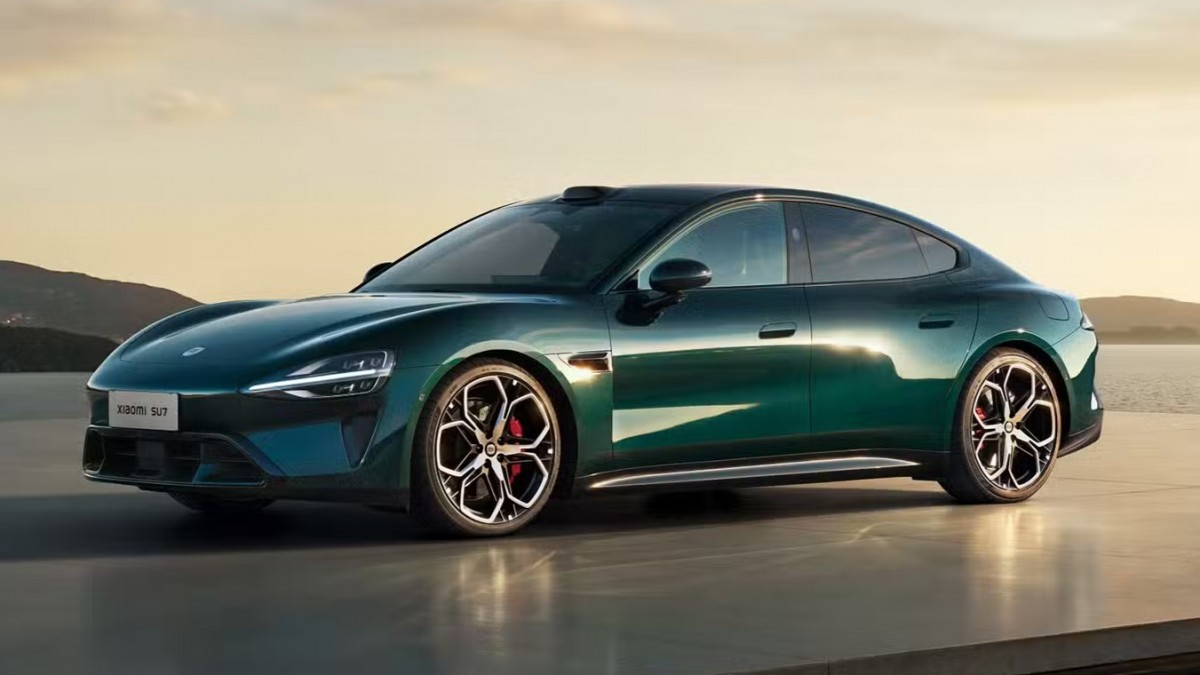
The Xiaomi SU7 Upgrade marks the Chinese tech giant’s most serious attempt yet to prove it can compete with established electric vehicle makers on engineering depth, not just software polish.
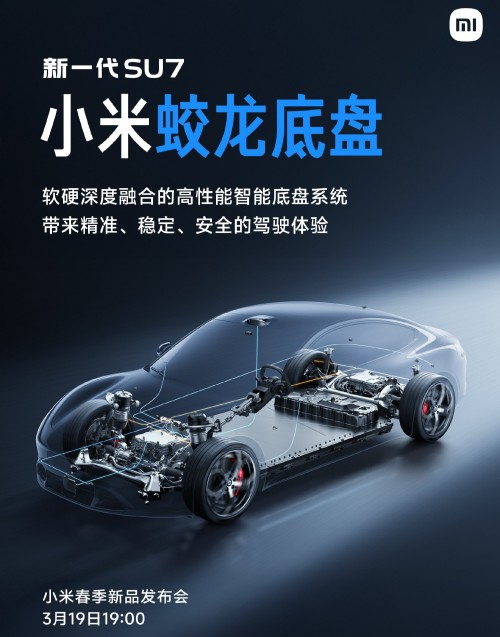
Set to officially launch on March 19, the refreshed SU7 looks largely unchanged from the outside. However, beneath the sheet metal, Xiaomi has reworked the chassis, braking systems, and structural safety. The message is clear: performance and protection now sit at the centre of the brand’s EV ambitions.
Xiaomi SU7 Upgrade Focuses on Driving Dynamics
The most significant engineering change comes in the suspension system.
The Pro and Max variants now feature a closed dual-chamber air suspension paired with Continuous Damping Control. This setup allows the car to automatically adjust ride height and stiffness depending on speed and road conditions.
In city traffic, the system softens for comfort. On highways or during aggressive cornering, it stiffens to improve stability. As a result, Xiaomi aims to deliver both luxury ride quality and sharper handling in one package.
Notably, this places the SU7 closer to premium European EV rivals rather than entry-level electric sedans.
Braking and Grip See Major Enhancements
The Xiaomi SU7 Upgrade also improves stopping power.
Standard models now include four-piston fixed front calipers. Meanwhile, the Max version adopts Brembo braking hardware, along with drilled and ventilated discs for better heat dissipation.
Wider tires further enhance grip:
Front: 245mm
Rear: 265mm
This configuration increases contact with the road surface, improving high-speed stability and cornering precision.
Consequently, Xiaomi appears to be targeting performance-minded drivers, not just urban commuters.
Structural Reinforcement for Battery Safety
Battery protection has become a defining issue in EV design. Therefore, Xiaomi strengthened the SU7’s body structure.
The refreshed model uses ultra-high-strength 2200 MPa steel in critical zones. A 1500 MPa crossbeam shields the battery pack, while a new underbody coating reportedly increases impact resistance tenfold.
Nine airbags now come standard, including additional rear passenger protection.
These changes reflect industry lessons learned from past EV crash incidents globally.
Performance and Charging Architecture
Power remains a core selling point.
The Standard model produces 320 horsepower. The Max variant reaches up to 690 horsepower using Xiaomi’s V6s Plus electric motors.
High-voltage architecture also improves charging efficiency:
Standard and Pro: 752V system
Max: 897V system
Higher voltage allows faster energy transfer, reducing charging times.
Range and Efficiency Gains
The Xiaomi SU7 Upgrade also improves driving range.
Standard version: 720 km
Pro version: up to 902 km
A drag coefficient of 0.21 enhances aerodynamic efficiency, placing the SU7 among the more slippery electric sedans on the market.
For emerging markets, including parts of Africa where charging networks remain limited, longer range can significantly influence purchasing decisions.
Interior Refinement and Smart Technology
Inside, Xiaomi has refined materials and added practical upgrades.
Triple-redundant door handles ensure entry even during power failure. A new “Midnight Black” interior option joins the lineup. Ambient lighting enhances the premium feel.
Advanced technology remains central. The vehicle includes LiDAR sensors and 4D radar systems to support driver assistance features.
Lei Jun, Xiaomi’s founder, described the update as the result of two years of refinement.
Competitive Positioning in a Crowded EV Market
The Xiaomi SU7 Upgrade arrives as China’s EV market grows increasingly competitive. Brands such as BYD and NIO continue to expand aggressively, while Tesla defends its share.
However, Xiaomi brings a strong consumer electronics ecosystem advantage. Its smartphone and smart home integration could appeal to tech-focused buyers.
For African markets, where Chinese brands already dominate the smartphone sector, Xiaomi’s automotive expansion could mirror that trajectory.
Why This Matters
The Xiaomi SU7 Upgrade shows that tech companies entering the auto industry are moving beyond novelty. Xiaomi is investing in mechanical engineering credibility, not just digital features.
If the model delivers on its performance claims, it may accelerate the convergence between consumer electronics and automotive design.
What Happens Next
The refreshed SU7 will reach showrooms ahead of its March 19 launch. Market reception in China will provide an early signal of Xiaomi’s long-term automotive viability.
Global expansion plans remain unclear. However, if demand holds, Xiaomi could eventually target export markets, including emerging economies.