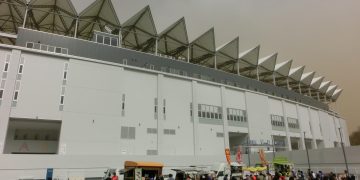
Franso Hariri Stadium is one of Iraq’s most historic football venues and the home ground of Erbil SC. Located in the southern part of Erbil, the stadium opened in 1956 and has undergone several transformations over its long life. Franso Hariri Stadium remains one of the region’s most recognizable sporting landmarks and carries deep cultural and political significance for the Kurdish community.
Stadium Details
| Feature | Information |
|---|---|
| Name | Franso Hariri Stadium |
| Capacity | 28,000 |
| Country | Iraq |
| City | Erbil |
| Home Club | Erbil SC |
| Inauguration | 1956 |
| Renovations | 1992, 2009 |
| Former Name | Erbil Stadium (1956–2001) |
| Naming | Renamed after Governor Franso Hariri |
Early History and Original Design
The stadium was constructed in 1956 during a period of expanding sports infrastructure across Iraq. The site chosen was south of Erbil, one of the oldest continuously inhabited cities in the world. Initially, the venue was planned with a capacity of 40,000 seats, aiming to serve as a major football hub for northern Iraq.
Although renovations in 1992 reduced the capacity to 28,000, the stadium remained one of the country’s largest venues for decades. Its combination of open seating, a classic athletics track, and integrated stands reflected mid-20th century stadium design in the Middle East.
Renaming and Legacy of Franso Hariri
For nearly half a century, the venue was known simply as Erbil Stadium. This changed in 2001 after the assassination of Franso Hariri, the then-governor of Erbil and a highly respected political figure. Hariri played a key role in supporting the stadium’s redevelopment, making the renaming a symbolic tribute to his contributions.
A statue of Hariri was placed opposite the main stand, giving the stadium not only a name but also a visible memorial honoring his legacy and leadership.
Role During Iraq’s Conflicts
In 2009, the national turmoil across Iraq forced the national football team to seek a safer home ground. Although Erbil lies within the autonomous Kurdish region, which maintained relative stability, the decision to host Iraq’s national team matches here was notable. It symbolized both the necessity brought by conflict and the unifying nature of football across Iraq’s diverse regions.
The stadium became an important venue during this period, hosting several international fixtures and domestic competitions while other regions struggled with insecurity.
Renovations and Modernization
Franso Hariri Stadium underwent two significant renovations:
- 1992 Renovation: Capacity reduction to 28,000, improved stands, structural upgrades.
- 2009 Renovation: Upgrades to support hosting national team matches and meet higher sporting standards.
These renovations helped prolong the stadium’s life and maintain its relevance despite the emergence of newer venues in Iraq.
Importance to Erbil SC and Kurdistan Football
As the home of Erbil SC, one of Iraq’s most successful northern teams, the stadium has witnessed league titles, international club competitions, and matches that drew tens of thousands of passionate supporters.
It also stands as a key sporting symbol within the Kurdistan Region of Iraq. Its location, history, and naming reflect the cultural identity and political evolution of Erbil while supporting the growth of football for future generations.
A Stadium of Heritage and Resilience
Today, Franso Hariri Stadium continues to serve as a major football venue and a testament to Erbil’s enduring resilience. With its rich history, memorable matches, and deep symbolic meaning, the stadium remains an essential part of Iraq’s sporting landscape.