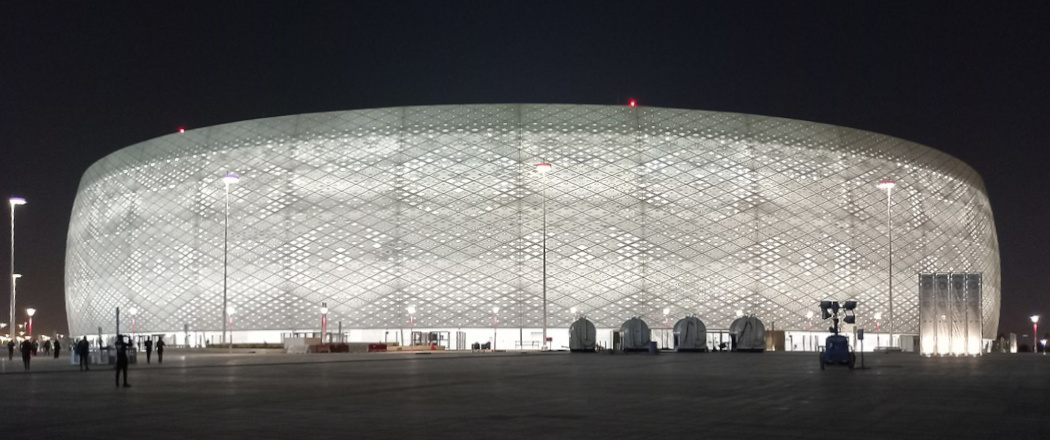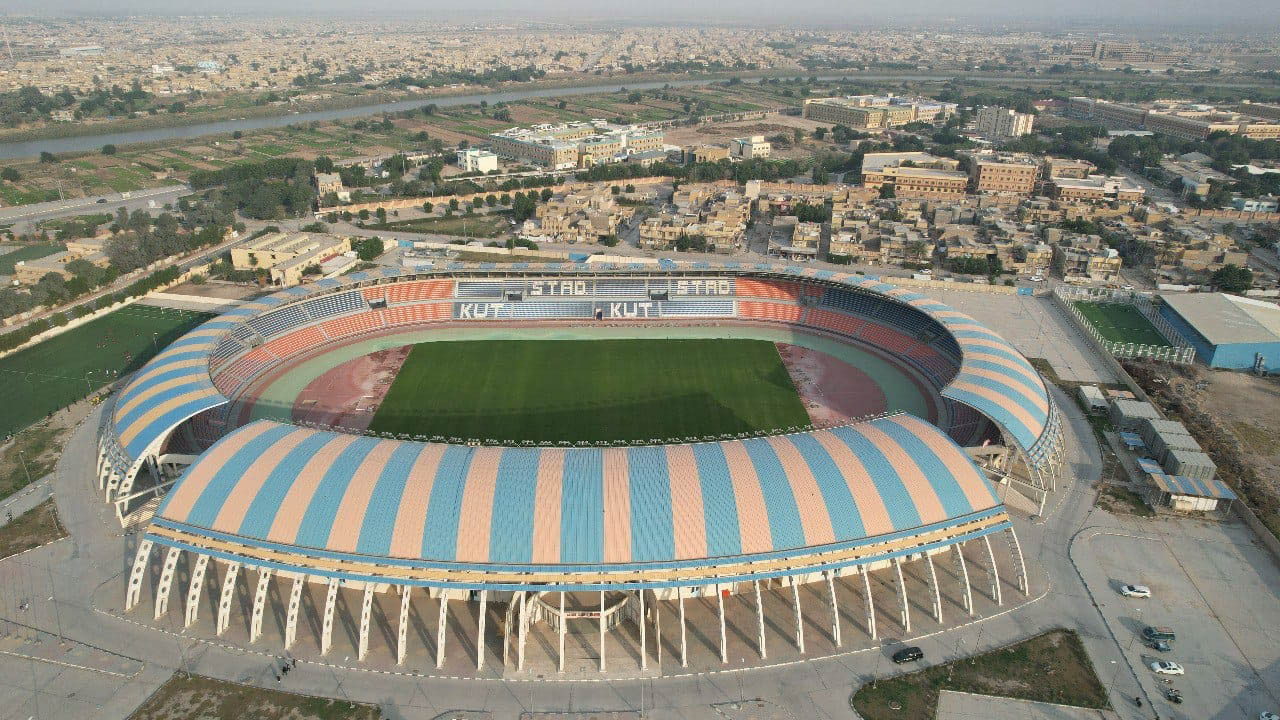
Al-Kut Olympic Stadium is a modern multi-purpose sports venue located in the city of Al-Kut in Iraq’s Wasit Province. Officially inaugurated on 28 July 2018, the 20,000-seat stadium has become an important center for football and athletics in the region. Al-Kut Olympic Stadium serves as the home ground of Al-Kut SC and plays a central role in hosting regional and national competitions.
Stadium Details
| Feature | Information |
|---|---|
| Name | Al-Kut Olympic Stadium |
| Capacity | 20,000 |
| Country | Iraq |
| City | Al-Kut |
| Home Club | Al-Kut SC |
| Inauguration | 28 July 2018 |
| Construction | 2011–2018 |
| Cost | IQD 30 billion |
| Contractors | Al Karama (initial), Sport System (final) |
| Stadium Type | Multi-purpose, includes athletics facilities |
Construction and Project Development
The construction of Al-Kut Olympic Stadium began in 2011 as part of broader national efforts to improve sports infrastructure across Iraq. Initially led by the Iraqi company Al Karama—affiliated with the Ministry of Industry and Minerals—the project was intended to deliver a modern venue capable of serving both football and athletics.
However, the project faced significant slowdowns, funding delays, and interruptions that extended the timeline far beyond initial expectations. By 2016, progress was notably slow, prompting the authorities to seek a new contractor capable of completing the stadium efficiently.
A turning point came when the Italian–Swedish company Sport System was awarded the contract to finalize the remaining work. With a mandate to complete the stadium within eight months, construction rapidly accelerated. This decisive intervention ensured the project reached full completion in 2018.
Inauguration and Opening Match
Al-Kut Olympic Stadium was officially inaugurated on 28 July 2018. The opening match featured Al-Kut SC facing Al-Mosul FC, marking an important moment for local supporters and the Wasit sporting community.
The stadium’s debut symbolized not only the completion of a long-delayed project but also the revitalization of football culture in the city. The venue immediately became a gathering point for fans eager to support their team in a modern sporting environment.
Hosting Major Football Events
While Al-Kut Olympic Stadium functions primarily as the home ground for Al-Kut SC, it has also hosted matches of national significance. One of the most high-profile events played here was the 2019 Iraqi Super Cup on 14 September 2019.
The match featured Al-Zawraa SC and Al-Shorta SC, two of Iraq’s biggest clubs. After a 1–1 draw, Al-Shorta SC secured their first-ever Super Cup title by winning 4–3 on penalties. The successful organization of this event demonstrated the stadium’s readiness to host major competitions.
Stadium Design and Facilities
The venue is designed as a multi-purpose facility, allowing it to host both football matches and athletics events. Key features include:
- A rectangular football pitch surrounded by a standard athletics track
- A seating bowl capable of accommodating 20,000 spectators
- Spectator stands designed with clear viewing angles
- Facilities for athletes, officials, and media
- Modern lighting systems suitable for night matches
This combination of features positions Al-Kut Olympic Stadium as one of the most functional sports venues in eastern Iraq.
Importance to the Community and Region
As the largest stadium in Wasit Province, Al-Kut Olympic Stadium plays a vital role in sports development. It serves as:
- A home venue for Al-Kut SC
- A regional host for national competitions
- A platform for youth sports development
- A public gathering space for major events
The stadium’s presence encourages broader participation in athletics, supports the growth of local clubs, and strengthens community identity through sport.
A Modern Symbol of Wasit’s Sporting Growth
Today, Al-Kut Olympic Stadium stands as a testament to perseverance and strategic investment. Despite years of delays, the completed venue provides a modern, accessible, and community-oriented stadium that enhances Iraq’s broader sports infrastructure.
The stadium’s ability to host high-profile matches and local competitions highlights its value, and it continues to elevate football and athletic development throughout the region.