FIFA has expressed hope that all 16 cities selected to host games for the 2026 World Cup will be prepared to meet the necessary requirements, following comments by U.S. President Donald Trump suggesting that matches could be relocated for security reasons.
Despite the concerns raised by Trump over potential security threats in some host cities, FIFA officials remain optimistic, emphasizing their commitment to ensuring safety and security at all World Cup venues. A FIFA spokesperson confirmed on Wednesday that “safety and security are the top priorities at all FIFA events worldwide,” but also clarified that decisions regarding the safety of cities are ultimately the responsibility of the host governments.
Trump’s Comments on Security Risks for 2026
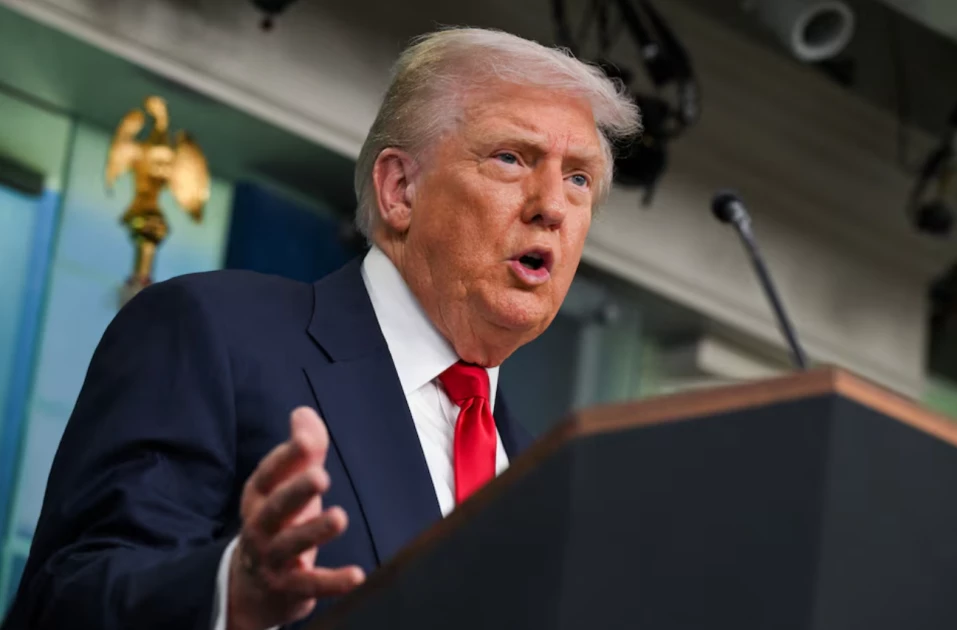
During a recent White House briefing, President Trump hinted that World Cup games could be moved from certain U.S. cities if they fail to meet the required safety standards. Specifically, Trump raised the possibility of relocating matches from Boston, one of the host cities, amidst his ongoing crackdown on crime in Democratic-run cities. “If I feel there’s unsafe conditions, I would call Gianni, the head of FIFA, who’s phenomenal, and I would say, let’s move it to another location,” Trump remarked, suggesting that FIFA could easily accommodate such a request.
The President further implied that this action could extend beyond the World Cup, stating that, if necessary, the 2028 Los Angeles Olympics could also face similar relocations under his administration’s efforts to maintain law and order.
FIFA’s Official Stance on Host City Preparedness
Despite Trump’s remarks, FIFA has remained steadfast in its belief that the 2026 World Cup will proceed as planned in all 16 host cities, including eleven in the United States. “We hope every one of our 16 host cities will be ready to successfully host and fulfill all necessary requirements,” said a FIFA spokesperson. The governing body for world football reiterated that ensuring the safety of the World Cup is the government’s responsibility, with local and national authorities making the final calls on public safety measures.
The 2026 World Cup, which will be jointly hosted by the U.S., Mexico, and Canada, is poised to be the largest in history, featuring 48 teams instead of the usual 32. The U.S. will host the majority of matches, including games in Boston, San Francisco, Seattle, and Los Angeles, which are scheduled to play prominent roles in the tournament.
Looking Ahead: Will Trump’s Security Measures Affect the World Cup?
The comments from President Trump reflect a broader national security agenda and a series of increasingly stringent policies on crime prevention, which have raised concerns about the social and political climate in certain U.S. cities. With the tournament fast approaching, the potential for last-minute changes or relocations remains uncertain. However, both FIFA and U.S. authorities are expected to continue working together to ensure the World Cup’s success and the safety of all participants and attendees.
As the 2026 World Cup draws near, attention will likely shift from these political debates to the excitement of the tournament itself. With 11 U.S. cities set to host a major chunk of the games, the pressure is on local officials to meet FIFA’s standards for infrastructure, security, and hospitality. The world will be watching closely to see if the host cities can rise to the occasion and ensure a seamless and safe experience for players and fans alike.