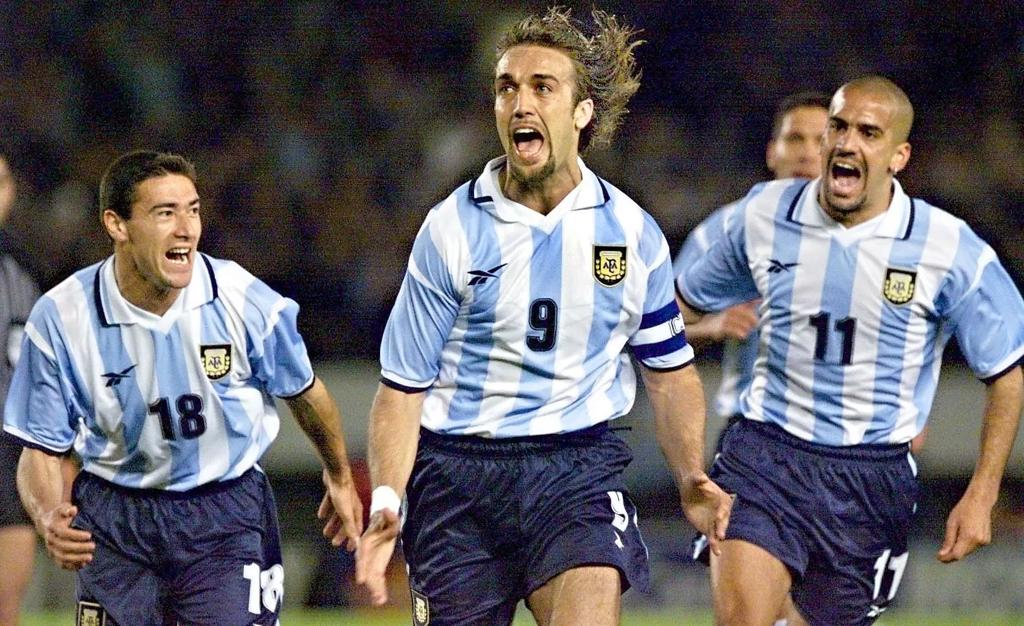
World Cup leading scorers occupy a special place in football history because goals at the FIFA World Cup are not ordinary goals. They are scored under the heaviest pressure, in front of the largest global audience, and often with a nation’s hopes attached to every touch of the ball. A player can dominate club football for years and still leave the World Cup with only a handful of goals. The tournament comes around once every four years, the margins are narrow, and the opportunity to build a record is limited.
That is why the FIFA World Cup all-time leading scorers list is one of the most prestigious records in football. It is not merely a table of numbers. It is a record of players who delivered at the highest international level, across different eras, formats, tactical styles and generations.
The list brings together Lionel Messi, Kylian Mbappe, Miroslav Klose, Ronaldo Nazario, Gerd Muller, Just Fontaine, Pele, Jurgen Klinsmann, Sandor Kocsis, Gabriel Batistuta, Teofilo Cubillas, Harry Kane, Grzegorz Lato, Gary Lineker, Thomas Muller, Helmut Rahn, Ademir, Roberto Baggio, Eusebio, Jairzinho, Paolo Rossi, Karl-Heinz Rummenigge, Uwe Seeler, Vava, Christian Vieri and David Villa.
Each name represents a different version of World Cup greatness. Some players built their records over many tournaments. Others exploded in one unforgettable edition. Some were classic centre-forwards who lived inside the penalty area. Others were wide forwards, second strikers, playmakers or complete attackers. Some won the World Cup. Others never lifted the trophy but still became tournament legends because of their goals.
As of the 2026 FIFA World Cup data, Lionel Messi leads the all-time chart with 18 goals. Kylian Mbappe and Miroslav Klose are level on 16. Brazil legend Ronaldo follows with 15. Gerd Muller has 14, Just Fontaine has 13, and Pele has 12. Behind them, a remarkable group of World Cup icons remain part of the competition’s scoring heritage.
Why World Cup Goals Matter
World Cup goals matter because they are rare. A domestic league season gives a striker dozens of matches. European competitions provide repeated campaigns. The World Cup gives players a short window, often no more than three matches if their country exits at the group stage. Even players from strong nations may only have a few tournaments in their physical prime.
That scarcity makes every goal more valuable. One goal can define a career. One final goal can change a player’s legacy forever. One tournament can turn a talented forward into an immortal name.
The World Cup also tests players in ways club football does not. National teams have less time to prepare. Players must adapt quickly to different teammates, different systems and different opponents. A striker may not receive the same service he gets at club level. A playmaker may face more defensive attention. A winger may be asked to sacrifice attacking freedom for tactical balance.
This is why the all-time scoring list includes different types of greatness. Miroslav Klose represents consistency across tournaments. Just Fontaine represents the greatest single-tournament scoring explosion. Ronaldo represents explosive centre-forward brilliance. Messi represents longevity, evolution and all-round attacking influence. Mbappe represents the modern forward: fast, direct, ruthless and built for transition football.
The list is also shaped by national-team strength. Players from Germany, Brazil, Argentina, France, England, Italy and Portugal appear often because their countries regularly progress deep into tournaments. More matches create more chances. But chances alone are never enough. World Cup goals require finishing, timing, nerve and the ability to perform when the entire world is watching.
Here, FIFA lists the leading marksmen in World Cup history.
Lionel Messi: 18 Goals for Argentina
Lionel Messi stands at the top of the FIFA World Cup all-time scoring list with 18 goals in 28 matches for Argentina. His World Cup journey covers six tournaments: 2006, 2010, 2014, 2018, 2022 and 2026.
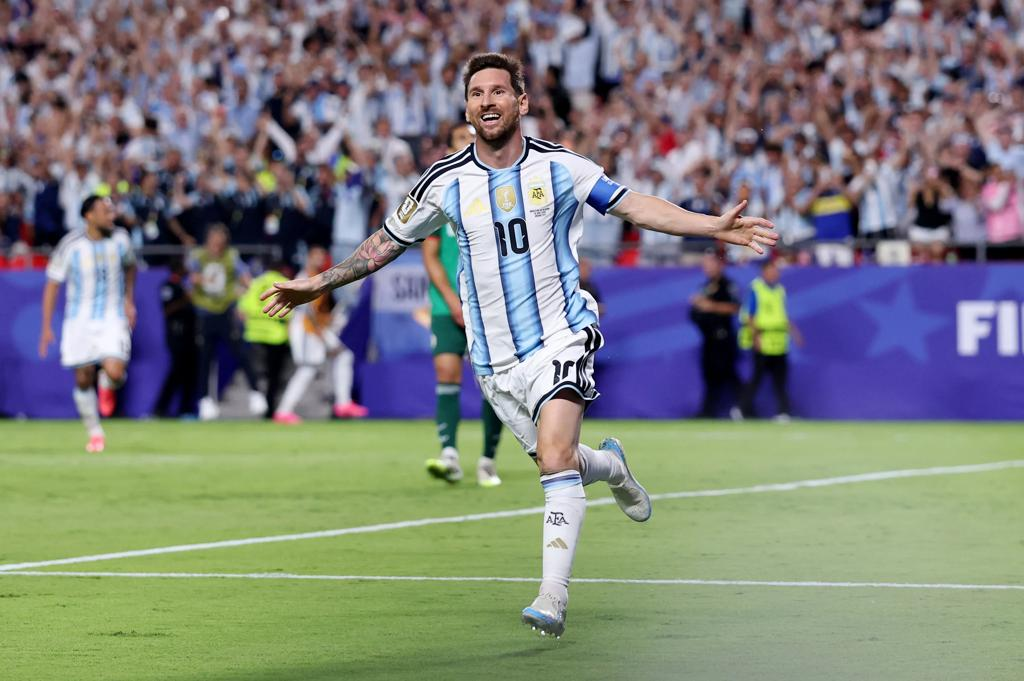
Messi’s rise to the top of the scoring chart is remarkable because he was never a traditional striker. He spent much of his career as a right-sided creator, false nine, number 10, playmaker and free attacking midfielder. Unlike many historic World Cup scorers, Messi did not simply wait inside the penalty area for chances. He built attacks, controlled tempo, created chances and still finished at an elite level.
His first World Cup goal came in 2006, when he was still a teenager. In 2010, he did not score, despite being heavily involved in Argentina’s attacking play. In 2014, he scored four goals and led Argentina to the final. In 2018, he added another goal in a difficult campaign for his country.
The biggest change came in 2022. Messi scored seven goals and led Argentina to the World Cup title. That tournament transformed his international legacy. He scored in the group stage, round of 16, quarter-final, semi-final and final. He was not only Argentina’s scorer but also the emotional and tactical leader of the team.
In 2026, Messi moved beyond the previous record after scoring a hat-trick against Algeria and adding further goals against Austria. That took his World Cup total to 18 and placed him ahead of every player in tournament history.
Messi’s record is powerful because it combines longevity with late-career greatness. Many players decline before their fifth or sixth World Cup. Messi instead produced some of his most important World Cup moments after the age when most forwards have faded from the international stage.
His case as the greatest World Cup scorer is not only based on totals. It is based on the way he scored, the years he covered, the pressure he carried and the fact that he eventually combined individual records with the sport’s biggest trophy.
Lionel Andrés Messi Cuccittini
Position: FW-MF (AM-WM) ▪ Footed: Left
170cm, 67kg (5-7, 148lb)
Born: June 24, 1987 (Age: 38-364d) in Rosario, Argentina ar
National Team: Argentina ar
Club: Inter Miami
Kylian Mbappe: 16 Goals for France
Kylian Mbappe is already one of the greatest World Cup goalscorers in history, with 16 goals in only 16 matches for France. His scoring rate is extraordinary, especially in the modern era, where international football is tactically tight and defenders have more detailed preparation than ever before.
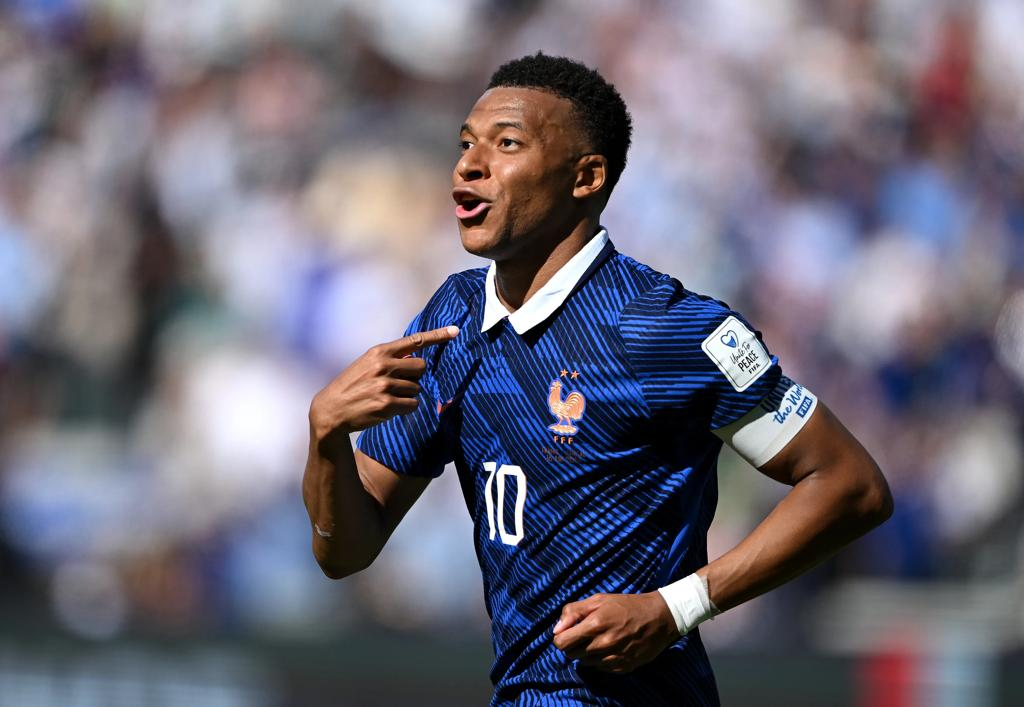
Mbappe’s World Cup story began in 2018, when he helped France win the tournament in Russia. He scored four goals, including one in the final against Croatia. That final goal made him the first teenager since Pele to score in a World Cup final, instantly connecting him to one of football’s most historic names.
In 2022, Mbappe became even more dangerous. He scored eight goals and won the Golden Boot. His hat-trick in the final against Argentina was one of the greatest individual performances in World Cup final history. France lost on penalties, but Mbappe’s display confirmed his status as the leading tournament forward of his generation.
By 2026, Mbappe had moved level with Miroslav Klose on 16 World Cup goals. Back-to-back braces against Senegal and Iraq showed how quickly he can change the scoring table. Few players in World Cup history have climbed so fast.
Mbappe’s style is perfectly suited to modern international football. He is devastating in transition, quick over long distances and clinical in one-on-one situations. He can score from the left, through the middle, from penalties, on counterattacks and from direct runs behind defenders.
Unlike some classic strikers, Mbappe does not need constant penalty-box service. He can create his own shooting situations with pace and timing. His movement forces defenders to retreat, creating space for teammates.
Because he remains active and already has 16 goals, Mbappe is the most obvious threat to Messi’s record. If France continue to reach the later stages of World Cups, he could become the all-time leading scorer before his international career ends.
Kylian Mbappé Lottin
Position: FW-MF ▪ Footed: Right
178cm, 74kg (5-10, 165lb)
Born: December 20, 1998 (Age: 27-185d) in Paris 19 Buttes-Chaumont, France fr
National Team: France fr
Club: Real Madrid
Miroslav Klose: 16 Goals for Germany
Miroslav Klose scored 16 World Cup goals in 24 matches for Germany, a record that stood at the top of the all-time chart before Messi moved ahead and Mbappe drew level.
Klose’s World Cup career covered four tournaments: 2002, 2006, 2010 and 2014. He scored five goals in 2002, five in 2006, four in 2010 and two in 2014. His final tournament ended with Germany winning the World Cup in Brazil, giving his record a fitting team achievement.
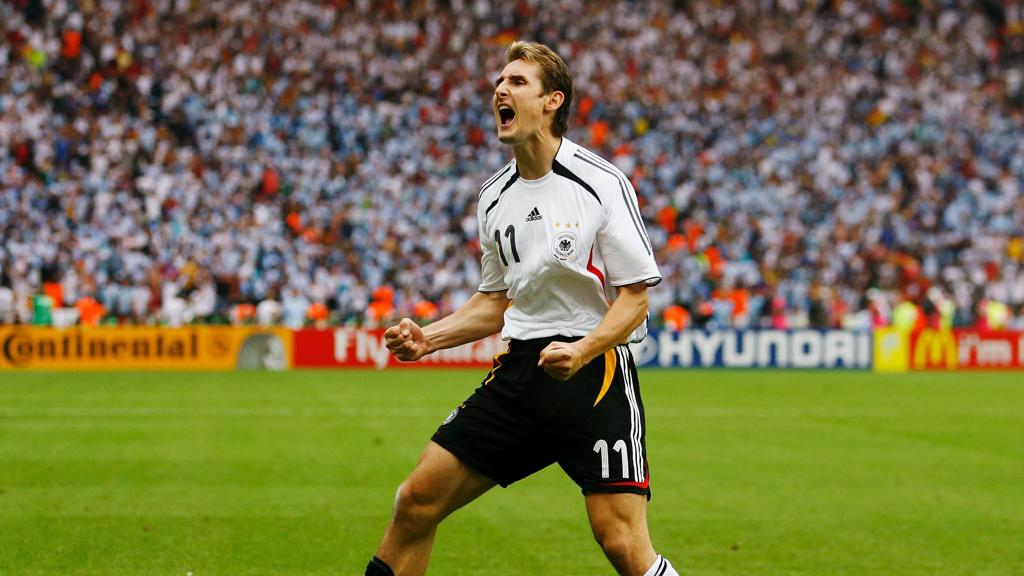
Klose was not the flashiest forward of his era, but he was one of the most intelligent. His game was built on movement, timing, aerial ability and calm finishing. He rarely wasted energy. He knew where to position himself and when to attack space.
Many of his goals looked simple, but that simplicity was the result of elite anticipation. He understood where crosses would arrive, where rebounds might fall and how defenders would react. He was a striker who mastered the details.
Klose also benefited from Germany’s consistency as a tournament team. Germany regularly reached the knockout stages, providing him with more matches. But availability is only part of the story. Klose had to produce across multiple editions, and he did so with remarkable reliability.
His record remains one of the greatest examples of World Cup specialization. At club level, he was respected but not always viewed as the world’s most glamorous striker. At the World Cup, he became a historic figure. That contrast makes his legacy even more interesting.
Klose proves that the World Cup can elevate a player’s global reputation forever. His 16 goals still place him among the greatest tournament scorers the game has ever seen.
Miroslav Josef Klose
Position: FW ▪ Footed: Right
184cm, 83kg (6-½, 185lb)
Born: June 9, 1978 in Opole, Poland pl
National Team: Germany de Other: Poland
Ronaldo: 15 Goals for Brazil
Ronaldo Nazario scored 15 World Cup goals in 19 matches for Brazil across four tournaments: 1994, 1998, 2002 and 2006. He remains one of the most feared strikers in the competition’s history.
Ronaldo was part of Brazil’s 1994 World Cup-winning squad as a teenager, although he did not score in that tournament. His real World Cup impact began in 1998, when he scored four goals and helped Brazil reach the final. That campaign ended painfully with defeat to France, but Ronaldo’s attacking brilliance was already clear.
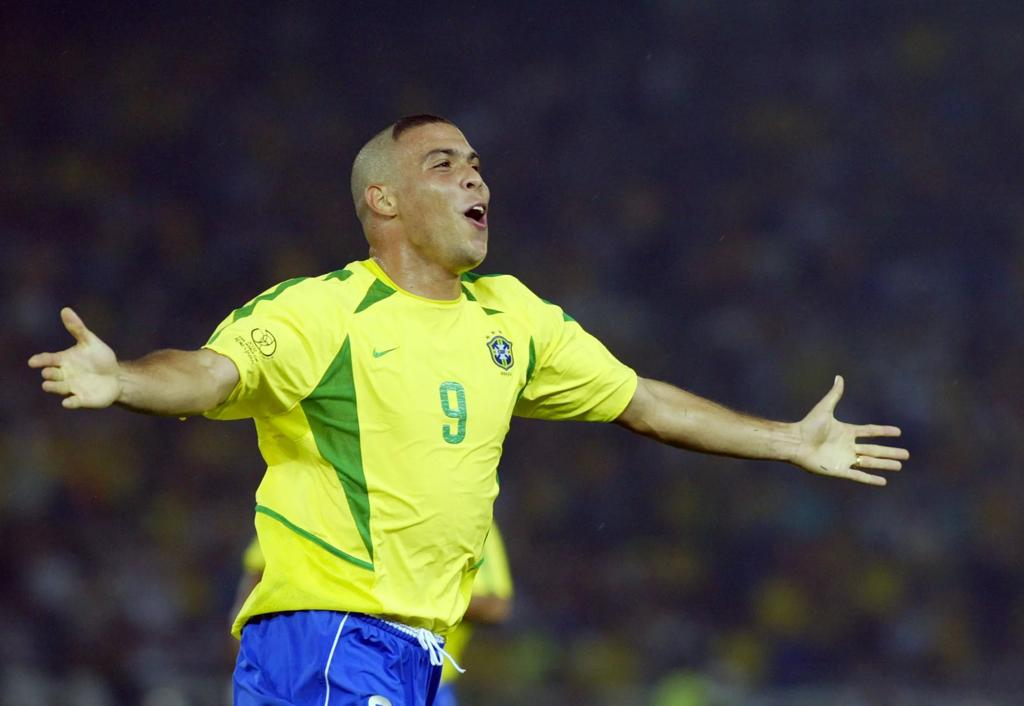
His greatest World Cup came in 2002. After severe injuries had threatened his career, Ronaldo returned to lead Brazil to the title in South Korea and Japan. He scored eight goals, including both goals in the final against Germany. That tournament became one of football’s greatest comeback stories.
Ronaldo added three more goals in 2006, taking his total to 15 and breaking the all-time World Cup scoring record at the time. His mark stood until Klose surpassed it in 2014.
At his peak, Ronaldo was a unique striker. He had the acceleration of a winger, the strength of a centre-forward, the dribbling of a playmaker and the finishing of a natural number nine. Goalkeepers feared him because he could round them, shoot early or change direction at speed.
His World Cup legacy is about more than goals. It is about the feeling he created when he ran at defenders. Ronaldo made centre-forward play look explosive and unstoppable. He remains Brazil’s greatest World Cup striker of the modern era and one of the defining attacking players in tournament history.
Ronaldo Luís Nazário de Lima
Position: FW
183cm, 83kg (6-0, 183lb)
Born: September 22, 1976 in Rio de Janeiro, Brazil br
National Team: Brazil br
Gerd Muller: 14 Goals for West Germany
Gerd Muller scored 14 World Cup goals in only 13 matches for West Germany. His record came across two tournaments: 1970 and 1974.
Muller’s efficiency is astonishing. He scored 10 goals in the 1970 World Cup and added four more in 1974, when West Germany won the tournament. Few players in history have combined such scoring volume with such a short number of matches.
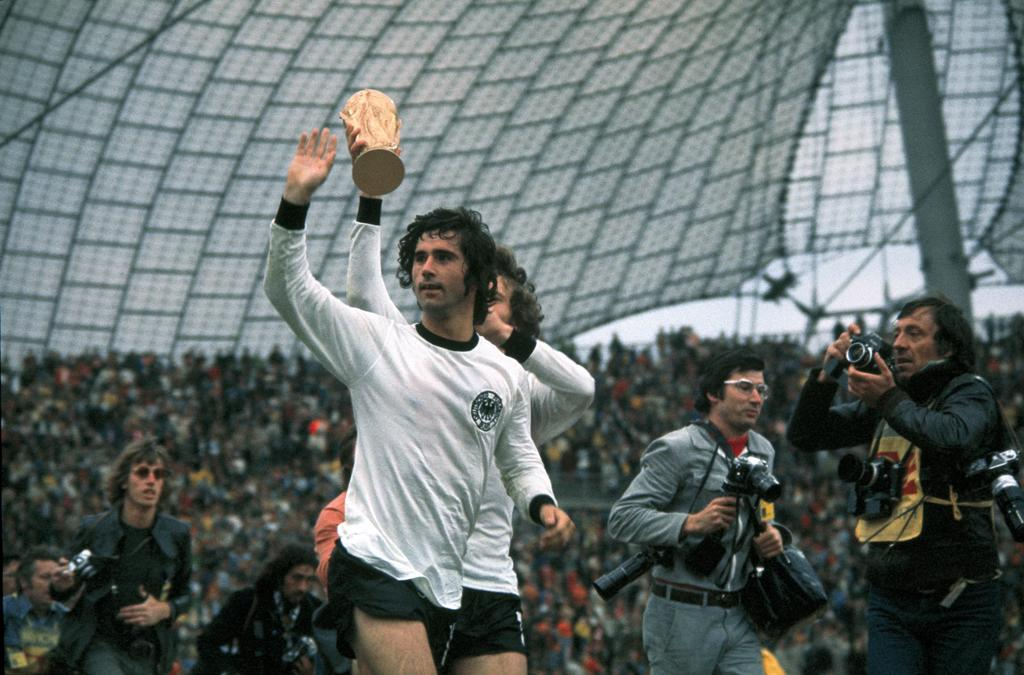
Muller was not a flashy forward. He did not rely on long dribbles or spectacular tricks. His genius was inside the penalty area. He had extraordinary balance, sharp reactions and a natural sense of where the ball would arrive.
Many strikers score when chances are obvious. Muller scored when chances barely existed. He could turn quickly, finish from awkward angles and react faster than defenders. His low centre of gravity helped him create space in crowded penalty areas.
His most famous World Cup moment came in the 1974 final against the Netherlands, when he scored the winning goal. That strike gave West Germany the trophy and confirmed Muller’s place among football’s greatest finishers.
Muller’s 14 goals remain one of the most efficient records in World Cup history. Modern players may pass his total, but very few can match his rate. He is still one of the purest penalty-box scorers the tournament has ever seen.
Just Fontaine: 13 Goals for France
Just Fontaine scored 13 World Cup goals, all in one tournament. His 1958 record remains the greatest single-edition scoring performance in FIFA World Cup history.
Fontaine played only six World Cup matches and scored 13 times. That number is almost unimaginable in modern football. It means he averaged more than two goals per match at the highest international level.
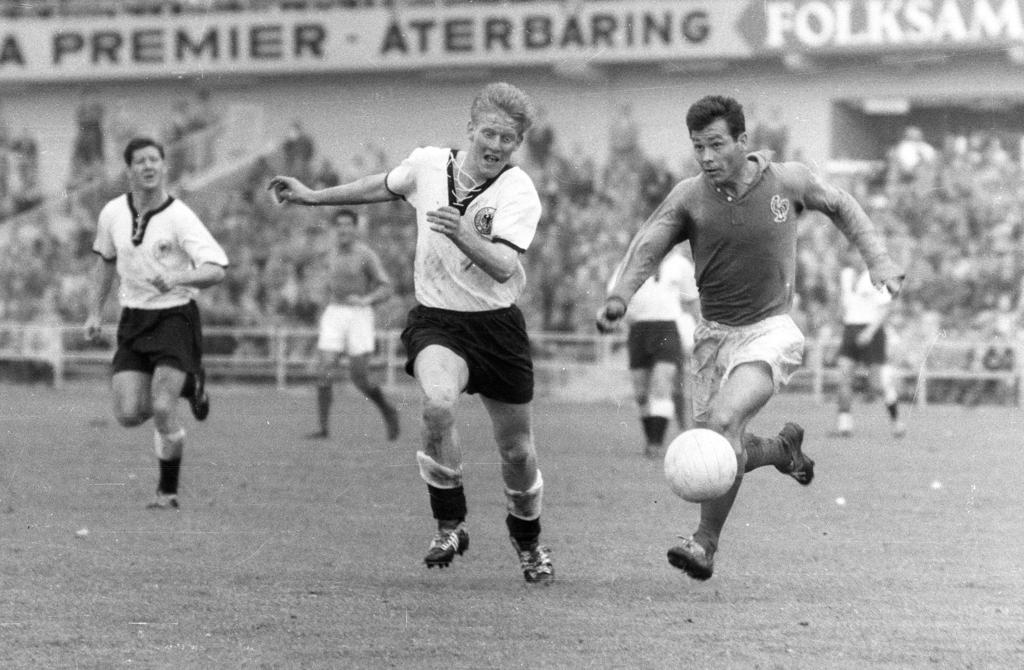
France did not win the 1958 World Cup, but Fontaine became one of the tournament’s immortal names. His movement, composure and finishing made him unstoppable throughout the competition. He scored in different situations and repeatedly punished defensive mistakes.
What makes Fontaine’s achievement so powerful is that it has never been matched. Many great scorers have played several tournaments without reaching 13 goals. Fontaine reached that number in one campaign.
His record shows that World Cup immortality does not always require a long international career or multiple tournaments. One extraordinary month can be enough to secure a permanent place in football history.
Fontaine’s 13-goal tournament is still a benchmark for individual scoring excellence. It remains one of the most famous records in the sport.
Pele: 12 Goals for Brazil
Pele scored 12 World Cup goals in 14 matches for Brazil across four tournaments: 1958, 1962, 1966 and 1970. He remains the only player to win three FIFA World Cups.
Pele’s World Cup story began in 1958, when he was only 17. He scored six goals in that tournament, including decisive goals in the semi-final and final. His performances made him a global star before he had even reached adulthood.
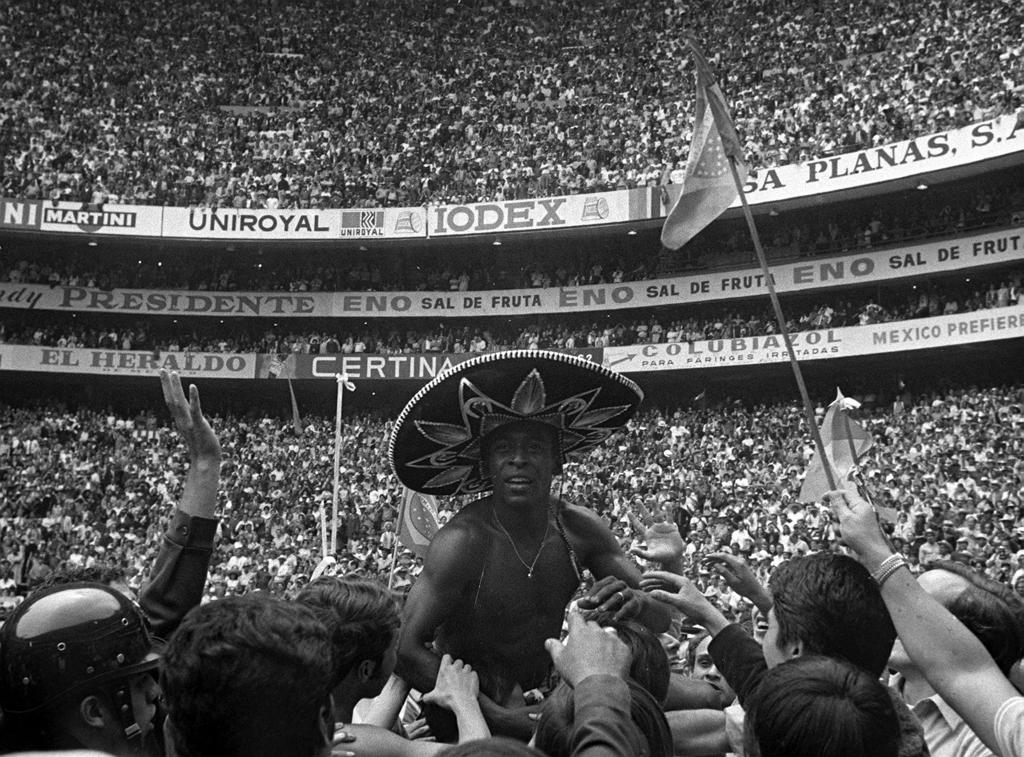
In 1962, Pele scored once before injury limited his role, but Brazil still won the tournament. In 1966, he scored again but was heavily targeted by opponents as Brazil exited early. In 1970, he returned as the leader of one of the greatest teams ever assembled, scoring four goals and helping Brazil win the World Cup in Mexico.
Pele’s scoring record is outstanding, but his World Cup greatness goes beyond goals. He was a complete forward. He could finish, create, dribble, head, combine and lead attacks with imagination. His performance in the 1970 final against Italy remains one of the most iconic displays in football history.
Although he is not at the top of the scoring table, Pele’s overall World Cup legacy is unmatched in many ways because of his three titles. His 12 goals place him among the greatest scorers, but his influence places him among the greatest players the tournament has ever seen.
Jurgen Klinsmann: 11 Goals for Germany
Jurgen Klinsmann scored 11 World Cup goals in 17 matches for West Germany and Germany across three tournaments: 1990, 1994 and 1998.
Klinsmann was part of the West Germany team that won the 1990 World Cup. He scored three goals in that campaign and gave the attack movement, aggression and aerial strength. Four years later, he scored five goals in the 1994 tournament. In 1998, he added three more.
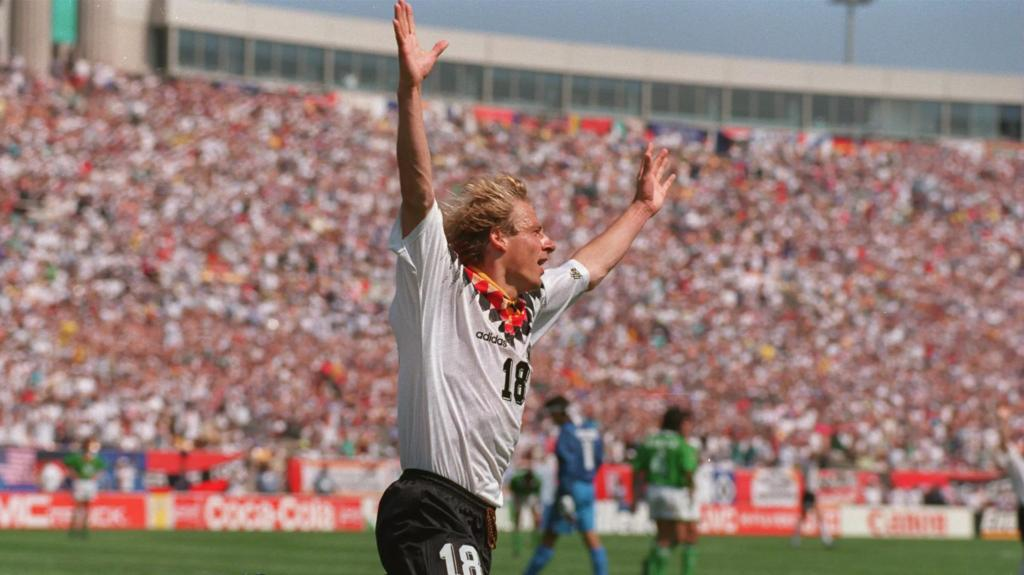
His World Cup record shows consistency across an entire decade. He was not dependent on one tournament. He delivered in different stages of his career and remained a reliable scorer for Germany.
Klinsmann was a forward who attacked space bravely. He was strong in the air, sharp inside the box and capable of finishing under pressure. He also worked hard for the team, pressing defenders and creating space for others.
Germany’s World Cup history is filled with tournament players, and Klinsmann belongs firmly in that tradition. His 11 goals put him above many more celebrated names and confirm his place as one of the competition’s elite forwards.
Sandor Kocsis: 11 Goals for Hungary
Sandor Kocsis scored 11 goals in only five World Cup matches for Hungary in 1954. His scoring rate remains one of the most extraordinary in the tournament’s history.
Kocsis was part of the famous Hungary team known as the Magical Magyars. That side was one of the most advanced attacking teams of its era and entered the 1954 World Cup as a major favourite.
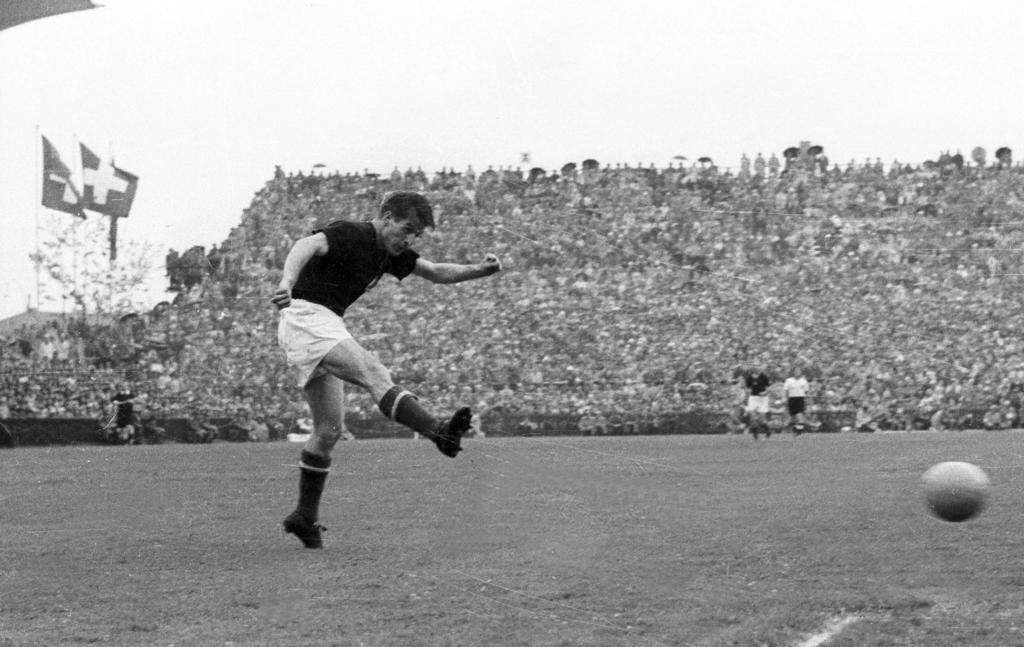
Kocsis became the team’s main scoring force. He was especially dominant in the air, earning a reputation as one of football’s great heading forwards. But he was not only a header of the ball. He had excellent movement, finishing and timing.
His 11 goals in five games show how destructive Hungary’s attack was. Few players have ever scored at such a rate on the World Cup stage.
Hungary reached the final but lost to West Germany in the famous Miracle of Bern. That defeat prevented Kocsis from ending the tournament as a world champion, but it did not diminish his individual achievement.
Like Just Fontaine, Kocsis proves that one tournament can build a permanent legacy. His name remains high on the all-time list despite playing only one World Cup.
Gabriel Batistuta: 10 Goals for Argentina
Gabriel Batistuta scored 10 World Cup goals in 12 matches for Argentina across three tournaments: 1994, 1998 and 2002.
Before Messi moved far ahead in Argentina’s World Cup scoring records, Batistuta was the country’s great modern benchmark. He was a classic number nine: powerful, direct and ruthless.
Batistuta scored four goals in 1994, five in 1998 and one in 2002. His record includes memorable hat-tricks and emphatic finishes. He could score with power from distance, finish first-time chances and dominate defenders physically.
Unlike Messi, Batistuta was not a playmaker. His game was built around finishing. He was the striker Argentina looked to when they needed a decisive touch near goal.
His teams did not reach a World Cup final, which limited his opportunity to build an even larger total. Even so, 10 goals in 12 matches is a superb record.
Batistuta’s place on the list reflects Argentina’s long tradition of elite attackers. He remains one of the greatest pure strikers the country has produced.
Teofilo Cubillas: 10 Goals for Peru
Teofilo Cubillas scored 10 World Cup goals in 13 matches for Peru across three tournaments: 1970, 1978 and 1982.
Cubillas is one of the greatest players in Peruvian football history and one of South America’s finest World Cup performers. He scored five goals in 1970 and five more in 1978, before going scoreless in 1982.
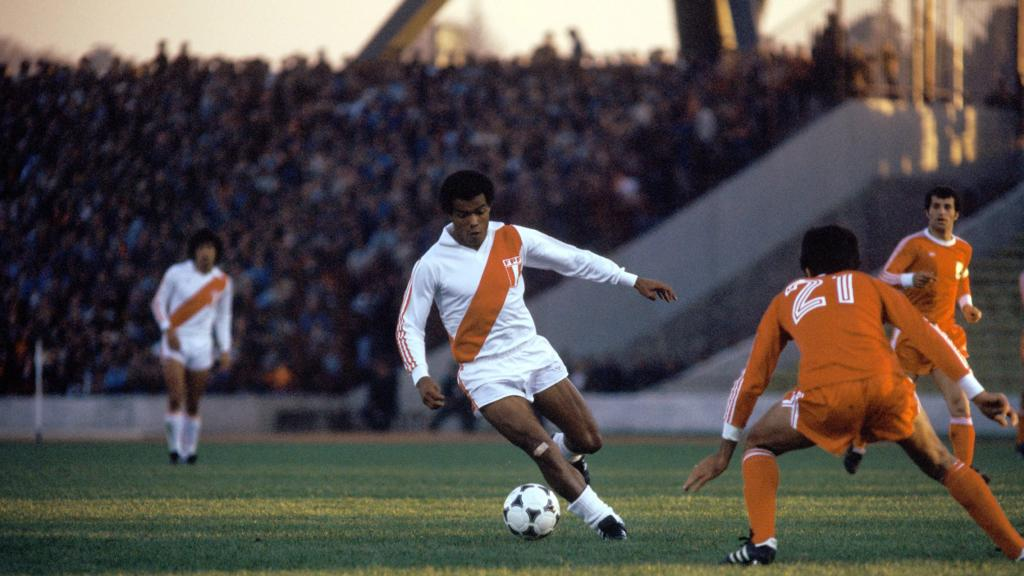
His game combined creativity, technique and goalscoring. He was not a traditional centre-forward. He could operate as an attacking midfielder or forward, influencing play with passing and movement while still arriving in scoring positions.
Cubillas is remembered for his elegant style and ability to produce spectacular goals. His free-kick technique, shooting and intelligence made him one of the standout stars of his era.
Peru have not always been a regular deep-running World Cup nation, which makes Cubillas’s record even more impressive. He reached 10 goals without the repeated knockout-stage opportunities enjoyed by players from more dominant football powers.
His presence on the all-time list shows that World Cup greatness can come from nations outside the usual title favourites.
Harry Kane: 10 Goals for England
Harry Kane has scored 10 World Cup goals in 12 matches for England across three tournaments: 2018, 2022 and 2026.
Kane made his biggest early World Cup impact in 2018, when he scored six goals and won the Golden Boot as England reached the semi-finals. He added two goals in 2022 and two more in 2026, moving into the group of players with 10 World Cup goals.
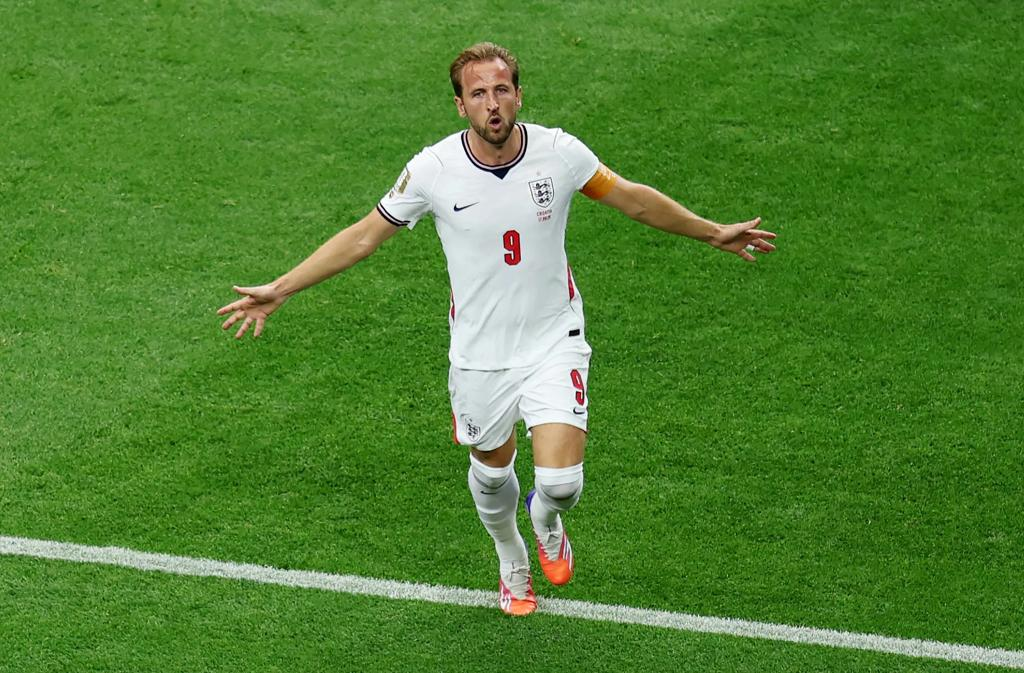
Kane is a modern centre-forward with an unusually broad skill set. He can score from inside the box, take penalties, drop deep to link play and create chances for runners. His movement is intelligent rather than explosive, and he uses positioning to create space.
His World Cup record has made him one of England’s greatest tournament forwards. England have had famous scorers before him, including Gary Lineker, but Kane’s consistency across tournaments places him among the leading global names.
The remaining question around Kane is team success. His scoring record is strong, but World Cup legacy is often shaped by how far a player’s country goes. If England make a deeper run, Kane’s goals could gain even greater historical weight.
Federation: The Football Association
Governing Body: UEFA (Union of European Football Associations)
Men’s Domestic League Champion:  Arsenal
Women’s Domestic League Champion:  Manchester City
Men’s Domestic Cup Champion:  Manchester City
World Cup: 17 appearances; Best Finish: 1st place (1966)
Women’s World Cup: 6 appearances; Best Finish: 2nd place (2023)
Grzegorz Lato: 10 Goals for Poland
Grzegorz Lato scored 10 World Cup goals in 20 matches for Poland across three tournaments: 1974, 1978 and 1982.
Lato’s greatest tournament came in 1974, when he scored seven goals and finished as the top scorer. Poland were one of the surprise powers of that World Cup, playing energetic, direct and effective football.
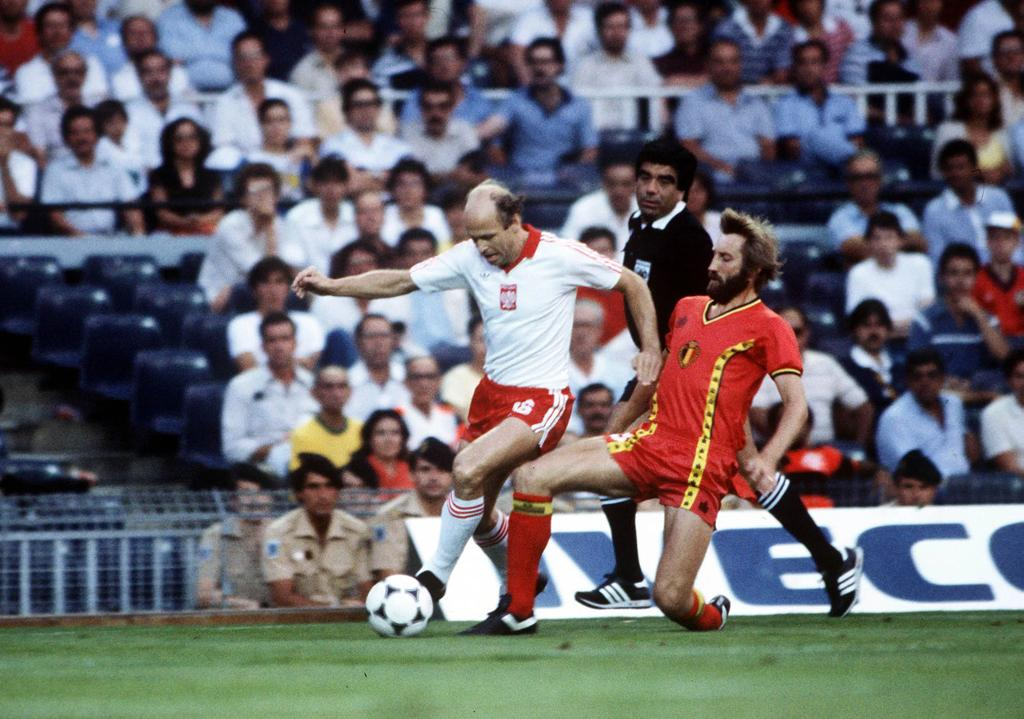
He added two goals in 1978 and one more in 1982. His longevity helped keep Poland competitive across a strong period in the country’s football history.
Lato was known for pace, movement and intelligent attacking runs. He could exploit space behind defences and finish chances efficiently. He was not the most glamorous name on the list, but his World Cup production was outstanding.
Poland’s 1970s and early 1980s sides remain among the strongest in the country’s history, and Lato was central to that era. His 10 goals secure his place among the competition’s most productive players.
Gary Lineker: 10 Goals for England
Gary Lineker scored 10 World Cup goals in 12 matches for England across two tournaments: 1986 and 1990.
Lineker won the Golden Shoe in 1986 after scoring six goals. He added four more in 1990, including a famous equaliser against West Germany in the semi-final. England lost that match on penalties, but Lineker’s role in the tournament remains part of English football memory.
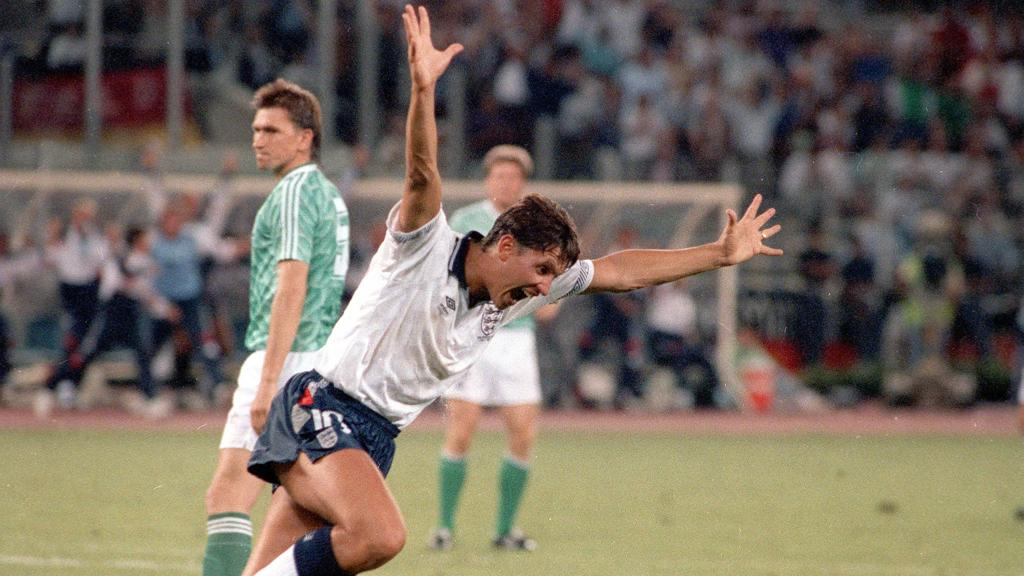
Lineker was a classic penalty-box striker. He relied on timing, anticipation and calm finishing. He was not physically dominant, but he knew how to find space and convert chances.
His record is one of the most efficient in England’s World Cup history. Ten goals in 12 matches is an elite return, especially across only two tournaments.
Lineker’s legacy also shows how World Cup scoring can define a player internationally. He had an excellent club career, but his World Cup goals gave him a permanent place in global football history.
Federation: The Football Association
Governing Body: UEFA (Union of European Football Associations)
Men’s Domestic League Champion: Arsenal
Women’s Domestic League Champion: Manchester City
Men’s Domestic Cup Champion: Manchester City
World Cup: 17 appearances; Best Finish: 1st place (1966)
Women’s World Cup: 6 appearances; Best Finish: 2nd place (2023)
Thomas Muller: 10 Goals for Germany
Thomas Muller scored 10 World Cup goals in 19 matches for Germany across four tournaments: 2010, 2014, 2018 and 2022.
Muller’s World Cup career started brilliantly in 2010, when he scored five goals and won the Golden Boot. He was young, intelligent and unusually difficult to mark. He was not a traditional striker or winger. He operated in spaces that defenders did not expect.
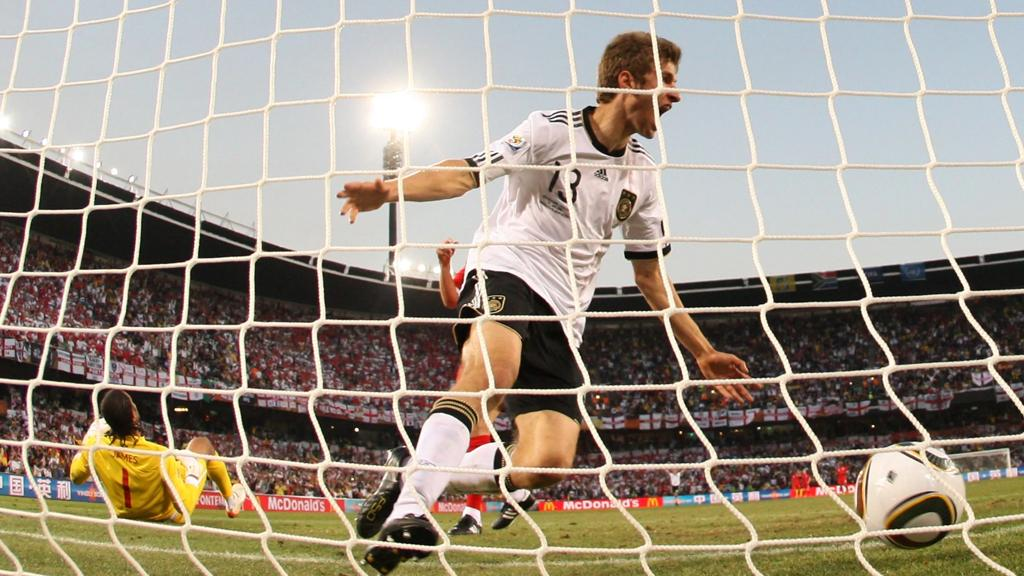
In 2014, Muller scored five more goals and helped Germany win the World Cup. That tournament confirmed him as one of the great modern tournament players.
His later World Cups did not bring more goals, but his early output was enough to place him among the all-time leading scorers.
Muller’s style is built on movement and interpretation of space. He often described his own role through the idea of finding space rather than fitting a fixed position. That made him especially dangerous in tournament football, where small defensive lapses can decide matches.
His 10 goals are a reminder that World Cup scorers are not always classic number nines. Some are intelligent attackers who arrive in the right place at exactly the right time.
Helmut Rahn: 10 Goals for West Germany
Helmut Rahn scored 10 World Cup goals in 10 matches for West Germany across two tournaments: 1954 and 1958.
Rahn is best remembered for his role in the 1954 World Cup final, when West Germany defeated Hungary in the Miracle of Bern. His winning goal became one of the most famous moments in German football history.
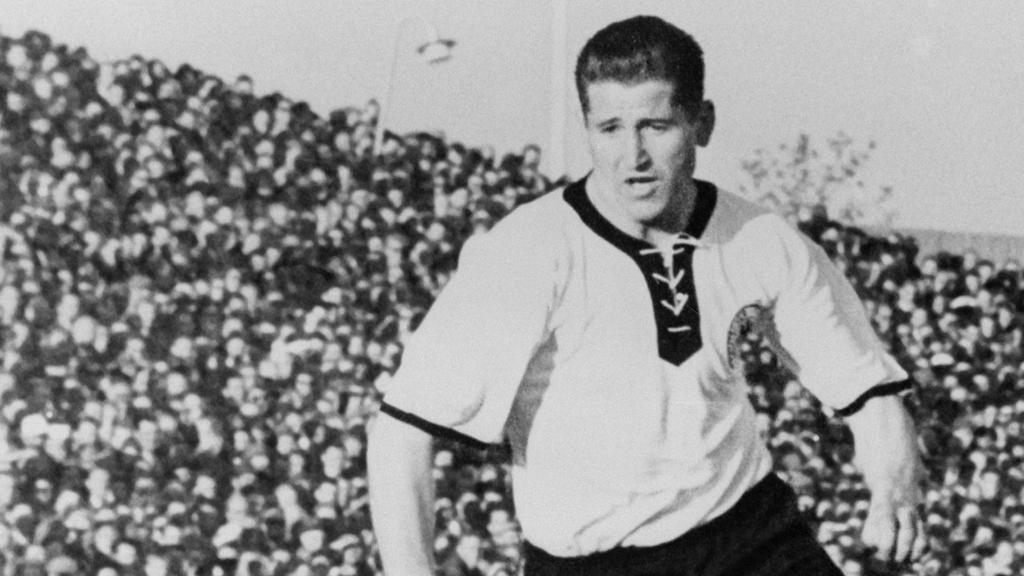
He scored four goals in 1954 and six more in 1958, giving him a perfect goal-per-game record across his World Cup career. That efficiency places him among the most productive scorers in tournament history.
Rahn was a powerful and direct forward with excellent shooting ability. He could score important goals and performed when the pressure was highest.
His legacy is tied not only to his numbers but to one of the World Cup’s most iconic finals. Scoring 10 goals is impressive. Scoring the goal that wins a nation its first World Cup makes the record legendary.
Ademir: Nine Goals for Brazil
Ademir scored nine World Cup goals in six matches for Brazil in 1950.
His tournament came in an era before the modern World Cup format, but his scoring impact remains historic. Brazil hosted the 1950 tournament and entered the final stage as favourites. Ademir was their leading attacking figure.
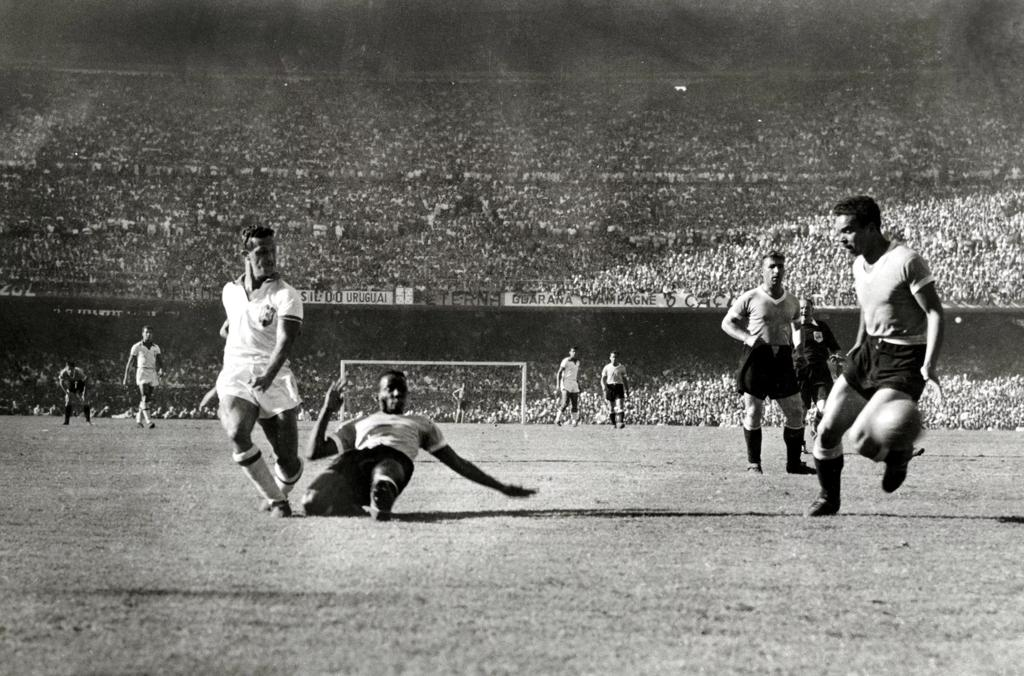
He scored repeatedly during the tournament and finished as its top scorer. His movement, finishing and attacking instincts made him one of the earliest great Brazilian World Cup forwards.
Brazil ultimately suffered heartbreak against Uruguay in the decisive final match at the Maracana. That defeat became one of the most painful moments in Brazilian football history.
Ademir’s individual record remains outstanding despite that team disappointment. Nine goals in six matches is an extraordinary return. His name belongs on the all-time list because he helped establish Brazil’s tradition of producing elite World Cup attackers.
Roberto Baggio: Nine Goals for Italy
Roberto Baggio scored nine World Cup goals in 16 matches for Italy across three tournaments: 1990, 1994 and 1998.
Baggio was one of the most elegant attacking players of his generation. He could play as a second striker or number 10, combining creativity, dribbling and finishing. His World Cup story is remembered for brilliance and heartbreak.
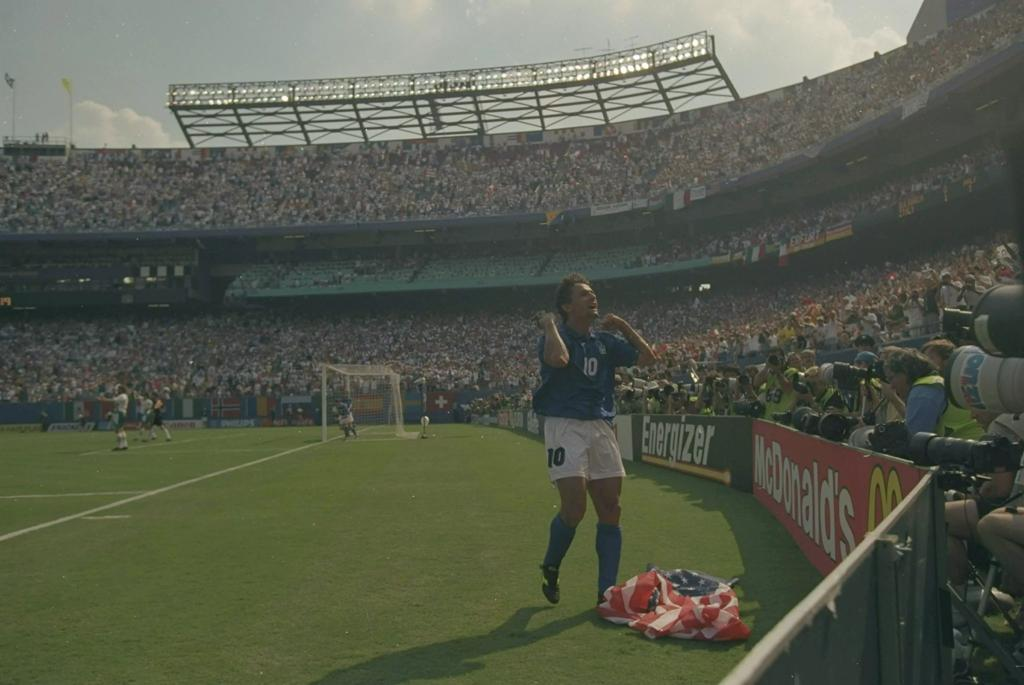
In 1990, he scored two goals as Italy finished third on home soil. In 1994, he scored five and carried Italy to the final with decisive knockout-stage performances. His goals against Nigeria, Spain and Bulgaria were crucial.
The 1994 final ended painfully when Baggio missed the decisive penalty in the shootout against Brazil. That moment became one of the most famous images in World Cup history. Yet it should not overshadow the fact that Italy would not have reached the final without him.
In 1998, Baggio added two more goals, showing his continued tournament quality.
His nine goals reflect a player who combined artistry with end product. Baggio remains one of the most beloved figures in World Cup history because of both his genius and his human vulnerability.
Eusebio: Nine Goals for Portugal
Eusebio scored nine World Cup goals in six matches for Portugal in 1966.
His 1966 tournament remains one of the greatest individual campaigns in World Cup history. Eusebio’s pace, power and finishing made him almost unstoppable. He helped Portugal reach the semi-finals in their first World Cup appearance.
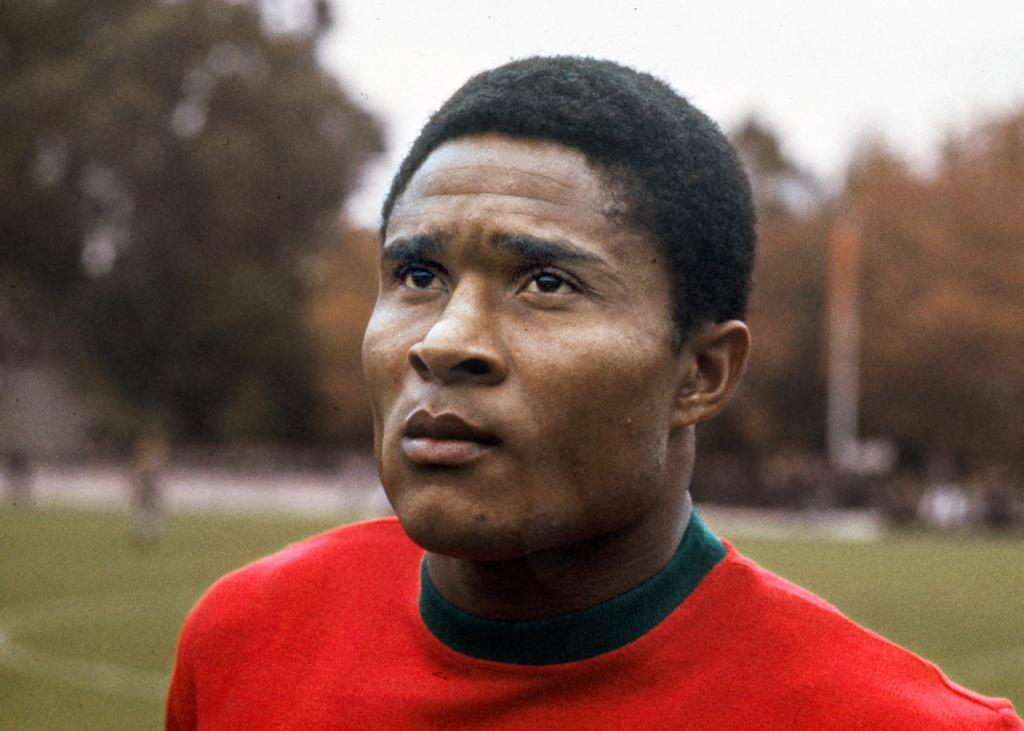
His most famous performance came against North Korea, when Portugal recovered from a three-goal deficit and Eusebio scored four times. That match became one of the tournament’s legendary comebacks.
Eusebio finished as the top scorer of the 1966 World Cup. His nine goals in six matches gave Portugal a global football identity and made him one of the sport’s biggest stars.
He was a forward of rare athleticism and technical quality. He could shoot with ferocious power, carry the ball at speed and finish under pressure.
Although Portugal did not win the tournament, Eusebio’s 1966 campaign remains one of the finest ever produced by a World Cup player.
Jairzinho: Nine Goals for Brazil
Jairzinho scored nine World Cup goals in 16 matches for Brazil across three tournaments: 1966, 1970 and 1974.
He is best remembered for his extraordinary 1970 tournament, when he scored in every match as Brazil won the World Cup in Mexico. That achievement remains one of the most remarkable scoring feats in tournament history.
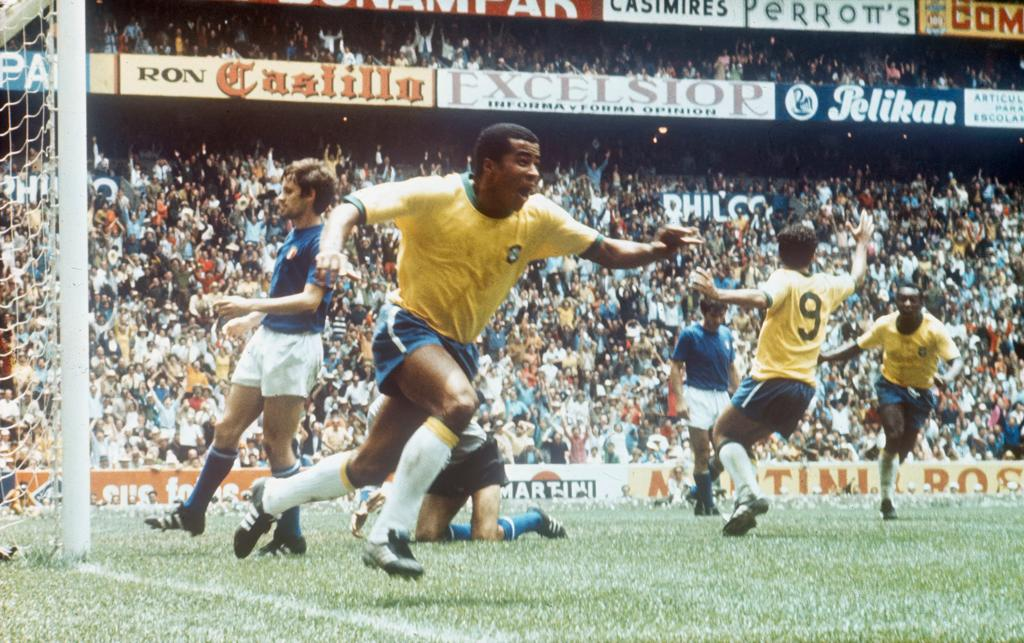
Jairzinho was part of a legendary Brazil attack that included Pele, Tostao, Rivelino and others. In that team, he provided pace, strength and directness from wide areas.
His goal in the 1970 final against Italy was one of the defining moments of Brazil’s triumph. The 1970 side is still regarded as one of the greatest teams in football history, and Jairzinho’s scoring consistency was central to their success.
Unlike some players on the list, Jairzinho was not a pure striker. He often operated from wider areas, which makes his scoring record even more impressive.
His nine World Cup goals and his record of scoring in every game of a winning campaign secure his place among the tournament’s most iconic forwards.
Paolo Rossi: Nine Goals for Italy
Paolo Rossi scored nine World Cup goals in 14 matches for Italy across two tournaments: 1978 and 1982.
Rossi’s legacy is built around the 1982 World Cup, where he became the hero of Italy’s triumph. After a slow start to the tournament, he exploded into form at exactly the right moment.
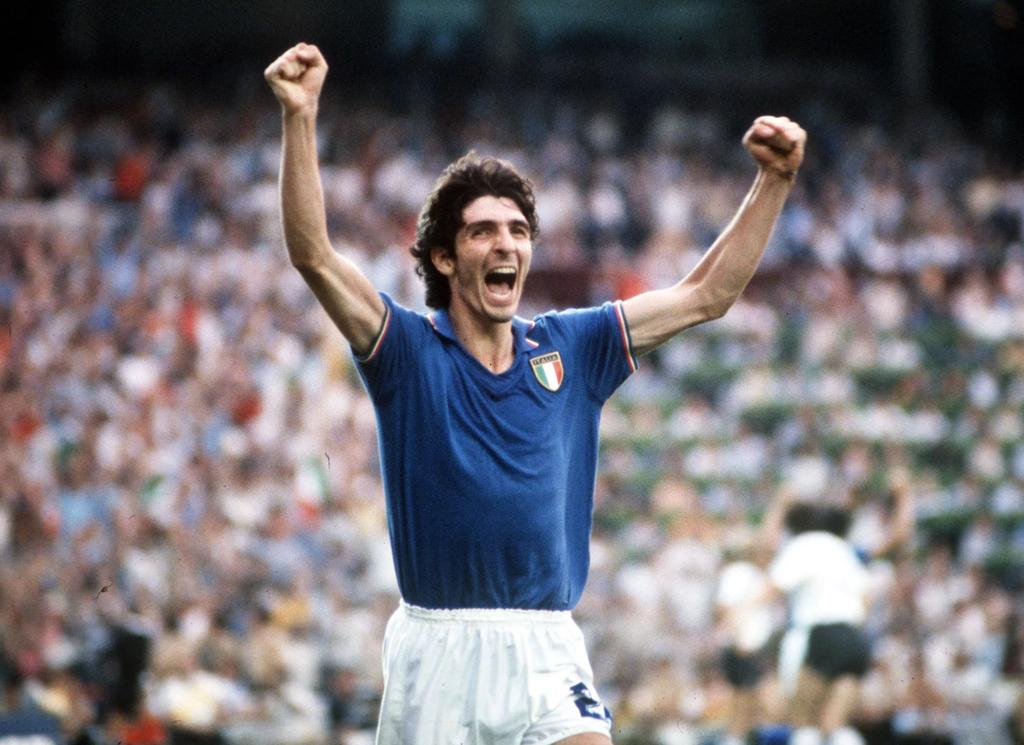
His hat-trick against Brazil in the second group stage is one of the most famous individual performances in World Cup history. Brazil were widely viewed as one of the most talented teams in the tournament, but Rossi’s finishing eliminated them.
He then scored twice in the semi-final against Poland and opened the scoring in the final against West Germany. Italy won the World Cup, and Rossi finished as the tournament’s top scorer.
Rossi was a striker of timing and instinct. He was not physically imposing, but he had a remarkable ability to appear in the right place. His 1982 campaign is a perfect example of a player catching fire in the decisive phase of a tournament.
His nine goals place him among the great World Cup scorers, but the timing of those goals makes his legacy even bigger.
Karl-Heinz Rummenigge: Nine Goals for West Germany
Karl-Heinz Rummenigge scored nine World Cup goals in 19 matches for West Germany across three tournaments: 1978, 1982 and 1986.
Rummenigge was one of the great European forwards of his era. He combined technical quality, athletic movement and intelligent finishing. He was capable of playing as a forward or attacking midfielder, giving West Germany flexibility in attack.
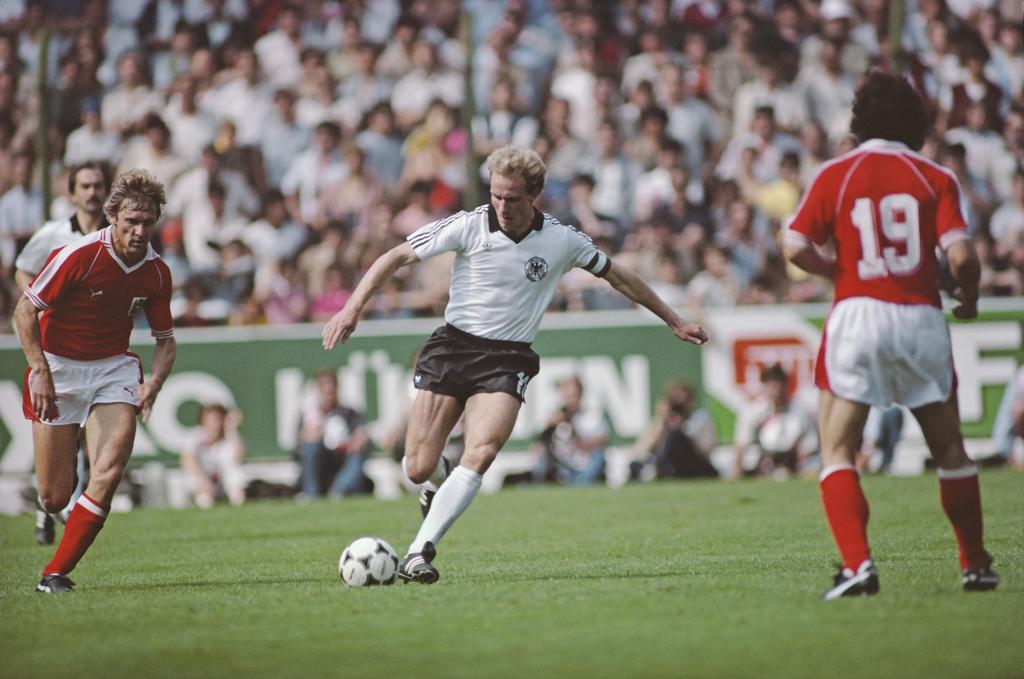
His strongest World Cup scoring return came in 1982, when he scored five goals as West Germany reached the final. He also scored three in 1978 and one in 1986.
Although West Germany did not win the World Cup during his playing career, Rummenigge reached two finals and remained one of their most important attacking players.
His record reflects consistency across three tournaments. He was not a one-edition scorer. He remained dangerous at different stages of his career and against different levels of opposition.
Rummenigge’s nine goals place him among Germany’s long line of elite World Cup performers.
Uwe Seeler: Nine Goals for West Germany
Uwe Seeler scored nine World Cup goals in 21 matches for West Germany across four tournaments: 1958, 1962, 1966 and 1970.
Seeler’s longevity was exceptional. Playing in four World Cups requires fitness, consistency and national-team trust over more than a decade. He scored in each of those tournaments, an achievement that highlights his reliability.
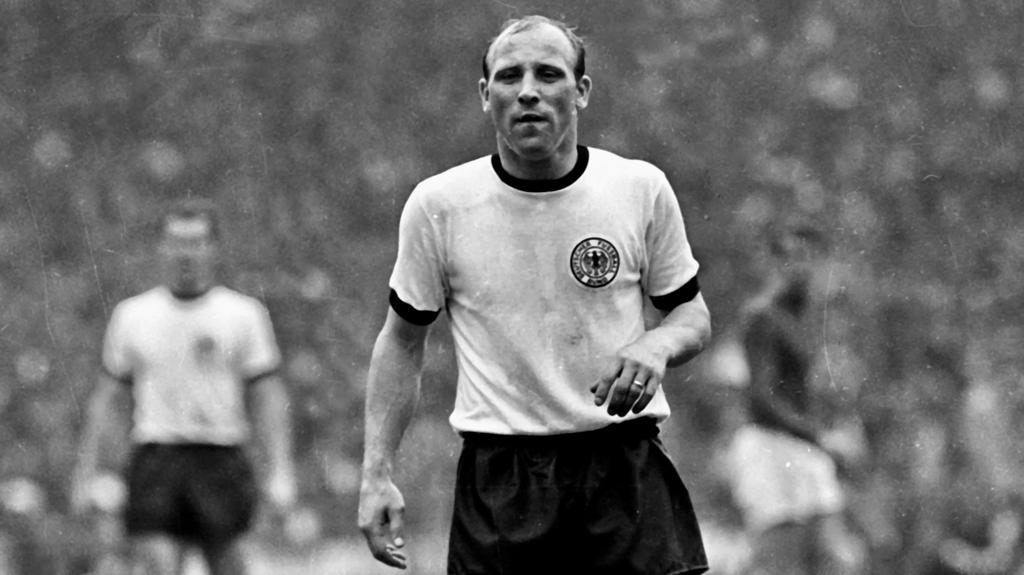
He was a strong, committed and technically capable forward. He could score with his head, finish inside the box and lead the line with intelligence.
Seeler played in an era when West Germany became one of the most consistent World Cup nations. He helped them reach the final in 1966 and remain competitive across several tournaments.
His nine goals may not place him at the very top of the chart, but his long service and repeated scoring across four editions make his World Cup record historically significant.
Seeler represents the type of player whose value goes beyond one tournament. He was a national-team pillar for years.
Vava: Nine Goals for Brazil
Vava scored nine World Cup goals in 10 matches for Brazil across two tournaments: 1958 and 1962.
He was an important part of Brazil’s back-to-back World Cup-winning teams. In 1958, he scored five goals, including two in the final against Sweden. In 1962, he added four more as Brazil won the tournament again.
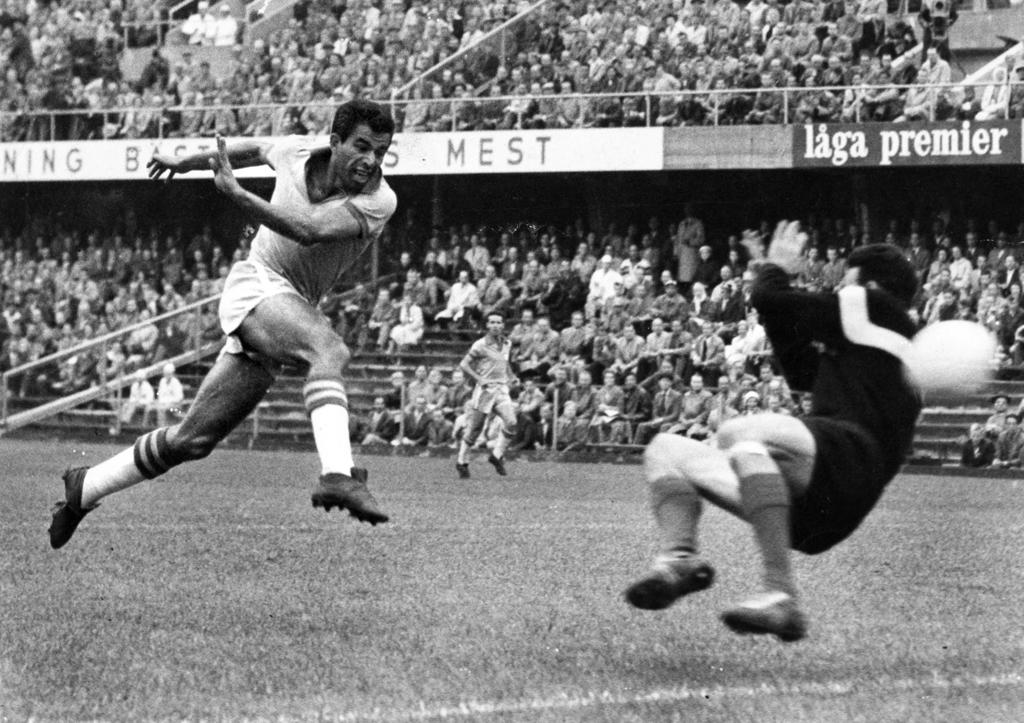
Vava was a classic centre-forward who provided strength, movement and finishing. In teams filled with extraordinary talent, including Pele and Garrincha, he supplied reliable goal threat through the middle.
His ability to score in major matches made him especially valuable. Scoring in World Cup finals is rare. Scoring decisive goals in title-winning campaigns places a player in a special category.
Vava’s nine goals in only 10 matches show his efficiency. He may not always receive the same global attention as Pele, but his contribution to Brazil’s early World Cup dominance was enormous.
He remains one of the most important forwards in Brazil’s tournament history.
Christian Vieri: Nine Goals for Italy
Christian Vieri scored nine World Cup goals in nine matches for Italy across two tournaments: 1998 and 2002.
His goal-per-game record is one of the most impressive among modern World Cup forwards. Vieri scored five goals in 1998 and four more in 2002, despite Italy not reaching the final in either tournament.
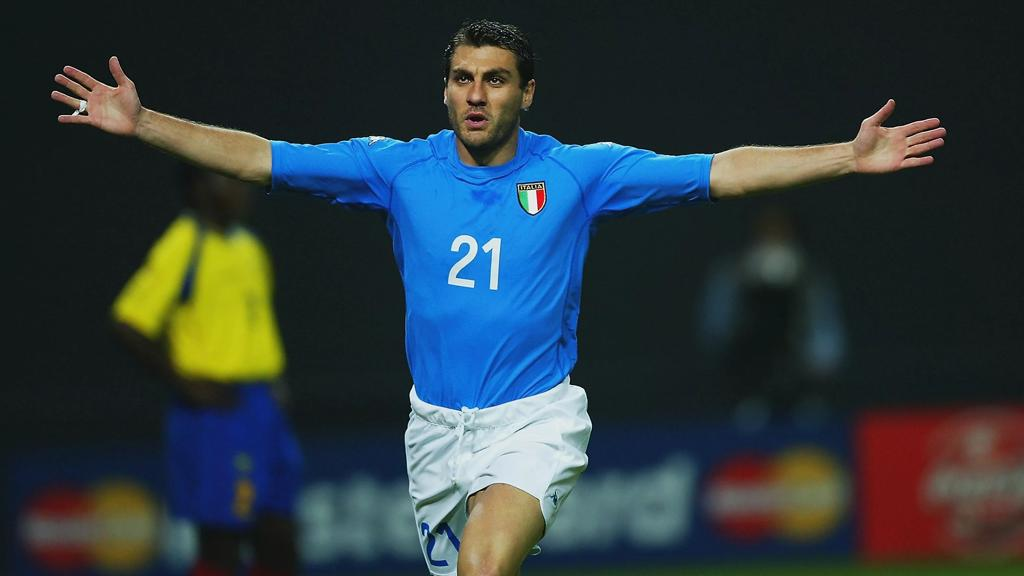
Vieri was a powerful centre-forward. He combined strength, aerial ability, left-footed finishing and penalty-box presence. Defenders found him difficult to handle because he could hold the ball, attack crosses and finish quickly.
At his best, he was one of the most feared strikers in the world. His World Cup numbers show that his club reputation translated strongly to international football.
Italy’s exits in 1998 and 2002 limited his chance to build an even larger total. With deeper tournament runs, Vieri might have climbed much higher on the all-time list.
Still, nine goals in nine matches is a superb record. It places him among the most efficient World Cup strikers of the modern era.
David Villa: Nine Goals for Spain
David Villa scored nine World Cup goals in 12 matches for Spain across three tournaments: 2006, 2010 and 2014.
Villa is Spain’s greatest World Cup scorer and one of the most important players in the country’s football history. His biggest contribution came in 2010, when Spain won their first World Cup.
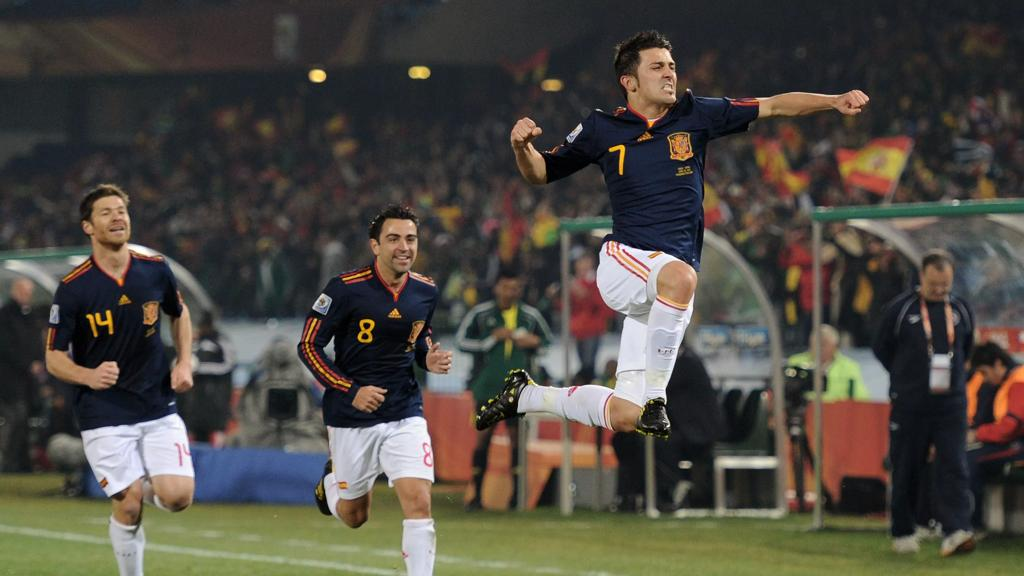
Spain’s 2010 team is often remembered for midfield control through Xavi, Andres Iniesta, Sergio Busquets and Xabi Alonso. But Villa’s goals were essential. He scored five times in that tournament and repeatedly provided the cutting edge Spain needed in tight matches.
Villa could play as a central striker or from the left. His movement, finishing and ability to shoot across goal made him extremely dangerous. He was not the tallest or most physical forward, but he was technically sharp and mentally composed.
He scored three goals in 2006, five in 2010 and one in 2014. His nine goals place him among the best World Cup forwards of his era.
Villa’s legacy is especially strong because his goals helped Spain convert possession dominance into tournament success. Without his finishing in 2010, Spain’s golden generation may not have become world champions.
David Villa Sánchez
Position: FW-MF (WM) ▪ Footed: Right
175cm, 68kg (5-9, 152lb)
Born: December 3, 1981 in Sama, Spain es
National Team: Spain es
Instagram: @davidvilla
Comparing the Top World Cup Scorers
The FIFA World Cup all-time leading scorers list is fascinating because it does not reward only one type of player.
Messi leads through longevity, creativity and late-career scoring. Mbappe is rising through explosive efficiency and modern forward play. Klose built his legacy through consistency and movement. Ronaldo brought power, speed and comeback drama. Muller delivered ruthless penalty-box efficiency. Fontaine produced the greatest single-tournament scoring record. Pele combined goals with unmatched team success.
Below them, Klinsmann, Kocsis, Batistuta, Cubillas, Kane, Lato, Lineker, Muller, Rahn and others show different routes to greatness. Some were stars of winning teams. Others carried teams that fell short. Some had one great tournament. Others scored across multiple editions.
The ranking also shows that World Cup scoring is shaped by opportunity. Players from strong nations often play more matches. But opportunity alone does not explain greatness. Many players have played many World Cup matches without reaching these totals. The players on this list converted opportunity into history.
Most Efficient Scorers on the List
Some records stand out because of efficiency rather than total volume.
Just Fontaine scored 13 goals in six matches. Sandor Kocsis scored 11 in five. Gerd Muller scored 14 in 13. Christian Vieri scored nine in nine. Helmut Rahn scored 10 in 10. Mbappe has 16 in 16.
These rates are remarkable. They show that some players reached legendary status without needing five or six tournaments. Their goals came quickly and repeatedly.
Modern football makes high scoring rates harder. Defending is more organized, video analysis is deeper, and tournament matches are often tighter. That is why Mbappe’s one-goal-per-game rate is especially impressive.
Messi’s record is different. His value comes from sustained scoring across a record number of tournaments and from his ability to combine goals with playmaking. Klose’s value comes from tournament reliability. Ronaldo’s comes from peak striker dominance and comeback greatness.
Efficiency and longevity are both valid forms of World Cup greatness.
Active Players and the Future of the Record
The World Cup scoring record may continue changing. Messi leads with 18, but Mbappe is only two goals behind. Kane has reached 10 and could climb further if England continue to go deep in tournaments.
Mbappe is the most obvious future record-holder candidate. His age, scoring rate and France’s strength give him a real chance to pass Messi. If he remains fit and continues to play for a competitive France team, the all-time record could change again.
Messi’s place is already secure. Even if he does not add more goals, reaching 18 after six World Cups is historic. His record represents one of the most complete international careers ever produced.
Kane’s climb is also important. England’s modern tournament consistency gives him chances, and his penalty-taking role helps him remain a reliable scorer.
The future of the list will depend on team success as much as individual quality. The greatest scorers need both talent and enough matches to build their totals.
What the List Reveals About Football History
The list of World Cup leading scorers is also a timeline of football history.
The early era produced players such as Fontaine, Kocsis, Pele, Ademir, Rahn, Vava and Muller. Their records came in tournaments with different tactical systems, different defensive structures and different match conditions.
The later 20th century brought Klinsmann, Batistuta, Baggio, Lato, Rossi, Rummenigge, Seeler and Lineker. These players represented a more structured international game but still found ways to score consistently.
The modern era brought Ronaldo, Klose, Villa, Thomas Muller, Kane, Messi and Mbappe. These players faced advanced scouting, elite athletic defenders and tactical preparation, making their scoring records especially impressive.
The list also shows the global nature of football greatness. Brazil, Argentina, Germany, France, England, Italy, Portugal, Peru, Poland, Hungary and Spain all appear through different players. The World Cup is not only a tournament of winning nations; it is a tournament of individual stories.
Conclusion
The FIFA World Cup all-time leading scorers list is one of the most meaningful records in football because it captures greatness under the highest pressure. World Cup goals are rare, difficult and unforgettable. They can define careers, decide finals and shape national memories.
Lionel Messi leads the list with 18 goals, completing one of the most remarkable international journeys in football history. Kylian Mbappe has already reached 16 and remains the strongest active threat to the record. Miroslav Klose’s 16 goals still represent one of the greatest examples of tournament consistency. Ronaldo’s 15 goals reflect the brilliance of one of the most explosive strikers ever. Gerd Muller, Just Fontaine and Pele remain permanent symbols of World Cup scoring greatness.
Behind them, Jurgen Klinsmann, Sandor Kocsis, Gabriel Batistuta, Teofilo Cubillas, Harry Kane, Grzegorz Lato, Gary Lineker, Thomas Muller, Helmut Rahn, Ademir, Roberto Baggio, Eusebio, Jairzinho, Paolo Rossi, Karl-Heinz Rummenigge, Uwe Seeler, Vava, Christian Vieri and David Villa all add depth to the story.
Some won the trophy. Some did not. Some had long World Cup careers. Others became immortal in a single tournament. Some scored through power, others through movement, intelligence, speed or technical brilliance. Together, they form the scoring history of the greatest tournament in football.
As the World Cup continues to evolve, new names will rise and records may fall. But the players on this list have already secured their place. They are the footballers who turned limited World Cup opportunities into lasting history, proving that a goal on the world stage can echo for generations.
Gallery