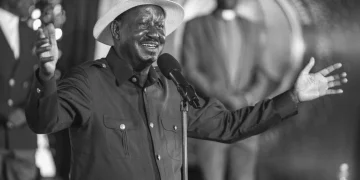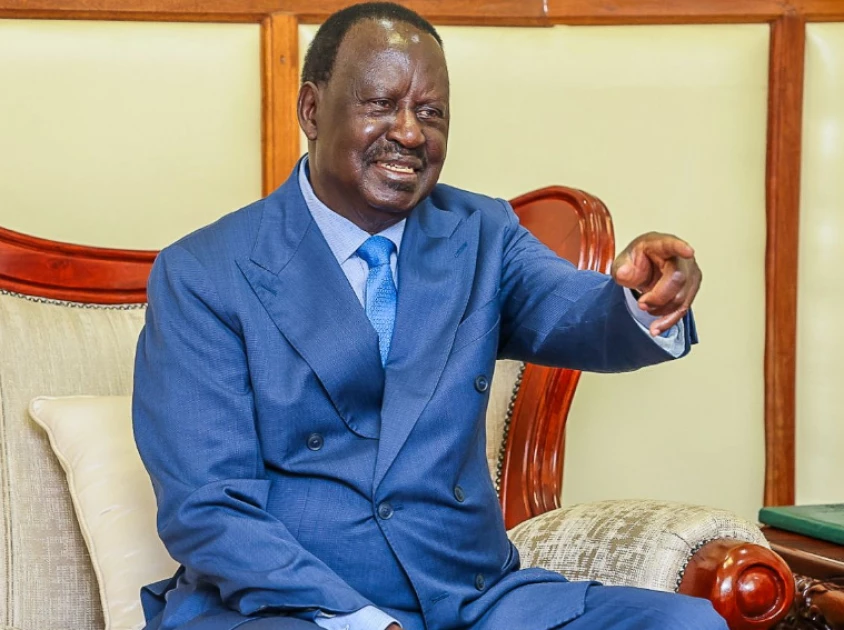
Raila Amolo Odinga’s political journey is marked by resilience, sacrifice, and unwavering determination. Known for his relentless pursuit of Kenya’s top political seat, Odinga will forever remain a symbol of pro-democracy activism, a fighter for constitutional reforms, and a leader who shaped the political fabric of the nation.
However, despite his significant role in Kenya’s political transformation, Raila’s quest for the presidency remained elusive, with five attempts and as many defeats. Each of his bids was filled with dramatic turns, both in the electoral trenches and beyond, drawing him into the hearts and minds of millions of Kenyans and leaving behind a complex legacy that will continue to shape Kenyan politics for generations.
A Journey of Setbacks and Triumphs
The first chapter in Raila’s presidential journey unfolded in 1997 when he ran under the banner of the National Development Party (NDP). In a race dominated by Daniel Arap Moi and Mwai Kibaki, Raila’s candidacy ended in third place, marking the beginning of his long path of electoral defeats. However, Raila’s resilience was clear, as his fight for democracy was far from over.
The year 2002 saw Raila sidelining his presidential ambitions to support Mwai Kibaki, who would later clinch the presidency. This move, however, demonstrated Raila’s commitment to the country’s future rather than just his own political gain. His support helped Kibaki win the presidency, but the political climate in Kenya was to shift once again as Raila made his return to the electoral scene.
2007 marked Raila’s second attempt at the presidency, this time with the Orange Democratic Movement (ODM), a force he had helped build. Despite running a vigorous campaign, Raila found himself at the center of one of Kenya’s most turbulent electoral periods. After losing to Mwai Kibaki in a disputed election, the country was thrust into violence and chaos. Raila’s response was a call for justice, and under the auspices of former UN Secretary-General Kofi Annan, the Grand Coalition Government was born. Raila was appointed Prime Minister, and for the first time in his life, he held executive power, albeit without the presidency.
His third run in 2013 saw him face off against Uhuru Kenyatta, with Raila again emerging on the losing side. A defeat in the polls was followed by a rejection of the results at the Supreme Court, but it was a case of history repeating itself as Raila found himself again with his second loss in a national election.
A Bold Challenge in 2017
2017 brought another twist in Raila’s bid for the presidency. After a second defeat by Uhuru Kenyatta, Raila made history by challenging the results at the Supreme Court, which made a landmark ruling by annulling the election results and calling for a fresh vote. However, in an unprecedented move, Raila chose to boycott the repeat election, citing the lack of reforms and irregularities in the electoral process. This decision, though controversial, solidified Raila’s position as a champion of free and fair elections. While Kenyatta was re-elected in the repeat election with an overwhelming majority, Raila’s role in advocating for electoral reform cemented his place as a stalwart in the fight for democracy.
The Final Attempt in 2022
The culmination of Raila’s long political career came in 2022, when he contested the presidency for the fifth and final time. Raila’s campaign was marked by hope, enthusiasm, and a renewed sense of possibility, with many believing that the veteran politician had finally earned the right to ascend to the presidency. However, despite his relentless campaigning and promises of change, Raila was again defeated, this time by William Ruto. The defeat sparked a wave of disappointment among his supporters but also solidified Raila’s place in Kenya’s democratic history. His loss, however, was seen not as a final failure, but as a culmination of his journey — a testament to his commitment to the country’s betterment.
Raila’s Legacy
While Raila Odinga never ascended to the presidency, his political legacy remains indelible. Through his five presidential bids, Raila shaped the very fabric of Kenya’s democracy. His life’s work led to significant milestones in the country’s governance, including the constitutional reforms of 2010, devolution, and his role in ending the 2007-2008 post-election violence. His lifelong advocacy for democratic rights, decentralized government, and political inclusivity continues to inspire future generations of leaders.
Raila’s role in Kenya’s political landscape will forever be remembered, not for his failures to reach State House, but for the reforms, movements, and milestones he achieved along the way. His influence on Kenya’s path to democratic maturity cannot be overstated, and while he may never have taken the oath of office, his vision for the country has certainly shaped its future.