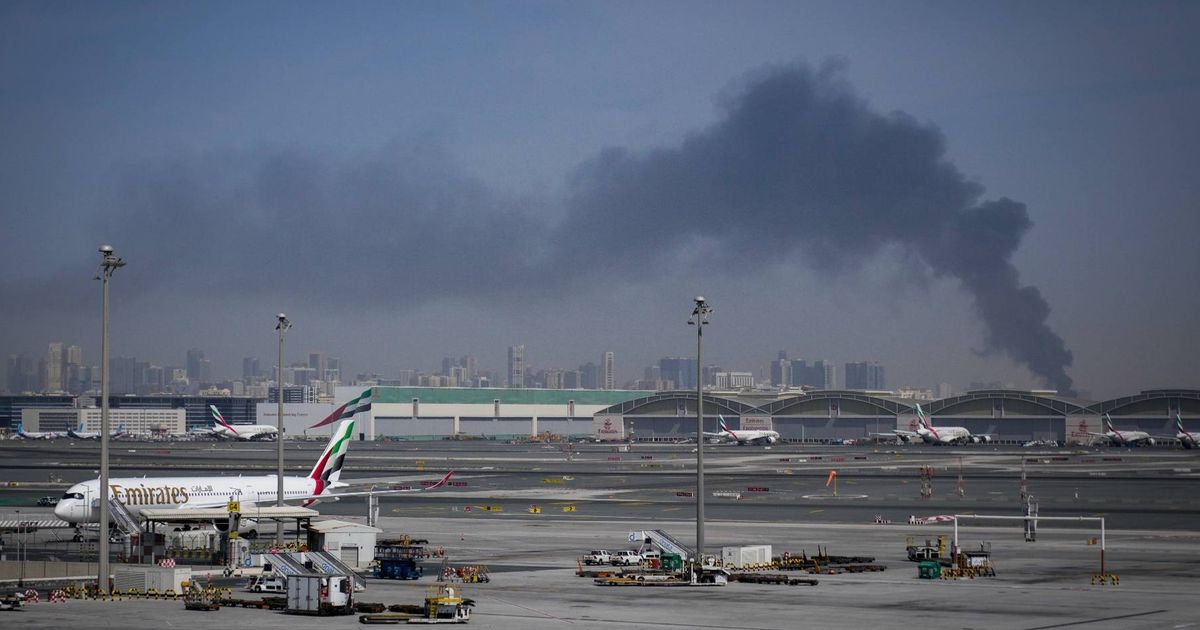
Dubai Air Defence operations were activated after authorities confirmed that loud sounds heard in the Marina and Al Sufouh districts resulted from “successful air defence interceptions.” The announcement came as the UAE Ministry of Defence said it intercepted 33 drones and nine ballistic missiles on Saturday.
The incident underscores how Gulf cities once considered insulated from frontline conflict are increasingly drawn into regional hostilities. Although no major infrastructure damage was reported, the scale of the interceptions highlights the intensity of aerial threats facing the Emirates.
Dubai Air Defence Systems Engage Incoming Threats
The Dubai Media Office said the sounds reported by residents were linked to interception activity rather than direct impacts. Officials emphasized that defensive measures functioned as intended.
Separately, the UAE Ministry of Defence confirmed that national air defence systems neutralized 33 drones and nine ballistic missiles. While authorities did not detail the origin of the projectiles, the broader regional conflict involving Iran, Israel, and US forces provides the context for heightened alert levels.
The volume of intercepted objects suggests coordinated waves rather than isolated incidents.
Urban Centers Now in Security Focus
Dubai’s Marina and Al Sufouh districts are among the city’s busiest residential and commercial zones. Even defensive detonations over such areas carry psychological impact.
Unlike remote military sites, these neighborhoods house expatriate communities, tourism hubs, and high-rise developments. Consequently, visible air defence activity reinforces how modern conflicts reach deep into economic centers.
Defense Architecture Under Continuous Test
The UAE has invested heavily in layered air defence capabilities, including radar networks and interceptor systems. Saturday’s Dubai Air Defence engagement demonstrates both readiness and the strain of sustained operations.
Ballistic missile interception requires high-precision systems. Meanwhile, drone swarms challenge radar detection and response timing.
Sustained aerial activity may lead to increased defense procurement and regional coordination.
Economic and Market Implications
Dubai serves as a global financial and logistics hub. Therefore, any perception of instability influences investor sentiment.
Shipping insurance costs, aviation routes, and regional trade corridors could face pressure if threats continue. Oil markets also remain sensitive, particularly given the Gulf’s role in global supply.
For African economies tied to Gulf trade and remittance flows, prolonged tension may affect currency stability and energy pricing.
Regional Security Balancing Act
The UAE maintains strategic partnerships with Western allies while also navigating complex diplomatic ties in the region. Defensive actions such as Dubai Air Defence interceptions reflect the delicate balance between deterrence and escalation.
Officials have not indicated retaliatory measures. Instead, statements focused on operational success and public reassurance.
However, repeated waves of drones and missiles could test regional patience and diplomatic channels.
Why This Matters
Dubai Air Defence operations reveal how aerial threats now extend into major urban hubs. Successful interceptions reduce immediate damage, yet they do not eliminate broader strategic risk.
As Gulf airspace grows more contested, governments must manage both military defense and investor confidence simultaneously.
What Happens Next
Authorities are expected to maintain heightened alert status and continue monitoring airspace activity. Regional coordination among Gulf states may intensify in response to recurring threats.
If further interceptions occur, markets and policymakers will closely assess whether the situation stabilizes or escalates.