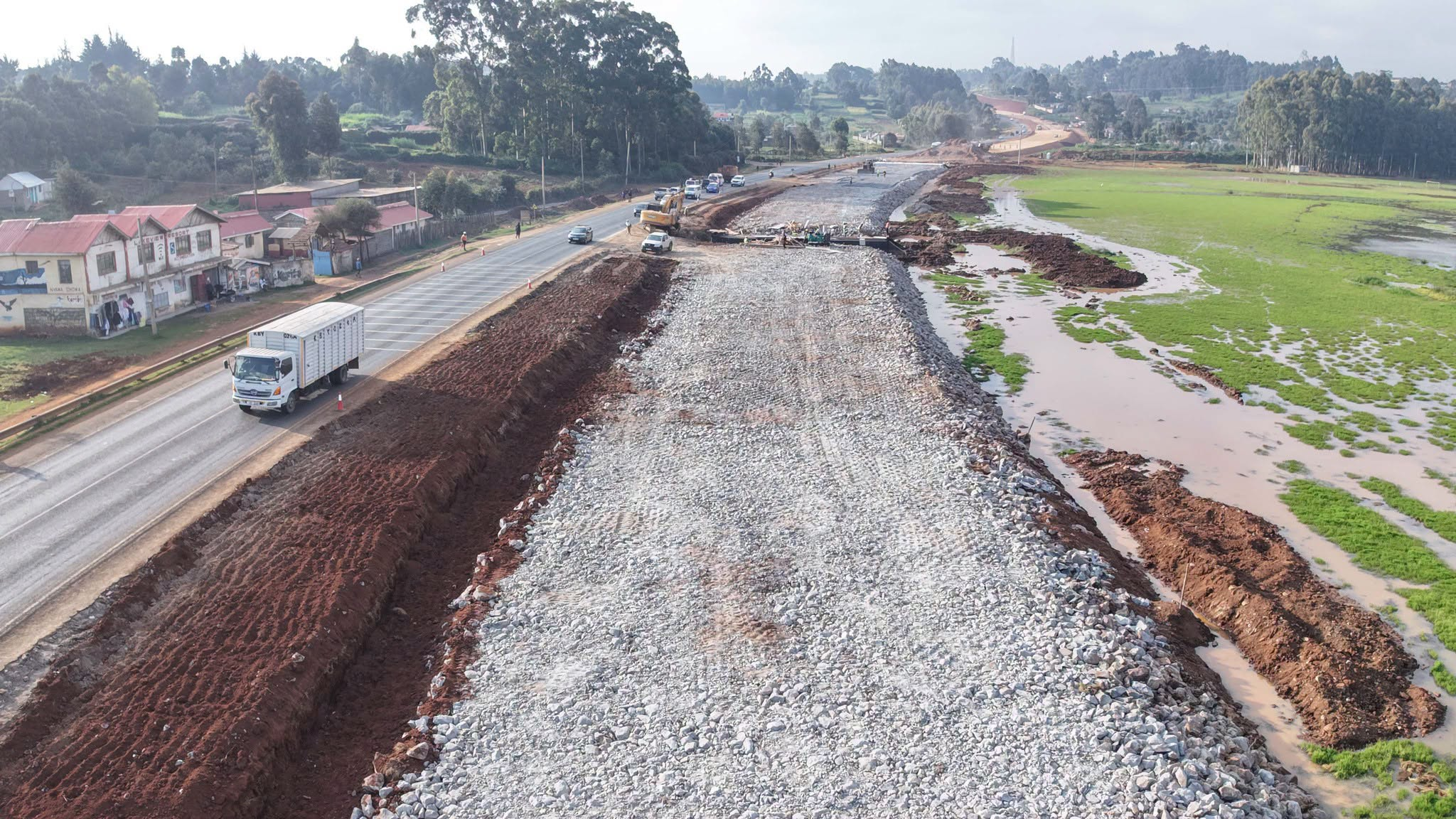
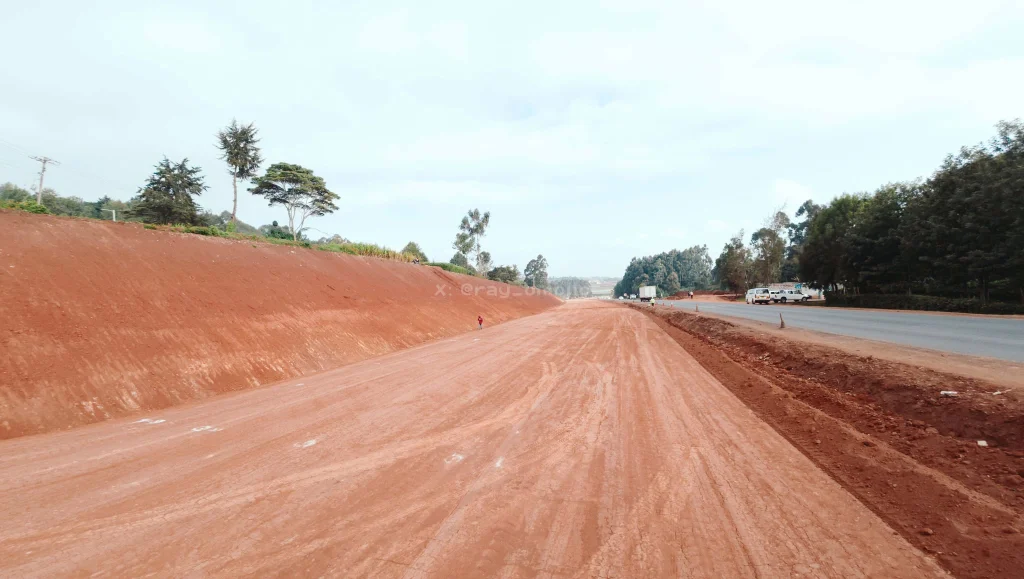
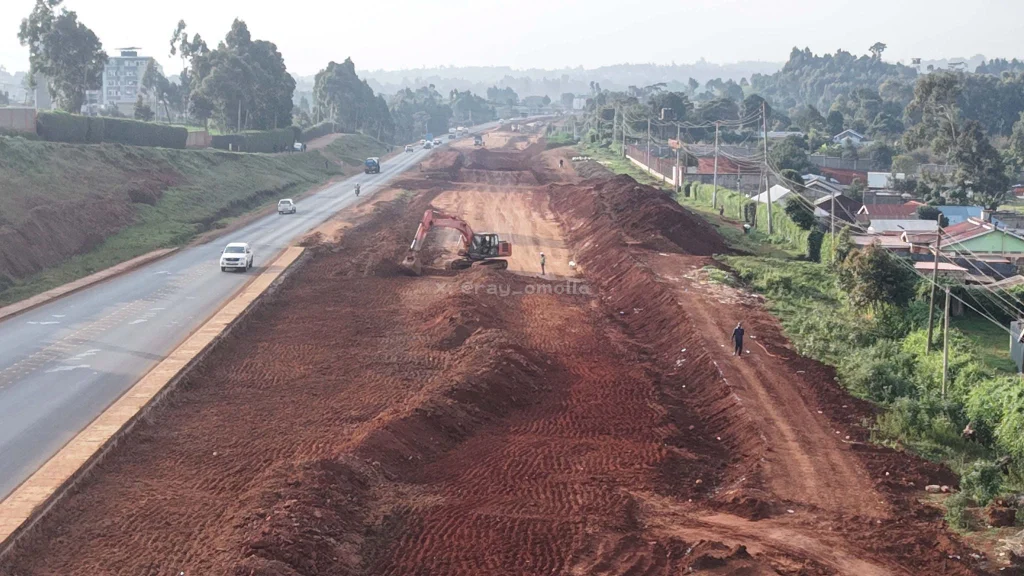
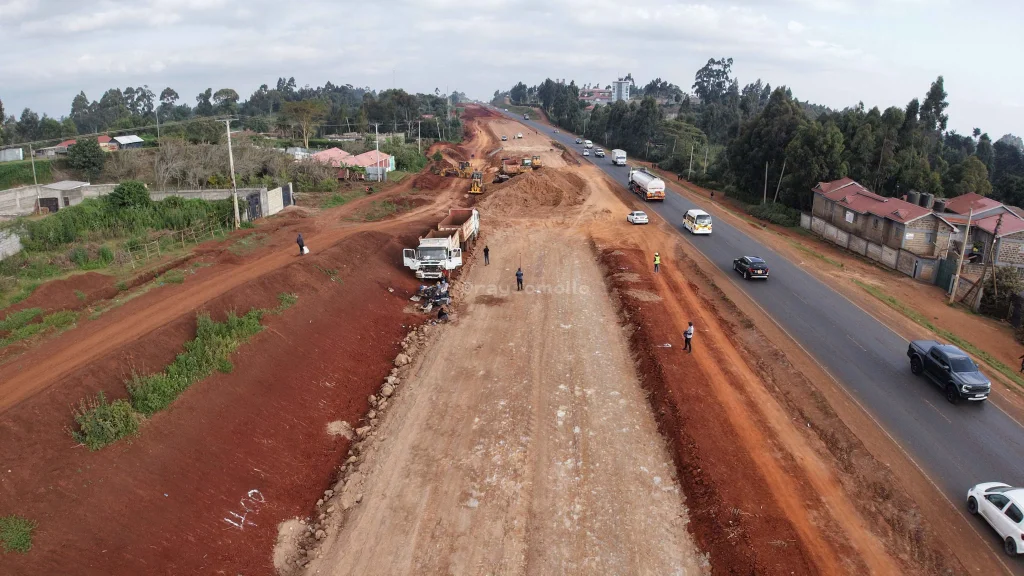
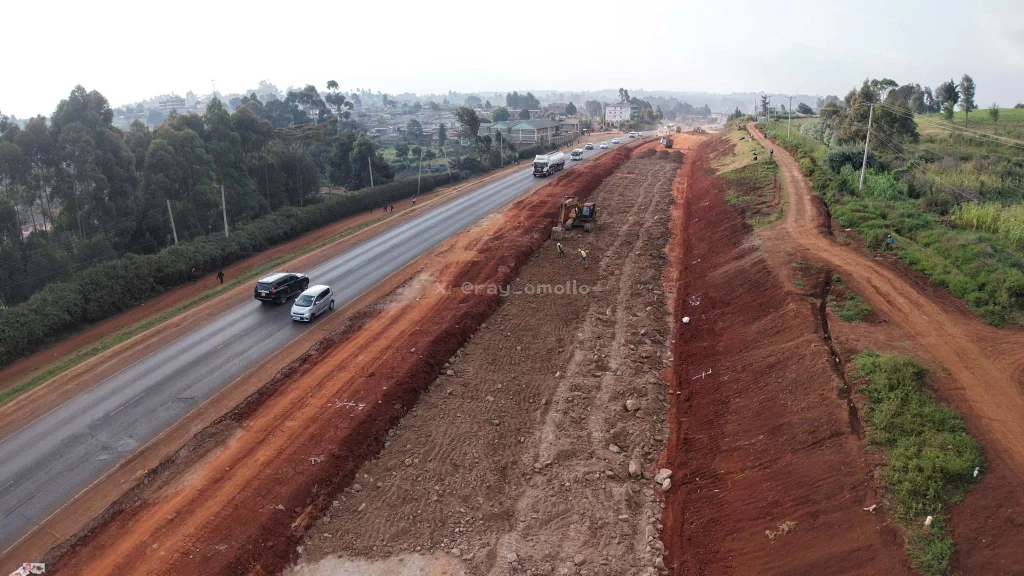
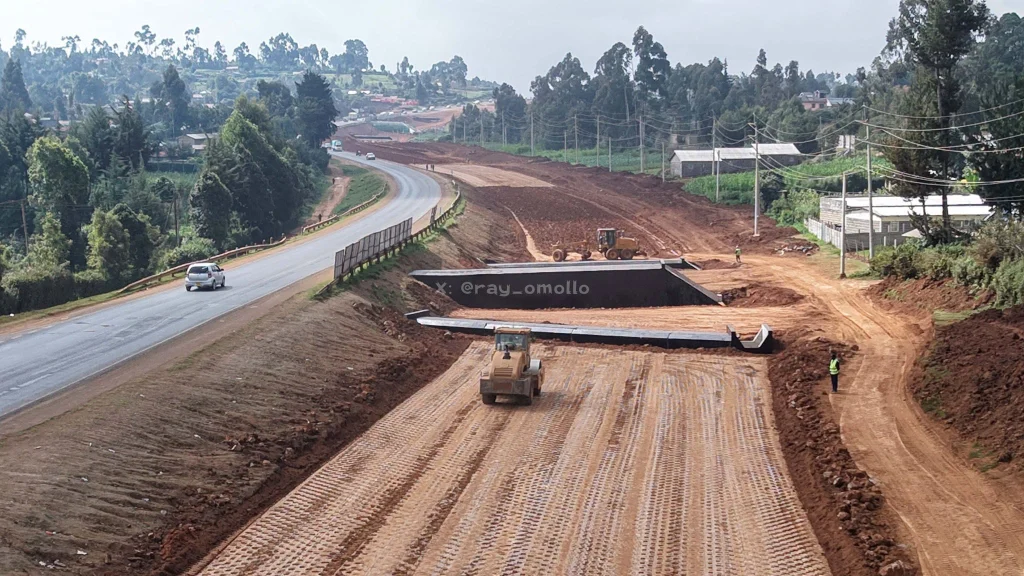
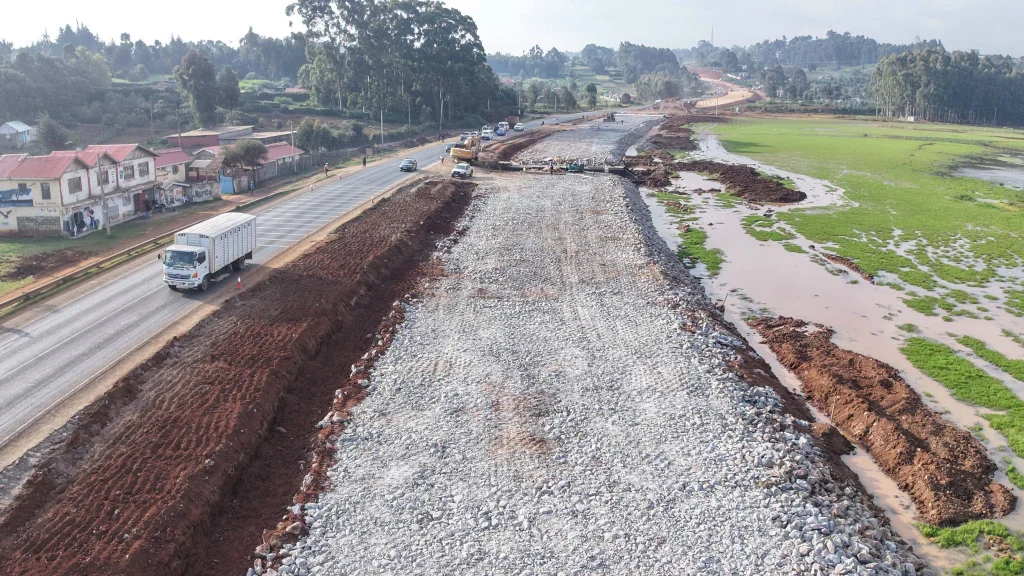
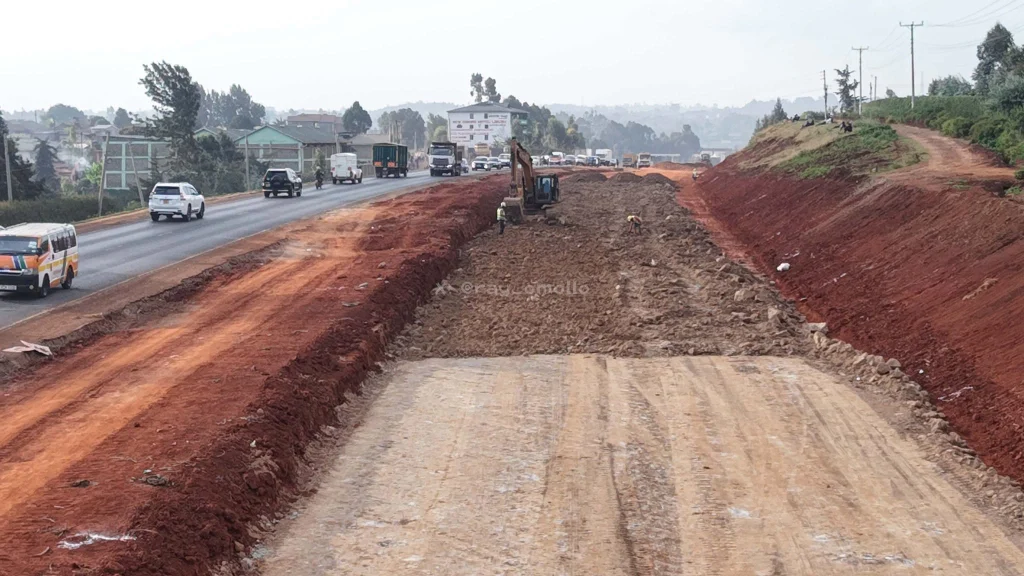
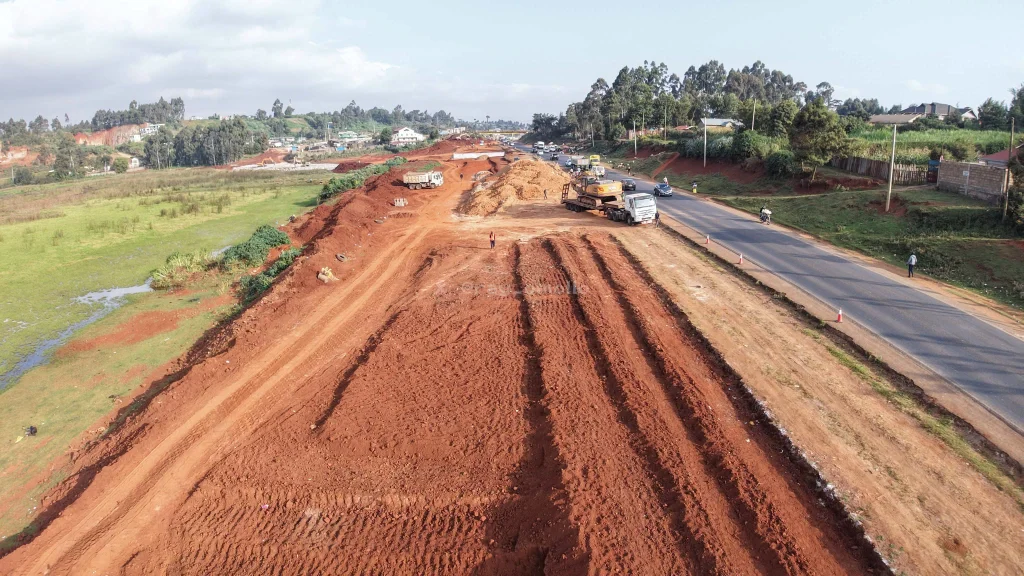
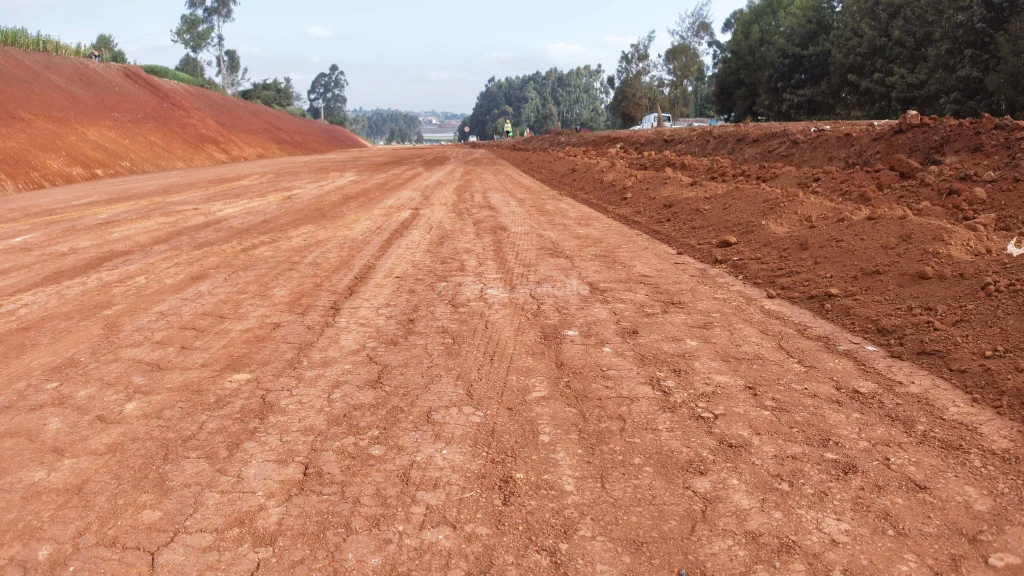
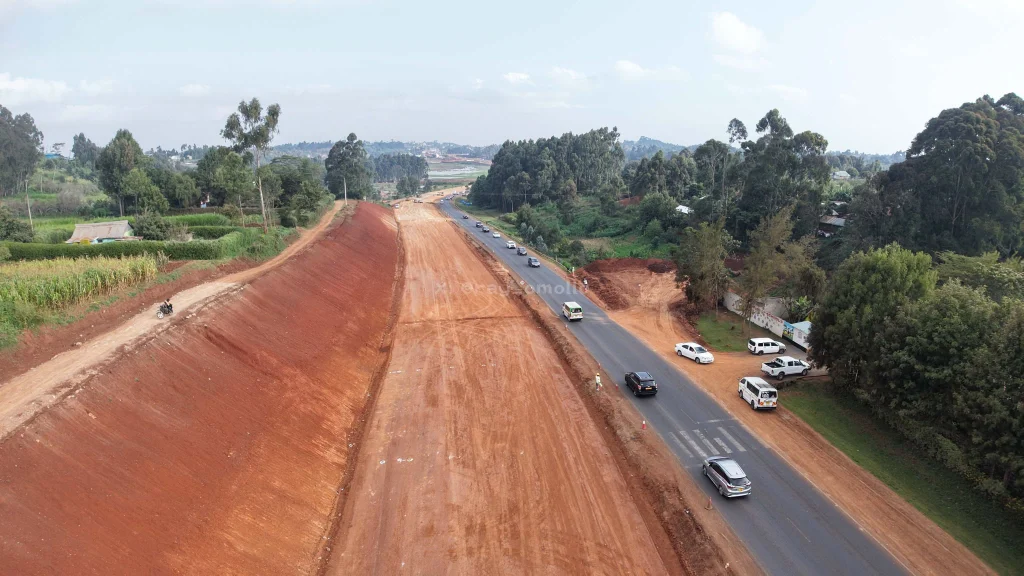
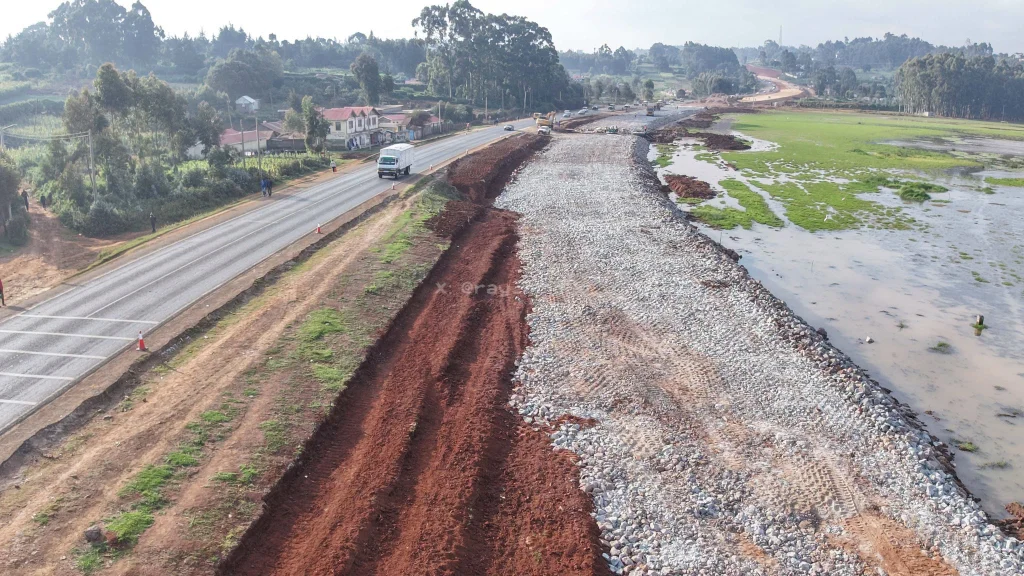
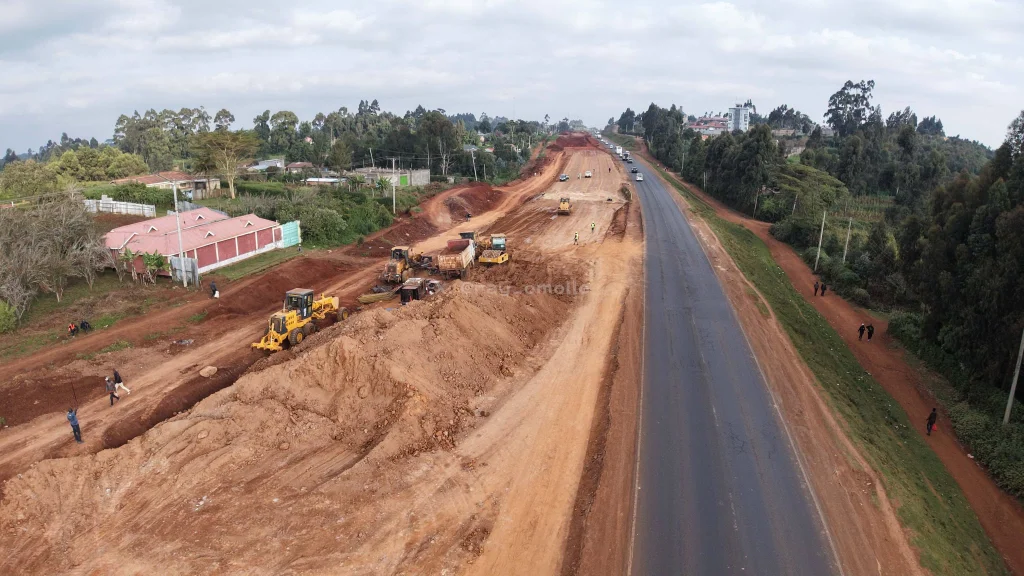
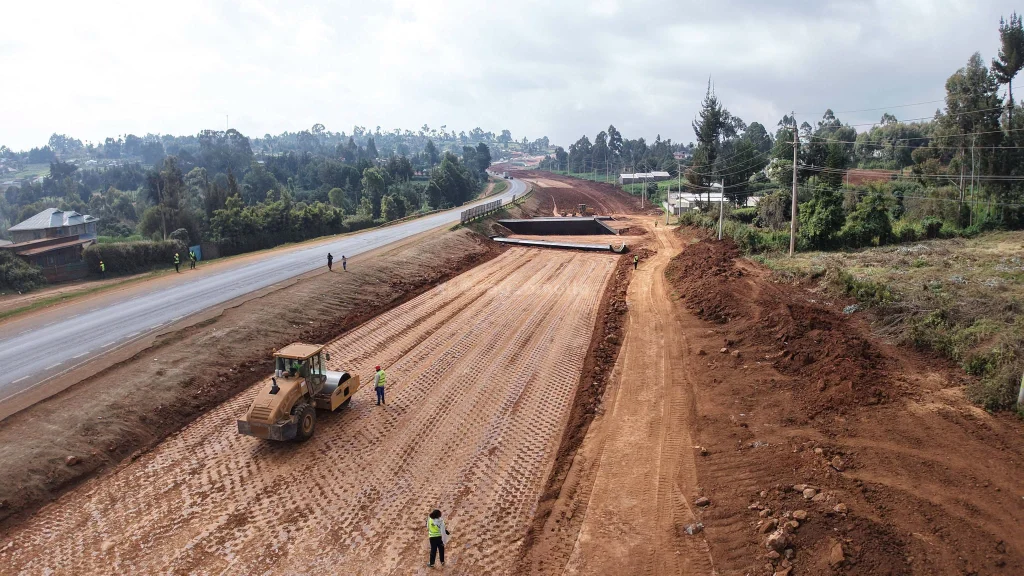
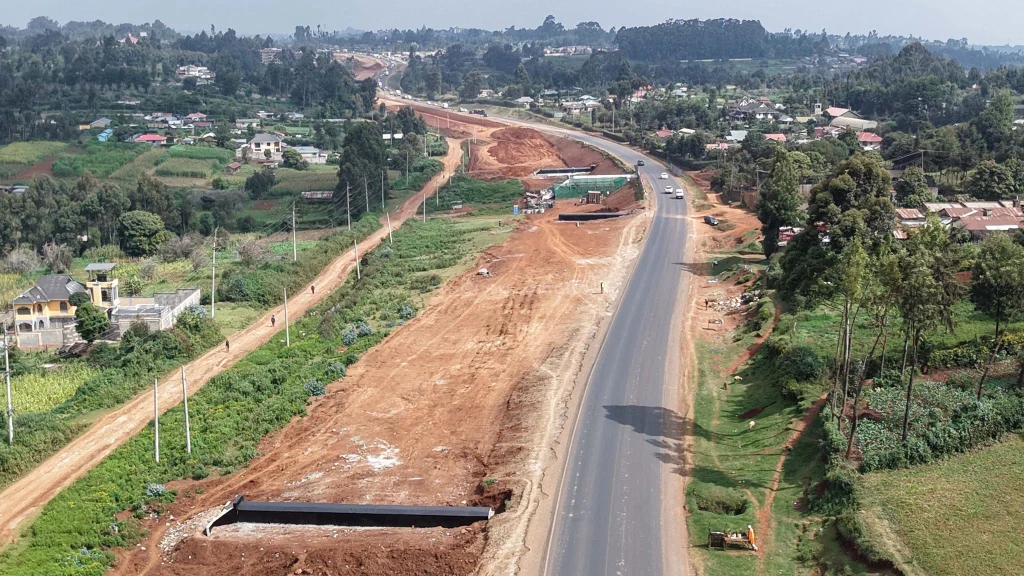
Heavy construction works are gaining momentum along the Rironi–Nakuru–Mau Summit Highway as the Government of Kenya advances one of the country’s most important road infrastructure projects.
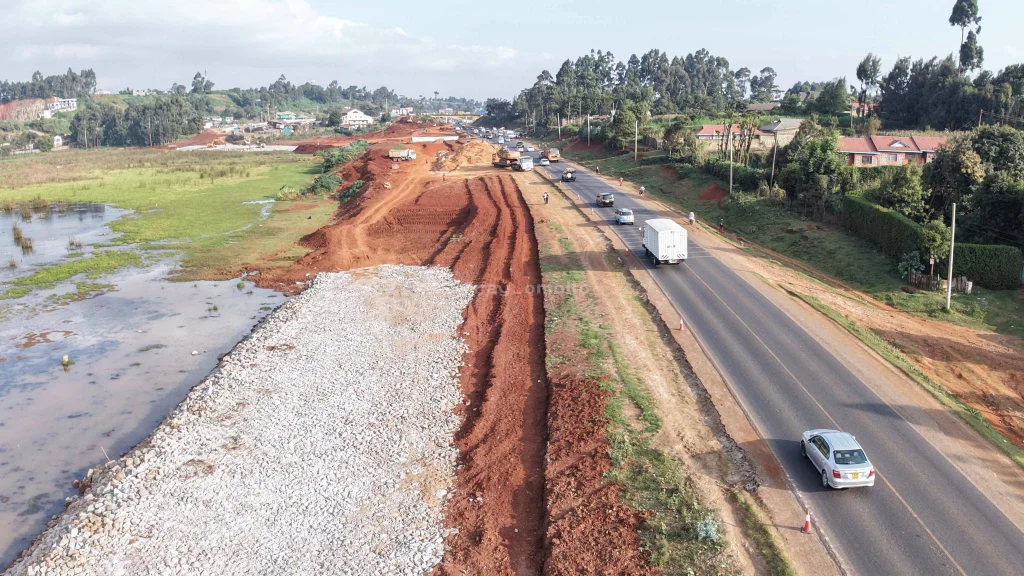
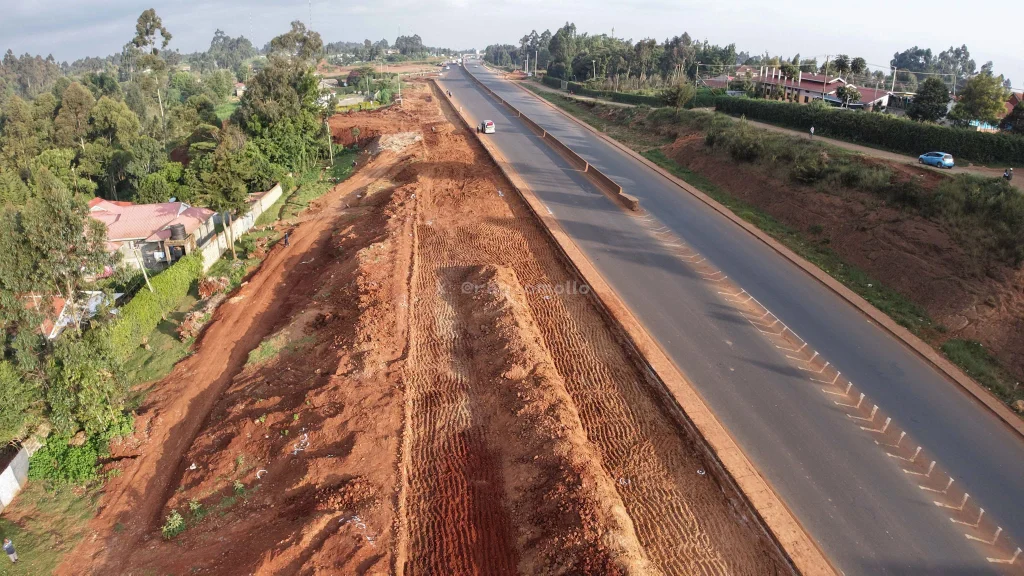
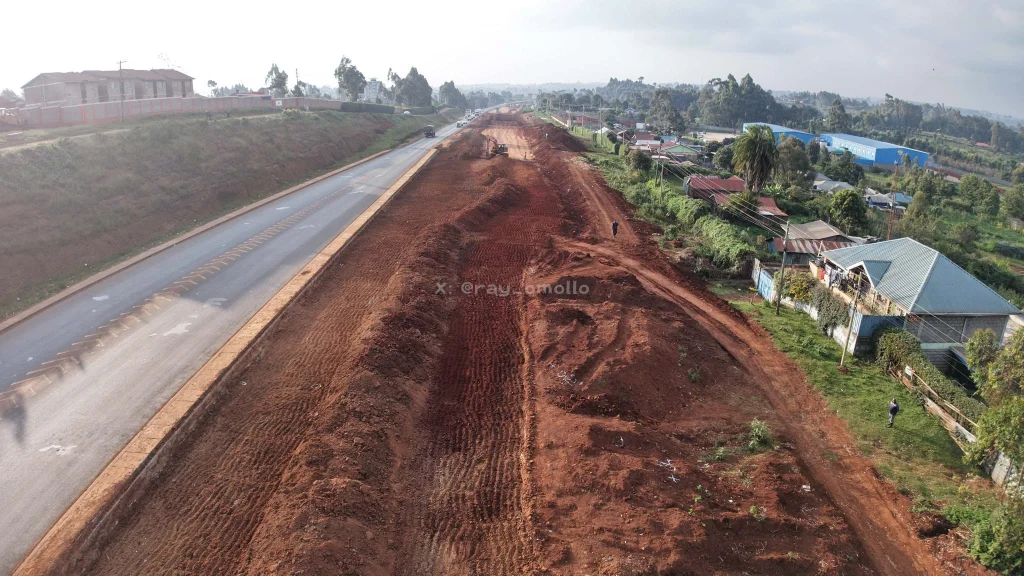
The project targets the heavily used A8 corridor from Rironi through Naivasha and Nakuru to Mau Summit, a critical transport route that connects Nairobi to Western Kenya and the wider East African region. Works currently underway include earthworks, road widening, drainage improvements, site clearance, culvert construction and related civil works across multiple sections of the corridor.
President William Ruto officially launched the Rironi–Mau Summit Road project on November 28, 2025, at Kamandura in Kiambu County. The Ministry of Roads and Transport said the launch covered Phase I of the Nairobi–Nakuru–Mau Summit A8 Road and the Nairobi–Maai Mahiu–Naivasha A8 South Road, with construction to be undertaken under a Public-Private Partnership framework involving China Road and Bridge Corporation and the National Social Security Fund.
Rironi–Nakuru–Mau Summit Highway Works Underway
Construction activity is now visible across sections of the Rironi–Nakuru–Mau Summit Highway, with contractors advancing early-stage works ahead of the full transformation of the corridor into a modern multi-lane road.
The project is designed to ease chronic congestion, improve road safety, reduce travel time and lower transport costs along one of Kenya’s busiest economic routes.
The broader A8 project covers approximately 175 kilometres from Rironi to Mau Summit. It also includes works on the A8 South corridor, the Rironi–Maai Mahiu–Naivasha road, which is listed in project documents at about 57.8 kilometres.
The highway is not only a commuter route. It is a national and regional trade artery that carries passengers, private vehicles, buses, trucks, farm produce and cargo moving between Nairobi, Nakuru, Western Kenya, Uganda, Rwanda, South Sudan and the wider Northern Corridor.
Scope of the A8 Highway Upgrade
The project involves upgrading and expanding the existing Rironi–Nakuru–Mau Summit Road into a safer and more efficient dual carriageway.
The African Development Bank describes the project as involving the widening of the 175-kilometre A8 road from Rironi to Mau Summit into a four-lane dual carriageway, as well as the strengthening and operation of the existing A8 South road from Rironi to Naivasha.
The works are expected to include additional lanes, improved junctions, drainage systems, service roads in selected areas, bridges, interchanges, pedestrian facilities and road safety features.
For motorists, the most visible outcome will be a wider and faster road.
For the economy, the bigger impact will be reduced congestion, improved logistics reliability and safer movement along a corridor that has long been associated with heavy traffic and accident risks.
Key Sections of the Project
The highway upgrade covers several strategic sections.
The first major section runs from Rironi toward Naivasha and Gilgil, serving traffic leaving Nairobi and moving toward the Rift Valley.
The second extends toward Nakuru and Mau Summit, linking the upgraded road to the western transport corridor.
The project also includes the Rironi–Maai Mahiu–Naivasha Escarpment Road, an important alternative route used by motorists and trucks moving between Nairobi, Naivasha and the wider Rift Valley.
KeNHA’s project disclosure notes that the A8 road project starts at Rironi and extends approximately 175 kilometres to Mau Summit, while the A8 South section branches from Rironi toward Maai Mahiu and Naivasha.
Together, these sections form one of the most important road packages currently being implemented in Kenya.
Why the Rironi–Mau Summit Road Matters
The Rironi–Nakuru–Mau Summit Highway is part of the Northern Corridor, one of East Africa’s most important trade routes.
The corridor connects the Port of Mombasa to Nairobi, the Rift Valley, Western Kenya and neighbouring countries including Uganda, Rwanda and South Sudan.
Any congestion on this route affects more than individual motorists.
It affects transporters, manufacturers, farmers, exporters, importers, bus operators, logistics firms and regional trade.
A faster, safer and more reliable highway can reduce delivery delays, lower vehicle operating costs and improve competitiveness for businesses using the corridor.
That is why the project is being treated as a strategic economic investment rather than a normal road upgrade.
A Road Long Associated With Congestion
The Rironi–Naivasha–Nakuru–Mau Summit corridor has long been one of Kenya’s most congested highways.
Traffic builds up especially during weekends, public holidays, school travel periods and peak transport seasons. Heavy trucks, buses, private vehicles and matatus often share narrow sections, creating bottlenecks and safety risks.
The existing road has struggled to keep pace with rising traffic volumes, population growth, increased trade and the expansion of towns along the corridor.
The upgrade is expected to address these problems by separating traffic flows, improving junctions and providing safer facilities for pedestrians and local communities.
Features Expected on the Completed Highway
The upgraded highway is expected to include modern road infrastructure designed to improve safety and traffic movement.
Planned features include grade-separated interchanges, overpasses, underpasses, truck lanes, pedestrian footbridges and intelligent transport systems.
These features matter because the current corridor serves different types of traffic at the same time.
Long-distance cargo trucks, local motorists, pedestrians, cyclists, public service vehicles and private cars all use the same transport space.
A modernized road design can reduce conflict between different road users and improve traffic predictability.
Interchanges and underpasses are especially important because they reduce dangerous crossing points and allow vehicles to move without frequent stopping.
Public-Private Partnership Model
The Rironi–Nakuru–Mau Summit Highway is being implemented under a Public-Private Partnership model.
According to the Ministry of Roads and Transport, Phase I is being implemented through a PPP between China Road and Bridge Corporation and the National Social Security Fund. The ministry said the project would be constructed over two years at a cost of $863 million, followed by a 28-year operation period.
The PPP Directorate also issued a statement in October 2025 explaining the implementation and governance framework for the project, noting public interest in the project’s structure, safeguards and long-term delivery model.
PPP projects are often used for large infrastructure works because they allow private capital and technical capacity to support public infrastructure delivery.
However, they also require transparency, strong contract management and public communication, especially where future tolling or long concession periods are involved.
Tolling and Long-Term Operations
The road is expected to operate under a concession model after construction.
Citizen Digital reported in June 2026 that KeNHA had set a proposed toll fee of KSh8 per kilometre on the Rironi–Mau Summit Road, with concessionaires expected to operate the road for 28 years before handing it back to the government.
Tolling remains a sensitive issue for motorists because it affects transport costs.
Supporters argue that tolling helps finance and maintain high-quality road infrastructure. Critics often raise concerns about affordability, transparency and the cost burden on ordinary road users.
For the project to maintain public confidence, clear communication on toll rates, exemptions, service levels, maintenance standards and payment systems will be important.
Construction Timeline
The project was officially launched in late November 2025 and is expected to be implemented in phases.
The Ministry of Roads and Transport said Phase I would be constructed over two years.
Recent reporting has also indicated that the Government is pushing for key sections of the corridor to be completed before the full project timeline. Kenyans.co.ke reported that President Ruto said the full dualling of the Rironi–Mau Summit corridor would be completed by April 2027, with the Rironi–Naivasha stretch targeted earlier.
As with all major infrastructure works, actual delivery will depend on land access, financing, weather, contractor performance, utilities relocation, traffic management and regulatory approvals.
Role of KeNHA and Government Agencies
The Kenya National Highways Authority is central to the development and oversight of the highway.
KeNHA has published disclosures and project documents outlining the project’s development phase, including the A8 and A8 South components.
Other state agencies also play important roles.
The PPP Directorate oversees the governance and private investment framework. The Ministry of Roads and Transport provides policy leadership. Security and administration agencies support stakeholder engagement, road safety awareness and protection of critical infrastructure.
The State Department for Internal Security and National Administration continues to support the project through coordination with local administration, communities, road users and security teams.
This is important because large road projects affect communities, land users, businesses, transport operators and public safety.
Road Safety Benefits
Road safety is one of the strongest arguments for the project.
The current corridor carries heavy mixed traffic, including long-distance trucks, buses, private cars and local traffic. This creates dangerous overtaking, congestion at towns and risky pedestrian crossings.
A dual carriageway with proper interchanges, pedestrian footbridges and truck management facilities can reduce head-on collision risks and improve traffic discipline.
Pedestrian facilities are especially important in towns and trading centres along the route.
Many road deaths in Kenya involve pedestrians, cyclists and vulnerable road users. A modern highway design must therefore protect both motorists and communities living along the corridor.
Economic Impact of the Highway
The upgraded highway is expected to deliver major economic benefits.
Reduced travel time can lower fuel consumption, vehicle maintenance costs and logistics delays. This directly benefits transporters, farmers, manufacturers and traders.
For passengers, the road can improve travel between Nairobi, Naivasha, Nakuru, Kericho, Eldoret, Kisumu and Western Kenya.
For businesses, reliable transport improves planning and reduces the hidden costs of congestion.
For tourism, the corridor supports travel to Naivasha, Nakuru, the Rift Valley, Western Kenya and cross-border destinations.
A better A8 corridor therefore supports trade, tourism, agriculture, industry and regional integration.
Impact on Logistics and the Northern Corridor
The Northern Corridor is the economic lifeline linking Kenya’s coast to the interior and neighbouring countries.
Cargo leaving the Port of Mombasa often moves through Nairobi before heading toward the Rift Valley and Western Kenya.
Congestion on the Rironi–Nakuru–Mau Summit section can delay goods moving to inland markets and regional destinations.
Upgrading the road can improve freight reliability and reduce transport time for logistics firms.
This is especially important for perishable goods, fuel transport, manufactured products, construction materials and regional exports.
In a competitive regional economy, faster logistics can make Kenya a stronger transport hub.
Benefits for Naivasha and Nakuru
Naivasha and Nakuru are expected to benefit significantly from the highway upgrade.
Naivasha has grown as an industrial, tourism and logistics location, supported by the Standard Gauge Railway inland depot, geothermal energy, flower farms and hospitality facilities.
Nakuru, now a city, is a major agricultural, commercial, education and transport hub.
Improved road access can support investment, housing, trade and tourism in both areas.
The highway will also make movement between Nairobi and the Rift Valley more predictable, which can encourage business expansion along the corridor.
Benefits for Local Communities
Communities along the corridor can benefit from better road access, safer crossings and improved local connectivity.
During construction, the project may create jobs, demand for materials, business opportunities and support services.
After completion, towns along the highway could benefit from increased trade, easier movement and improved access to markets.
However, large road projects also bring disruptions.
Residents and businesses may face dust, diversions, temporary traffic delays, noise, land access issues and construction risks.
This is why stakeholder engagement and road safety awareness are important throughout the project period.
Managing Construction Disruption
Construction on a busy highway creates unavoidable disruption.
Motorists may experience diversions, reduced lanes, speed controls, temporary closures and construction traffic.
Transporters and commuters should expect delays in active work zones and follow traffic management instructions.
Contractors and authorities must ensure clear signage, safe diversions, lighting, barriers and communication to reduce accidents.
Road users should also avoid speeding near construction zones and respect instructions from traffic marshals and police officers.
The success of the project during construction will depend not only on engineering work but also on disciplined traffic management.
Environmental and Social Considerations
Major road projects require environmental and social safeguards.
The African Development Bank’s project information notes environmental and social coordination roles linked to the Nairobi–Nakuru–Mau Summit Highway project.
These safeguards are important because road expansion can affect land, water drainage, roadside businesses, settlements, vegetation, noise levels and community movement.
Proper drainage is especially important along the Rift Valley corridor because poor drainage can damage roads, increase flooding and create safety hazards.
A strong environmental and social management process helps reduce harm while supporting long-term infrastructure benefits.
Why Intelligent Transport Systems Matter
The planned intelligent transport systems could make the highway safer and easier to manage.
Such systems may include traffic monitoring, electronic tolling, incident detection, speed management, cameras, variable message signs and data-driven operations.
For a major toll road, technology is important because it supports real-time monitoring, faster incident response and better traffic flow.
If implemented well, intelligent transport systems can reduce congestion at toll points and help authorities manage emergencies more effectively.
They can also support road safety enforcement by detecting dangerous driving patterns.
Strategic Importance for Vision 2030 and National Development
The Rironi–Nakuru–Mau Summit Highway supports Kenya’s wider development agenda by improving transport infrastructure along a strategic economic corridor.
Modern highways help unlock investment, reduce business costs and connect regions more efficiently.
For Kenya, the project also supports regional integration by improving the road link between Mombasa, Nairobi, Western Kenya and neighbouring countries.
A strong transport network is essential for industrialization, agriculture, tourism, logistics and trade.
That is why the project is being positioned as one of the country’s most transformative road infrastructure investments.
Challenges to Watch
Despite the strong potential, the project faces several challenges.
The first is timely completion. Large infrastructure projects can face delays caused by land acquisition, utility relocation, weather, financing and contractor coordination.
The second is public acceptance of tolling. Motorists will want clear answers on how much they will pay and what service quality they will receive.
The third is road safety during construction. Active work zones on a busy corridor can increase risk if diversions are poorly managed.
The fourth is maintaining transparency around project costs, concession terms and long-term operations.
Addressing these issues will be key to sustaining public confidence.
What Completion Will Mean for Kenya
Once complete, the Rironi–Nakuru–Mau Summit Highway could significantly change travel in Kenya.
The journey between Nairobi and Nakuru is expected to become safer, faster and more reliable.
Cargo movement along the Northern Corridor could become more efficient.
Tourism and investment in Naivasha, Nakuru and the wider Rift Valley could receive a boost.
Motorists may benefit from fewer bottlenecks, improved road geometry and better crossing facilities.
For communities along the route, the project could improve access to services, markets and business opportunities.
The biggest long-term benefit will be the strengthening of Kenya’s transport backbone.
Final Analysis
The Rironi–Nakuru–Mau Summit Highway is more than a road project.
It is a strategic investment in Kenya’s transport system, regional trade competitiveness and long-term economic growth.
With construction now advancing across multiple sections, the project is moving from policy and planning into visible implementation.
The road’s success will depend on timely delivery, transparent management, safety during construction and effective long-term operations.
If delivered well, the highway could become one of the most important infrastructure upgrades of the decade.
Conclusion: Rironi–Nakuru–Mau Summit Highway Enters Critical Construction Phase
Heavy construction works are now in full swing along the Rironi–Nakuru–Mau Summit Highway as Kenya moves ahead with the upgrade of the strategic A8 corridor.
The project covers the 175-kilometre Rironi–Mau Summit road and the A8 South link from Rironi through Maai Mahiu to Naivasha, with works including dualling, road widening, drainage improvements, interchanges, pedestrian facilities and intelligent transport systems.
Officially launched by President William Ruto on November 28, 2025, the project is being implemented under a Public-Private Partnership model and is expected to play a major role in easing congestion, improving safety and lowering transport costs along the Northern Corridor.
For motorists, businesses and communities, the highway promises safer and more reliable travel.
For Kenya, it represents a major step toward a more efficient transport network linking Nairobi, the Rift Valley, Western Kenya and the wider East African region.
Read Also: Kenya Airways Explains Why New York Flight Turned Back