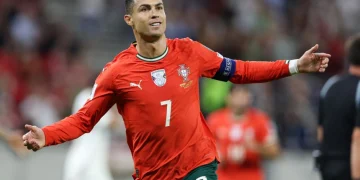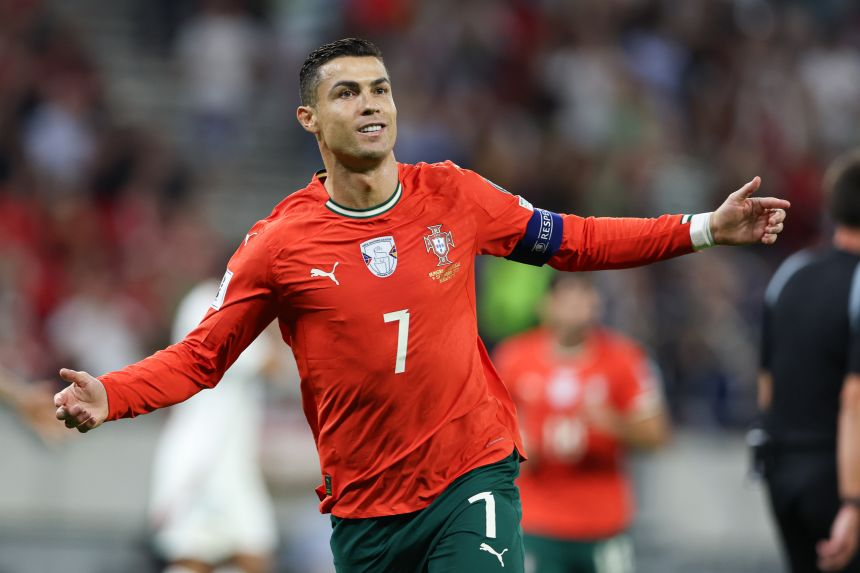
The Ronaldo Messi rivalry has never needed much fuel to dominate football debate. One rumor, one emotional interview, or one final tournament possibility is enough to send fans into another argument about legacy, records and the last dance.
That is why the idea of Cristiano Ronaldo pushing toward the 2030 FIFA World Cup has created such a powerful question: could Lionel Messi delay retirement if Ronaldo somehow keeps going?
The honest answer is that it remains speculation. Ronaldo has been reported as saying the 2026 World Cup would be his last, and Portugal’s 1-0 defeat to Spain in the Round of 16 has been widely framed as his World Cup farewell.
Messi, meanwhile, has not made a firm public commitment to playing in 2030. At 39 during the 2026 World Cup, he has continued to influence Argentina, with Reuters describing him as still central to the national team after two decades on the World Cup stage.
Still, football is not only built on confirmed plans. It is built on possibility. And the 2030 World Cup has a special emotional pull because FIFA has confirmed that Morocco, Portugal and Spain will host the tournament, while Argentina, Paraguay and Uruguay will each stage one centenary celebration match.
That gives the story its power. Portugal will be one of the main hosts. Argentina will be part of the centenary celebration. If either Ronaldo or Messi were ever tempted by one final symbolic tournament, 2030 would be the one.
Ronaldo Messi Debate Enters the 2030 World Cup Imagination
The Ronaldo Messi rivalry is the defining individual battle of modern football.
For nearly two decades, Cristiano Ronaldo and Lionel Messi shaped how fans argued about greatness. It was Real Madrid against Barcelona. Portugal against Argentina. Athletic power against creative genius. Goals against playmaking. Champions League nights against World Cup memories.
Even now, after both players have already built careers beyond normal comparison, the debate refuses to end.
That is why the 2030 World Cup idea is so emotional. It is not just about whether two ageing players can still perform. It is about whether football could get one final scene from the rivalry that defined an era.
But there is a major reality check.
Ronaldo’s 2030 dream is not confirmed. In fact, current reporting points the other way, with Ronaldo having described the 2026 tournament as his final World Cup.
That does not stop fans from imagining the impossible. Football has seen great players extend careers before. But as things stand, any Ronaldo-Messi 2030 storyline should be presented as a fan debate, not a confirmed plan.
Why the 2030 World Cup Carries Special Meaning
The 2030 FIFA World Cup is not a normal tournament.
It will mark 100 years since the first World Cup was held in Uruguay in 1930. FIFA has confirmed a unique format in which Morocco, Portugal and Spain serve as the main hosts, while Uruguay, Argentina and Paraguay each host one centenary celebration match.
That makes the event symbolically powerful for both Ronaldo and Messi.
For Ronaldo, Portugal being one of the main host nations would make 2030 deeply personal. Playing in a World Cup connected to his country would be the kind of ending that football romantics dream about.
For Messi, Argentina’s involvement in the centenary celebration gives the tournament a different kind of emotional weight. Even if Argentina is not one of the main hosts, the country’s role in the opening celebration connects the tournament to South American football history.
This is why fans are asking the question.
Would Ronaldo’s presence motivate Messi to continue?
Would Messi want one final tournament connected to Argentina?
Would either player accept a reduced role just to be part of history?
None of those questions has a confirmed answer. But they are understandable because 2030 is not just another World Cup. It is a centenary World Cup with direct links to both legends’ football identities.
Could Ronaldo Influence Messi’s Retirement Decision?
Ronaldo could influence the conversation around Messi’s retirement, but he probably would not be the deciding factor.
Messi’s decision will likely depend on fitness, motivation, Argentina’s squad needs, family life, club form and whether he believes he can still help the national team. At this stage, emotion alone would not be enough.
Still, rivalries can affect elite athletes.
Messi and Ronaldo have pushed each other for years. Their numbers, awards and achievements have often moved in parallel. When one reached a new milestone, the other was immediately compared against it. That kind of rivalry can become part of an athlete’s motivation.
So, if Ronaldo were somehow to reverse course and target 2030, it could increase the pressure around Messi. Fans would demand a final chapter. Media would frame the tournament as one last GOAT debate. Sponsors and broadcasters would love the storyline.
But Messi has rarely made career decisions only because of Ronaldo. His international journey has been shaped more by Argentina: World Cup pain, Copa América heartbreak, national pressure and eventual glory.
If Messi continues, it will likely be because he still feels useful to Argentina, not because he wants to chase Ronaldo.
One Final Global Stage
The strongest reason Messi could consider 2030 is not Ronaldo. It is the World Cup itself.
Messi has already won the trophy, which changed the emotional meaning of his Argentina career. Before 2022, every tournament carried the burden of proving himself internationally. After winning the World Cup, he no longer needed validation.
That freedom could make retirement easier.
But it could also make one more tournament tempting. A player with nothing left to prove can sometimes play with less pressure. If Messi remains fit and Argentina still sees him as valuable, the 2030 centenary tournament could become an emotional farewell rather than a desperate chase.
The same logic applies to Ronaldo in theory. If he were still active and available, Portugal hosting the main tournament would create enormous symbolic pressure. But the current reporting around Ronaldo’s 2026 farewell makes that scenario unlikely unless his position changes.
How Their Roles Would Change by 2030
If either Messi or Ronaldo were somehow involved in 2030, neither would be expected to play like his younger self.
Messi would be 43. Ronaldo would be 45.
At those ages, their roles would need to be carefully managed.
Messi could operate as a deep creative player, used for passing range, set pieces, final-third decision-making and short bursts of control. He would not be expected to press intensely for 90 minutes or carry the ball constantly.
Ronaldo, if still playing, would likely be used as a penalty-box forward. His value would be movement, aerial threat, finishing, leadership and late-game presence rather than all-round involvement.
That is why the 2030 debate is more emotional than tactical. It is hard to imagine either player being the physical centre of a World Cup team at that stage. But it is easier to imagine them being used as symbolic, specialist figures if their form and fitness allowed it.
Why It May Not Happen
The most realistic outcome is that 2030 comes too late.
Football careers are demanding, and international tournaments are physically intense. Even players with extraordinary discipline eventually face the limits of age, recovery and match rhythm.
Ronaldo has already been widely reported as treating 2026 as his final World Cup.
Messi’s future is less definitive, but 2030 would require four more years of elite-level conditioning, motivation and selection relevance. That is a huge ask, even for a player of his intelligence and technical quality.
Argentina also has to think about transition. Great teams cannot depend forever on one legend. At some point, the next generation must take ownership.
Portugal faces the same reality with Ronaldo. The national team must eventually build fully around younger attackers, even if Ronaldo’s legacy remains unmatched.
Why Fans Still Want to Believe
Fans want the 2030 dream because Messi and Ronaldo made football feel larger than ordinary competition.
Their rivalry was not just about statistics. It was about identity. Fans chose sides. Debates crossed clubs, countries and generations. Every goal became evidence. Every trophy became an argument. Every failure became fuel.
That is why the idea of one final World Cup is irresistible.
A Portugal-hosted tournament with Ronaldo involved would be cinematic. An Argentina-linked centenary World Cup with Messi involved would be historic. Both appearing together would be one of the most dramatic football stories imaginable.
But football rarely gives perfect endings. More often, legends leave before fans are ready.
Expert Analysis
The idea that Ronaldo’s 2030 ambition could delay Messi’s retirement is emotionally powerful but factually uncertain.
The key point is this: Messi’s retirement will not be decided by Ronaldo alone.
Ronaldo may influence the public debate. He may shape the media narrative. He may keep fans comparing the two. But Messi’s actual decision will depend on whether his body, mind and national team still align.
The 2030 World Cup adds symbolism, but symbolism does not win matches. Argentina would need to believe Messi could still contribute. Portugal would need the same belief about Ronaldo if his situation ever changed.
The more realistic scenario is that the rivalry continues through legacy rather than another tournament. Their records, trophies and influence will keep being debated long after both retire.
Still, the question is worth asking because it captures what made the rivalry special. Messi and Ronaldo did not only compete against opponents. They competed against time, expectation and each other.
That is why even an unlikely 2030 possibility feels powerful.
Frequently Asked Questions
Could Cristiano Ronaldo play at the 2030 World Cup?
Based on current reporting, it appears unlikely. Ronaldo has been reported as saying the 2026 World Cup would be his last, and Portugal’s 2026 exit has been described as his World Cup farewell.
Could Lionel Messi play at the 2030 World Cup?
It is possible in theory, but there is no confirmation. Messi would be 43 during the 2030 tournament, so any decision would depend on fitness, motivation, Argentina’s needs and whether he is still playing at a high enough level.
Why is the 2030 World Cup special?
The 2030 World Cup marks the tournament’s centenary. FIFA has confirmed Morocco, Portugal and Spain as main hosts, while Argentina, Paraguay and Uruguay will each host one centenary celebration match.
Would Ronaldo’s decision influence Messi?
It could influence the media debate and fan pressure, but Messi’s decision would likely depend more on his own fitness, family, motivation and role with Argentina.
Could Messi and Ronaldo both appear in 2030?
It is highly unlikely but not impossible in pure theory. Both would be in their forties, and neither has confirmed plans to play in 2030.
What roles would they play if they reached 2030?
Messi would likely be used as a deeper creator or specialist playmaker. Ronaldo would likely be used as a penalty-box finisher or late-game attacking option.
Conclusion
Could Ronaldo’s 2030 World Cup dream delay Messi’s retirement?
Only in the imagination of football fans for now.
The romantic version is easy to understand: Ronaldo pushes toward Portugal’s home-linked World Cup, Messi refuses to let the rivalry end, and the two greatest players of their generation meet history one final time.
The realistic version is more cautious. Ronaldo has been reported as treating 2026 as his final World Cup, while Messi has not confirmed any 2030 plan. Fitness, motivation and national-team needs will matter far more than rivalry alone.
But the debate will not disappear.
The 2030 World Cup is tied to Portugal, Argentina and football’s 100-year history. That gives the Messi-Ronaldo story one final stage in the minds of fans, even if the players themselves never step onto it.
Whether they play or not, their rivalry has already achieved something rare: it made football history feel unfinished for nearly 20 years.