Football has many ways of creating beauty. A long pass can split a defence. A striker’s finish can decide a final. A goalkeeper’s save can become the turning point of a season. But nothing captures the imagination quite like dribbling.
A great dribbler changes the rhythm of a match. He turns pressure into opportunity, stillness into chaos and a crowded pitch into a private stage. With one drop of the shoulder, a sudden burst of acceleration or a perfectly timed feint, he can make defenders lose balance, draw the crowd to its feet and create a chance from nothing.
The best dribblers in football history are not all the same. Some were explosive wingers who lived for one-on-one battles. Some were playmakers who glided through midfield. Some were forwards who could destroy entire defences at speed. Others were entertainers, artists and street-football geniuses who treated the ball like an extension of the body.
Ranking dribblers across different eras is difficult. Modern players have data, video analysis and tactical systems that allow us to measure take-ons more clearly. Older legends were judged through eyewitness accounts, match footage, reputation and influence. The pitches were different. The balls were different. Refereeing standards were different. Defensive systems were different. But the essence of dribbling remains the same: can a player beat opponents with the ball under pressure?
This ranking considers skill, influence, effectiveness, reputation, longevity, ability against elite defenders and the emotional impact of each player’s style. It is not only about tricks. It is about control, courage, timing, balance, imagination and the ability to turn dribbling into danger.
Here are the 25 best dribblers in football history.
What Makes a Great Dribbler?
A great dribbler is not simply a player who performs tricks. Tricks can entertain, but dribbling at the highest level requires purpose.
The finest dribblers know when to slow the game down and when to accelerate. They understand the defender’s body shape. They invite pressure, then escape it. They know how to protect the ball with their hips, shoulders and stride. They can beat a man on the outside, cut inside, ride tackles, change direction and still keep the next pass or shot in mind.
There are several types of elite dribblers.
The first type is the winger. This player isolates full-backs, attacks wide spaces and creates crossing or shooting opportunities. Stanley Matthews, Garrincha, George Best and John Barnes fit strongly into this tradition.
The second type is the central creator. These players dribble not only to beat one man but to manipulate entire defensive structures. Johan Cruyff, Zinedine Zidane, Roberto Baggio and Dennis Bergkamp belong here.
The third type is the explosive forward. These players use speed, power and balance to break through defenders and finish chances. Ronaldo Nazario, Lionel Messi, Neymar and Eden Hazard represent this style in different ways.
The fourth type is the entertainer. These are players whose dribbling is part of football’s emotional memory. Ronaldinho, Jay-Jay Okocha and Garrincha did not only beat defenders; they made people smile.
The greatest of all combine several of these qualities.
25. Rivellino
Rivellino was one of Brazil’s great left-footed magicians and a key member of the legendary 1970 World Cup-winning team. He is often remembered for his powerful shooting, passing range and the famous “elastico” or “flip-flap” skill that later became associated with Ronaldinho.
His dribbling was based on deception. Rivellino could shape his body as if he were moving in one direction, then flick the ball sharply the other way. That ability to unbalance defenders made him a constant threat between midfield and attack.
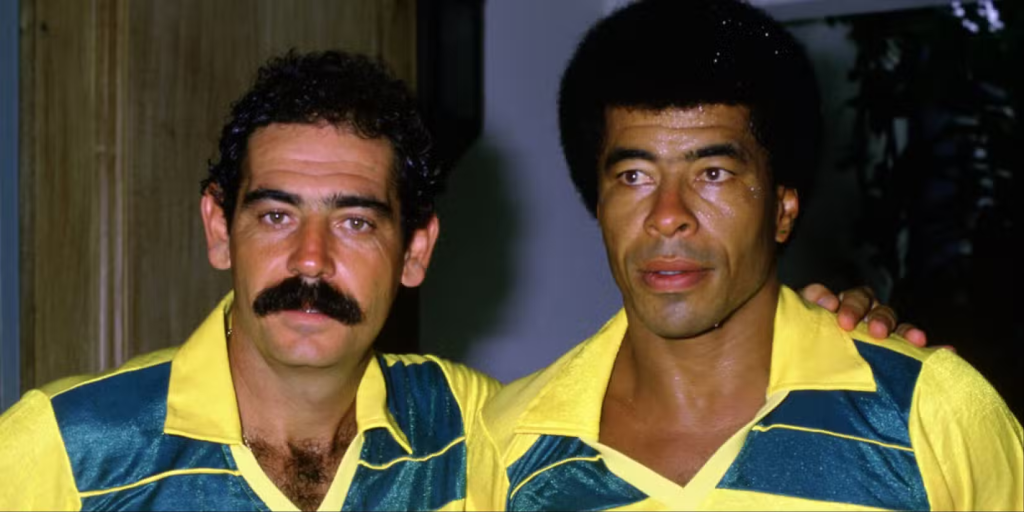
Unlike some wide dribblers, Rivellino was not only about pace. He was a technician. His close control, balance and disguise allowed him to operate in crowded areas. He could carry the ball, create passing angles and release teammates with clever distribution.
His influence on Brazilian football is significant. Later generations of skilful Brazilian players inherited some of the expressive style that Rivellino helped popularise. Diego Maradona also admired him, which says a lot about his standing among creative footballers.
Rivellino belongs on this list because his dribbling was not decorative. It was part of a complete attacking game built on creativity, intelligence and technical elegance.
24. Paulo Futre
Paulo Futre was one of Portugal’s most exciting attacking players of the 1980s and 1990s. A left-footed winger with explosive acceleration, he was capable of turning defensive situations into dangerous attacks in seconds.
Futre’s dribbling was direct. He wanted to attack space, beat defenders and drive toward goal. His movement drew comparisons with Diego Maradona because of his balance, left-footed control and ability to twist away from pressure.
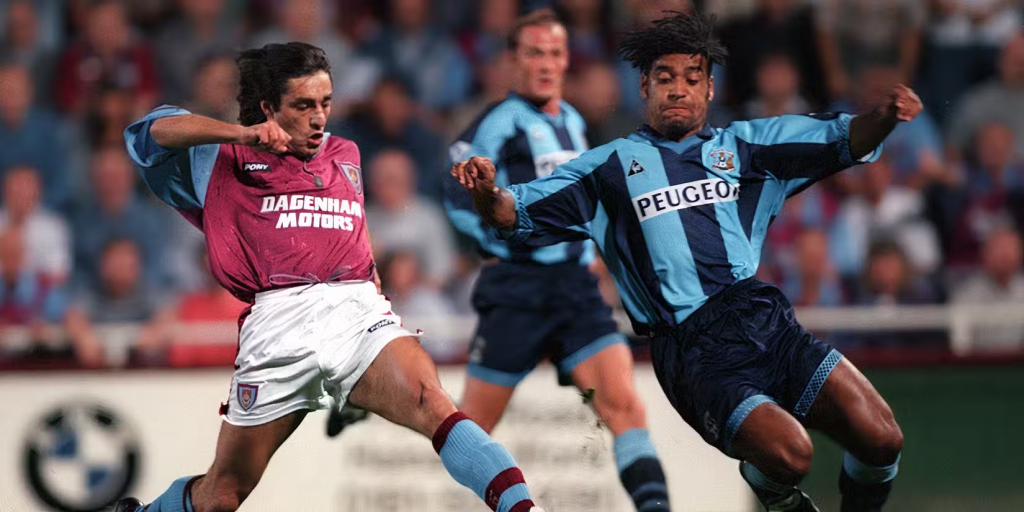
His career included spells at Porto, Atletico Madrid, Benfica, West Ham and other clubs. At his peak, he was one of Europe’s most dangerous wide attackers. He could carry the ball at speed, glide past defenders and combine dribbling with creativity and finishing.
Injuries affected his career and prevented him from enjoying the same long peak as some other legends. But when judging pure dribbling talent, Futre deserves recognition. He had the confidence to take players on, the technique to escape tight spaces and the speed to punish defenders once he had beaten them.
His place in the ranking reflects both his brilliance and the sense that injuries stopped him from climbing even higher.
23. Marc Overmars
Marc Overmars was one of the fastest elite dribblers of his generation. His game was built on acceleration, directness and ruthless efficiency.
The Dutch winger starred for Ajax, Arsenal and Barcelona, winning major honours and terrifying full-backs with his pace. At Ajax, he was part of the team that won the Champions League in 1995. At Arsenal, he became a crucial player in Arsene Wenger’s title-winning side, offering width, speed and decisive attacking moments.
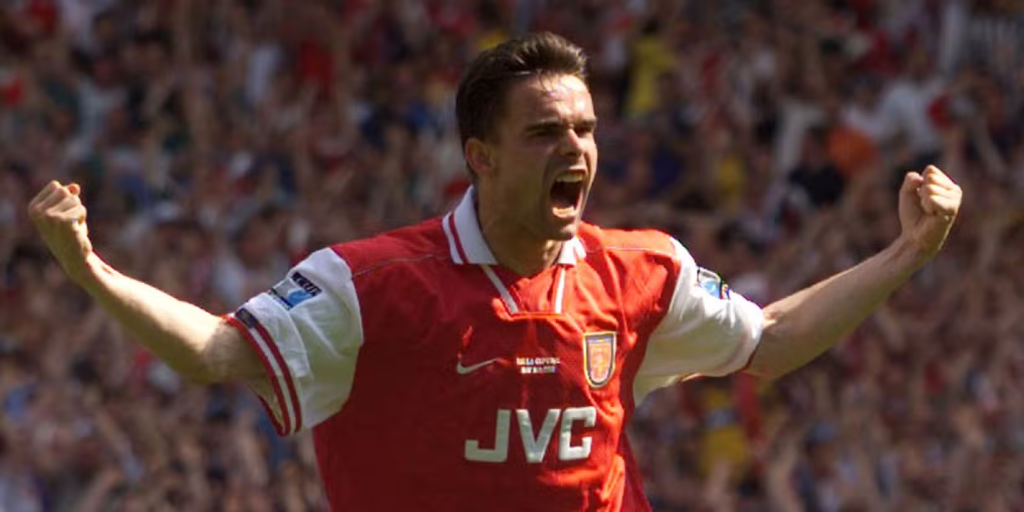
Overmars was not a showman in the Ronaldinho sense. He did not dribble to entertain first. He dribbled to hurt teams. He would receive the ball wide, push it beyond the defender and explode into space. His direct style made him extremely difficult to contain because defenders knew what was coming but often could not stop it.
His dribbling was especially effective in transition. When opponents were stretched, Overmars could carry the ball over long distances and turn defence into attack almost instantly.
He earns a place among the best dribblers because speed with the ball is a rare weapon. Many players are fast. Fewer can run at top speed while keeping the ball under control. Overmars could.
22. David Ginola
David Ginola was elegance in motion. The French winger became a cult hero at Newcastle United and Tottenham Hotspur, admired for his style, confidence and smooth control of the ball.
Ginola was not the fastest dribbler on this list, but he had exceptional touch and balance. He could slow a defender down, tempt him into a challenge, then glide past with a change of direction. His dribbling was graceful rather than violent. He looked comfortable even when surrounded.
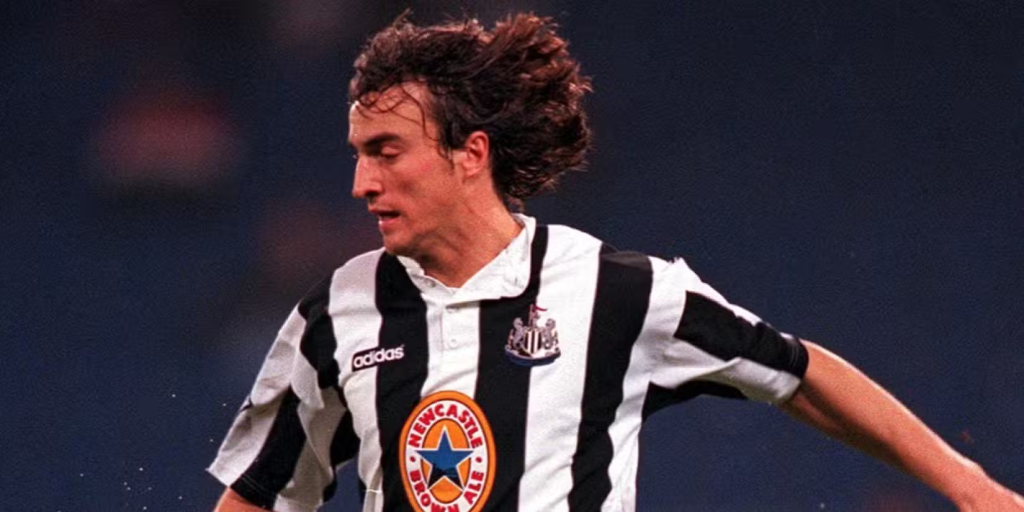
His style made him a joy to watch. He had the flair associated with great French attacking players: upright posture, soft feet, strong first touch and the ability to turn ordinary possession into theatre.
Ginola also carried creative responsibility. He was often the player teammates looked for when they needed imagination. His dribbling opened space, drew defenders and created chances.
He may not have won the volume of trophies enjoyed by some others in this ranking, but dribbling greatness is not judged only by medals. Ginola’s ability to entertain, manipulate defenders and produce moments of individual quality earns him his place.
21. Luis Figo
Luis Figo was one of the great wide creators of his era. The Portuguese winger combined dribbling, crossing, passing and tactical intelligence, making him far more than a traditional touchline player.
Figo’s dribbling was controlled and purposeful. He did not rely on pure pace as much as body shape, timing and close control. He could beat defenders on either side, create space for crosses and carry the ball inside to link play.
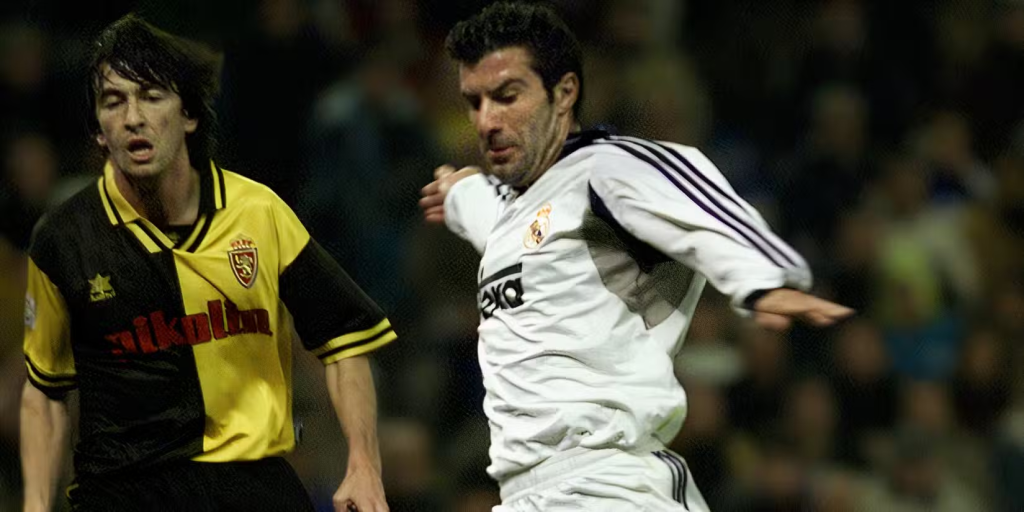
His career took him from Sporting CP to Barcelona, Real Madrid and Inter Milan. His controversial move from Barcelona to Real Madrid made him one of the most discussed players in world football, but his quality was never in doubt. He won the Ballon d’Or and became one of the defining figures of Portugal’s golden generation.
Figo’s dribbling was valuable because it came with end product. He could create chances, score goals and control attacking tempo from wide areas. Defenders could not simply show him outside or inside because he had the skill to punish both options.
He ranks among the greatest dribblers because he turned one-on-one ability into sustained elite performance at the highest level.
20. Eddie Gray
Eddie Gray is one of Leeds United’s greatest players and one of British football’s finest natural wingers. His entire senior career was spent at Leeds, where he became a key figure in Don Revie’s great side.
Gray’s dribbling was classic wing play: close control, balance, quick feet and the courage to take on full-backs repeatedly. He could beat defenders in tight areas and create openings from the left side.
His famous goal against Burnley in 1970 remains one of the great individual goals in Leeds history. It captured what made Gray special: confidence, rhythm and the ability to move through defenders with the ball almost glued to his feet.
In an era when defenders were often more physical and referees gave attackers less protection, Gray’s dribbling required bravery. He was not simply a skilful player; he was prepared to keep demanding the ball and keep attacking defenders.
His inclusion recognises a winger whose artistry became part of a club’s identity. Leeds had many great players during their golden period, but Gray was one of the most naturally gifted.
19. Gianfranco Zola
Gianfranco Zola was a magician in tight spaces. The Italian forward and playmaker made his name at Napoli, Parma and Chelsea, becoming one of the most loved foreign players in Premier League history.
Zola’s dribbling was based on low centre of gravity, sharp changes of direction and exceptional touch. He did not need large spaces to influence games. He could receive the ball with defenders close, turn quickly and create something unexpected.
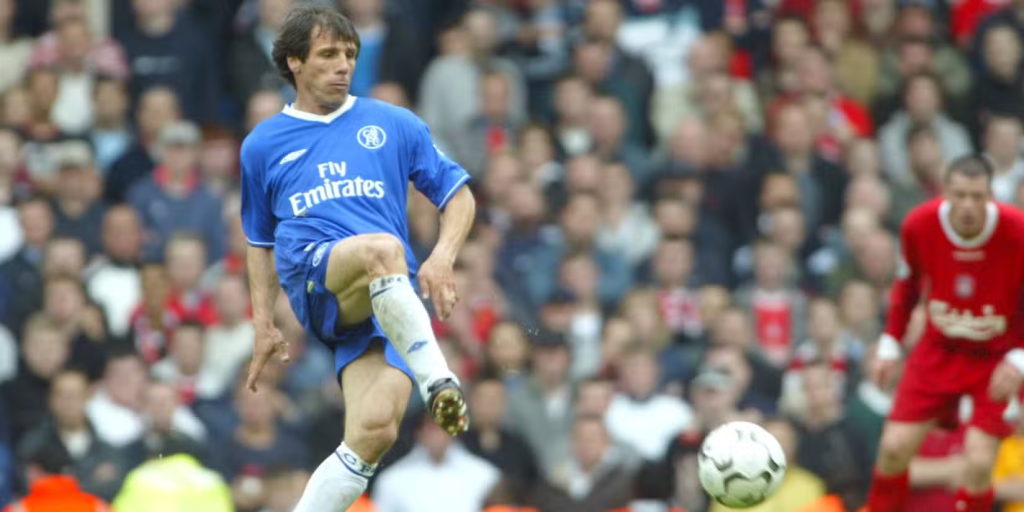
His background in Italian football gave him tactical intelligence, while his natural flair made him unpredictable. He could drift between midfield and attack, escape pressure and combine dribbling with passing, finishing and set-piece quality.
At Chelsea, Zola became a symbol of creativity. He arrived before the club’s modern era of dominance but helped raise its technical level and international profile. Fans loved him because he played with imagination and humility.
Zola’s place among the best dribblers comes from his ability to make difficult things look simple. He could beat defenders without needing explosive speed, using technique, balance and intelligence instead.
18. Paul Gascoigne
Paul Gascoigne, known simply as Gazza, was one of England’s most naturally gifted footballers. At his best, he had a rare ability to carry the ball through midfield, beat opponents and play with instinctive creativity.
Gascoigne’s dribbling came from confidence and improvisation. He had strength, balance, quick feet and the courage to try things that other players would not attempt. He could receive the ball under pressure, roll away from markers and drive forward with personality.
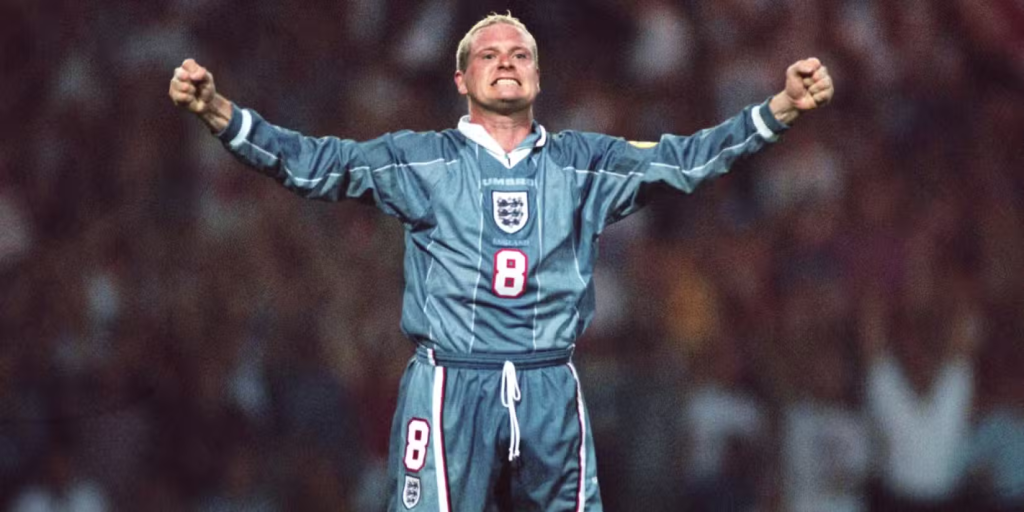
His career included spells at Newcastle United, Tottenham Hotspur, Lazio, Rangers and Everton. He produced memorable moments for England, especially at Italia 90 and Euro 96. His famous goal against Scotland at Euro 96 showed his imagination, technique and ability to produce under pressure.
Off-field challenges affected his career and public image, but his footballing talent was extraordinary. Gascoigne had the natural feel of a street footballer combined with the ability to perform on major stages.
He ranks here because dribbling was central to his identity. When Gazza carried the ball, crowds sensed that something unusual might happen.
17. Roberto Baggio
Roberto Baggio was one of Italy’s most gifted attacking players. Known as “Il Divin Codino”, he combined elegance, balance, vision, free-kick ability and dribbling skill.
Baggio’s dribbling was not based on constant tricks. It was about timing, softness of touch and gliding movement. He could drift past defenders with subtle body shifts, protect the ball in crowded areas and create shooting angles from almost nothing.
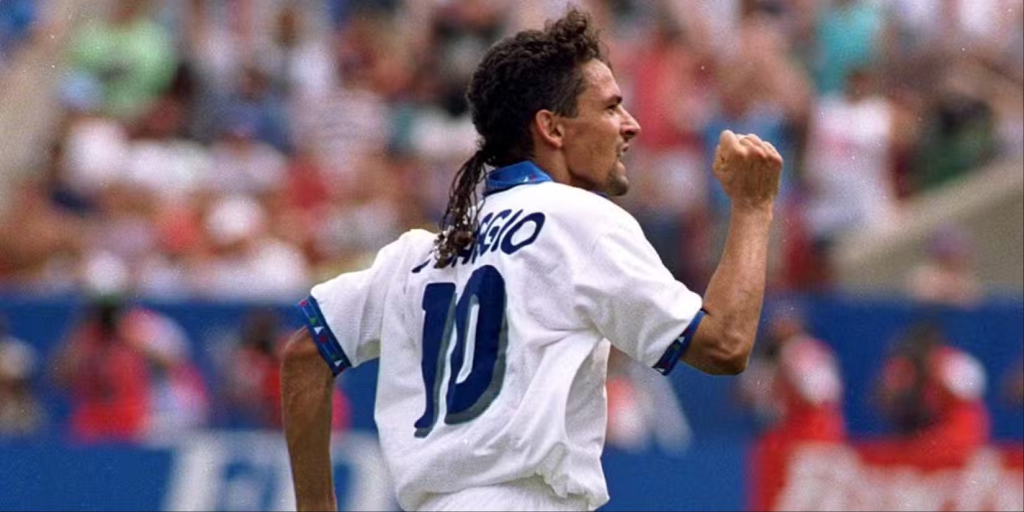
He starred for clubs including Fiorentina, Juventus, AC Milan, Inter Milan and Brescia. He won the Ballon d’Or in 1993 and carried Italy to the 1994 World Cup final, where his missed penalty became one of football’s most painful images. But reducing Baggio’s career to that moment would be unfair. He was one of the most technically complete players of his generation.
Baggio’s dribbling was beautiful because it served creativity. He could beat a man, slip a pass, draw a foul or finish with precision. He played with grace even in a tactical culture that often prioritised defensive structure.
His place in this ranking reflects his artistry and the way he used dribbling to unlock compact defences.
16. Zico
Zico was one of Brazil’s greatest playmakers and one of the finest attacking midfielders of the late 1970s and early 1980s. Often called the “White Pele”, he was known for technique, vision, goalscoring and free-kick mastery.
His dribbling was smooth, intelligent and creative. Zico did not always need to beat several players at once. He used close control to open passing lanes, escape pressure and move into shooting positions.
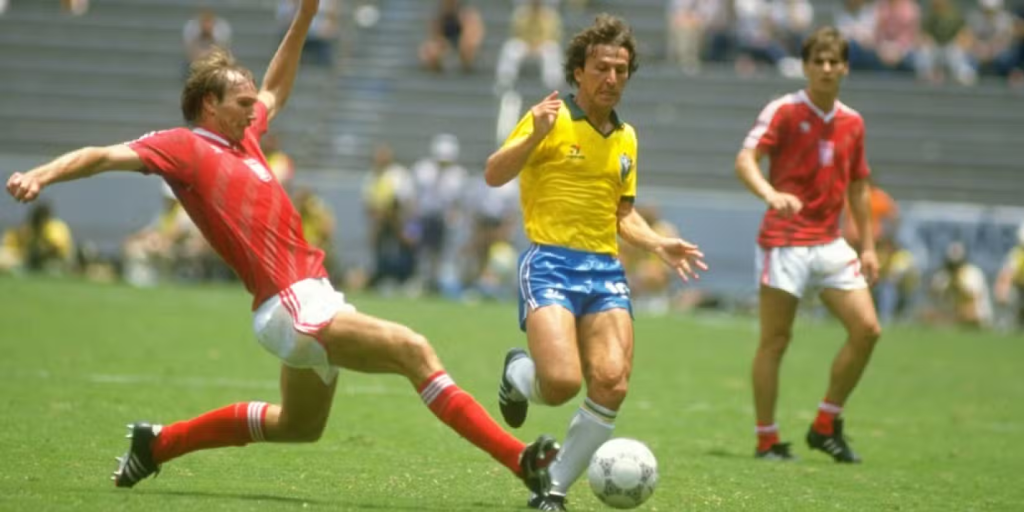
At Flamengo, Zico became a legend, winning major domestic and continental honours. For Brazil, he was part of one of the most admired teams never to win the World Cup: the 1982 side known for its beautiful attacking football.
Zico’s dribbling belonged to a broader creative package. He could carry the ball through midfield, combine quickly with teammates and produce moments of individual brilliance around the box.
He earns his place because he represented a Brazilian tradition where dribbling was not separated from passing and rhythm. He did not simply beat defenders; he conducted attacks.
15. Dennis Bergkamp
Dennis Bergkamp was not a winger, nor was he a dribbler in the traditional sense. But his control of the ball was so refined that he belongs among football’s great manipulators of space.
Bergkamp developed at Ajax before playing for Inter Milan and Arsenal. In North London, he became one of the Premier League’s most elegant and intelligent forwards.
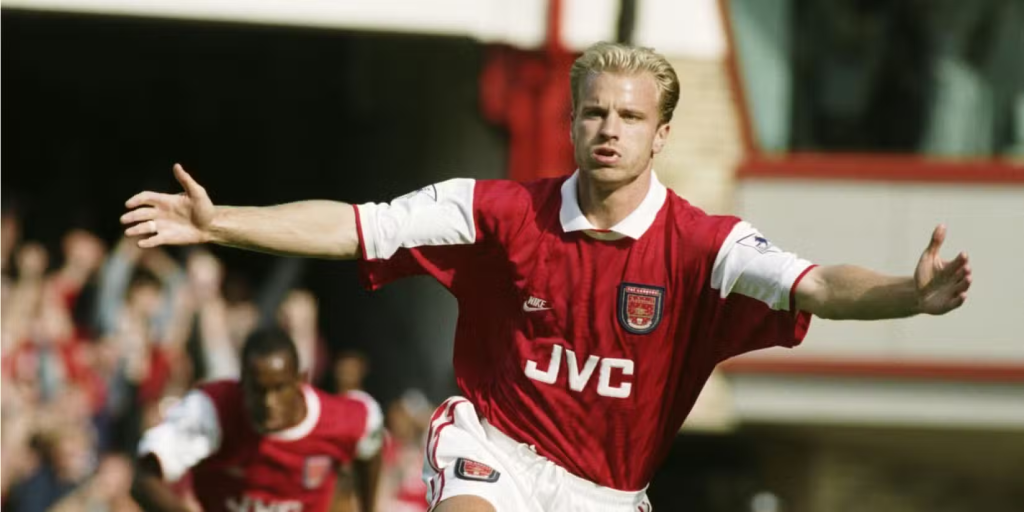
His dribbling was subtle. He rarely wasted movement. He could receive the ball with his back to goal, take one touch to remove a defender and another to create a chance. His famous goals against Newcastle United and Argentina showed his extraordinary relationship with the ball.
Bergkamp’s genius was in his first touch. Many players dribble after controlling the ball. Bergkamp often used the first touch as the dribble itself. He could eliminate defenders before they realised he had moved.
He was not a high-volume dribbler like Messi or Neymar, but his technical control and ability to beat opponents through touch, balance and imagination make him one of the most refined ball players in history.
14. John Barnes
John Barnes was one of the most powerful and graceful wingers England has produced. At Watford, Liverpool and for England, he combined strength, rhythm and close control.
Barnes’ dribbling was based on balance and body movement. He could shift his weight, glide past defenders and carry the ball at speed without losing control. Unlike some wingers who relied only on pace, Barnes had intelligence and precision in his movement.
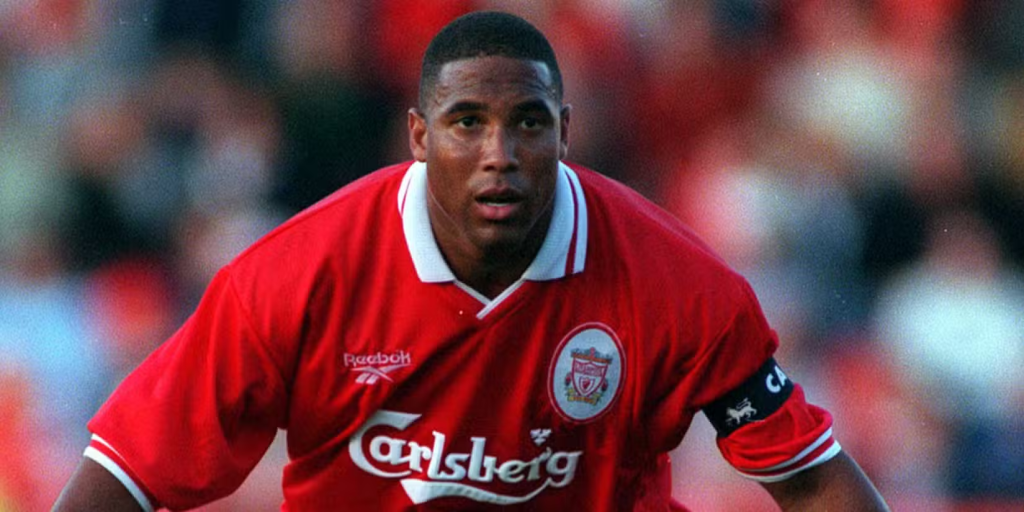
His famous goal for England against Brazil in 1984 remains one of the great dribbling goals in international football. He danced through defenders with a mixture of confidence, power and elegance before scoring.
At Liverpool, Barnes evolved from a winger into a more complete midfielder, but his ability to carry the ball remained a major part of his game. He was both creative and physically strong, making him difficult to knock off the ball.
Barnes deserves his place because he brought controlled flair to English football. He was not simply fast or skilful; he was a devastating carrier of the ball.
13. Ronaldo Nazario
Ronaldo Nazario, known as O Fenomeno, was one of the most explosive dribbling forwards football has ever seen.
At his peak, Ronaldo combined pace, power, balance, close control and finishing in a way that seemed almost unfair. He could receive the ball deep, turn, accelerate and cut through defenders before finishing with calm precision.
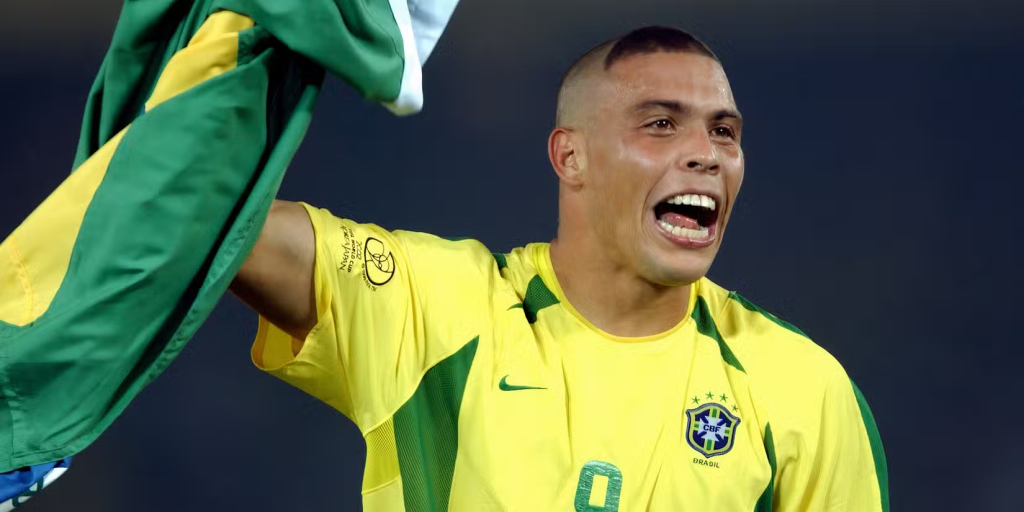
His spells at PSV, Barcelona, Inter Milan and Real Madrid produced moments of breathtaking individual brilliance. The Barcelona version of Ronaldo was especially terrifying. He played like a striker with the dribbling ability of a winger and the strength of a centre-forward.
What made Ronaldo different was his ability to dribble at full speed. Many great dribblers slow down to manipulate defenders. Ronaldo could run directly at them, shift the ball with either foot and keep his balance while being challenged.
Injuries robbed him of some explosiveness, but even after serious setbacks, he remained an elite player and helped Brazil win the 2002 World Cup.
Ronaldo ranks high because few players have ever made elite defenders look so helpless in open space.
12. Eden Hazard
Eden Hazard was one of the finest dribblers of the modern Premier League era. At Lille and Chelsea, he became famous for his balance, strength, agility and ability to beat defenders in crowded areas.
Hazard’s dribbling was built around his low centre of gravity. He could absorb contact, roll away from pressure and accelerate in tight spaces. Defenders often tried to foul him because cleanly dispossessing him was so difficult.
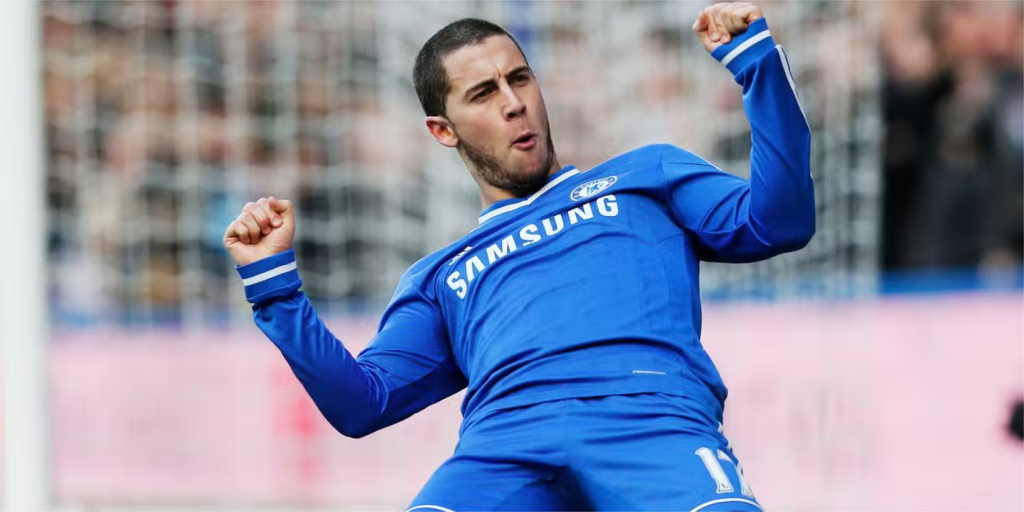
At Chelsea, Hazard was the creative heartbeat of the team. He completed huge numbers of take-ons and combined dribbling with goals, assists and match-winning performances. His ability to carry the ball from midfield to attack made him especially valuable in transition.
Hazard was also efficient. He did not dribble only to entertain. He used it to advance the ball, draw defenders, win fouls and open space for teammates.
His move to Real Madrid did not work as expected, largely because of injuries and fitness issues, but his peak at Chelsea remains one of the great dribbling periods in modern European football.
Hazard ranks above many legends because data and memory agree: at his best, he was almost impossible to stop one-on-one.
11. Jay-Jay Okocha
Jay-Jay Okocha was football joy in human form. The Nigerian playmaker had outrageous technique, imagination and confidence. His nickname, “so good they named him twice,” captured the affection fans felt for him.
Okocha played for clubs including Eintracht Frankfurt, Fenerbahce, Paris Saint-Germain and Bolton Wanderers. Everywhere he went, he produced moments of skill that lived long in the memory.
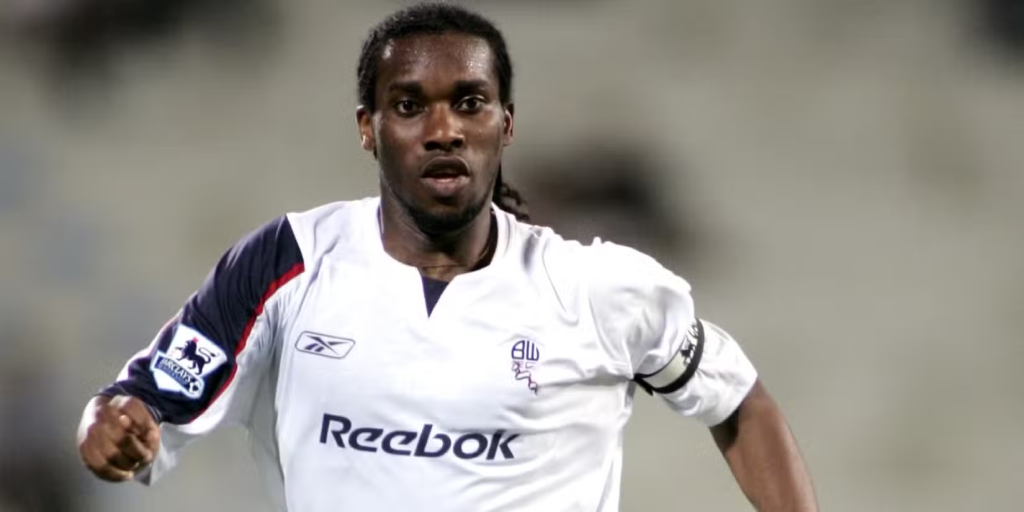
His dribbling was expressive. Stepovers, feints, drag-backs, body swerves, nutmegs and sudden changes of rhythm were all part of his game. But Okocha was not just a circus act. He could create chances, control tempo and inspire teams.
At Bolton, under Sam Allardyce, he became one of the Premier League’s great entertainers. He played with freedom and transformed how many fans viewed the club. His influence on African football is also immense. For many young players, Okocha represented creativity without fear.
He ranks just outside the top ten because his dribbling artistry was extraordinary, even if his trophy haul and consistency at the very highest European level were not as strong as some above him.
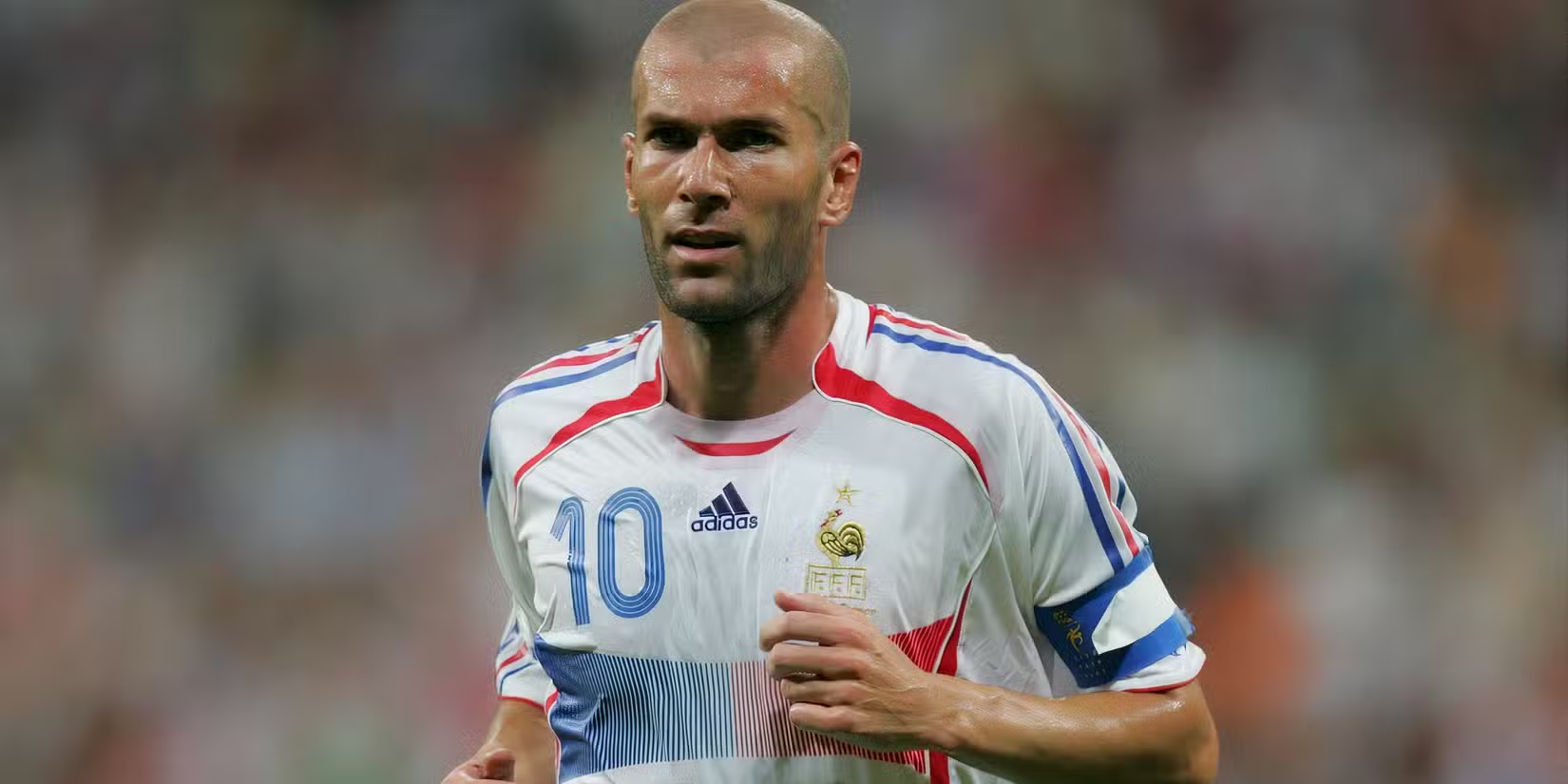
10. Zinedine Zidane
Zinedine Zidane’s dribbling was different from almost everyone else on this list. He was not fast in the traditional sense. He did not rely on tricks or constant take-ons. Instead, he used touch, balance, strength and spatial awareness to move through midfield with unmatched elegance.
Zidane began at Cannes and Bordeaux before becoming a superstar at Juventus and Real Madrid. He won the Ballon d’Or, the World Cup, the Champions League and multiple league titles. His greatest performances often came on the biggest stages.
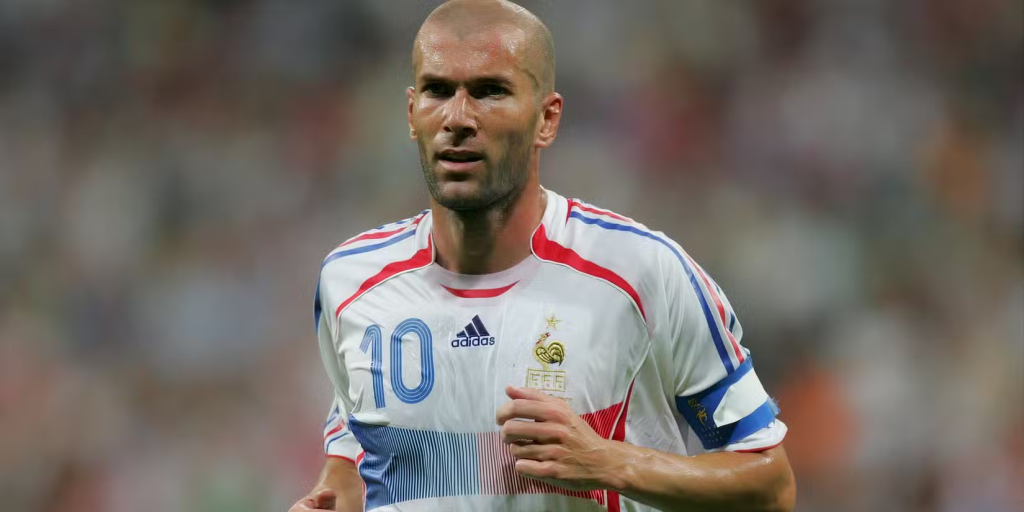
His signature move was the roulette, a spinning turn that allowed him to escape pressure while keeping the ball close. But Zidane’s dribbling was more than one move. He could pause, invite pressure, shield the ball and glide away from multiple players.
What made him special was calmness. In the most intense matches, Zidane appeared to operate at a different speed. He could slow the game down and make defenders commit first.
He deserves a top-ten place because dribbling is not only about speed. It is about mastery of space. Zidane had that mastery.
9. Neymar
Neymar is one of the last great modern showmen. In an era increasingly dominated by tactical structure, pressing systems and efficiency, he preserved the street-football spirit of Brazilian attack.
From Santos to Barcelona, Paris Saint-Germain, Al Hilal and Brazil, Neymar built his reputation on flair, creativity and fearless dribbling. He could beat defenders with stepovers, nutmegs, flicks, elasticos, sudden acceleration and unpredictable touches.
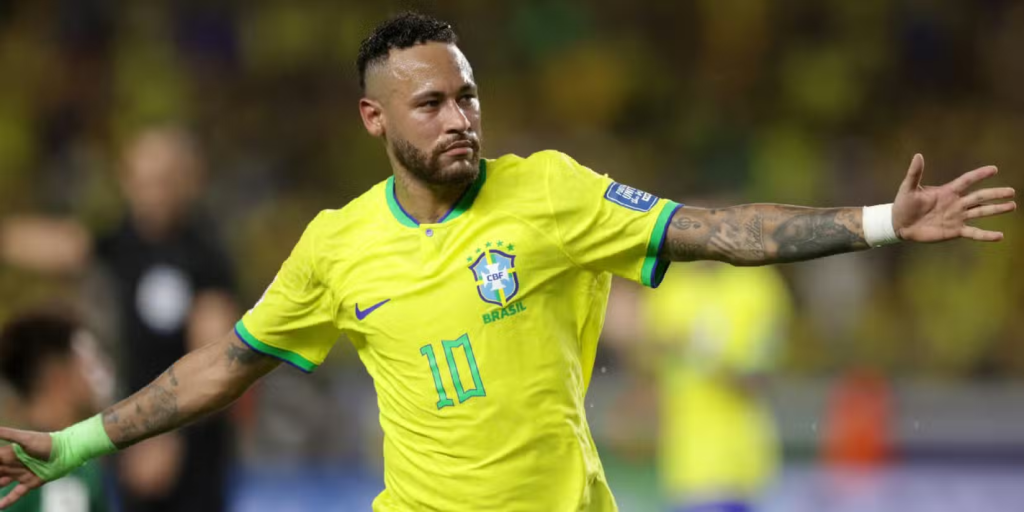
At Barcelona, alongside Lionel Messi and Luis Suarez, Neymar became part of one of the most devastating attacking trios ever assembled. His dribbling gave the team a different kind of threat: a winger who could isolate defenders, create chances and score in major matches.
For Brazil, Neymar carried enormous creative responsibility and became the country’s all-time leading men’s scorer. That achievement shows that his dribbling was matched by end product.
Neymar’s style has sometimes divided opinion. Some critics saw excess. Fans saw entertainment. But football needs players who dare to be expressive.
He ranks ninth because his peak dribbling belongs among the very best of the modern game. Few players of his era have matched his combination of skill, creativity and unpredictability.
8. Omar Sivori
Omar Sivori was one of the great left-footed dribblers of the 1950s and 1960s. Born in Argentina and later representing Italy, he became a key figure for River Plate, Juventus and Napoli.
Sivori was known for his fierce personality and extraordinary technique. He loved embarrassing defenders, especially with nutmegs and sharp left-footed touches. His dribbling had edge. It was not gentle or polite; it was confrontational.
At Juventus, he became one of the stars of a dominant team and won the Ballon d’Or in 1961. His ability to carry the ball, create chances and score made him one of the most feared attackers of his era.
Sivori’s nickname, “El Gran Zurdo,” meaning the great left-footer, captured the essence of his game. He could do almost anything with his left foot. Defenders knew where he wanted to go, yet he still found a way through.
He ranks this high because he was not only skilful but influential. He helped shape the image of the arrogant, brilliant, unpredictable attacking genius who could win games through individual talent.
7. Sir Stanley Matthews
Sir Stanley Matthews was the original “Wizard of the Dribble.” His career stretched from the 1930s to the 1960s, an almost unbelievable span at the top level.
Matthews was not a prolific goalscorer. His greatness came from wing play. He could beat full-backs repeatedly through body swerves, timing and balance. He was famous for making defenders commit before slipping past them.
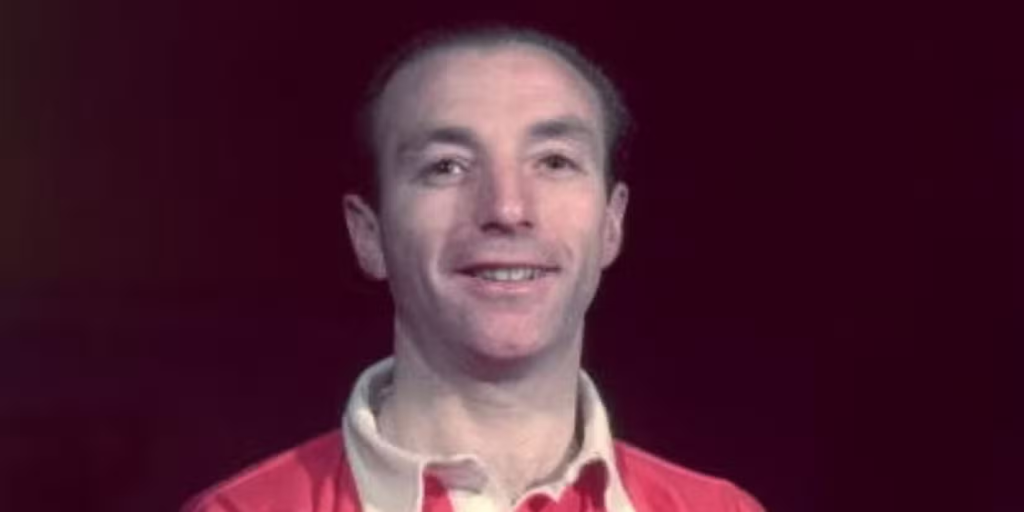
His most famous performance came in the 1953 FA Cup final, known forever as the “Matthews Final.” Although Stan Mortensen scored a hat-trick for Blackpool, Matthews’ wing play dominated the memory of the match. That tells you everything about the power of dribbling to define a game.
Matthews played in an era of heavy pitches, physical defending and limited protection for attackers. To remain effective for so long required remarkable fitness, discipline and technical excellence.
His influence extended far beyond England. Pele admired him, and generations of wingers studied his style.
He ranks seventh because he helped define dribbling as a football art. Many came after him, but few carried the craft with such purity and longevity.
6. Ronaldinho
Ronaldinho may be the most joyful footballer ever to play the game. He made elite football look like a street performance, turning matches into festivals of imagination.
His dribbling was built on creativity. Stepovers, no-look touches, elasticos, backheels, shoulder drops, flicks and sudden changes of rhythm all appeared naturally in his game. But Ronaldinho was not just a trickster. At his peak, he was devastatingly effective.
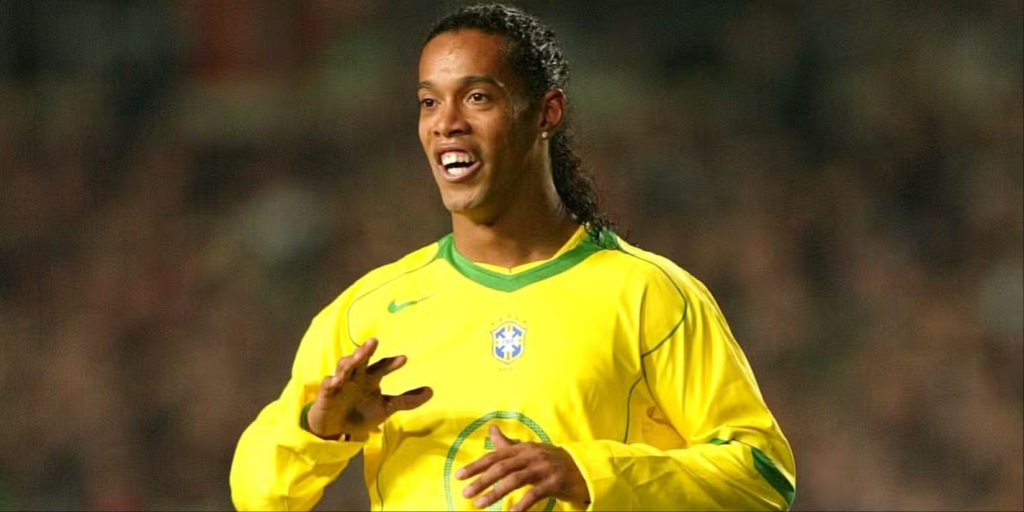
At Barcelona, he restored belief and beauty to the club before the Messi era fully arrived. He won the Ballon d’Or, the Champions League, La Liga titles and the admiration of fans around the world. With Brazil, he won the World Cup and added to the country’s tradition of expressive attacking football.
Ronaldinho’s dribbling was psychologically powerful. Defenders did not know what was coming. He could beat them with skill, strength, timing or pure audacity. He played as if he saw possibilities that others did not.
His career peak was not as long as Messi’s or Cristiano Ronaldo’s, but few peaks were more magical.
He ranks sixth because he represents the emotional side of dribbling: the ability to make football feel like play, even at the highest level.
5. Johan Cruyff
Johan Cruyff was one of football’s greatest thinkers and one of its finest dribblers. His influence as a player, coach and philosopher is almost impossible to measure.
Cruyff’s dribbling was intelligent. He did not beat players for show. He used dribbling to create the fastest route to goal, manipulate space and disrupt defensive structure. His famous Cruyff turn, performed at the 1974 World Cup, remains one of the most iconic moves in football history.
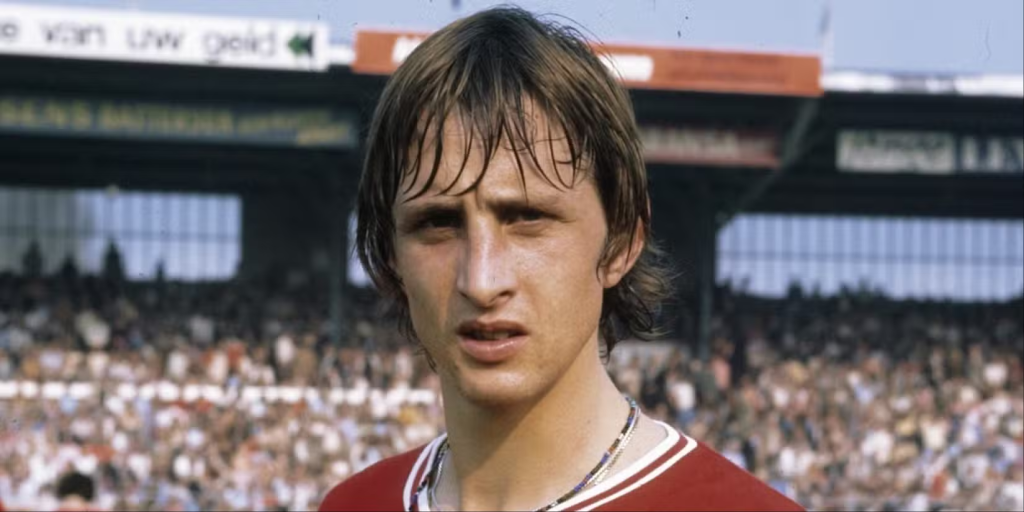
At Ajax, Barcelona and the Netherlands, Cruyff became the face of Total Football. He could play as a forward, creator and tactical leader. His dribbling helped him move between positions, pull defenders out of shape and create numerical advantages.
What made Cruyff special was the relationship between technique and thought. Every touch seemed connected to a larger idea. He did not simply react to the game; he understood it before others did.
His place in the top five is secure because dribbling was part of his wider genius. He used the ball to teach football new possibilities.
4. George Best
George Best was one of the most naturally gifted footballers Britain and Ireland have ever produced. At Manchester United, he combined balance, two-footed control, acceleration and imagination.
Best’s dribbling was electric. He could beat defenders on either side, ride tackles and keep the ball under control while moving at speed. Teammates and opponents often described him as almost impossible to predict.
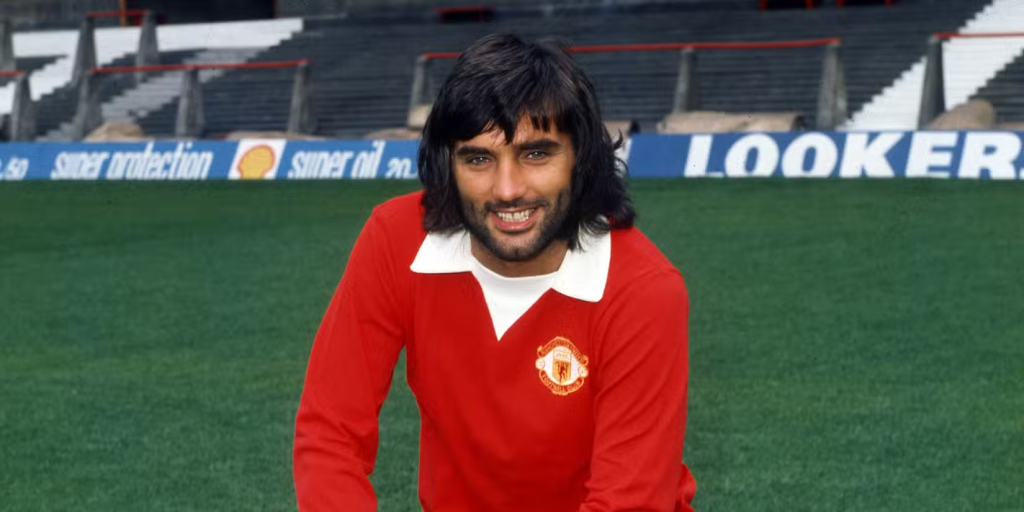
Under Sir Matt Busby, Best became a superstar before the age of 22. He helped Manchester United win the European Cup in 1968 and became one of football’s first global celebrity players.
His peak was dazzling. He played with mischief and confidence, often humiliating defenders with nutmegs and sudden changes of direction. He was not only a winger but also a scorer, creator and match-winner.
Personal issues and lifestyle choices shortened his time at the very highest level, but his talent remains unquestioned.
Best ranks fourth because few players have ever combined dribbling, charisma and danger so naturally. When he had the ball, defenders were never comfortable.
3. Lionel Messi
Lionel Messi is the greatest dribbler of the modern era and one of the greatest footballers of all time.
His dribbling is unique because it is so efficient. Messi does not need unnecessary tricks. He uses tiny touches, body feints, acceleration and perfect balance. The ball stays close to his left foot, almost as if controlled by invisible thread.
At Barcelona, Messi developed from a teenage winger into a false nine, playmaker and complete attacking force. His early years were filled with slaloming runs past multiple defenders. Later, he became more selective, choosing moments to accelerate and destroy defensive lines.
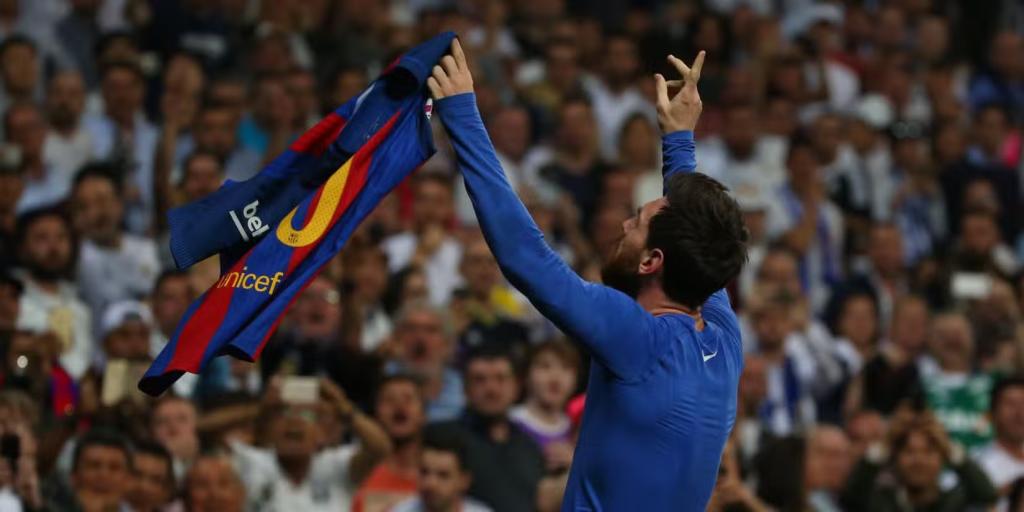
Messi’s low centre of gravity allows him to change direction quickly. His decision-making makes him even more dangerous. He does not dribble only to beat a man; he dribbles to create the best next action, whether that is a pass, shot or another carry.
His famous goal against Getafe in 2007 drew comparisons with Maradona’s Goal of the Century. Throughout his career, he repeatedly produced runs that seemed impossible in modern, tactically organised football.
Messi’s numbers also support the eye test. Modern dribble data places him among the most prolific and successful ball-carriers of his era.
He ranks third because he combined dribbling with goals, assists, longevity and unmatched consistency. In modern football, nobody has carried the ball better.
2. Diego Maradona
Diego Maradona was football’s ultimate force of individual defiance. His dribbling was not only beautiful; it was heroic.
Maradona played in an era of brutal defending, heavy tackles and less protection for attackers. Yet he carried the ball through crowds of opponents with astonishing balance and courage. Defenders often had no answer except fouling him.
The 1986 World Cup remains the greatest tournament by an individual player in football history for many fans. Maradona completed a record number of dribbles, drew constant attention and scored the Goal of the Century against England after carrying the ball from inside his own half.
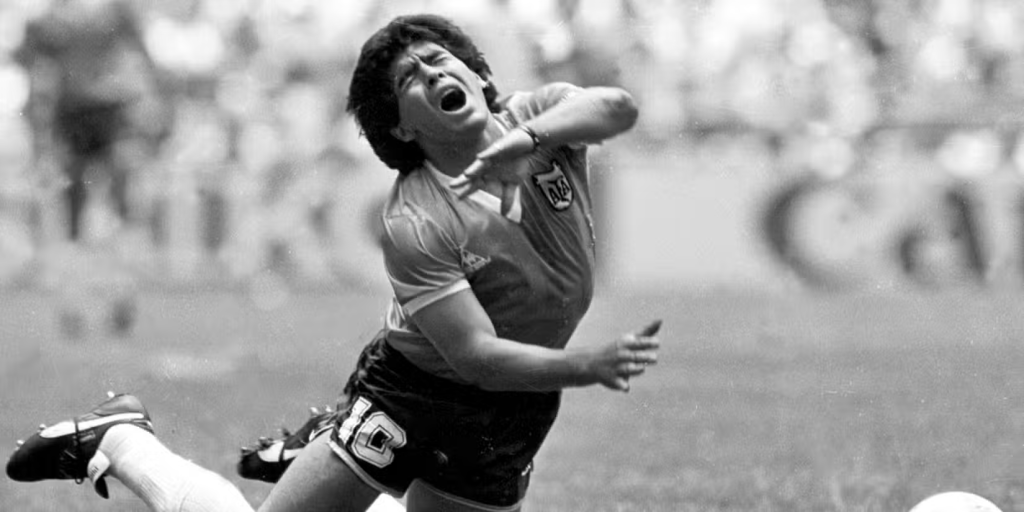
That goal captured everything about him: acceleration, balance, control, imagination, strength and nerve. It was not just a great dribble. It was a moment that defined football’s capacity for genius.
At Napoli, Maradona carried a club and a city to historic success. In Italy’s defensive league, he found ways to beat markers, draw fouls and create miracles.
Maradona’s dribbling had emotion. It felt like resistance. He played against defenders, systems, pressure and expectation, yet the ball remained under his spell.
He ranks second because his dribbling produced some of football’s most iconic moments. Very few players have ever bent the game around themselves the way Maradona did.
1. Garrincha
Garrincha stands at the top of this ranking because no player is more closely associated with the pure joy of dribbling.
Born Manuel Francisco dos Santos, Garrincha became known as the “Joy of the People.” His legs were famously bowed, and his unusual movement helped make him unpredictable. Defenders struggled to read his stride, timing and direction.
Garrincha’s game was built around the right wing. He would receive the ball, face the defender and attack. Often, he would beat the same opponent again and again. He played with a childlike freedom, as if the purpose of football was not only to win but to entertain.
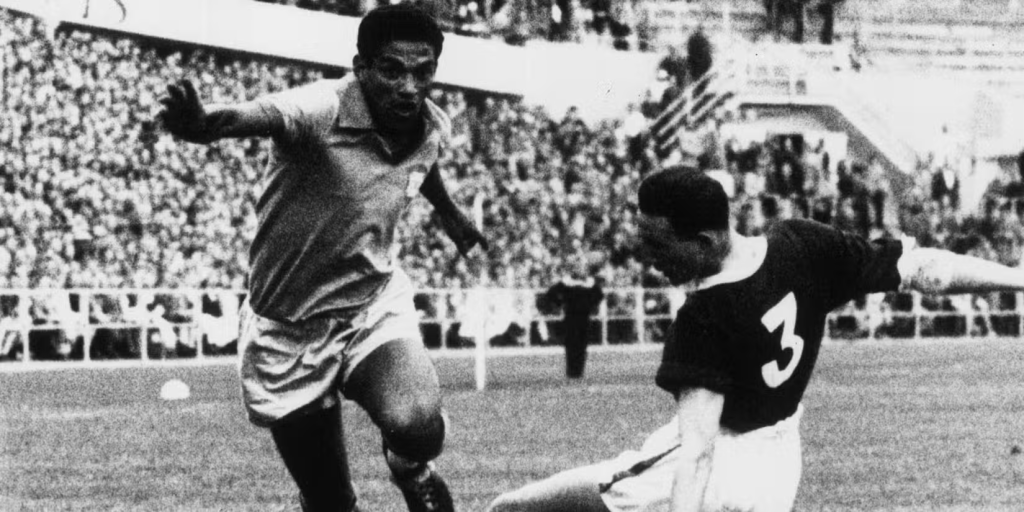
With Brazil, he won the World Cup in 1958 and 1962. In 1962, after Pele was injured, Garrincha became the team’s central attacking force and led Brazil to the title. That tournament strengthened his legend and proved that his flair could carry a team at the highest level.
What separates Garrincha is the depth of his myth. Statistical dribble data from his era is limited, but the testimony of teammates, opponents, journalists and fans is overwhelming. He was not merely effective. He was beloved because he embodied football as joy.
Garrincha made defenders look helpless while making crowds feel alive. That is the essence of dribbling greatness.
For that reason, he deserves to be ranked as the greatest dribbler in football history.
Honourable Mentions
Any ranking of the best dribblers in football history will leave out great names. Football has produced too many artists for one list to include everyone.
Players such as Pele, Cristiano Ronaldo, Kaka, Robinho, Ryan Giggs, Andres Iniesta, Michael Laudrup, Dragan Dzajic, Stanley Bowles, Pierre Littbarski, Hristo Stoichkov, Roberto Donadoni, Sadio Mane, Vinicius Junior, Riyad Mahrez and Lamine Yamal all deserve discussion in wider debates about dribbling.
Some were left out because their greatness was defined by more than dribbling. Pele, for example, was an extraordinary ball carrier but also a complete forward whose finishing, movement and athleticism shape his legacy. Iniesta was an elite dribbler in midfield, but his genius is usually discussed through passing, press resistance and control. Cristiano Ronaldo was a spectacular dribbler in his early Manchester United years but later evolved into a goalscoring forward.
The beauty of football is that these debates never end.
Why Brazil Has Produced So Many Great Dribblers
Brazil appears repeatedly in this ranking, and that is no accident. Garrincha, Ronaldinho, Neymar, Rivellino, Zico and Ronaldo all came from a football culture that has long celebrated individual expression.
Brazilian football has historically valued improvisation, flair and technical confidence. Street football, futsal, beach football and informal games helped many players develop close control in tight spaces. These environments reward creativity. They encourage players to try moves, solve problems and treat the ball as a companion rather than an object.
That does not mean Brazilian football is only about tricks. The greatest Brazilian dribblers combined flair with purpose. Garrincha created chances. Ronaldo scored goals. Ronaldinho won major titles. Neymar became Brazil’s record scorer. Zico controlled matches. Rivellino influenced generations.
Brazil’s tradition reminds us that dribbling is cultural as well as technical. It comes from how players grow up, what coaches encourage and what fans celebrate.
Why Modern Dribbling Is Harder Than Ever
Some argue that older dribblers had more freedom because tactical systems were less compact. Others argue that older players faced rougher defending and worse pitches. Both points are true in different ways.
Modern dribbling is difficult because space is limited. Teams press collectively, defend in compact blocks and use video analysis to study opponents. Full-backs are faster and fitter. Midfielders cover more ground. Tactical discipline reduces the number of open one-on-one situations.
At the same time, modern attackers receive more protection from referees, play on better pitches and use lighter boots and balls. Sports science also improves preparation and recovery.
This makes cross-era comparison difficult. Messi, Neymar and Hazard produced elite dribbling in an era of compact defensive systems. Garrincha, Matthews, Best and Maradona played in eras with more physical challenges and less statistical documentation.
The greatest dribblers are those whose skill transcends context. Their style would matter in any era.
Final Ranking: The 25 Best Dribblers in Football History
- Rivellino
- Paulo Futre
- Marc Overmars
- David Ginola
- Luis Figo
- Eddie Gray
- Gianfranco Zola
- Paul Gascoigne
- Roberto Baggio
- Zico
- Dennis Bergkamp
- John Barnes
- Ronaldo Nazario
- Eden Hazard
- Jay-Jay Okocha
- Zinedine Zidane
- Neymar
- Omar Sivori
- Sir Stanley Matthews
- Ronaldinho
- Johan Cruyff
- George Best
- Lionel Messi
- Diego Maradona
- Garrincha
Conclusion: Dribbling Is Football’s Most Emotional Skill
Goals decide matches, but dribbling creates memories.
A great dribble is personal. It is one player against another, courage against pressure, imagination against structure. It can happen in a World Cup final, a league match, a muddy English pitch, a Brazilian street, a Champions League night or a playground. The setting changes, but the feeling is the same.
Garrincha made football joyful. Maradona made it rebellious. Messi made it efficient and almost mathematical. Ronaldinho made it playful. Neymar made it theatrical. Best made it charismatic. Cruyff made it intelligent. Zidane made it elegant. Hazard made it modern. Okocha made it fearless.
The best dribblers in football history remind us why the sport became loved in the first place. Before tactics, transfers, contracts, statistics and commercial power, football was about a player with a ball at his feet trying to beat the person in front of him.
That simple act still has the power to move millions.
FAQs About the Best Dribblers in Football History
Who is the best dribbler in football history?
Garrincha is often regarded as the best dribbler in football history because of his extraordinary wing play, unpredictability and influence on Brazil’s World Cup-winning teams. His dribbling was joyful, direct and almost impossible for defenders to read. Although older eras lack modern statistical data, his reputation among players, journalists and fans remains legendary.
Is Lionel Messi the greatest modern dribbler?
Yes. Lionel Messi is widely considered the greatest modern dribbler. His close control, balance, acceleration and decision-making made him almost impossible to stop one-on-one. Unlike many trick-based dribblers, Messi’s style is extremely efficient. He beats defenders with small touches, body feints and perfect timing rather than unnecessary showmanship.
Was Diego Maradona better than Messi at dribbling?
The debate is close. Maradona produced some of the most iconic dribbling moments ever, including his 1986 World Cup run against England. Messi has greater longevity and modern statistical dominance. Maradona’s dribbling felt more explosive and defiant, while Messi’s is more efficient and consistent. Choosing between them depends on whether one values peak mythology or long-term mastery.
Why is Garrincha ranked above Maradona and Messi?
Garrincha is ranked first because his entire football identity was built around dribbling. He was a pure winger who repeatedly beat defenders, entertained crowds and helped Brazil win two World Cups. Maradona and Messi were more complete all-round attacking forces, but Garrincha is arguably the purest dribbler football has ever seen.
Who is the best Brazilian dribbler ever?
Garrincha is the best Brazilian dribbler ever in this ranking. Ronaldinho, Neymar, Ronaldo, Rivellino and Zico are also among Brazil’s greatest ball players. Brazil’s football culture has produced many legendary dribblers because of its emphasis on flair, improvisation and close control.
Was Ronaldinho a better dribbler than Neymar?
Ronaldinho and Neymar were different kinds of dribblers. Ronaldinho was more magical, unpredictable and joyful, using tricks and imagination to entertain and create. Neymar is a more modern high-volume dribbler with greater statistical output and longer elite-level production. Ronaldinho ranks higher here because of his unique impact and unforgettable peak.
Why is Cristiano Ronaldo not in the top 25?
Cristiano Ronaldo was an outstanding dribbler during his early Manchester United years, but his career evolved toward goalscoring, movement, aerial ability and finishing. His all-time greatness is unquestionable, but this ranking focuses specifically on dribbling. Players included above him are more strongly defined by ball-carrying and one-on-one skill across their careers.
Was Eden Hazard one of the best dribblers of the modern era?
Yes. Eden Hazard was one of the best dribblers of the modern era, especially during his Chelsea peak. His low centre of gravity, strength, close control and ability to ride challenges made him extremely difficult to stop. Modern data also supports his reputation as one of the most successful high-volume take-on players of his generation.
Why is Jay-Jay Okocha so highly rated?
Jay-Jay Okocha is highly rated because of his creativity, flair and fearless ball control. He played with imagination and brought street-football skills to elite football. His tricks were not only entertaining; they also helped him escape pressure and create chances. He remains one of Africa’s greatest dribblers.
What is the most famous dribble in football history?
Diego Maradona’s Goal of the Century against England at the 1986 World Cup is widely considered the most famous dribble in football history. Maradona carried the ball from inside his own half, beat several England players and scored. It remains one of football’s defining moments.
Was Stanley Matthews really that good?
Yes. Stanley Matthews was known as the “Wizard of the Dribble” and remained effective at the top level for an extraordinary length of time. His body swerve, timing and wing play made him one of football’s first great dribbling icons. His performance in the 1953 FA Cup final became legendary.
Who was better at dribbling: George Best or Johan Cruyff?
George Best was more of a natural winger and one-on-one destroyer, while Johan Cruyff used dribbling as part of a broader tactical intelligence. Best was more explosive and mischievous. Cruyff was more strategic and influential. Both belong among the very greatest, but Best ranks slightly higher here for pure dribbling danger.
Why is Ronaldo Nazario included?
Ronaldo Nazario is included because he was one of the most devastating dribbling forwards ever. At his peak, he could carry the ball at incredible speed, beat multiple defenders and finish with power or composure. His dribbling was not decorative; it directly created goals.
What makes a great football dribbler?
A great football dribbler needs close control, balance, timing, courage, acceleration and decision-making. Tricks can help, but the best dribblers use skill with purpose. They beat defenders to create space, chances, goals or tactical advantages.
Who is the best dribbler playing today?
Among active players, Lionel Messi and Neymar remain historic references, though both are now in the later stages of their careers. Younger stars such as Vinicius Junior, Lamine Yamal, Kylian Mbappe, Jamal Musiala and others are now among the most exciting current dribblers, but their all-time ranking will depend on longevity and major-stage impact.