The list of footballers with 500 goals is one of the most exclusive records in world football, bringing together modern icons, historic legends and disputed statistical giants whose numbers still spark debate across generations.
Cristiano Ronaldo leads the modern top-level scoring table with 976 goals for club and country combined, according to the uploaded statistical source, which lists figures as of July 7, 2026. Lionel Messi follows with 919 goals, while Pelé, Romário, Ferenc Puskás, Josef Bican and Robert Lewandowski complete the group of names most strongly associated with football’s highest-scoring elite.
The achievement is extraordinary because 500 goals is not simply a sign of talent. It requires longevity, elite movement, physical durability, tactical intelligence, mental strength and the ability to score across different competitions, opponents, coaches and eras. Many great footballers have enjoyed brilliant careers without coming close to the milestone.
Yet the record is also complicated. Football does not have one universally accepted all-time goalscorer list. FIFA has never released a definitive official ranking of the highest career scorers, and historical totals remain disputed because statisticians differ on whether to include friendlies, reserve matches, regional competitions, wartime fixtures, lower divisions and unofficial tours. The uploaded source notes that FIFA has never kept an official all-time goalscorer record, while external reporting has also observed that the all-time scoring title remains heavily contested because of different counting methods.
That uncertainty makes the 500-goal club both fascinating and controversial. It is a place where modern data meets football folklore, and where Ronaldo and Messi stand beside Pelé, Puskás, Bican, Gerd Müller, Eusébio and other legends whose records were built in very different football worlds.
Footballers With 500 Goals: Why the Milestone Matters
The phrase footballers with 500 goals carries weight because it marks a level of consistency that only a small number of players have ever reached.
A player can score 20 goals in one brilliant season. A great striker can score 200 or 300 goals across a long career. But 500 goals requires something more. It demands elite production over a decade or longer, often across domestic leagues, national cups, continental competitions and international football.
The uploaded source states that 27 players have scored at least 500 goals in top-level association football competitions, according to the International Federation of Football History & Statistics and other media-based records. It also notes that the RSSSF credits 83 players with reaching 500 goals when matches across all levels are considered.
That difference is important. The top-level list is more restrictive. It focuses on professional senior goals in recognized top-level competitions. The wider RSSSF-style list is broader and includes more historical and multi-level totals. RSSSF’s own “Prolific Scorers Data” explains that its all-time records use verified data from club books, historical websites and old press sources, showing how much football record-keeping depends on archival research rather than one central official database.
This is why the 500-goal milestone is not only about arithmetic. It is about methodology. Which goals count? Should friendlies count if they were serious commercial tours against top opponents? Should wartime goals count if leagues were disrupted? Should regional championships count if they were major competitions in their time? Should reserve-team goals count for players from eras when football structures were different?
There is no perfect answer. Modern football has clearer data, wider television coverage and more standardized competitions. Older football had less consistent documentation but produced legends whose records were built in conditions that cannot easily be compared with today.
That makes the list more than a ranking. It is a historical map of football’s evolution.
Cristiano Ronaldo Leads the Top-Level Scoring Race
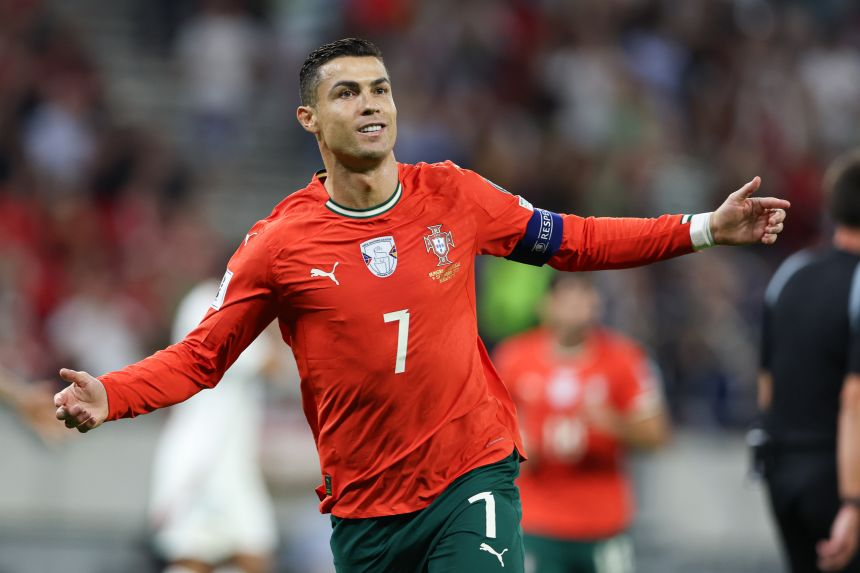
Cristiano Ronaldo sits at the top of the leading footballers with 500 goals, with 976 top-level goals listed in the uploaded source as of July 7, 2026. The breakdown shows 600 league goals, 57 cup goals, 173 continental goals and 146 goals for Portugal and other representative competition categories used in the table.
ESPN’s Ronaldo goal tracker also listed him on 976 career goals after goal No. 976 came on July 2, 2026, in Portugal’s 2-1 win over Croatia, reinforcing his position as the leading modern scorer in widely used professional-career counting systems.
Ronaldo’s scoring record is remarkable because it spans multiple leagues, tactical systems and physical phases of his career. He began as a winger at Sporting CP and Manchester United, evolved into a devastating wide forward at Real Madrid, became a penalty-box finisher later in his career, and continued scoring heavily with Juventus, Manchester United again, Al Nassr and Portugal.
His numbers are not built on one environment. They stretch across England, Spain, Italy, Saudi Arabia, the UEFA Champions League, European Championships, World Cups and international qualifiers. That variety strengthens his case as football’s most prolific modern scorer.
Ronaldo’s pursuit of 1,000 career goals has become one of the most followed individual storylines in football. The uploaded source notes that Ronaldo stated in 2024 that he wanted to become the first player to reach 1,000 career goals before retirement, though media outlets have regularly questioned whether he can reach the milestone.
The debate around 1,000 goals is not only about whether Ronaldo can physically reach it. It is also about what kind of goals should count. Pelé and Romário have both been associated with 1,000-goal claims, but those totals included friendlies or unofficial matches. Ronaldo’s modern count is more conservative because it generally refers to senior competitive goals.
That distinction matters for history. If Ronaldo reaches 1,000 in top-level competitive football, it would be one of the clearest statistical milestones the sport has ever seen.
Lionel Messi Remains the Closest Modern Rival
Lionel Messi is second on the top-level list, with 919 goals listed in the uploaded source as of July 7, 2026. His total includes 565 league goals, 71 cup goals, 158 continental goals and 125 goals for Argentina and other categories used in the table.
Messi’s record is different from Ronaldo’s but equally historic. Where Ronaldo’s scoring story is built on reinvention across leagues, Messi’s is built on a combination of artistry, efficiency and extraordinary consistency, especially during his Barcelona years.
The uploaded source highlights that Messi scored 672 goals for Barcelona, the most by any player for a single club in the top-level historical record.
That single-club record is one of the most impressive numbers in football. Barcelona’s attack was built around Messi for more than a decade, but his output still required constant adaptation. He scored as a winger, false nine, central creator and late-career playmaker. He was not only a scorer but also one of football’s greatest assist providers.
Messi’s place in the 500-goal club also challenges the idea that only pure strikers dominate all-time scoring lists. He spent much of his career as a creative forward who controlled matches, dropped into midfield, built attacks and still scored at a rate that placed him among the greatest finishers ever.
The Ronaldo-Messi comparison has defined modern football. Both players pushed each other’s scoring standards beyond what previous generations considered normal. Before them, totals above 700 goals belonged mostly to historical legends whose records were debated. Ronaldo and Messi made such numbers visible in the modern data era.
Their rivalry also changed how fans discuss football records. Every goal became part of a larger race. Every milestone was compared instantly across social media, sports websites and broadcast graphics. That visibility helped turn career scoring into one of football’s biggest ongoing narratives.
Pelé, Romário, Puskás and Bican Keep the Historical Debate Alive
The names immediately behind Ronaldo and Messi show why the 500-goal club cannot be understood through modern statistics alone.
Pelé is listed third in the uploaded top-level table with 762 goals, while Romário follows with 756. Ferenc Puskás is listed with 725, Josef Bican with 722, and Robert Lewandowski with 697.
Each of these players represents a different scoring era.
Pelé became the global symbol of football greatness. His record remains one of the most debated in the sport because Santos, Brazil and Pelé supporters have long argued that friendly goals should not be dismissed casually. In Pelé’s era, club friendlies and international tours often had major commercial and sporting importance. The uploaded source notes that outlets such as Sky Sports, ESPN and Globo Esporte have argued that friendly matches were important during Pelé’s era and that their goals should count in a broader historical reading.
Critics disagree. They argue that friendlies against invitational or weaker teams cannot carry the same statistical value as competitive fixtures. That tension explains why Pelé can appear with different career totals depending on the record system used.
Romário’s numbers carry similar controversy. The Brazilian striker famously claimed his 1,000th goal in 2007, but later reports noted that his total included friendlies. In stricter top-level counting systems, he appears below Ronaldo, Messi and Pelé but remains one of the greatest finishers football has produced.
Puskás represents another era entirely. The Hungarian and Real Madrid legend combined explosive left-footed finishing with a career interrupted and reshaped by political history. His goals came in Hungary, Spain and international football, and his scoring legacy remains central to the story of European football’s mid-20th century.
Josef Bican may be the most disputed name of all. The uploaded source notes that FIFA recognized Bican in 2020 as a record scorer with an estimated 805 goals, but several outlets have acknowledged that parts of his tally include reserve-team and unofficial international goals. RSSSF credits Bican with a much higher total under broader methodology, while other sources give different figures.
Bican’s case shows the central problem of all-time scoring records. He was clearly one of football’s most prolific players. But the exact number depends on which competitions are accepted.
Robert Lewandowski and the Modern Striker’s Place in History
Robert Lewandowski is listed seventh in the uploaded top-level table with 697 goals as of July 7, 2026. His total places him behind Ronaldo, Messi, Pelé, Romário, Puskás and Bican, but ahead of many iconic strikers from older generations.
Lewandowski’s record is important because he represents the modern specialist centre-forward. Unlike Messi and Ronaldo, whose roles changed across their careers, Lewandowski has been primarily a traditional No. 9 built around movement, finishing, positioning and penalty-box dominance.
His peak years at Borussia Dortmund and Bayern Munich showed how devastating a striker can be when elite service meets elite finishing. He also carried Poland’s attack for many years, adding international goals to a club career defined by consistency.
Lewandowski’s presence near the top of the list proves that pure centre-forwards still matter in the era of fluid front threes and pressing systems. While modern football often demands forwards who can press, create and rotate positions, the ability to score repeatedly remains the most valuable attacking skill.
His record also highlights how difficult it is to reach 700 goals in the modern game. Lewandowski has had a long career at the top level, scored heavily in domestic leagues and the Champions League, and remained physically disciplined into his late 30s. Even then, he remains far behind Ronaldo and Messi.
That gap shows how extreme the Ronaldo-Messi era has been.
The Top 27 Footballers With 500 or More Top-Level Goals
According to the uploaded source, 27 footballers have scored at least 500 goals in top-level professional football competitions as of July 7, 2026. The list is led by Ronaldo, Messi and Pelé, with several active players still adding to their totals.
| Rank | Player | Total Goals | Career Span |
|---|---|---|---|
| 1 | Cristiano Ronaldo | 976 | 2002–present |
| 2 | Lionel Messi | 919 | 2004–present |
| 3 | Pelé | 762 | 1957–1977 |
| 4 | Romário | 756 | 1985–2007 |
| 5 | Ferenc Puskás | 725 | 1943–1966 |
| 6 | Josef Bican | 722 | 1931–1955 |
| 7 | Robert Lewandowski | 697 | 2008–present |
| 8 | Jimmy Jones | 639 | 1947–1964 |
| 9 | Gerd Müller | 634 | 1964–1981 |
| 10 | Joe Bambrick | 626 | 1926–1943 |
| 11 | Abe Lenstra | 624 | 1936–1963 |
| 12 | Luis Suárez | 606 | 2005–present |
| 13 | Eusébio | 578 | 1960–1978 |
| 14 | Glenn Ferguson | 563 | 1987–2011 |
| 15 | Zlatan Ibrahimović | 561 | 1999–2023 |
| 16 | Imre Schlosser | 553 | 1906–1928 |
| 16 | Fernando Peyroteo | 553 | 1937–1949 |
| 18 | Uwe Seeler | 552 | 1954–1978 |
| 19 | Jimmy McGrory | 550 | 1923–1937 |
| 20 | Alfredo Di Stéfano | 537 | 1945–1966 |
| 21 | György Sárosi | 530 | 1931–1948 |
| 22 | Karim Benzema | 523 | 2005–present |
| 23 | Roberto Dinamite | 513 | 1971–1992 |
| 24 | Harry Kane | 511 | 2011–present |
| 25 | Hugo Sánchez | 506 | 1976–1997 |
| 26 | Franz Binder | 503 | 1930–1949 |
| 27 | Zico | 501 | 1971–1994 |
The list includes players from Europe, South America and beyond, showing that elite scoring has never belonged to one region alone. It also includes several different types of forwards: traditional centre-forwards, inside forwards, wide forwards, false nines, penalty-box specialists and creative attackers.
Some names are familiar to modern fans. Ronaldo, Messi, Lewandowski, Suárez, Benzema, Ibrahimović and Kane played in the modern media era. Others, such as Jimmy Jones, Joe Bambrick, Abe Lenstra, Fernando Peyroteo and Imre Schlosser, are more familiar to historians and record specialists.
That mix is valuable. It reminds fans that football history did not begin with television, Champions League graphics or social media debates. The sport had prolific scorers long before modern data platforms existed.
Single-Club Scorers: Messi, Pelé and the Loyalty Record
One of the most remarkable subplots inside the 500-goal club is the group of players who scored at least 500 goals for a single club.
The uploaded source lists nine players who achieved the feat at one club: Josef Bican for Slavia Prague, Jimmy Jones for Glenavon, Jimmy McGrory for Celtic, Joe Bambrick for Linfield, Lionel Messi for Barcelona, Gerd Müller for Bayern Munich, Pelé for Santos, Fernando Peyroteo for Sporting Lisbon and Uwe Seeler for Hamburg.
Messi leads that single-club group with 672 goals for Barcelona. That number is one of the most secure and celebrated records in modern football because it was achieved in a heavily documented era and at one of the biggest clubs in the world.
The single-club scoring record is different from the overall career record. It measures dominance inside one football environment. It reflects a long relationship between player, club, supporters, teammates and tactical identity.
Messi’s Barcelona record is tied to an entire football era. He scored under Frank Rijkaard, Pep Guardiola, Tito Vilanova, Luis Enrique, Ernesto Valverde and others. He shared attacks with Ronaldinho, Samuel Eto’o, Thierry Henry, David Villa, Neymar, Luis Suárez and many more. Yet through all those changes, he remained the central figure.
Pelé’s Santos record belongs to another kind of football world. Santos toured globally, faced major clubs and became one of the most recognizable teams on earth because of Pelé. The dispute over friendlies complicates his total, but it does not erase his importance.
Gerd Müller’s Bayern Munich record is another example of pure finishing dominance. Müller’s movement inside the box, balance and instinct made him one of Europe’s most feared scorers.
These single-club achievements matter because modern football is increasingly mobile. Players change clubs more often, contracts are shorter, transfer markets are global and elite careers are built across several leagues. A player scoring 500 goals for one club may become even rarer in the future.
Why Goal Totals Are So Difficult to Compare
The debate around footballers with 500 goals is not just about who scored more. It is about what football was in each era.
Modern players compete in highly structured leagues, continental tournaments and international competitions. Their matches are recorded, televised, digitized and verified almost instantly. Older players competed in football systems that were less standardized. Some leagues were regional. Some matches were wartime fixtures. Some tours were officially organized but not always treated as competitive by later statisticians.
The uploaded source highlights major disputes around Bican, Pelé, Romário, Erwin Helmchen and others. It notes that Bican’s totals vary depending on whether wartime goals, reserve-team goals, winter tournaments, regional teams and unofficial international matches are included.
RSSSF’s list is broader than the IFFHS-style top-level table and credits 83 players with at least 500 goals across competitions at all levels. RSSSF’s published methodology notes that its records rely on verified match data, club books, historical websites and old press sources, showing the difficulty of reconstructing scoring records from older eras.
This creates two legitimate approaches.
The first approach is strict. Count only top-level official competitive goals. This favors modern players and those whose records are well documented in elite competitions.
The second approach is historical. Count goals in matches that were meaningful in their era, including some friendlies, regional competitions or representative fixtures. This gives more weight to players like Pelé and Bican, whose careers unfolded before modern football calendars were standardized.
Neither approach is perfect.
If the strict method is used too rigidly, it can erase the reality of older football. If the broad method is used too loosely, it can inflate totals with matches that were not comparable to elite competition.
The best article or ranking should therefore be transparent. It should explain the counting system, cite the source and avoid pretending that one number settles every debate.
The RSSSF List and the Erwin Helmchen Question
The RSSSF list adds another layer to the debate because it includes players whose totals are far higher under broader methodology.
The uploaded source shows that RSSSF credits Erwin Helmchen with 989 or more goals, placing him above Ronaldo under that system. It also lists Ronaldo with 975, Josef Bican with 950 or more, Ronnie Rooke with 934 or more, and Messi with 925 as of the RSSSF list’s date.
This is why some football historians argue that Helmchen deserves more attention. In many mainstream conversations, Ronaldo, Messi, Pelé, Romário, Puskás and Bican dominate the all-time scoring debate. But the broader RSSSF list places Helmchen at or near the very top.
The issue is that Helmchen’s career belongs to an era and competition structure that most modern fans do not know well. His goals came in German football across a period that included different regional and wartime contexts. That makes his total difficult to compare directly with Ronaldo scoring in modern leagues, Champions League matches and international tournaments.
Still, ignoring names like Helmchen makes football history smaller. Record lists should not only repeat the most famous players. They should also preserve the achievements of scorers who dominated earlier football environments.
The RSSSF list helps do that. But because it uses a different methodology from stricter top-level tables, it should not be mixed casually with IFFHS-style totals. Ronaldo’s 976 in top-level counting and Helmchen’s 989-plus in broader counting are not identical categories.
This is a crucial point for SEO articles, social posts and football debates. The headline “Ronaldo is the all-time top scorer” is widely used in modern top-level competitive counting. The headline “Helmchen may be the highest all-level scorer” belongs to a different methodology.
Both can appear in the same article, but they must be explained clearly.
Active Players Still Chasing Higher Milestones
Several players in the 500-goal club remain active or were recently active, making the list a living record.
The uploaded top-level list marks Ronaldo, Messi, Lewandowski, Luis Suárez, Karim Benzema and Harry Kane among the active scorers as of July 7, 2026.
Ronaldo’s next target is obvious: 1,000 goals. At 976, he is close enough for every goal to become part of a countdown. The challenge is age, match availability, fitness and whether he continues long enough at club and international level.
Messi’s pursuit is different. At 919, he is behind Ronaldo but still far ahead of almost every other player in history. His total may continue rising depending on his club and international future.
Lewandowski is approaching 700 top-level goals, a milestone that would strengthen his case as one of the greatest centre-forwards in football history. Luis Suárez, listed at 606, already ranks among the most productive forwards of his generation. Benzema, at 523, has crossed into rare territory after a career defined by both scoring and link-up play.
Harry Kane is one of the most interesting active names. Listed with 511 goals, he has entered the 500-goal club while still capable of adding significantly to his total. Kane’s record is especially notable because he spent many years as both a scorer and creator, often dropping deep to link play before finishing attacks.
Kane’s future total may depend on how long he stays at elite level and whether he continues scoring regularly for club and country. If he maintains his production, he could climb several places in the all-time top-level list.
What the 500-Goal Club Says About Football Evolution
The 500-goal club tells the story of football’s tactical and commercial evolution.
Early scorers such as Imre Schlosser, Josef Bican and Ferenc Puskás played in eras when formations were more attack-heavy, defensive systems were less compact and competitions were structured very differently. Their records reflect both individual brilliance and the football ecosystems of their time.
Mid-century legends such as Pelé, Eusébio, Gerd Müller and Uwe Seeler played as football became more global, televised and commercially powerful. Their goals turned them into international stars and helped build the global mythology of clubs and national teams.
Modern players such as Ronaldo, Messi, Lewandowski, Suárez, Benzema and Kane played in the era of sports science, tactical pressing, elite nutrition, video analysis, global branding and heavy fixture schedules. Their scoring totals reflect not only ability but also extreme professionalism.
In some ways, modern football makes scoring harder. Defenses are more organized, goalkeepers are better trained, and data analysis exposes attacking patterns. In other ways, it gives elite scorers advantages. Top players receive better medical care, longer careers, more matches, improved pitches and tactical systems designed to maximize their strengths.
That balance makes cross-era comparison difficult but fascinating.
Ronaldo and Messi are not simply better because they have higher numbers than most past players. They are different kinds of athletes from a different football economy. Pelé and Bican are not lesser because their records are disputed. They played in systems where football’s official structure was not as clean as it is today.
A fair historical reading must recognize both points.
Who Is the Greatest Goalscorer of All Time?
The answer depends on the question.
If the question is who leads the widely recognized top-level competitive scoring table, the answer is Cristiano Ronaldo. The uploaded source lists him first with 976 goals, while ESPN’s current tracker also places him at 976.
If the question is who has the strongest single-club scoring record, Lionel Messi has the clearest modern case with 672 goals for Barcelona.
If the question is who was the greatest symbolic scorer of football’s global expansion, Pelé remains central. His record and legacy cannot be reduced only to whether every friendly goal counts.
If the question is who may have the highest all-level total under broader research, RSSSF-style methodology brings names such as Erwin Helmchen and Josef Bican into the debate.
That is why “greatest goalscorer” is not only a statistical question. It is also about era, role, competition strength, international impact, consistency, pressure and legacy.
Ronaldo’s case is built on volume, longevity, Champions League dominance, international records and scoring across multiple elite leagues. Messi’s case is built on scoring combined with playmaking, single-club dominance and efficiency. Pelé’s case is built on World Cup greatness, Santos dominance and global cultural impact. Bican’s case is built on astonishing historical scoring rates. Puskás’ case is built on left-footed genius and influence across Hungarian and Spanish football.
The 500-goal club is not a simple ladder. It is a museum of different scoring greatness.
Frequently Asked Questions
Who has scored the most goals in football history?
Cristiano Ronaldo leads the widely used top-level professional scoring list with 976 goals as of July 7, 2026, according to the uploaded source. ESPN’s goal tracker also listed Ronaldo at 976 after his July 2, 2026 goal for Portugal against Croatia.
How many footballers have scored 500 or more goals?
According to the uploaded source, 27 players have scored 500 or more goals in top-level association football competitions. Under the broader RSSSF methodology, 83 players are credited with at least 500 goals across competitions at all levels.
How many goals does Lionel Messi have?
Lionel Messi is listed with 919 top-level career goals as of July 7, 2026, according to the uploaded source. He is second behind Cristiano Ronaldo in that table.
Did Pelé score more than 1,000 goals?
Pelé has long been associated with totals above 1,000 goals, but those figures include friendlies and other disputed matches. In stricter top-level counting, the uploaded source lists Pelé with 762 goals.
Why are Josef Bican’s goals disputed?
Josef Bican’s totals vary because different sources count different types of matches, including wartime games, reserve-team goals, regional selections and unofficial fixtures. The uploaded source notes that FIFA, RSSSF, Czech football authorities and media outlets have used different numbers for Bican.
Which player has scored the most goals for one club?
Lionel Messi holds the strongest modern single-club scoring record, with 672 goals for Barcelona between 2004 and 2021, according to the uploaded source.
Is Harry Kane in the 500-goal club?
Yes. Harry Kane is listed with 511 goals in the uploaded top-level table as of July 7, 2026, making him one of the active members of the 500-goal club.
Is Ronaldo close to 1,000 goals?
Yes. Ronaldo is listed with 976 goals, meaning he is 24 goals away from 1,000 in the top-level counting used by the uploaded source.
Conclusion
The list of footballers with 500 goals is one of the most powerful records in football because it combines numbers, history and debate.
Cristiano Ronaldo leads the modern top-level table with 976 goals, standing closer than anyone to the extraordinary 1,000-goal mark. Lionel Messi follows with 919 goals and the strongest single-club scoring record in modern football. Pelé, Romário, Puskás, Bican, Lewandowski, Müller, Eusébio, Suárez, Benzema and Kane add depth to a list that stretches across more than a century of football history.
But the story is not only about who ranks first. It is about how football counts greatness.
Some records are clean and modern. Others are historical and disputed. FIFA does not maintain one official all-time career scoring list, while organizations such as IFFHS and RSSSF use different methods. That means the all-time scoring debate will continue, especially around names like Pelé, Bican, Romário and Helmchen.
What cannot be disputed is the scale of the achievement. Scoring 500 goals requires greatness over time. It demands talent, fitness, consistency and the ability to perform again and again when defenders know exactly what a player wants to do.
That is why the 500-goal club remains one of football’s most respected milestones. It belongs not only to record books, but to the story of the sport itself.
From Schlosser to Bican, from Pelé to Puskás, from Müller to Messi, and from Ronaldo to the next generation, the pursuit of goals remains football’s most universal language.
Read Also: Pixel 11 Prices Leak Ahead of Google Launch