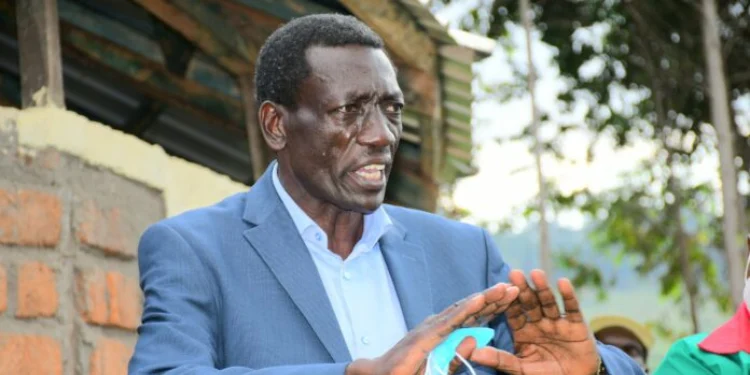
Collins Oyuu Profile reflects the steady ascent of a classroom teacher who became one of the most visible figures in Kenya’s education sector. As Secretary General of the Kenya National Union of Teachers, KNUT, Oyuu occupies a position that carries both administrative authority and political weight. His career traces the evolution of union leadership in Kenya, particularly at a time when education reforms, teacher recruitment and collective bargaining agreements continue to shape national debate.
Born in 1965 in Uyoma, Rarieda, Siaya County, Oyuu grew up in a region historically active in political and civic engagement. Over time, he built a career grounded in teaching and later transitioned into full time union representation. The Collins Oyuu Profile illustrates how local leadership within branch structures can gradually extend into national influence.
Today, he serves not only as KNUT Secretary General but also as a member of the Kenya National Qualifications Board, having been appointed in October 2023. His leadership role places him at the intersection of teacher welfare, policy implementation and government negotiations.
Early Life and Educational Background
Primary Education and Early Training
Collins Oyuu began his formal education in 1972 at Kasarani Primary School. His early academic years unfolded during a period of expansion in Kenya’s public education system. In 1983, he briefly attended the Kenya Police Training College, an experience that preceded his final commitment to teaching.
Seminary Studies and Teacher Training
Before entering teacher training, Oyuu attended seminary studies at Queen of Apostles in Mabanga for several years. Although he did not ultimately pursue clerical life, the seminary experience likely contributed to his communication skills and leadership orientation.
In 1987, he joined Shanzu Teachers Training College in Kilifi, marking his formal entry into the teaching profession. He later pursued a Bachelor of Education degree, further strengthening his academic credentials. The Collins Oyuu Profile demonstrates that his path into union leadership was rooted firmly in professional training as an educator.
Career Background in Teaching and Unionism
Classroom Experience
Oyuu began his teaching career at Ruma Primary School in Siaya County. Like many union leaders in Kenya, he rose from grassroots engagement rather than external appointment. His classroom experience provided practical insight into teacher challenges, including workload, remuneration and policy shifts.
Entry into KNUT Leadership
His involvement in union leadership began in 1996 when he was elected as a branch executive committee member in Siaya County. This role marked the start of his long association with KNUT governance structures.
In 2002, he became chair of the Bondo Branch. Six years later, in 2008, he was elected secretary of the Rarieda branch. By 2013, Oyuu had joined the KNUT National Steering Committee, expanding his influence beyond regional structures.
In 2015, he was confirmed as acting Assistant Secretary General, a position that elevated him into the union’s national leadership framework. In 2018, he was elected KNUT Vice Chairperson. Eventually, he assumed the role of Secretary General, replacing Wilson Sossion after being elected unopposed.
The Collins Oyuu Profile underscores a leadership trajectory built over decades rather than through abrupt political maneuvering.
Role as KNUT Secretary General
Negotiations and Collective Bargaining
As Secretary General, Oyuu has played a central role in negotiations between KNUT and the government. One of his key milestones involved participation in the implementation of the 2025–2029 Collective Bargaining Agreement. The agreement led to official salary increments for teachers effective July 2025.
Union negotiations in Kenya often involve extended dialogue with the Teachers Service Commission and the Ministry of Education. Therefore, the implementation of salary adjustments marked a significant moment during his tenure.
Advocacy for Junior Secondary Teachers
Oyuu has also advocated for the recruitment of Junior Secondary School interns on a permanent and pensionable basis. His call for confirmation of 20,000 teachers as government employees reflects broader debates about employment stability within Kenya’s education reforms.
Such advocacy positions KNUT not only as a welfare body but also as an active participant in shaping education policy implementation.
Appointment to the Kenya National Qualifications Board
In October 2023, Oyuu was appointed as a member of the Kenya National Qualifications Board. This board oversees standards related to academic and professional certifications. His appointment extends his influence into regulatory frameworks that define qualification standards across institutions.
The Collins Oyuu Profile therefore reflects leadership that spans both union advocacy and national policy oversight.
Family and Personal Life
Collins Oyuu is married and has three children, two sons and a daughter. While he maintains a relatively private personal life, his family background reflects stability outside the often demanding sphere of union leadership.
Public union officials frequently balance negotiation pressures with personal responsibilities. His long career suggests sustained commitment despite evolving political and institutional challenges.
Collins Oyuu Net Worth and Financial Standing
Estimating the net worth of union officials can be complex, as public disclosures are limited. Collins Oyuu’s income primarily derives from his professional career in education and union leadership roles.
As KNUT Secretary General, he earns a salary aligned with senior union executive compensation. Additional allowances may apply through board membership and official responsibilities. However, there is no publicly verified detailed disclosure of his personal wealth.
The Collins Oyuu Profile, therefore, approaches net worth cautiously, acknowledging that while he holds high level leadership positions, specific asset valuations remain private.
Influence Within Kenya’s Education Sector
Collins Oyuu’s leadership comes at a time when Kenya’s education system continues to undergo structural adjustments. Curriculum reforms, teacher deployment models and funding frameworks remain central issues.
His role situates him within a broader dialogue about teacher welfare, public accountability and policy sustainability. Through negotiations and public statements, he represents a large segment of Kenya’s teaching workforce.
As debates continue around employment security and educational reform, figures like Oyuu remain pivotal in mediating between government policy and classroom realities.
The Collins Oyuu Profile illustrates how decades of service within branch and national structures can culminate in high level leadership. His journey from primary school teacher to Secretary General reflects both institutional continuity and the evolving nature of union influence in Kenya’s public education system.