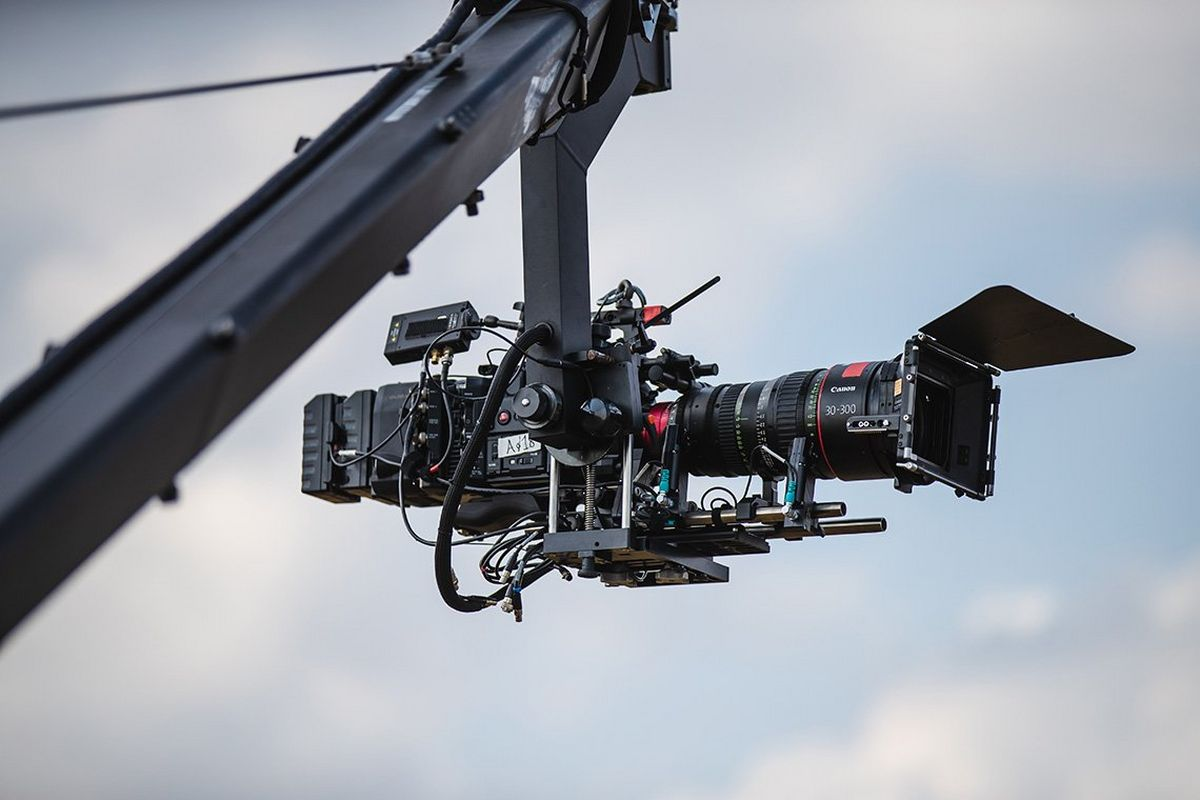
Canon EOS C700 FF is a professional full-frame cinema camera designed for high-end film, commercial, broadcast and large-scale production work.
Announced in March 2018, the camera marked an important moment for Canon’s Cinema EOS line because it became the company’s first full-frame cinema camera. It expanded the original EOS C700 platform by adding a larger sensor, 5.9K RAW capture and full-frame production flexibility.
The EOS C700 FF uses a 38.1 x 20.1 mm full-frame CMOS sensor and supports 5.9K RAW recording at 5952 x 3140. It also supports 4K DCI, 4K UHD, 2K DCI and HD recording formats, giving filmmakers multiple options for cinema, television, streaming and post-production workflows.
Although the model has now been discontinued in some Canon regional listings, it remains an important camera in Canon’s cinema history and still appears in rental, used and professional production discussions.
Key Canon EOS C700 FF Specifications
The Canon EOS C700 FF was built as a serious A-camera for professional productions rather than a compact run-and-gun cinema body.
| Feature | Canon EOS C700 FF |
|---|---|
| Release period | March 2018 announcement |
| Camera type | Professional full-frame cinema camera |
| Sensor size | 38.1 x 20.1 mm |
| Maximum RAW resolution | 5.9K, 5952 x 3140 |
| Lens mount options | EF or PL |
| Base sensitivity | ISO 800 |
| Claimed dynamic range | Up to 15 stops with Canon Log 2 |
| Main recording formats | RAW, XF-AVC, ProRes |
| Internal recording media | CFast 2.0 cards for XF-AVC and ProRes |
| RAW recording media | CODEX drive system |
| Body weight | About 3.4kg |
| Dimensions | About 327 x 154 x 167 mm |
| Autofocus | Dual Pixel CMOS AF on EF model |
| Built-in ND filters | Up to 10 stops |
The camera’s headline strengths are its full-frame sensor, 5.9K RAW workflow, Canon colour science, modular body and professional production features.
Full-Frame 5.9K Sensor
The Canon EOS C700 FF uses a full-frame CMOS sensor with an active image area of 38.1 x 20.1 mm.
This sensor is wider than the traditional Super 35 format used in many cinema cameras. The larger sensor allows cinematographers to create a wider field of view, shallower depth of field and a more immersive large-format look.
The maximum RAW recording resolution is 5952 x 3140, which Canon describes as 5.9K. This gives filmmakers more resolution than standard 4K capture and allows high-quality oversampled 4K output.
Why 5.9K Matters
5.9K recording gives productions extra room in post-production.
Editors and colourists can reframe, stabilize, crop or deliver 4K footage with cleaner detail. Visual effects teams also benefit from higher-resolution source material because it gives them more image data to work with.
For cinema and high-end streaming productions, 5.9K capture can help preserve detail while still delivering in 4K or 2K.
Recording Formats
The Canon EOS C700 FF supports several important recording formats.
| Recording Format | Resolution |
| 5.9K RAW | 5952 x 3140 |
| 4K DCI | 4096 x 2160 |
| 4K UHD | 3840 x 2160 |
| 2K DCI | 2048 x 1080 |
| HD | 1920 x 1080 |
These formats allow the camera to serve different types of productions. A feature film may choose 5.9K RAW for maximum post-production control. A broadcast or documentary production may choose XF-AVC or ProRes for faster workflow.
The camera also supports full-frame, Super 35 and Super 16 crop modes. This helps crews use different lens sets and adapt the camera to different production needs.
5.9K RAW Recording
The EOS C700 FF can record 5.9K RAW at up to 60fps using a CODEX drive system.
Canon lists 10-bit RAW for 50p and 59.94p, while lower frame rates can support 12-bit RAW depending on the mode. This gives productions a serious RAW workflow for colour grading, exposure refinement and visual effects.
RAW recording is especially useful when image quality matters more than file size. It preserves more information from the sensor and gives colourists greater freedom in post-production.
RAW Requires a CODEX Recorder
A key point is that 5.9K RAW recording depends on the CODEX drive system.
The camera can record 4K internally to XF-AVC or ProRes, but its highest-quality 5.9K RAW workflow uses the dedicated CODEX recording solution. This makes the C700 FF more of a professional production system than a simple standalone camera.
XF-AVC and ProRes Workflows
The Canon EOS C700 FF supports internal 4K recording in XF-AVC and ProRes.
XF-AVC is Canon’s professional codec designed for quality and efficient post-production. The camera supports up to 4K 810Mbps internal recording in XF-AVC.
ProRes support is also important because it allows easier integration into established editing workflows. Many production houses and post-production teams already use ProRes as a standard format for commercial, television and film projects.
This flexibility helped make the C700 FF suitable for both high-end RAW productions and faster-turnaround jobs.
Dynamic Range and Canon Log 2
Canon claims the EOS C700 FF can deliver up to 15 stops of dynamic range using Canon Log 2.
Dynamic range is important because it determines how much detail the camera can hold between shadows and highlights. A wide dynamic range helps cinematographers protect bright skies, windows, practical lights and reflective surfaces while still holding detail in darker areas.
Canon Log 2 gives filmmakers the most flexible grading option on the camera. It creates a flat image profile designed for colour correction and HDR workflows.
HDR Monitoring Support
The EOS C700 FF also supports HDR production tools, including PQ and HLG monitoring.
That made the camera relevant for HDR broadcast, streaming and cinema workflows during a period when high dynamic range production was becoming more important across the industry.
EF and PL Mount Options
The Canon EOS C700 FF was offered in EF and PL mount versions.
The EF mount version supports Canon EF lenses and benefits from Dual Pixel CMOS AF. This is useful for documentary crews, solo operators and productions using Canon cinema or still-photo glass.
The PL mount version targets traditional cinema production. PL lenses are widely used in feature films, commercials and high-end production environments. The PL version also supports Cooke /i metadata technology.
Why Mount Choice Matters
The mount determines which lenses a production can use.
EF mount is useful for Canon lens owners and productions that want autofocus support. PL mount is better for crews using professional cinema primes, anamorphic lenses and industry-standard rental-house lens packages.
The C700 FF gave buyers both options, making it more flexible for different production ecosystems.
Dual Pixel CMOS AF
The EF version of the Canon EOS C700 FF supports Dual Pixel CMOS AF.
This autofocus system helps maintain focus on moving subjects and supports smoother focusing for certain types of production. It is especially useful for documentaries, interviews, live events and fast-paced shooting where a dedicated focus puller may not always be available.
For PL mount users, the camera is more likely to be operated in a traditional cinema workflow with manual focus control.
Built-In ND Filters
The Canon EOS C700 FF includes built-in optical ND filters with up to 10 stops of control.
Built-in ND filters are essential on professional cinema cameras because they allow cinematographers to control exposure without changing shutter speed, aperture or ISO unnecessarily.
This helps maintain consistent motion blur and depth of field, especially when shooting outdoors or under strong lighting.
Modular Cinema Body
The EOS C700 FF uses a large, modular production body.
At about 3.4kg, it is much heavier than compact cinema cameras such as the EOS C500 Mark II or newer RF-mount cinema bodies. However, the larger body supports professional operation, strong connectivity, accessory mounting and production-style control.
It was designed for crews using cinema rigs, external monitors, matte boxes, follow-focus systems, shoulder setups and studio accessories.
Why the Body Size Matters
The C700 FF was not built to be a small handheld camera.
It was intended as a serious production body for controlled professional environments. Its shape and size make more sense on sets where the camera is built into a full cinema rig.
For modern solo creators, it may feel too large. For production crews, the body was designed to fit established film and television workflows.
Dynamic Range and Rolling Shutter Test Status
The pasted CineD-style data lists dynamic range and rolling shutter as not tested.
That means the camera should not be compared against lab-tested models using those specific rankings. However, Canon’s official specifications claim up to 15 stops of dynamic range with Canon Log 2.
For rolling shutter, users should rely on production tests, rental-house evaluations and real-world footage before choosing the camera for fast motion or handheld action work.
Canon EOS C700 FF vs Canon EOS C500 Mark II
The EOS C700 FF and EOS C500 Mark II share some major ideas, including full-frame Canon cinema imaging and 5.9K capture.
The C700 FF is larger and more production-oriented. It uses the CODEX drive system for 5.9K RAW and supports a modular studio-style workflow. The C500 Mark II is smaller, lighter and more modern, with internal Cinema RAW Light and a more compact body.
For many current buyers, the C500 Mark II is easier to use. However, the C700 FF remains important because it was Canon’s first full-frame Cinema EOS camera and helped establish the company’s large-format cinema direction.
Who Should Use the Canon EOS C700 FF?
The Canon EOS C700 FF is best suited for professional productions with proper crew, lenses, media and post-production support.
It makes sense for:
Feature films
Television dramas
Commercial productions
High-end documentaries
Studio work
Rental houses
HDR production workflows
Productions using EF or PL cinema lenses
Crews needing full-frame Canon colour and 5.9K RAW
It is not the best choice for casual creators, lightweight documentary shooters or small teams that need compact cameras and simple media workflows.
Price and Availability
The Canon EOS C700 FF is now an older and largely discontinued cinema camera.
Availability depends on region, used-market condition, rental-house stock and remaining dealer inventory. Because it was originally a high-end cinema camera, buyers should also consider the cost of CODEX recording, media, batteries, viewfinders, rigging, lenses and post-production storage.
For many filmmakers today, renting may be more practical than buying. Used prices can vary widely because complete production kits may include valuable accessories.
Key Takeaways
- Canon EOS C700 FF was announced in March 2018.
- It was Canon’s first full-frame Cinema EOS camera.
- The camera uses a 38.1 x 20.1 mm full-frame CMOS sensor.
- Maximum RAW resolution is 5.9K at 5952 x 3140.
- 5.9K RAW recording uses a CODEX drive system.
- Internal recording supports XF-AVC and ProRes workflows.
- Canon claims up to 15 stops of dynamic range with Canon Log 2.
- The camera supports EF and PL mount versions.
- Dual Pixel CMOS AF is available on the EF model.
- Built-in optical ND filters provide up to 10 stops of control.
- Recording formats include 5.9K RAW, 4K DCI, 4K UHD, 2K DCI and HD.
- The pasted lab dataset lists dynamic range and rolling shutter as not tested.
- The model is now marked discontinued in some Canon regional product listings.
Frequently Asked Questions
What is the Canon EOS C700 FF?
The Canon EOS C700 FF is a professional full-frame Cinema EOS camera designed for high-end film, television, commercial and HDR production.
When was the Canon EOS C700 FF released?
Canon announced the EOS C700 FF in March 2018, with availability following later in 2018.
What sensor does the Canon EOS C700 FF use?
It uses a full-frame CMOS sensor with a 38.1 x 20.1 mm active image area.
What is the maximum resolution?
The maximum RAW resolution is 5.9K at 5952 x 3140.
Does the Canon EOS C700 FF record RAW internally?
The camera records 5.9K RAW using a dedicated CODEX drive system. It records 4K internally in XF-AVC or ProRes formats.
What lens mounts are available?
The EOS C700 FF was offered in EF and PL mount versions.
Does the Canon EOS C700 FF have autofocus?
The EF version supports Canon Dual Pixel CMOS AF. PL workflows are usually manual-focus cinema setups.
What is the dynamic range of the Canon EOS C700 FF?
Canon claims up to 15 stops of dynamic range with Canon Log 2. The pasted lab dataset lists dynamic range as not tested.
What recording formats does it support?
The camera supports 5.9K RAW, 4K DCI, 4K UHD, 2K DCI and HD formats.
Is the Canon EOS C700 FF still worth using?
Yes, it can still be useful for productions that need full-frame Canon cinema colour, 5.9K RAW and professional production features. However, newer Canon cinema cameras may be smaller, easier to power and more efficient for modern workflows.
Conclusion
The Canon EOS C700 FF remains a key camera in Canon’s Cinema EOS history.
It introduced Canon’s full-frame cinema direction with a 38.1 x 20.1 mm sensor, 5.9K RAW capture, 15-stop dynamic range claim, EF and PL mount options, ProRes, XF-AVC and professional production controls.
Although it has been overtaken by newer and smaller Cinema EOS bodies, the C700 FF still represents an important step in Canon’s move into large-format digital cinematography. For professional crews with the right lenses, recording system and post-production support, it remains a serious full-frame cinema production tool.
Read Also: Canon EOS R: Specs, Sensor, Video Features and Full-Frame Mirrorless Value