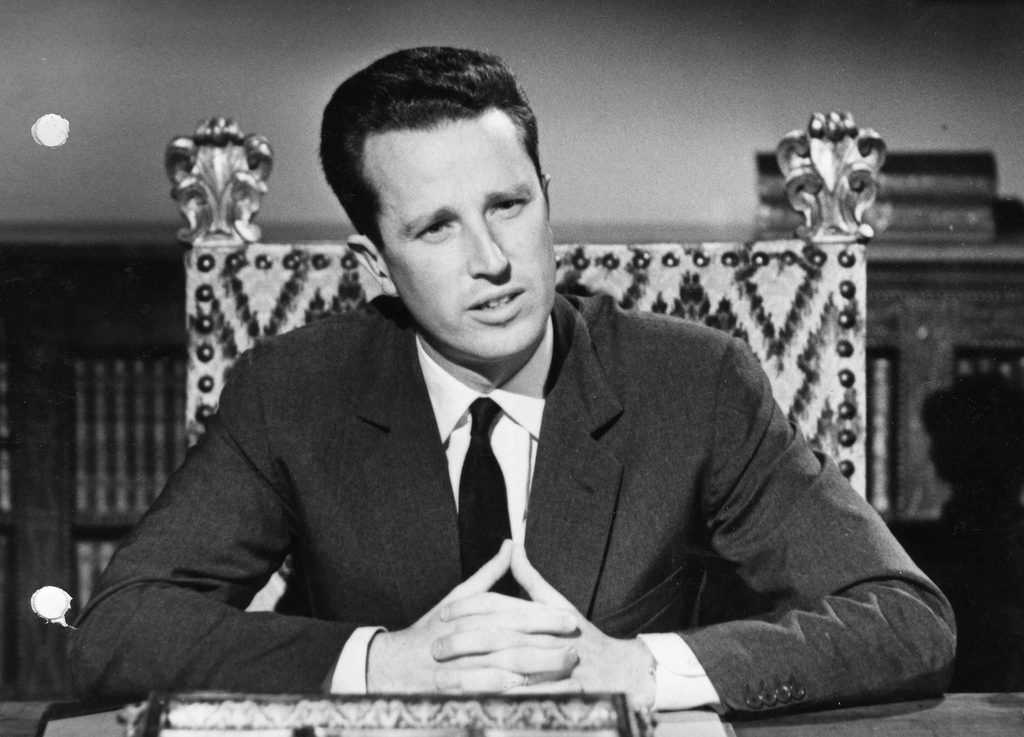
Baudouin I was born on September 7, 1930, at Stuyvenberg Castle, near Brussels, into Belgium’s royal family. He was the second son of King Leopold III and Queen Astrid. His childhood was marked by tragedy and turbulence: Queen Astrid died in a car accident in 1935, leaving a deep impression on the young prince.
During World War II, Baudouin and his family were interned by German forces and later went into exile in Switzerland. His father’s controversial wartime conduct—seen by some as collaborationist—sparked the “Royal Question,” a political and public crisis that deeply damaged the monarchy’s credibility.
Accession to the Throne
When King Leopold III abdicated in July 1951, his son Baudouin assumed the throne as the fifth King of the Belgians. He had already acted as head of state from August 1950 to July 1951 during his father’s political struggles. At just 20 years old, Baudouin inherited a fragile monarchy, but his humility and quiet resolve helped rebuild trust in the institution.
A Reign of Unity and Transition
Baudouin’s reign lasted 42 years (1951–1993), making him one of Belgium’s longest-serving monarchs. He acted as a symbol of national unity in a country divided between Flemish and French-speaking communities. His impartial stance toward both linguistic groups earned him wide respect.
Internationally, Baudouin presided over one of Belgium’s most significant historical moments: the independence of the Belgian Congo. After a tour of the colony in December 1959, he officially proclaimed its independence in Léopoldville (now Kinshasa) on June 30, 1960. The event was marked by controversy, as his speech defending colonial rule contrasted sharply with the independence speech of Patrice Lumumba, Congo’s first prime minister.
Baudouin was also known for his principled actions. In 1990 he temporarily stepped down from the throne rather than approve a parliamentary bill legalizing abortion, citing his personal conscience. Parliament declared him unable to reign for one day, passed the law, and then reinstated him—an unprecedented constitutional solution that highlighted his integrity.
Personal Life and Legacy
On December 15, 1960, Baudouin married Doña Fabiola de Mora y Aragón, a Spanish noblewoman. Their marriage was childless, and upon Baudouin’s sudden death from heart failure on July 31, 1993, while vacationing in Motril, Spain, the crown passed to his younger brother, Prince Albert II.
Baudouin left behind a reputation as a deeply moral, unifying monarch who guided Belgium through decolonization, economic challenges, and cultural divisions. He is remembered for his dignity, impartiality, and devotion to both his people and his faith.
Quick Facts
| Attribute | Details |
|---|---|
| Full Name | Baudouin Albert Charles Leopold Axel Marie Gustave of Saxe-Coburg-Gotha |
| Flemish Name | Boudewijn I |
| Born | September 7, 1930, Stuyvenberg Castle, near Brussels, Belgium |
| Died | July 31, 1993, Motril, Spain (aged 62) |
| Title / Office | King of the Belgians (1951–1993), Head of State (1950–1951) |
| Parents | King Leopold III and Queen Astrid |
| Marriage | Doña Fabiola de Mora y Aragón (m. 1960) |
| Notable Events | Congo independence (1960), one-day abdication over abortion law (1990) |
| Successor | King Albert II |