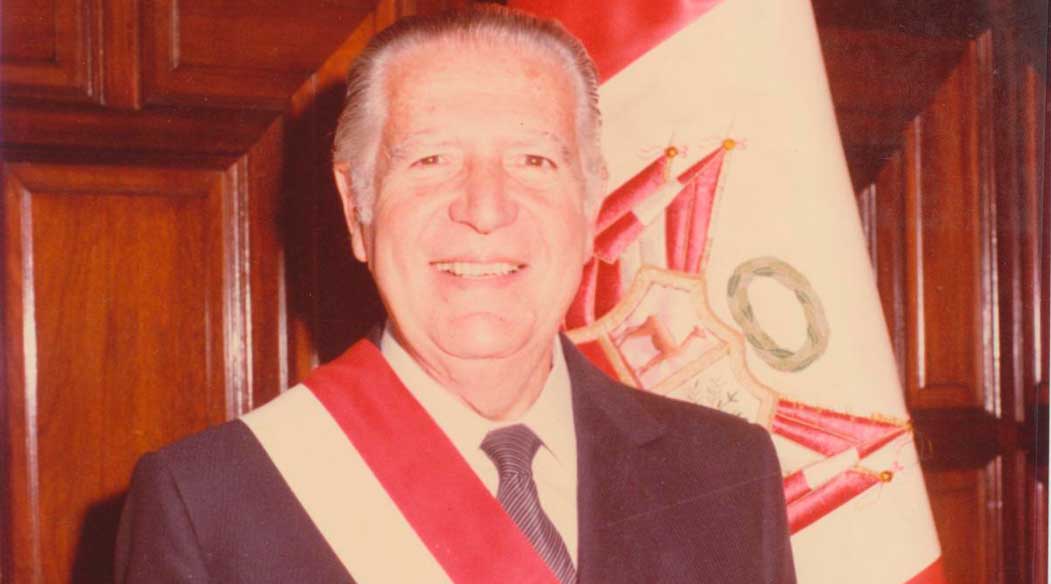
Fernando Belaúnde Terry (born October 7, 1912, Lima, Peru—died June 4, 2002, Lima) was a statesman, architect, and president of Peru (1963–68; 1980–85). He was best known for his reformist vision, democratic principles, and pro-American policies, which shaped Peru’s mid-20th-century politics.
Early Life and Education
Belaúnde came from a distinguished aristocratic Peruvian family. His father, Rafael Belaúnde Diez Canseco, served as prime minister, giving him early exposure to politics. From 1924 to 1935, he studied architecture in the United States and France, later practicing briefly in Mexico before returning to Peru in 1936. In Lima, he gained recognition as an architect and founded the magazine Arquitecto Peruano (“Peruvian Architect”).
Political Rise
Belaúnde first entered politics as a member of the Chamber of Deputies (1945–48). However, a military coup in 1948 forced him to step aside, and he returned to academia, becoming dean of architecture at the School of Engineers (later the National University of Engineering).
He co-founded the National Democratic Front (Frente Democrático Nacional) and later established the National Front of Democratic Youth, which evolved into the Popular Action Party (Acción Popular). After narrowly losing the 1956 elections, he built momentum and won the 1963 presidential election with 39 percent of the vote.
First Presidency (1963–1968)
Belaúnde’s government emphasized land reform, road construction, and development of the Amazon region. He aligned Peru closely with the United States, supporting the Alliance for Progress, a U.S.-backed development initiative for Latin America.
However, his presidency faced resistance from an opposition-controlled Congress, which blocked many reforms. Public anger grew over a controversial deal with the International Petroleum Company, leading to his overthrow by a military junta in October 1968. Belaúnde went into exile, living in the United States before returning to Peru in 1976.
Second Presidency (1980–1985)
Following the restoration of democracy, Belaúnde returned to power in the 1980 elections, defeating 14 candidates. He restored press freedoms and reinforced Peru’s democratic institutions.
His second term, however, was marked by economic difficulties: hyperinflation, foreign debt, and growing violence by the Shining Path insurgency. His austerity measures sparked discontent, and he was defeated in the 1985 elections by Alan García.
Legacy
Belaúnde was admired as a democratic reformer who resisted authoritarianism. His legacy includes promoting infrastructure development, modernization of Peru’s economy, and safeguarding democracy despite political instability. He also authored several works, including La conquista del Perú por los Peruanos (1959; Peru’s Own Conquest).
Quick Facts
| Attribute | Details |
|---|---|
| Full Name | Fernando Belaúnde Terry |
| Born | October 7, 1912, Lima, Peru |
| Died | June 4, 2002, Lima (aged 89) |
| Title / Office | President of Peru (1963–68; 1980–85) |
| Political Affiliation | Popular Action (Acción Popular) |
| Professions | Architect, statesman, writer |
| Key Policies | Land reform, Amazon road expansion, pro-American development strategy |
| Notable Works | La conquista del Perú por los Peruanos (1959) |