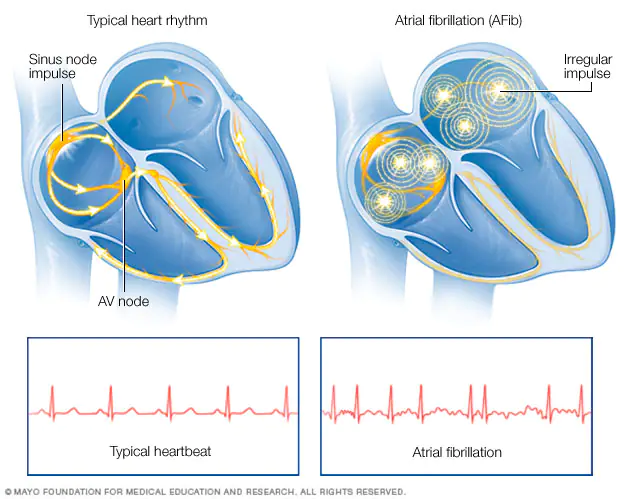
Atrial fibrillation (AFib) is a common yet serious heart condition characterized by an irregular and often rapid heart rhythm, known as an arrhythmia. While AFib itself may not be immediately life-threatening, it increases the risk of potentially severe complications such as blood clots, stroke, heart failure, and other cardiovascular issues. This comprehensive guide explores the causes, symptoms, risk factors, complications, treatments, and prevention strategies associated with atrial fibrillation.
What is Atrial Fibrillation?
Atrial fibrillation occurs when the upper chambers of the heart, called the atria, beat irregularly and out of sync with the lower chambers, known as the ventricles. This chaotic heart rhythm can disrupt blood flow and lead to various complications. The heart typically beats between 60 and 100 times per minute at rest, but in AFib, the heart rate can surge to between 100 and 175 beats per minute.
Types of Atrial Fibrillation
AFib can present in different forms, each with varying levels of severity and persistence:
- Occasional (Paroxysmal) AFib:
Episodes occur sporadically and may last for minutes to hours or up to a week. Symptoms often resolve on their own without treatment. - Persistent AFib:
The irregular heart rhythm is constant and requires medical intervention to restore a regular heartbeat. - Long-standing Persistent AFib:
This form persists for more than 12 months and typically requires advanced treatment strategies to manage. - Permanent AFib:
The heart rhythm cannot be restored to normal. Long-term management focuses on controlling the heart rate and preventing complications.
Symptoms of Atrial Fibrillation
AFib symptoms vary widely. Some individuals may experience pronounced symptoms, while others may remain asymptomatic. Common symptoms include:
- Palpitations (fast, fluttering, or pounding heartbeat)
- Chest pain
- Dizziness or lightheadedness
- Fatigue
- Shortness of breath
- Weakness
- Reduced ability to exercise
When to See a Doctor:
Seek immediate medical attention if you experience chest pain, as it may signal a heart attack. Regular health checkups are essential if you suspect symptoms of atrial fibrillation.
Causes of Atrial Fibrillation
Understanding how the heart functions is key to recognizing the causes of AFib. The heart’s natural electrical system regulates its rhythm, starting with signals from the sinus node in the upper right chamber. These signals pass through the atria and the AV node before reaching the ventricles. In AFib, this electrical signaling becomes chaotic, causing the atria to tremble or quiver.
Common Causes of AFib
- Structural heart problems, such as congenital heart defects
- Heart attack or heart valve disease
- High blood pressure
- Thyroid disorders, including an overactive thyroid
- Obstructive sleep apnea
- Coronary artery disease
- Viral infections or lung diseases
Lifestyle Triggers
Certain lifestyle habits and environmental factors can provoke AFib episodes:
- Excessive alcohol or caffeine consumption
- Smoking or tobacco use
- Stress or physical exhaustion
- Use of stimulant medications or illegal drugs
Risk Factors for Atrial Fibrillation
Several factors increase the likelihood of developing AFib:
- Age:
The risk of AFib increases with age, particularly after age 65. - Heart Conditions:
Conditions like coronary artery disease, heart valve disease, and congenital heart defects are significant risk factors. - High Blood Pressure:
Over time, high blood pressure can cause structural changes in the heart, increasing the risk of AFib. - Lifestyle Factors:
Smoking, excessive alcohol consumption, and caffeine intake can exacerbate the risk. - Obesity:
Excess weight is linked to higher rates of AFib. - Chronic Health Conditions:
Diabetes, kidney disease, and lung diseases like sleep apnea contribute to AFib risk. - Family History:
A genetic predisposition to AFib exists in some families.
Complications of Atrial Fibrillation
AFib increases the risk of several complications:
1. Stroke
AFib disrupts the efficient flow of blood through the heart, leading to the formation of clots. If a clot travels to the brain, it can cause a stroke. The risk of stroke is heightened by conditions like high blood pressure, diabetes, and certain heart diseases.
2. Heart Failure
The irregular heart rhythm can weaken the heart over time, impairing its ability to pump blood effectively. This can result in heart failure, a condition where the heart struggles to meet the body’s demands.
3. Other Cardiovascular Issues
Persistent AFib can lead to other complications, such as:
- Blood pooling in the atria
- Chronic fatigue and reduced physical capacity
- Increased risk of other arrhythmias
Treatment for Atrial Fibrillation
Treatment aims to restore a regular heart rhythm, manage symptoms, and prevent complications such as blood clots and stroke. The choice of treatment depends on the severity of the condition and the individual’s overall health.
1. Medications
- Blood Thinners: Prevent clot formation and reduce stroke risk.
- Rate Control Medications: Slow down the heart rate.
- Rhythm Control Medications: Help restore and maintain a regular heartbeat.
2. Cardioversion
This procedure uses electrical shocks or medications to reset the heart’s rhythm. It is often performed in a hospital setting.
3. Catheter Ablation
A minimally invasive procedure that targets and destroys faulty electrical pathways in the heart using heat or cold.
4. Pacemakers
In cases where AFib is caused by an overly slow heart rate, a pacemaker may be implanted to regulate the heart rhythm.
Preventing Atrial Fibrillation
Adopting a heart-healthy lifestyle can significantly reduce the risk of developing AFib:
- Control Underlying Conditions:
Manage high blood pressure, high cholesterol, and diabetes with medical guidance. - Avoid Triggers:
Limit alcohol, caffeine, and nicotine intake, and avoid stimulant medications unless prescribed. - Exercise Regularly:
Aim for at least 30 minutes of moderate activity most days of the week. - Maintain a Healthy Weight:
Work toward a body weight within a healthy range for your height and age. - Get Quality Sleep:
Adults should aim for 7-9 hours of restful sleep each night. - Manage Stress:
Practice relaxation techniques such as yoga, meditation, or deep breathing exercises.
When to Seek Help
Early detection and treatment are critical in managing AFib and preventing complications. If you notice symptoms like palpitations, dizziness, or chest pain, consult a healthcare professional promptly. A cardiologist can evaluate your condition and recommend an appropriate treatment plan.
Emergency Situations:
If you experience severe chest pain, difficulty breathing, or fainting, seek immediate medical attention, as these could be signs of a heart attack or other critical issues.
Conclusion
Atrial fibrillation is a complex yet manageable condition. By understanding its symptoms, causes, and risk factors, you can take proactive steps to protect your heart health. Whether through lifestyle changes, medications, or medical procedures, effective management of AFib can improve quality of life and reduce the risk of serious complications.
By prioritizing a heart-healthy lifestyle and staying informed, you can work toward preventing AFib or mitigating its effects. Remember, early detection and treatment are key to maintaining your heart health and overall well-being.
Disclaimer: This article is for informational purposes only and should not replace professional medical advice. Always consult with a healthcare provider for diagnosis and treatment of atrial fibrillation or any other medical condition.