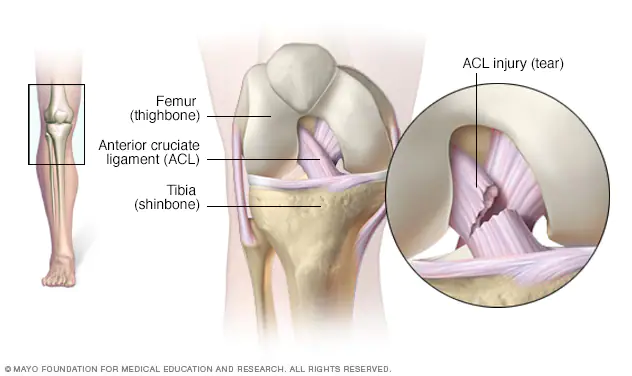
An anterior cruciate ligament (ACL) injury is a tear or sprain of one of the major ligaments in the knee that connects the thighbone (femur) to the shinbone (tibia). This ligament plays a crucial role in stabilizing the knee during activities involving sudden movements or changes in direction. ACL injuries are common in sports like soccer, basketball, football, and skiing, and they can vary in severity from mild sprains to complete tears.
This guide explores the symptoms, causes, risk factors, and prevention strategies for ACL injuries, along with available treatment options to support recovery.
What is an ACL Injury?
The ACL is one of two ligaments that cross in the middle of the knee joint. It stabilizes the joint and prevents the tibia from sliding too far forward relative to the femur. ACL injuries occur when excessive stress is placed on the knee, causing the ligament to stretch, partially tear, or rupture completely.
Types of ACL Injuries:
- Grade 1: Mild sprain, with the ligament slightly stretched but intact.
- Grade 2: Partial tear, with noticeable instability in the knee.
- Grade 3: Complete tear, resulting in significant instability.
Symptoms of ACL Injuries
Symptoms of an ACL injury typically appear immediately after the incident and may worsen over time.
Common Symptoms:
- Popping Sound or Sensation:
- A loud pop or feeling of a “snap” in the knee at the time of injury.
- Severe Pain:
- Intense pain in the knee, often preventing further activity.
- Swelling:
- Rapid swelling within the first few hours after the injury.
- Instability:
- The knee may feel unstable or as though it will “give way” when weight is applied.
- Limited Range of Motion:
- Difficulty fully bending or straightening the knee.
When to See a Doctor:
Seek immediate medical care if you experience severe pain, swelling, or instability in your knee after an injury. Prompt diagnosis is crucial to determine the severity and appropriate treatment.
Causes of ACL Injuries
ACL injuries typically occur during activities that place stress on the knee joint.
Common Causes:
- Sudden Stops or Direction Changes:
- Pivoting or cutting movements, especially with a planted foot.
- Improper Landing:
- Landing awkwardly after a jump.
- Collisions:
- Direct blows to the knee, such as during a football tackle.
- Sudden Acceleration or Deceleration:
- Quickly starting or stopping movement can strain the ligament.
Risk Factors for ACL Injuries
Several factors increase the likelihood of an ACL injury:
1. Biological and Anatomical Factors:
- Gender: Women have a higher risk due to differences in anatomy, muscle strength, and hormonal influences.
- Age: Most common in individuals aged 15–45 who engage in high-risk sports.
2. Sports Participation:
- Activities involving pivoting, cutting, and jumping, such as soccer, basketball, and skiing, pose a greater risk.
3. Poor Conditioning and Technique:
- Weak leg muscles or improper form during sports increase strain on the ACL.
4. External Factors:
- Footwear: Ill-fitting shoes can affect stability.
- Playing Surface: Artificial turf increases the risk compared to natural grass.
Complications of ACL Injuries
Without proper treatment, ACL injuries can lead to significant complications, including:
1. Chronic Instability:
- An untreated tear may result in repeated knee buckling during physical activity.
2. Osteoarthritis:
- ACL injuries increase the risk of developing knee osteoarthritis, even after surgical repair.
3. Associated Injuries:
- Damage to other knee structures, such as the meniscus or cartilage, is common with ACL injuries.
Treatment Options for ACL Injuries
Treatment depends on the severity of the injury, activity level, and personal goals. Options include nonsurgical management and surgical intervention.
1. Nonsurgical Treatment:
- Rest and Immobilization:
- Avoid activities that worsen symptoms, and use crutches if needed.
- Physical Therapy:
- Focuses on strengthening surrounding muscles to support the knee.
- Bracing:
- May provide additional stability for mild injuries.
2. Surgical Treatment:
- ACL Reconstruction:
- Involves replacing the torn ligament with a graft, typically from the patient’s own tendon or a donor.
- Post-Surgery Rehabilitation:
- Essential for restoring strength, stability, and range of motion.
Prevention of ACL Injuries
Proper training, conditioning, and attention to technique can significantly reduce the risk of ACL injuries.
1. Strengthening and Conditioning:
- Focus on strengthening leg muscles, especially the hamstrings and quadriceps, to support the knee.
- Incorporate core exercises to improve overall stability.
2. Jumping and Landing Techniques:
- Train to land softly with knees bent and avoid inward movement of the knees during jumps.
3. Proper Equipment:
- Wear well-fitted footwear and ensure sports equipment, like ski bindings, is properly maintained.
4. Gradual Progression:
- Increase training intensity, duration, and frequency gradually to avoid sudden strain on the ACL.
5. Cross-Training:
- Alternate high-impact sports with low-impact activities like swimming or cycling.
Living with an ACL Injury
Recovery from an ACL injury requires commitment to rehabilitation and lifestyle adjustments.
Rehabilitation Tips:
- Follow a physical therapy plan to regain strength and stability.
- Avoid high-risk activities until cleared by your healthcare provider.
- Maintain a healthy weight to reduce stress on the knee.
Conclusion
ACL injuries are common in sports and can significantly impact an individual’s mobility and quality of life. Early diagnosis, appropriate treatment, and preventive measures are essential for recovery and reducing the risk of future injuries.
By focusing on proper conditioning, technique, and equipment, athletes and active individuals can minimize their risk of ACL injuries and maintain their physical performance.
Disclaimer: This article is for informational purposes only and should not replace professional medical advice. Always consult a healthcare provider for diagnosis and treatment of ACL injuries.