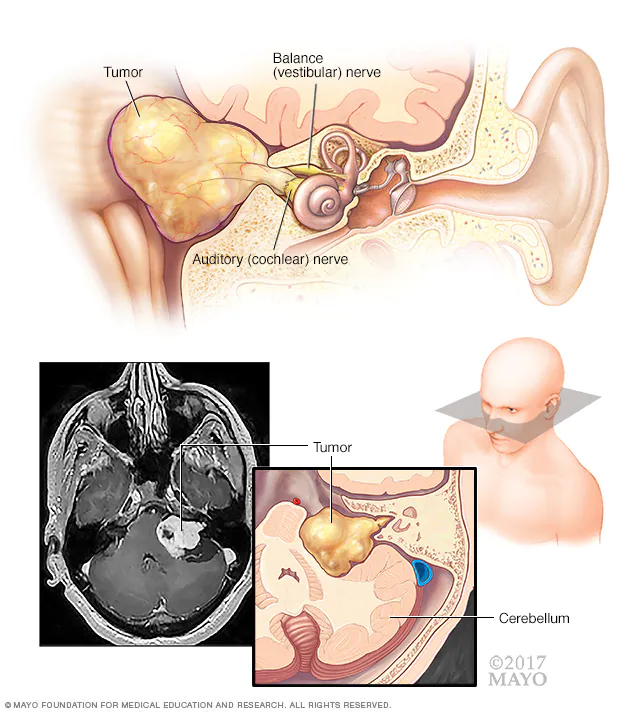
An acoustic neuroma, also called a vestibular schwannoma, is a noncancerous tumor that develops on the vestibular nerve. This nerve connects the inner ear to the brain and plays a critical role in balance and hearing. While typically slow-growing, acoustic neuromas can cause significant complications as they increase in size, including hearing loss, balance problems, and, in rare cases, pressure on the brainstem that can become life-threatening.
This article explores the symptoms, causes, risk factors, and available treatments for acoustic neuroma.
What is an Acoustic Neuroma?
An acoustic neuroma develops from Schwann cells, which form the protective covering of the vestibular nerve. These tumors are generally benign, meaning they do not spread to other parts of the body. However, as they grow, they may compress surrounding nerves and brain structures, leading to a variety of symptoms.
Key Facts:
- Location: Develops on the vestibular nerve, which affects balance and hearing.
- Growth Rate: Usually slow but may occasionally grow rapidly.
- Potential Impact: Large tumors can compress the brainstem, interfering with vital functions.
Symptoms of Acoustic Neuroma
The symptoms of an acoustic neuroma can be subtle and develop slowly over time, making early detection challenging. Symptoms primarily result from the tumor’s effects on the hearing and balance nerves, but nearby structures may also be affected.
Common Symptoms:
- Hearing Loss:
- Gradual hearing loss in one ear is the most common symptom.
- Rarely, hearing loss may occur suddenly.
- Tinnitus (Ringing in the Ear):
- A persistent ringing or buzzing in the affected ear.
- Balance Problems:
- Loss of steadiness or difficulty maintaining balance, especially in low-light conditions.
- Dizziness:
- Episodes of vertigo or a sensation of spinning.
- Facial Numbness or Weakness:
- Pressure on the facial nerve may cause numbness or, in rare cases, loss of muscle movement.
- Severe Complications:
- Large tumors can compress the brainstem, potentially leading to life-threatening conditions such as hydrocephalus (fluid buildup in the brain).
When to See a Doctor:
Consult a healthcare provider if you notice symptoms such as hearing loss in one ear, persistent ringing, or balance issues. Early diagnosis can prevent complications such as total hearing loss.
Causes of Acoustic Neuroma
The exact cause of most acoustic neuromas is unknown. However, a small percentage of cases are linked to genetic factors.
Genetic Factors:
- A problem with a gene on chromosome 22 is associated with acoustic neuromas. This gene typically produces a protein that regulates Schwann cell growth.
- In some cases, this gene change is inherited, as seen in individuals with neurofibromatosis type 2 (NF2).
Neurofibromatosis Type 2:
- A rare genetic disorder accounting for about 5% of acoustic neuroma cases.
- Involves bilateral tumors on the hearing and balance nerves.
- Follows an autosomal dominant inheritance pattern, meaning a child has a 50% chance of inheriting the condition if one parent is affected.
Risk Factors for Acoustic Neuroma
The only confirmed risk factor for acoustic neuroma is neurofibromatosis type 2 (NF2). However, most cases occur without a clear hereditary link.
Key Points About NF2:
- Rare disorder characterized by tumors on both sides of the head.
- Can lead to additional noncancerous tumors on other nerves.
Complications of Acoustic Neuroma
If left untreated, acoustic neuromas can lead to permanent complications or even life-threatening conditions.
Common Complications:
- Hearing Loss:
- Permanent hearing loss in the affected ear.
- Facial Numbness and Weakness:
- Pressure on the facial nerve can result in numbness or reduced muscle movement.
- Balance Issues:
- Persistent balance problems may affect mobility and quality of life.
- Tinnitus:
- Continuous ringing in the ear that can interfere with daily activities.
- Hydrocephalus:
- Large tumors may block cerebrospinal fluid flow, causing fluid buildup in the skull and increasing intracranial pressure.
Diagnosis of Acoustic Neuroma
Accurate diagnosis involves a combination of medical history, physical examination, and specialized tests.
Diagnostic Tests:
- Hearing Tests (Audiometry):
- Assesses the extent of hearing loss and distinguishes between conductive and sensorineural causes.
- Imaging Studies:
- MRI: The preferred method for detecting small tumors.
- CT Scan: May be used if MRI is unavailable.
Treatment Options for Acoustic Neuroma
Treatment depends on the size of the tumor, the severity of symptoms, and the overall health of the patient. Options include monitoring, radiation, and surgery.
1. Monitoring:
- “Watch and Wait”: Appropriate for small, slow-growing tumors with minimal symptoms.
- Regular MRI scans are performed to track tumor growth.
2. Radiation Therapy:
- Used to slow tumor growth or shrink the tumor.
- Stereotactic Radiosurgery: A non-invasive procedure delivering precise radiation beams to the tumor.
3. Surgery:
- Recommended for larger tumors causing significant symptoms.
- Goals include tumor removal, preserving nerve function, and preventing complications.
Types of Surgery:
- Retrosigmoid Approach: Allows access to the tumor while preserving hearing if possible.
- Translabyrinthine Approach: Used for larger tumors but may result in total hearing loss in the affected ear.
Prevention of Acoustic Neuroma
There are no known ways to prevent acoustic neuromas since their exact cause is unclear. However, individuals with neurofibromatosis type 2 should undergo regular screenings for early detection and management.
Living with Acoustic Neuroma
Coping with an acoustic neuroma often involves lifestyle adjustments and ongoing medical care.
Management Tips:
- Hearing Aids: May help manage hearing loss.
- Balance Training: Physical therapy can improve balance and coordination.
- Counseling and Support Groups: Emotional support can help individuals adjust to life with an acoustic neuroma.
Conclusion
An acoustic neuroma is a noncancerous but potentially serious tumor that affects hearing, balance, and facial nerves. Early detection is crucial to managing symptoms and preventing complications. With advancements in medical imaging, radiation therapy, and surgical techniques, treatment options can be tailored to individual needs, improving outcomes and quality of life.
If you experience symptoms such as unilateral hearing loss, tinnitus, or balance issues, seek medical advice promptly for evaluation and potential treatment.
Disclaimer: This article is for informational purposes only and is not a substitute for professional medical advice. Always consult your healthcare provider for personalized care.