


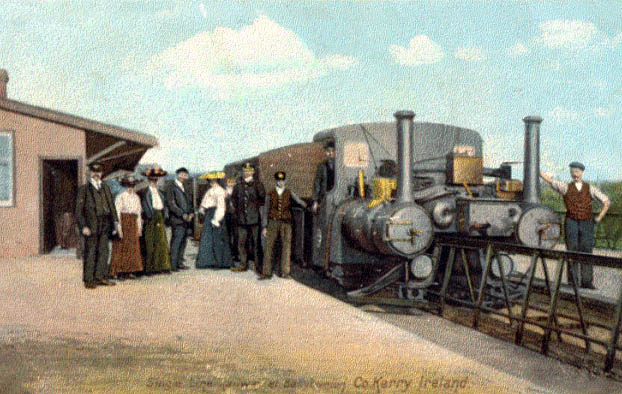
The 0-3-0 wheel arrangement is one of the rarest configurations in the history of steam locomotion, uniquely designed for monorail systems rather than conventional railways. Unlike standard locomotives that operate on dual tracks, this layout was created for single-track elevated or ground-level monorails, requiring specialized engineering and balancing systems.
Design and Classification
In Whyte notation, the 0-3-0 designation refers to three coupled driving wheels on a single side, with no leading or trailing wheels. Because it was designed for monorails, the arrangement included additional guide or balancing wheels that did not bear the main load.
Interestingly, under Russian axle classification, which counts axles rather than wheels, the 0-3-0 is equivalent to a 0-6-0 configuration in standard rail terminology.
This configuration provided good traction and mechanical simplicity but required counterbalancing systems to maintain stability since the locomotive’s main driving wheels operated along a single rail beam.
Historical Examples
Listowel and Ballybunion Railway (Ireland)
The most famous use of the 0-3-0 design was on the Lartigue Monorail system, which operated on the Listowel and Ballybunion Railway in County Kerry, Ireland, from 1888 to 1924.
These locomotives were built by the Hunslet Engine Company of Leeds, based on the design of Charles Lartigue, who invented a balanced monorail supported by A-shaped trestles. The locomotive featured a 0-3-0 drive system mounted along the central rail with additional guide wheels on either side to stabilize it along the elevated track.
Each locomotive had twin boilers and dual cabs, positioned on either side of the central track beam to balance the weight symmetrically. Although mechanically reliable, the system proved impractical due to its complex infrastructure and difficulties in loading freight evenly on both sides of the rail.
Patiala State Monorail Trainways (India)
A second notable example appeared in India in 1907, with the establishment of the Patiala State Monorail Trainways (PSMT) in Patiala, Punjab. Four 0-3-0 locomotives were built by Orenstein & Koppel of Berlin, designed for a semi-ground monorail system.
These engines had double-flanged driving wheels running on a single steel rail and an outrigger wheel on the ground to maintain lateral stability. This combination allowed the locomotive to operate efficiently on uneven terrain.
One of these locomotives has been preserved in working condition at the National Rail Museum in New Delhi, making it one of the few surviving operational steam monorails in the world.
Technical and Operational Context
The 0-3-0 arrangement was developed to solve the engineering challenges of single-track rail transport in regions or environments where traditional dual-track railways were not feasible. Both the Irish and Indian systems used unique balancing methods:
- Lartigue Monorail (Ireland): Used a central beam supported by a series of trestles, with guide wheels stabilizing the locomotive.
- Patiala Monorail (India): Employed a ground outrigger wheel for lateral balance.
Despite their ingenuity, both systems faced logistical limitations — cargo had to be evenly distributed, and infrastructure costs were high. As a result, monorails using the 0-3-0 configuration were discontinued after a few decades.
Legacy
Though largely experimental, the 0-3-0 monorail locomotives represent a remarkable period in railway innovation. They combined mechanical simplicity with creative design to solve the challenge of single-rail transportation before the development of modern monorail technologies.
Today, the preserved Patiala Monorail locomotive serves as a functional heritage exhibit, offering a glimpse into early 20th-century monorail engineering and the global fascination with unconventional rail solutions.




