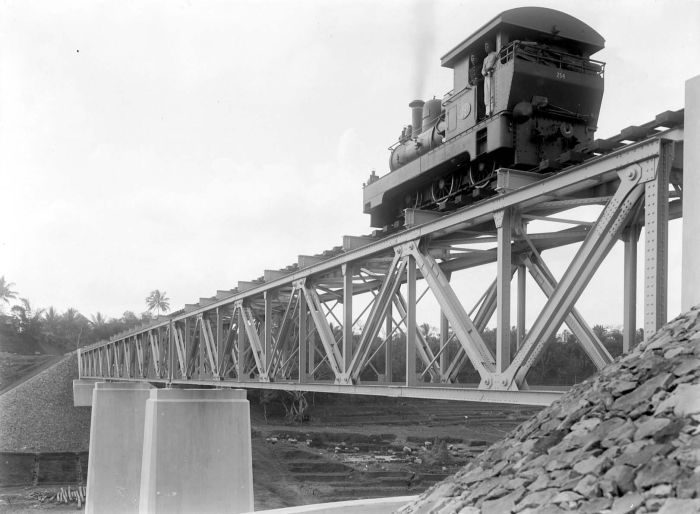
The 0-6-0 steam locomotive is one of the most iconic and widely used designs in railway history. Under Whyte notation, it describes an engine with no leading wheels, six coupled driving wheels on three axles, and no trailing wheels. This simple yet powerful configuration gave rise to thousands of locomotives across the world—from the early British railways to industrial yards and narrow-gauge lines in Africa, Asia, and the Americas.
The entire engine mass acting as adhesive weight gave the 0-6-0 remarkable tractive effort, making it ideal for freight work, yard shunting, and short-haul services where speed was less important than pulling power.
Origins and Early Development
The first known 0-6-0 tender locomotive was Hackworth’s Royal George, built in 1827 for the Stockton and Darlington Railway. It marked a shift toward heavier-duty designs capable of hauling longer goods trains. By the mid-19th century, engineers like Charles Tayleur and William Kitching had refined the arrangement, introducing inside cylinders for better stability and compactness.
Tank versions followed in the 1850s, with the 0-6-0T and 0-6-0ST (saddle tanks) becoming the backbone of shunting and industrial railways across Britain and Europe.
Design Variants and Notation
The 0-6-0 configuration was adaptable across many engine types, leading to several sub-classifications based on tank and transmission systems:
- 0-6-0T – Side tank locomotive
- 0-6-0ST – Saddle tank
- 0-6-0PT – Pannier tank (notably on Great Western Railway)
- 0-6-0WT – Well tank
- 0-6-0VB – Vertical boiler
- 0-6-0F – Fireless locomotive
- 0-6-0DM/DH/DE – Diesel mechanical, hydraulic, or electric transmission
In European UIC classification, it is designated C, and in Russian notation, it is 0-3-0, representing three coupled axles.
Advantages and Drawbacks
Advantages
- Entire engine weight contributed to traction, maximizing pulling power.
- Mechanically simple and easier to maintain.
- Well-suited for slow-speed freight and shunting operations.
Drawbacks
- Lack of leading or trailing wheels caused instability at high speeds.
- Limited maneuverability on sharp curves at high velocity.
Thus, 0-6-0s thrived on industrial, freight, and branch lines, not mainline express routes.
Global Usage and Regional Variants
United Kingdom
The 0-6-0 dominated British freight operations for more than a century. By 1900, over one-third of British locomotives were 0-6-0 tender types.
Notable classes included:
- John Ramsbottom’s DX Goods Class (1858–1872) – 943 units built.
- Southern Railway Q1 “Austerity” (1942) – The most powerful 0-6-0 ever built in Europe.
- GWR Pannier Tanks – Staples of branch lines and shunting yards.
Diesel successors like the BR Class 08 continued the 0-6-0 legacy in the mid-20th century, replacing steam in industrial and yard duties.
United States
In America, the 0-6-0 became synonymous with switcher locomotives. The USRA 0-6-0, built during World War I, set a national standard—255 units were constructed and distributed across 24 railroads.
The Pennsylvania Railroad alone operated over 1,200 examples, known for their strength and compact size.
During World War II, the USATC S100 Class—514 units built—served Allied forces in Europe and North Africa. Many continued postwar service in Britain, Egypt, France, Iraq, and Yugoslavia.
Australia
The New South Wales Z19 Class and Victorian Railways Z-Class represented key Australian examples. These locomotives were used across goods yards and branch lines, with many preserved today in museums like Dorrigo and Newport.
Finland
Finland’s VR Class Vr1, built between 1913 and 1919, became iconic for its compact design and reliability. Nicknamed “Kana” (Chicken), these locomotives worked until 1975, marking one of Europe’s longest-serving 0-6-0 fleets.
Indonesia
The Dutch East Indies (Indonesia) developed a rich collection of 0-6-0T locomotives, many built by Sächsische Maschinenfabrik and Werkspoor for both narrow and standard gauge lines.
Famous examples include:
- NIS Class 250 (1899–1908) – Featuring Golsdorf wheel systems.
- SJS Class 100 (1898–1902) – Used for sugar freight and passenger lines; one preserved as C19 12 in Jakarta.
Philippines
The 0-6-0T Cabanatuan Class of 1905, built for the Manila Railway, was among the first in Asia. The Hawaiian-Philippine Company still operates 0-6-0 tender locomotives for heritage trains—some of the last working steam engines in Southeast Asia.
South Africa and Namibia
The Cape Government Railways and Transvaal Republic Railways widely used 0-6-0s for shunting and construction. The Zwillinge twin tank engines of German South West Africa (Namibia) were unique paired 0-6-0Ts, designed for dual operation with shared controls—a remarkable engineering experiment of the early 1900s.
Legacy and Preservation
The 0-6-0 wheel arrangement stands as the most successful and versatile locomotive configuration in history. Its influence extends beyond steam, shaping the design of diesel and electric shunters for over a century.
Today, dozens of preserved 0-6-0 locomotives operate in heritage railways and museums worldwide—from Finland’s Bristollari to Britain’s Southern Q1 and Tasmania’s Z-Class—honoring a design that powered the industrial age and global rail expansion.