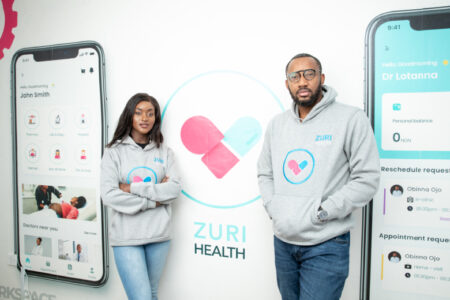
Zuri Health funding reflects the rise of digital healthcare in Africa, where mobile platforms are becoming an important bridge between patients and medical services. Founded in Nairobi, Kenya, Zuri Health is a virtual hospital that provides affordable and accessible healthcare through a mobile app, website, WhatsApp bot, and SMS service.
The company operates in healthcare IT, health and medical services, mobile health, and digital health. Its model is built around a simple but powerful idea: patients should be able to reach doctors, pharmacies, laboratories, diagnostic services, and home-based care without first facing the cost, distance, or inconvenience of a hospital visit.
Through Zuri Health, patients can chat and consult with doctors, buy medication from pharmacies, book lab and diagnostic tests, and arrange for a doctor to visit them at home. That makes the company more than a telemedicine app. It is trying to build a wider digital healthcare ecosystem for patients across Sub-Saharan Africa.
The company’s funding history includes grants, equity funding, pre-seed investment, seed support, and in-kind services from investors and ecosystem partners. This mix shows that Zuri Health sits at the intersection of healthcare access, technology, inclusion, and venture-backed innovation.
What Is Zuri Health?
Zuri Health is a Kenyan virtual hospital and digital healthcare platform. It provides medical services through mobile and digital channels, including a mobile app, website, WhatsApp bot, and SMS service.
The company helps patients access doctors, pharmacies, laboratory testing, diagnostic services, and home-based medical visits. Its model is especially relevant in markets where healthcare access can be limited by location, cost, doctor shortages, transport challenges, and long waiting times.
Zuri Health’s public profile describes it as a “Super Health App” providing affordable and accessible healthcare services across Sub-Saharan Africa. The company’s approach is mobile-first, but it does not rely only on smartphone access. SMS and WhatsApp support are important because many patients may not always have reliable internet access or may prefer simpler communication channels.
| Category | Role in Zuri Health’s Model |
|---|---|
| Healthcare IT | Uses digital systems to connect patients and health providers. |
| Health/Medical | Provides access to medical consultations and related services. |
| Health | Supports general healthcare access and patient care. |
| Mobile Health | Delivers services through mobile app, WhatsApp, and SMS. |
| Telemedicine | Enables remote doctor consultations and medical advice. |
| Pharmacy Access | Allows patients to buy medication from pharmacies. |
| Lab and Diagnostics | Helps patients book tests and diagnostic services. |
| Home-Based Care | Enables doctor visits at home where available. |
Zuri Health’s value comes from bringing several healthcare services into one platform. A patient may start with a chat consultation, then be referred for lab tests, receive a prescription, buy medication, and arrange follow-up care.
Why Zuri Health Funding Matters
Zuri Health funding matters because healthcare access remains uneven across many African markets. Patients often face long distances to hospitals, high consultation costs, limited specialist availability, and delays in diagnosis or treatment.
A mobile-first healthcare platform can reduce some of those barriers. It can help patients ask questions earlier, speak with doctors faster, order medication more conveniently, and access care without unnecessary travel.
This is especially important for people dealing with minor illnesses, chronic conditions, follow-up consultations, prescription refills, lab bookings, and basic medical advice. Not every health concern requires a hospital queue. In many cases, a digital first step can improve convenience and guide patients toward the right level of care.
Zuri Health’s funding also matters because its model addresses digital inclusion. The company uses several access channels: app, website, WhatsApp, and SMS. That matters in Sub-Saharan Africa, where smartphone access and internet reliability vary widely.
For investors, Zuri Health represents a healthtech opportunity built around scale, access, and recurring healthcare demand. For patients, it represents a more convenient route into the healthcare system.
Full List of Zuri Health Funding Rounds
Zuri Health has attracted backing from venture capital firms, development-focused investors, healthcare innovation programmes, and startup ecosystem partners. Some funding amounts are disclosed, while others are listed without a public value.
| Investor or Partner | Announced Date | Amount | Funding Type | Strategic Value |
| MSISV | Sep 2025 | $250k | Seed | Supports growth of Zuri Health’s digital healthcare platform. |
| Five35 Ventures | Jul 2023 | Undisclosed | Seed | Adds women-focused and Africa-focused venture capital support. |
| UM6P Ventures | Jan 2023 | Undisclosed | Seed | Supports technology-led innovation and African expansion. |
| Investing In Innovation Africa | Sep 2022 | $50k | Grant | Supports healthcare innovation and ecosystem development. |
| Asime Ventures | May 2022 | Undisclosed | Pre-seed | Supports early growth and expansion. |
| Five35 Ventures | May 2022 | Undisclosed | Pre-seed | Adds venture backing for early-stage growth. |
| V8 Capital Partners | May 2022 | Undisclosed | Pre-seed | Supports product development and market expansion. |
| Villgro Kenya | May 2022 | Undisclosed | Pre-seed | Adds healthcare and impact investment support. |
| DOB Equity | May 2022 | Undisclosed | Pre-seed | Supports digital healthcare expansion across Africa. |
| Launch Africa VC | May 2022 | Undisclosed | Pre-seed | Adds pan-African venture capital backing. |
| Founders Factory | May 2022 | Undisclosed | Pre-seed | Supports startup acceleration, product growth, and market entry. |
| Wazo Challenge East Africa | Oct 2021 | $10k | Grant | Provides early innovation support. |
| KFW DEG | Not specified | Undisclosed | Equity Funding | Adds development finance and growth support. |
| SeedStars | Not specified | Undisclosed | Equity Funding | Adds global startup ecosystem backing. |
| Platform Capital | Not specified | Undisclosed | Equity Funding | Supports early-stage investment and market expansion. |
| Black Founders Fund | Not specified | Undisclosed | Equity Funding | Adds support for Black-led technology startups. |
| Marula Square | Not specified | Undisclosed | Equity Funding | Adds private investment support. |
| Health Innovation Exchange – HIEx | Not specified | In-kind services | In-kind Support | Provides healthcare innovation support and ecosystem access. |
| Hindsight Ventures | Not specified | Undisclosed | Equity Funding | Supports startup development and growth. |
Zuri Health’s funding history shows a company that has benefited from multiple forms of capital. Grants and in-kind services helped support early innovation, while pre-seed and seed capital supported product development, operations, and expansion.
Zuri Health Funding Timeline
2020: Founded in Nairobi
Zuri Health was founded in Nairobi, Kenya, in 2020. Its founding came at a time when digital health was gaining attention globally and across Africa. Patients were becoming more familiar with remote consultations, while health systems were looking for ways to reduce pressure on physical facilities.
The company entered the market with a virtual hospital model designed to make healthcare more accessible through mobile channels.
2021: Early Grant Support
In October 2021, Zuri Health received a $10,000 grant from Wazo Challenge East Africa. Early grant support can be important for healthtech startups because it allows founders to test ideas, improve products, and build early traction without immediate repayment pressure.
At this stage, Zuri Health’s challenge was to prove that patients would trust a digital healthcare platform and that providers could deliver reliable services through remote channels.
2022: Pre-Seed Funding and Expansion Capital
In May 2022, Zuri Health attracted pre-seed backing from investors including DOB Equity, Launch Africa VC, Founders Factory, V8 Capital Partners, Villgro Kenya, Five35 Ventures, and Asime Ventures.
Public reports from 2022 described Zuri Health as raising $1.3 million in pre-seed funding to grow across Africa. The round included participation from investors such as DOB Equity, Launch Africa Ventures, Founders Factory Africa, V8 Capital, Platform Capital, Villgro Africa, Asime Ventures, and the Salik Family Trust.
This was a major milestone because it gave Zuri Health resources to expand its platform, increase product offerings, and launch in new markets. It also validated the company’s belief that mobile-based healthcare could become a scalable model in Africa.
2022: Healthcare Innovation Grant
In September 2022, Investing In Innovation Africa provided a $50,000 grant. This support added to Zuri Health’s innovation funding and reinforced its role in Africa’s digital health ecosystem.
For a virtual hospital, grants can help support new service lines, patient access models, partnerships, and product experiments that may not yet be fully commercial.
2023: Additional Seed Support
In January 2023, UM6P Ventures joined as a seed investor. In July 2023, Five35 Ventures was listed as a seed investor.
This phase likely supported Zuri Health’s continued growth after its pre-seed expansion. For healthtech companies, follow-on seed support is useful because scaling healthcare requires trust, regulatory awareness, provider networks, patient acquisition, and operational reliability.
2025: MSISV Seed Funding
In September 2025, MSISV was listed as providing $250,000 in seed funding to Zuri Health. This funding added further support to the company’s growth journey.
By this stage, Zuri Health had already positioned itself as a mobile-first virtual hospital serving patients through multiple channels. The next challenge was to deepen trust, improve service quality, expand partnerships, and grow repeat usage.
Biggest Zuri Health Funding Rounds by Known Value
Several Zuri Health funding amounts are disclosed, while others remain undisclosed. The largest public round identified in funding coverage is the 2022 pre-seed round.
| Rank | Investor or Round | Date | Amount | Funding Type |
| 1 | Pre-seed round | May 2022 | $1.3m | Pre-seed |
| 2 | MSISV | Sep 2025 | $250k | Seed |
| 3 | Investing In Innovation Africa | Sep 2022 | $50k | Grant |
| 4 | Wazo Challenge East Africa | Oct 2021 | $10k | Grant |
The $1.3 million pre-seed round stands out as the most important disclosed capital milestone. It helped move Zuri Health beyond early validation and gave the company room to expand its digital healthcare services.
Most Common Funding Categories
Zuri Health’s funding profile includes equity, pre-seed, seed, grants, and in-kind support.
| Funding Category | Role in Zuri Health’s Growth |
| Pre-seed | Helped validate the business model and support early expansion. |
| Seed | Supported product development, growth, and market reach. |
| Equity Funding | Provided growth capital from startup and development-oriented investors. |
| Grant Funding | Supported innovation, access, and early healthcare experiments. |
| In-kind Services | Added mentorship, ecosystem support, and healthcare innovation guidance. |
This capital mix fits Zuri Health’s model. Virtual healthcare requires software development, provider networks, patient support, regulatory awareness, and trust-building. Grants and in-kind services can support innovation, while equity and seed funding help expand commercial operations.
Strategic Lessons From Zuri Health Funding
Mobile Health Must Be Multi-Channel
Zuri Health’s model is not limited to a smartphone app. It also uses WhatsApp, SMS, and web access. That is a strategic strength in African healthcare markets.
A platform that relies only on smartphones may exclude users with limited internet access. By offering multiple channels, Zuri Health can serve a broader patient base.
Healthcare Access Is a Distribution Problem
Many patients do not lack medical needs. They lack convenient access. They may live far from facilities, face long queues, or struggle to afford repeated visits.
Zuri Health’s virtual hospital model helps solve the distribution problem by bringing the first layer of care closer to the patient.
Digital Health Requires Trust
Healthcare is personal. Patients must believe that the doctors are qualified, the advice is safe, medications are legitimate, and private information is protected.
Zuri Health’s funding can support technology and growth, but long-term success depends on trust, quality, and consistent medical standards.
How Zuri Health Funding Fits Its Business Model
Zuri Health funding fits the company’s business model because a virtual hospital needs investment across several connected functions.
First, it needs technology. The platform must support app access, website access, WhatsApp interactions, SMS consultations, bookings, payment flows, and service coordination.
Second, it needs provider networks. Zuri Health must work with doctors, pharmacies, laboratories, diagnostic providers, and home-care professionals.
Third, it needs patient acquisition. Healthcare platforms must build awareness and convince patients to trust digital channels.
Fourth, it needs operational support. A patient journey may involve a consultation, prescription, lab test, medication delivery, and follow-up care. Coordinating those steps requires systems and people.
Funding helps Zuri Health build that infrastructure.
Financial and Ownership Context
Zuri Health has attracted a broad set of investors and partners, including MSISV, Five35 Ventures, UM6P Ventures, DOB Equity, Launch Africa VC, Founders Factory, Villgro Kenya, V8 Capital Partners, Platform Capital, SeedStars, KFW DEG, Black Founders Fund, Hindsight Ventures, Health Innovation Exchange, and others.
The company’s disclosed funding includes a $10,000 grant from Wazo Challenge East Africa, a $50,000 grant from Investing In Innovation Africa, a $250,000 seed investment from MSISV, and a reported $1.3 million pre-seed round in 2022.
This funding profile shows a company still in the growth-building phase. It is not a mature hospital chain. It is an emerging digital healthcare platform trying to prove that virtual care can be accessible, trusted, and scalable across African markets.
Competitive Impact of Zuri Health Funding
Zuri Health funding strengthens the company’s competitive position in several ways.
First, capital helps the company improve its technology platform. In digital healthcare, convenience and reliability are essential. If the app, WhatsApp bot, SMS service, or booking process fails, patients may lose trust quickly.
Second, funding supports service expansion. Zuri Health is not limited to doctor chats. It also connects patients to pharmacies, labs, diagnostics, and doctor-at-home services.
Third, investor backing improves credibility. Healthcare is sensitive, so recognizable investors and ecosystem partners can help reassure partners and users.
Fourth, funding helps Zuri Health compete against both traditional and digital alternatives. Its competitors are not only other healthtech startups. They include hospitals, clinics, pharmacies, informal advice channels, and traditional patient referral networks.
Advantages of the Funding Strategy
Broader Patient Access
Funding helps Zuri Health expand digital channels that can reach patients through app, web, WhatsApp, and SMS.
Stronger Provider Network
Capital can support partnerships with doctors, pharmacies, laboratories, diagnostic providers, and home-visit professionals.
Product Expansion
Zuri Health can add or improve services such as online consultations, medicine ordering, lab bookings, diagnostics, and doctor-at-home care.
Credibility in Healthtech
Backing from venture, innovation, and development-focused investors can strengthen the company’s reputation in a trust-heavy sector.
Support for Underserved Users
SMS and WhatsApp access can help users who may not have constant internet access or who prefer simple mobile channels.
Disadvantages of the Funding Strategy
Healthcare Quality Risk
Digital healthcare platforms must maintain high medical standards. Poor advice, weak follow-up, or unreliable service could damage trust.
Regulatory Complexity
Healthcare services are regulated. Zuri Health must manage compliance, licensing, data privacy, and professional standards across markets.
Operational Burden
A virtual hospital is more complex than a simple app. It must coordinate doctors, pharmacies, labs, diagnostics, and home visits.
Patient Trust Barrier
Some patients may still prefer in-person consultations. Zuri Health must show when virtual care is appropriate and when patients should seek physical medical attention.
Funding and Scale Pressure
Like many startups, Zuri Health must convert funding into sustainable growth. Healthcare expansion can be expensive and slow.
Case Studies of Major Zuri Health Funding Rounds
The $1.3 Million Pre-Seed Round
Zuri Health’s $1.3 million pre-seed round in 2022 was a major turning point. It gave the company resources to strengthen its digital platform, expand product offerings, and move into new markets.
The investor group included firms with experience in African startups, healthcare, venture capital, and impact-driven business models. This mattered because Zuri Health needed more than money. It needed investor support for market expansion, product development, and business strategy.
MSISV Seed Funding
The $250,000 seed funding from MSISV in September 2025 added another disclosed capital milestone. This funding supported Zuri Health’s continued growth as a digital healthcare provider.
For a company building a virtual hospital, seed-stage funding can help improve service quality, expand patient acquisition, and strengthen operational systems.
Investing In Innovation Africa Grant
The $50,000 grant from Investing In Innovation Africa supported Zuri Health’s innovation journey. Grants can be valuable in healthtech because they help companies test services, reach underserved users, and develop products without relying entirely on commercial revenue.
Wazo Challenge East Africa Grant
The $10,000 grant from Wazo Challenge East Africa was an early form of support. Small grants can help young startups validate ideas, build prototypes, or reach early customers.
For Zuri Health, this support came before larger pre-seed and seed rounds, making it part of the company’s early foundation.
Common Mistakes When Analyzing Zuri Health Funding
Treating Zuri Health as Only a Telemedicine App
Zuri Health is broader than basic telemedicine. It connects patients to consultations, pharmacies, lab tests, diagnostics, and doctor-at-home services.
Ignoring SMS and WhatsApp
SMS and WhatsApp are not secondary features. They are central to accessibility in markets where smartphone and internet access are uneven.
Focusing Only on Funding Amounts
Funding is important, but healthtech success depends on service quality, provider trust, patient retention, and regulatory execution.
Underestimating Healthcare Operations
Digital health still requires real-world coordination. Doctors, medications, lab tests, diagnostics, and home visits must work together.
Assuming Virtual Care Replaces Hospitals
Virtual care does not replace all hospital care. It works best as a first access point, triage layer, follow-up channel, and convenience tool for appropriate cases.
Lessons for Business Owners and Investors
Zuri Health offers several lessons for founders, investors, and healthcare leaders.
First, access is a powerful business opportunity. Patients need faster and more affordable ways to reach medical services.
Second, healthcare products must be built around user behavior. In many African markets, WhatsApp and SMS may be as important as apps.
Third, trust determines adoption. A healthcare platform must be reliable, safe, and medically responsible.
Fourth, healthtech companies need strong partnerships. Doctors, pharmacies, laboratories, insurers, employers, and public health organizations can all play a role.
Finally, funding should support quality as well as growth. Scaling healthcare without maintaining standards can damage both patients and the business.
Key Takeaways
- Zuri Health is a Nairobi-based virtual hospital and digital healthcare platform.
- The company was founded in 2020.
- Zuri Health provides healthcare through a mobile app, website, WhatsApp bot, and SMS service.
- Patients can consult doctors, buy medication, book labs and diagnostics, and arrange doctor-at-home visits.
- Zuri Health operates in healthcare IT, health and medical services, and mobile health.
- The company raised a reported $1.3 million pre-seed round in 2022.
- It received a $250,000 seed investment from MSISV in September 2025.
- It also received grants from Wazo Challenge East Africa and Investing In Innovation Africa.
- Zuri Health’s model is strongest when it combines digital access with real healthcare services.
- The company’s key risks include regulation, quality control, patient trust, and operational complexity.
- Zuri Health funding reflects growing investor interest in African digital health platforms.
Frequently Asked Questions
What is Zuri Health?
Zuri Health is a virtual hospital and digital healthcare platform that provides affordable healthcare services through mobile and digital channels.
What does Zuri Health do?
Zuri Health allows patients to consult doctors, buy medication, book lab and diagnostic tests, and arrange doctor-at-home visits.
Where is Zuri Health based?
Zuri Health is based in Nairobi, Kenya.
When was Zuri Health founded?
Zuri Health was founded in 2020.
What is Zuri Health funding?
Zuri Health funding refers to the company’s grants, pre-seed investment, seed funding, equity support, and in-kind services from investors and ecosystem partners.
How much funding has Zuri Health raised?
Zuri Health raised a reported $1.3 million pre-seed round in 2022. Its available funding history also includes a $250,000 seed investment from MSISV and grants of $50,000 and $10,000.
Who invested in Zuri Health?
Investors and partners linked to Zuri Health include MSISV, Five35 Ventures, UM6P Ventures, DOB Equity, Launch Africa VC, Founders Factory, Villgro Kenya, V8 Capital Partners, SeedStars, Platform Capital, Black Founders Fund, and others.
How do patients access Zuri Health?
Patients can access Zuri Health through its mobile app, website, WhatsApp bot, and SMS service.
Is Zuri Health only for online doctor consultations?
No. Zuri Health also supports medication purchases, lab bookings, diagnostic tests, and doctor-at-home visits.
Why is Zuri Health important?
Zuri Health is important because it uses mobile technology to make healthcare more accessible and convenient for patients across African markets.
What risks does Zuri Health face?
Zuri Health faces risks related to healthcare regulation, patient trust, quality control, data privacy, operational complexity, and sustainable growth.
Conclusion
Zuri Health funding shows how a Kenyan healthtech company is building a mobile-first virtual hospital for African patients. By combining doctor consultations, pharmacy access, lab bookings, diagnostic services, WhatsApp, SMS, web access, and home visits, Zuri Health is trying to make healthcare more convenient and accessible.
The company’s funding history reflects growing confidence in digital health across Africa. Its reported $1.3 million pre-seed round in 2022, $250,000 seed funding from MSISV in 2025, and earlier grants have supported a model that goes beyond simple telemedicine.
Still, Zuri Health’s long-term success will depend on more than funding. Healthcare requires trust, quality, regulation, clinical responsibility, and reliable execution. Patients must feel confident that digital care is safe, professional, and connected to real medical services when needed.
If Zuri Health can deliver that trust at scale, it could become an important part of Africa’s healthcare access story. Zuri Health funding is therefore not just a startup financing milestone. It is part of a larger shift toward mobile healthcare, virtual hospitals, and patient-centered digital health in Africa.
Disclaimer: This article is for informational and educational purposes only. It is not investment advice, financial advice, or a recommendation to buy or sell any security. Always conduct your own research and consider speaking with a qualified financial adviser before making investment decisions.
Read Also: E-tiba Funding: How the Kenyan Healthtech Is Expanding Home Healthcare