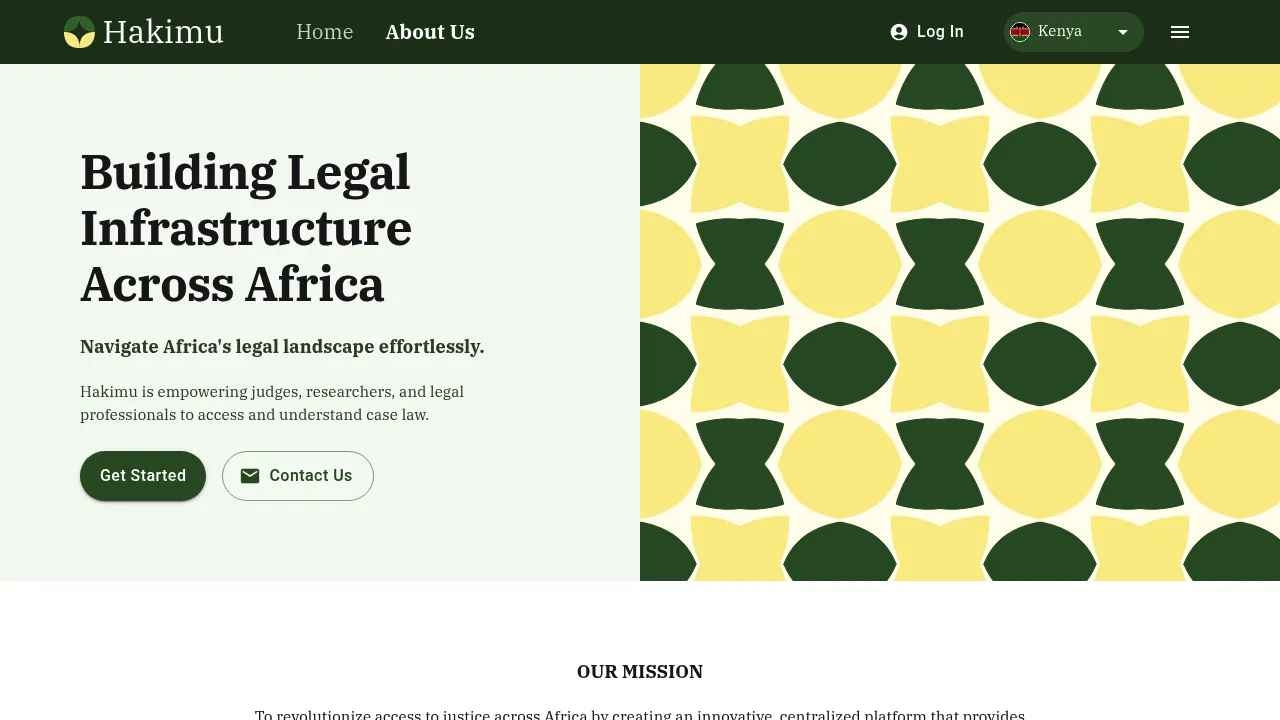
Hakimu funding has placed the Nairobi-based legal technology startup among the newest companies trying to modernize legal research across Africa. Founded in 2026, Hakimu is building pan-African legal infrastructure using artificial intelligence, semantic search, case law databases, legal document summarization, and contextual legal knowledge tools.
The company raised $200,000 in pre-seed funding from Madica in April 2026. Madica announced $600,000 in new investments across three African startups, with $200,000 each going to Hakimu in Kenya, Kilimo Fresh in Tanzania, and Biovana in Nigeria.
Hakimu’s mission is ambitious. The company wants to revolutionize access to justice across Africa by creating a centralized platform that provides contextually relevant legal solutions. Its tools are designed for judges, legal professionals, researchers, institutions, and other users who need to access and understand case law more efficiently.
That problem is real. Legal research across African jurisdictions can be slow, fragmented, and difficult. Finding relevant precedent often requires searching through long judgments, incomplete databases, different court systems, and complex legal language. Hakimu is trying to reduce that friction with an AI-powered legal search engine built for African legal contexts.
What Is Hakimu?
Hakimu is a Kenyan legal technology startup focused on legal AI and legal infrastructure. The company is building tools that help users search, summarize, understand, and retrieve legal information.
Madica describes Hakimu as an Africa-focused legal technology startup building the region’s first multilingual, AI-powered legal search engine. Its model involves aggregating and structuring African laws and case law into a unified platform so governments, legal professionals, businesses, and investors can access and interpret reliable legal information across jurisdictions.
Hakimu operates across several related categories:
| Category | Role in Hakimu’s Model |
|---|---|
| Legal | Serves lawyers, judges, researchers, and legal institutions. |
| Artificial Intelligence | Uses AI to search, summarize, and interpret legal materials. |
| Legal Support | Helps professionals reduce time spent on manual research. |
| Legal AI | Applies large language models and semantic search to legal data. |
| Legal Infrastructure | Builds structured access to African case law and legal knowledge. |
| Case Law Search | Helps users find relevant judgments and precedent. |
| Legal Knowledge Management | Organizes legal information for easier retrieval and analysis. |
| Access to Justice | Supports broader legal access through better information tools. |
Hakimu’s platform includes AI-powered search, case synopses, legal case summarization, precedent retrieval, and tools designed to help users navigate long cases. Its product direction suggests a focus on solving a core legal workflow problem: finding the right law, understanding it quickly, and applying it responsibly.
Why Hakimu Funding Matters
Hakimu funding matters because Africa’s legal systems need better digital infrastructure. Courts, lawyers, researchers, businesses, and ordinary citizens all depend on access to reliable legal information. When that information is hard to find, justice becomes slower, more expensive, and less predictable.
Legal research is especially important in common law systems, where precedent plays a central role. Judges and lawyers must identify relevant decisions, compare facts, extract principles, and understand how earlier cases affect current disputes. When case law databases are difficult to search, legal work becomes more time-consuming.
Hakimu’s funding is also significant because it comes at a time when African judiciaries and legal institutions are beginning to explore artificial intelligence more seriously. Kenya’s Judiciary has publicly discussed an Artificial Intelligence Adoption Policy Framework to guide safe and ethical integration of AI tools while protecting judicial independence, data privacy, and due process.
That context matters. Legal AI cannot be treated like ordinary consumer technology. It must be accurate, explainable, jurisdiction-aware, and careful with sensitive legal information. A company like Hakimu must therefore build not only a search product, but a trusted legal infrastructure layer.
Full List of Hakimu Funding Rounds
Hakimu’s available funding history shows one disclosed pre-seed investment.
| Investor | Announced Date | Amount | Funding Type | Strategic Value |
| Madica | Apr 2026 | $200,000 | Pre-seed | Supports product development, market validation, legal AI infrastructure, and pan-African legal research tools. |
The $200,000 pre-seed round gives Hakimu early capital to build and refine its legal search infrastructure. For an AI legal research startup, pre-seed funding is important because the company must invest in data structuring, retrieval systems, product design, legal accuracy, user trust, and institutional partnerships.
Hakimu Funding Timeline
2026: Founded in Nairobi
Hakimu was founded in Nairobi, Kenya, in 2026. Its founding location is important because Kenya has one of Africa’s more active legal, technology, and startup ecosystems.
Nairobi offers access to lawyers, courts, legal researchers, civic technology organizations, software talent, and startup investors. That makes it a practical base for a company trying to build legal infrastructure for African jurisdictions.
April 2026: Madica Pre-Seed Investment
In April 2026, Hakimu raised $200,000 in pre-seed funding from Madica. The investment was part of a broader $600,000 announcement covering three African startups: Hakimu, Kilimo Fresh, and Biovana.
Madica’s portfolio page describes Hakimu as a legaltech company building a multilingual AI-powered legal search engine for African laws and case law.
This investment is strategically important for three reasons. First, it validates legal AI as an investable sector in Africa. Second, it gives Hakimu resources to build early product infrastructure. Third, it connects the startup to a pan-African investor focused on early-stage companies.
Biggest Hakimu Funding Rounds by Deal Value
Hakimu has one disclosed funding round in the available record.
| Rank | Investor | Date | Amount | Funding Type |
| 1 | Madica | Apr 2026 | $200,000 | Pre-seed |
Because Hakimu is newly founded, its funding profile is still early. The key issue is not the size of the round alone. The more important question is whether the company can turn early capital into a trusted legal research platform with real adoption among lawyers, judges, researchers, and institutions.
Most Common Funding Categories
Hakimu’s available funding history is concentrated in pre-seed investment.
| Funding Category | Role in Hakimu’s Growth |
| Pre-seed Funding | Supports early product development, data infrastructure, legal research tools, user testing, and market validation. |
| Legaltech Investment | Signals investor confidence in African legal AI and access-to-justice technology. |
| AI Infrastructure Capital | Helps fund search, summarization, retrieval, and knowledge management systems. |
This funding mix fits Hakimu’s current stage. Legal AI platforms require careful early investment because quality, accuracy, and trust must be built before aggressive scaling.
Strategic Lessons From Hakimu Funding
Legal Infrastructure Is a Real Market Gap
Hakimu’s business is built around a practical gap: legal information across Africa is often difficult to search, compare, and understand. Lawyers and judges may spend significant time locating relevant authorities.
A platform that improves legal research can create value for courts, firms, universities, businesses, and legal departments.
AI Must Be Grounded in Legal Sources
Legal AI tools must be grounded in real legal materials. A general chatbot is not enough. Users need citations, case references, relevant paragraphs, judges’ names, court details, legal principles, and jurisdiction-specific context.
Hakimu’s focus on case law search, legal knowledge search, case synopses, and document summarization aligns with this need.
Access to Justice Depends on Access to Information
Justice is not only about courts. It is also about whether people can understand the law, find relevant information, and act on it.
By improving legal research infrastructure, Hakimu could help reduce information barriers for legal professionals and eventually for wider public users.
How Hakimu Funding Fits Its Business Model
Hakimu funding fits its business model because legal AI infrastructure requires significant upfront work before revenue can scale.
The company must collect, clean, structure, and organize legal materials. It must build search systems that understand legal meaning, not just keywords. It must summarize long cases without losing important legal nuance. It must also design tools that legal professionals can trust.
This is technically and legally demanding. Legal language is complex, and court decisions often turn on specific facts, procedural details, and jurisdictional context. AI tools must therefore support research rather than replace professional judgment.
The $200,000 pre-seed round can help Hakimu build an early version of that infrastructure, test it with users, and refine its product around real legal workflows.
Financial and Ownership Context
Hakimu is a privately held Kenyan legaltech startup founded in 2026. Its disclosed funding consists of a $200,000 pre-seed investment from Madica.
Madica is the company’s only listed investor in the available funding record. The investment places Hakimu in a portfolio of early-stage African startups receiving pre-seed capital and support.
At this stage, Hakimu should be viewed as an early-stage legal AI company, not a mature legal research business. Its valuation, revenue, user base, and long-term financial performance are not disclosed in the available information.
The company’s success will depend on product quality, data access, legal accuracy, institutional relationships, and adoption among legal professionals.
Competitive Impact of Hakimu Funding
Hakimu funding gives the company an early opportunity to compete in a legal research market that is still underdeveloped across many African jurisdictions.
Its competition may come from several directions. Traditional legal databases, public case law portals, law firm knowledge systems, university libraries, search engines, and general AI tools can all serve parts of the research process.
Hakimu’s potential advantage is specialization. A legal AI platform built specifically for African case law can offer more relevant results than generic tools if it has strong data, good retrieval systems, and reliable summaries.
The company may also benefit from timing. Interest in AI for legal research is growing, while African legal systems still have major digitization gaps. If Hakimu can establish trust early, it could become part of the legal knowledge infrastructure used by professionals and institutions.
Advantages of the Funding Strategy
Early Product Development
The pre-seed funding gives Hakimu capital to build its core search, summarization, and legal knowledge tools.
Investor Validation
Madica’s backing gives Hakimu credibility as an early-stage African legaltech startup.
Focused Market Entry
Because the round is still early, Hakimu can focus on product-market fit rather than rushing into too many markets at once.
Support for Access to Justice
Better legal research tools can support faster access to legal information, which may help improve justice outcomes over time.
Pan-African Potential
Hakimu’s mission is not limited to one jurisdiction. If it can build multilingual and multi-jurisdictional infrastructure, its addressable market could expand across African legal systems.
Disadvantages of the Funding Strategy
Small Capital Base
A $200,000 pre-seed round is useful but limited. Building high-quality legal AI infrastructure may require more capital over time.
Data Access Challenges
Legal AI depends on structured legal data. Accessing, cleaning, and maintaining case law and statutes across jurisdictions can be difficult.
Accuracy Risk
Legal research tools must be accurate. Wrong summaries, missing citations, or irrelevant search results can damage trust quickly.
Regulatory and Ethical Concerns
AI in legal systems raises questions around privacy, fairness, accountability, transparency, and judicial independence.
Slow Institutional Adoption
Courts, law firms, universities, and government agencies may take time to adopt new legal technology. Sales cycles can be long.
Case Studies of Major Hakimu Funding Rounds
Madica Pre-Seed Investment
Madica’s $200,000 pre-seed investment is Hakimu’s first major disclosed funding milestone. The investment supports the company’s effort to build AI-powered legal infrastructure for Africa.
For Hakimu, the round provides capital and validation at the earliest stage. It also connects the company to a broader ecosystem of African startups and investors.
For Madica, the investment reflects confidence in legaltech as an emerging African opportunity. The firm’s portfolio description frames Hakimu as a multilingual AI-powered legal search engine that aggregates and structures African laws and case law into one platform.
Hakimu AI Search Platform
Hakimu’s product is built around AI-powered legal search. Its tools include semantic search, case synopses, legal document summarization, legal research support, precedent retrieval, and legal knowledge management.
This product direction is important because keyword search alone can be weak in legal research. Lawyers may need to find cases based on legal concepts, factual similarities, judicial reasoning, or precedent relevance. AI-powered semantic search can potentially improve that process if it is grounded in reliable legal sources.
Access-to-Justice Infrastructure
Hakimu’s mission includes improving access to justice across Africa. That makes the company’s product relevant beyond commercial law firms.
Judges, law students, researchers, civil society groups, government agencies, and businesses could all benefit from better access to structured legal information. However, public-facing access-to-justice tools must be designed carefully to avoid misleading users or replacing professional legal advice where it is needed.
Common Mistakes When Analyzing Hakimu Funding
Treating Hakimu Like a Generic AI Startup
Hakimu is not simply an AI chatbot company. It is building legal infrastructure, which requires accuracy, legal context, citations, and jurisdiction-specific knowledge.
Ignoring Data Quality
The quality of legal AI depends on the quality of legal data. Poorly structured case law will produce weak outputs, even with advanced models.
Assuming AI Replaces Lawyers or Judges
Hakimu’s tools are best understood as research and knowledge tools. They can help professionals find and understand legal information, but they do not replace legal judgment.
Overlooking Institutional Trust
Legal professionals are cautious for good reason. Hakimu must earn trust through reliability, transparency, and consistent usefulness.
Focusing Only on the Funding Amount
The $200,000 round is important, but the real story is whether Hakimu can build a defensible legal data platform and gain adoption.
Lessons for Business Owners and Investors
Hakimu offers several lessons for founders, investors, and legal industry leaders.
First, overlooked infrastructure can create strong startup opportunities. Legal research may not look as flashy as consumer technology, but it solves an important professional problem.
Second, AI is most valuable when it is domain-specific. Legal AI must understand legal language, sources, precedent, and jurisdiction.
Third, access-to-justice technology needs trust. Users must know where information comes from and what limits the tool has.
Fourth, African markets need locally built legal infrastructure. Imported tools may not understand African jurisdictions, legal languages, court structures, or local legal workflows.
Finally, early funding is only the beginning. Hakimu’s long-term value will depend on data access, product quality, user adoption, and responsible AI governance.
Key Takeaways
- Hakimu is a Nairobi-based legaltech startup founded in 2026.
- The company is building pan-African legal infrastructure.
- Hakimu uses AI to support case law search, legal knowledge search, and document summarization.
- The company raised $200,000 in pre-seed funding from Madica in April 2026.
- Hakimu is focused on judges, researchers, legal professionals, governments, businesses, and institutions.
- Its tools include AI-powered semantic search, case synopses, Hakimu AI, and Hakimu Outline.
- Madica describes Hakimu as an Africa-focused multilingual AI-powered legal search engine.
- The company’s mission is linked to access to justice across Africa.
- Legal AI requires accuracy, citations, data quality, and professional trust.
- Hakimu’s biggest risks include limited capital, data access, accuracy, regulation, and institutional adoption.
- The startup’s opportunity is significant because African legal research remains fragmented and time-intensive.
- Hakimu funding reflects growing investor interest in legal AI infrastructure for African markets.
Frequently Asked Questions
What is Hakimu?
Hakimu is a Kenyan legaltech startup building AI-powered legal infrastructure for African legal research and case law access.
What does Hakimu do?
Hakimu helps judges, lawyers, researchers, and legal professionals search, summarize, and understand case law using artificial intelligence.
What is Hakimu funding?
Hakimu funding refers to the company’s $200,000 pre-seed investment from Madica in April 2026.
Who invested in Hakimu?
Madica is the listed investor in Hakimu’s available funding record.
How much funding has Hakimu raised?
Hakimu has raised $200,000 in disclosed pre-seed funding.
When was Hakimu founded?
Hakimu was founded in 2026.
Where is Hakimu based?
Hakimu is based in Nairobi, Kenya.
What sectors does Hakimu operate in?
Hakimu operates in artificial intelligence, legal technology, legal support, legal AI, and legal infrastructure.
Is Hakimu only for lawyers?
No. Hakimu is designed for legal professionals, judges, researchers, governments, businesses, and institutions that need access to reliable legal information.
Does Hakimu replace legal advice?
No. Hakimu is best understood as a legal research and knowledge tool. It can support legal work, but it should not replace professional legal advice or judicial decision-making.
Why is Hakimu important?
Hakimu is important because access to relevant case law remains a major challenge across many African legal systems. Better legal research tools can save time and improve access to legal knowledge.
What risks does Hakimu face?
Hakimu faces risks related to data access, legal accuracy, AI reliability, regulation, ethical use, institutional adoption, and funding scale.
Conclusion
Hakimu funding shows how a new Kenyan legaltech startup is trying to build the digital infrastructure needed for faster, more accessible legal research across Africa. Founded in 2026, Hakimu is focused on AI-powered case law search, legal knowledge management, document summarization, precedent retrieval, and access-to-justice tools.
The company’s $200,000 pre-seed investment from Madica gives it early capital to build and test its platform. More importantly, it validates legal AI as a serious African startup category. Hakimu’s opportunity lies in solving a practical problem: legal professionals need faster, more reliable ways to find and understand relevant case law.
However, the challenge is significant. Legal AI must be accurate, transparent, jurisdiction-aware, and trusted. Hakimu will need strong data infrastructure, careful product design, responsible AI governance, and deep relationships with legal users.
If it succeeds, Hakimu could become part of the legal infrastructure that helps African judges, lawyers, researchers, and institutions work more efficiently. Hakimu funding is therefore more than a startup financing story. It is a signal that legal AI and access-to-justice technology may become an important part of Africa’s digital transformation.
Disclaimer: This article is for informational and educational purposes only. It is not investment advice, financial advice, or a recommendation to buy or sell any security. Always conduct your own research and consider speaking with a qualified financial adviser before making investment decisions.
Read Also: Lifta Kenya Funding: How the Company Is Building a Water Business in Turkana