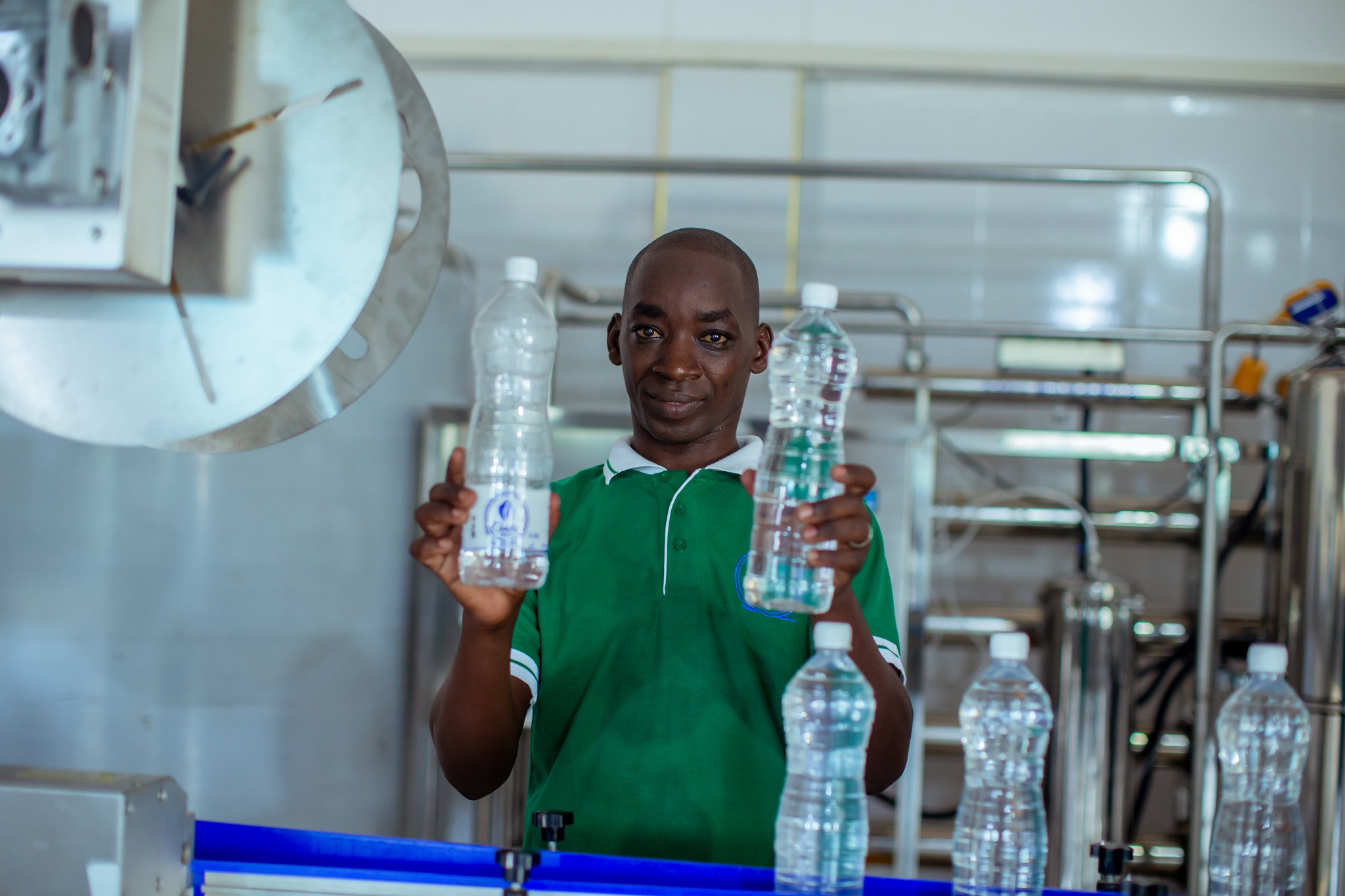
Lifta Kenya funding tells the story of a young Kenyan beverage and water treatment company operating in one of the country’s most commercially challenging and socially important regions. Founded in 2021 and based in Lodwar, Kenya, Lifta Kenya manufactures Oasis Drops Purified Drinking Water and operates in the energy, food, beverage, beverage industry, and drinking water treatment sectors.
The company’s business is built around a basic but essential need: safe drinking water. In markets such as Kakuma, Kalobeyei, Lodwar, and surrounding parts of Turkana County, reliable access to clean water is not only a consumer product issue. It is linked to public health, dignity, local enterprise, refugee-host community development, and regional resilience.
Lifta Kenya has attracted support from the Kakuma Kalobeyei Challenge Fund and the Refugee Investment Facility. Those backers matter because they connect the company to a wider investment agenda focused on private sector growth in refugee-hosting areas.
Unlike many startup stories built around software or consumer apps, Lifta Kenya’s growth is tied to physical production, distribution, water treatment, recycling, and local market access. That makes the company a useful case study in how small and medium-sized businesses can serve essential needs while creating economic activity in underserved regions.
What Is Lifta Kenya?
Lifta Kenya is a Kenyan food and beverage manufacturing company associated with Oasis Drops Purified Drinking Water. Public company descriptions also identify Lifta Kenya Limited as a manufacturer of Oasis Drops Purified Drinking Water, B-Bull Energy Drink, and a lime-flavoured soft drink.
The company is based in Turkana County, with public profiles placing it in Lodwar and Kakuma. Its business sits across several practical sectors:
| Sector | Role in Lifta Kenya’s Model |
|---|---|
| Food | Provides consumable products for households and institutions. |
| Beverage | Manufactures bottled water and related drinks. |
| Drinking Water Treatment | Processes and purifies water for safe consumption. |
| Energy | Relevant to production, bottling, cold chain, and operating costs. |
| Local Manufacturing | Builds production capacity close to the market. |
| Refugee-Host Economy | Serves customers in and around Kakuma and Kalobeyei. |
Lifta Kenya’s flagship product is Oasis Drops Purified Drinking Water. In a region where water access and affordability are critical, a local purified water producer can play an important role in reducing distribution costs and improving availability.
Why Lifta Kenya Funding Matters
Lifta Kenya funding matters because safe drinking water is both a business opportunity and a development priority. In Turkana County, water access is shaped by climate pressure, infrastructure gaps, distance, logistics costs, and the needs of both host communities and refugee populations.
Businesses that can produce and distribute affordable drinking water locally can help solve several problems at once. They reduce dependence on distant suppliers, create local jobs, support small retailers, and improve access to a product that people need every day.
The company’s funding is also important because it comes from partners focused on refugee-hosting areas. Kakuma and Kalobeyei are not ordinary consumer markets. They include refugees, host communities, humanitarian agencies, small traders, schools, health facilities, and local businesses.
That makes Lifta Kenya’s growth more than a beverage story. It is part of a wider effort to show that private enterprise can work in refugee-hosting economies when companies receive the right blend of capital, technical support, and market access.
Full List of Lifta Kenya Funding and Investor Support
Lifta Kenya’s available funding record shows support from two investor or ecosystem partners. The exact amount for each listed support round is not disclosed in the supplied funding history.
| Investor or Partner | Announced Date | Amount | Funding Type | Strategic Value |
| Kakuma Kalobeyei Challenge Fund | Jun 2025 | Undisclosed | Challenge Fund / Grant Support | Supports private sector investment, water access, and business growth in the Kakuma-Kalobeyei refugee-hosting area. |
| Refugee Investment Facility | May 2026 | Undisclosed | Investment / Loan Facility | Supports expansion of water production, distribution, and related impact in refugee-hosting communities. |
Although the disclosed funding values are not listed, the strategic meaning is clear. Lifta Kenya has attracted support from programmes designed to strengthen private sector participation in refugee-hosting areas.
Lifta Kenya Funding Timeline
2021: Founded in Turkana County
Lifta Kenya was founded in 2021. The company began operating in a region where access to safe, affordable water is a persistent need.
Building a beverage and purified water company in Turkana requires more than identifying demand. It requires production equipment, water treatment capacity, packaging, regulatory compliance, distribution networks, and trust from customers.
The company’s early years were therefore likely focused on setting up operations, building the Oasis Drops brand, and creating local distribution capacity.
2025: Kakuma Kalobeyei Challenge Fund Support
In June 2025, Lifta Kenya received listed support from the Kakuma Kalobeyei Challenge Fund. KKCF is designed to support private sector investment and unlock economic potential for refugees and host communities in the Kakuma-Kalobeyei area.
For Lifta Kenya, this support was important because it connected the company to a programme specifically built around the local market it serves. Water access is one of the most practical areas where private enterprise can have a direct community impact.
Support from KKCF can help companies like Lifta Kenya invest in equipment, distribution, affordability, and market expansion. In the case of a water business, these improvements can directly affect product availability and price.
2026: Refugee Investment Facility Backing
In May 2026, Lifta Kenya was listed as receiving support from the Refugee Investment Facility. Public reporting described Lifta as joining the Refugee Investment Facility portfolio, with its water business having installed capacity of 60,000 litres per day and products distributed across Kakuma town and refugee settlements.
This support strengthened Lifta Kenya’s ability to scale production and distribution. It also placed the company within a growing group of refugee-serving enterprises that attract investment not only because of commercial potential but also because of measurable community value.
Biggest Lifta Kenya Funding Rounds by Known Value
The available Lifta Kenya funding information does not disclose exact amounts for the listed 2025 and 2026 support. However, the strategic ranking can be assessed by timing and role.
| Rank | Investor or Partner | Date | Amount | Funding Type |
| 1 | Refugee Investment Facility | May 2026 | Undisclosed | Investment / Loan Facility |
| 2 | Kakuma Kalobeyei Challenge Fund | Jun 2025 | Undisclosed | Challenge Fund / Grant Support |
The Refugee Investment Facility backing is especially important because it is linked to scaling water production and distribution. The Kakuma Kalobeyei Challenge Fund support is equally strategic because it helped strengthen the company’s position in the refugee-hosting economy.
Most Common Funding Categories
Lifta Kenya’s funding profile is different from that of a typical venture-backed software company. Its support comes through refugee-focused investment and challenge-fund mechanisms.
| Funding Category | Role in Lifta Kenya’s Growth |
| Challenge Fund Support | Helps companies serving refugee and host communities invest in growth. |
| Refugee Investment Finance | Provides capital for businesses creating impact in refugee-hosting areas. |
| Private Sector Development Support | Encourages enterprise-led solutions in underserved markets. |
| Essential Goods Financing | Supports production and distribution of critical products such as drinking water. |
This type of funding fits Lifta Kenya’s business model. A bottled water and beverage manufacturer needs capital for production capacity, packaging, equipment, distribution, quality control, and working capital.
Strategic Lessons From Lifta Kenya Funding
Essential Products Can Build Strong Local Businesses
Lifta Kenya’s model is built around a product people need every day. Safe drinking water is not a luxury product. It is a necessity.
That gives the business a practical foundation. Demand for drinking water is recurring, and local production can improve availability in regions where logistics are expensive.
Refugee-Hosting Markets Are Real Consumer Markets
Kakuma and Kalobeyei are often discussed through a humanitarian lens. However, they are also active markets with households, shops, service providers, institutions, and businesses.
Lifta Kenya’s growth shows how private companies can serve these markets when they understand local needs and distribution realities.
Local Production Can Lower Costs
Transporting bottled water over long distances can increase prices. Local purification and bottling can reduce logistics costs and improve supply reliability.
Public reporting has noted that KKCF support helped Lifta reduce per-litre water costs significantly. That matters because affordability is central in low-income and refugee-hosting communities.
How Lifta Kenya Funding Fits Its Business Model
Lifta Kenya funding fits the company’s business model because water production is capital-intensive. A purified drinking water company must invest in water treatment equipment, bottling systems, packaging, quality testing, storage, transport, and distribution points.
Unlike a purely digital startup, Lifta Kenya must manage physical infrastructure every day. It needs production uptime, reliable sourcing, clean processing, packaging materials, regulatory compliance, and distribution logistics.
Funding from partners such as KKCF and the Refugee Investment Facility can help the company expand these capabilities. It can also support community-facing goals such as affordability, access, employment, and environmental management.
The company’s reported move into plastic recycling also fits the model. Bottled water businesses must manage packaging responsibility. Recycling can reduce environmental harm while creating another local economic activity.
Financial and Ownership Context
Lifta Kenya is a privately held Kenyan company founded in 2021. Its public business profile describes it as a food and beverage manufacturing company associated with Oasis Drops Purified Drinking Water, B-Bull Energy Drink, and a lime-flavoured soft drink.
The available funding record lists support from the Kakuma Kalobeyei Challenge Fund in June 2025 and the Refugee Investment Facility in May 2026. Exact funding amounts are not disclosed in the provided funding history.
The company should therefore be viewed as an emerging local manufacturer rather than a large public corporation. Its financial story is about production capacity, local market access, impact-linked funding, and essential goods distribution in an underserved region.
Competitive Impact of Lifta Kenya Funding
Lifta Kenya funding can strengthen the company’s competitive position in several ways.
First, it can improve production capacity. A water business with stronger equipment and better treatment systems can serve more customers and institutions.
Second, it can reduce unit costs. If funding helps improve scale and operational efficiency, Lifta Kenya may be able to offer more affordable water.
Third, it can expand distribution. In markets such as Kakuma and Kalobeyei, reaching customers matters as much as production. Distribution points, retailers, schools, clinics, and community institutions can all become important channels.
Fourth, institutional backing can improve trust. In food and beverage manufacturing, especially drinking water, customers need confidence in safety and quality.
Finally, funding can support environmental responsibility. Plastic waste is a major challenge for bottled water businesses. Investment in recycling capacity can help Lifta Kenya manage that risk while creating added value.
Advantages of the Funding Strategy
Better Access to Safe Drinking Water
Funding can help Lifta Kenya increase production and distribution of Oasis Drops Purified Drinking Water. This directly supports community access to safe drinking water.
Stronger Local Manufacturing
By producing closer to the market, Lifta Kenya can reduce dependence on distant suppliers and strengthen local enterprise.
Support for Refugee and Host Communities
The company operates in a region where refugee and host community development is a priority. Its growth can support jobs, distribution networks, and essential goods access.
Potential Cost Reductions
Improved production capacity and local distribution can reduce the final cost of water for customers.
Environmental Opportunity
If Lifta Kenya expands plastic recycling alongside bottled water production, it can address a major environmental issue while creating economic activity.
Disadvantages of the Funding Strategy
High Operating Costs
Water treatment and beverage manufacturing require equipment, energy, packaging, transport, and maintenance. These costs can pressure margins.
Climate and Water Resource Risk
Turkana County faces harsh climate conditions. Water availability, drought, and resource management can affect long-term operations.
Packaging Waste Risk
Bottled water creates plastic waste. Without strong recycling systems, environmental concerns can damage community trust and regulatory standing.
Affordability Pressure
Customers in refugee-hosting and low-income markets may be highly price-sensitive. Lifta Kenya must balance affordability with financial sustainability.
Logistics Challenges
Distribution in remote or semi-arid regions can be difficult. Roads, fuel costs, storage, and last-mile delivery can affect reliability.
Case Studies of Major Lifta Kenya Funding Support
Kakuma Kalobeyei Challenge Fund
The Kakuma Kalobeyei Challenge Fund support was a major milestone for Lifta Kenya. KKCF is focused on unlocking private sector investment in the Kakuma-Kalobeyei refugee-hosting area.
For Lifta Kenya, this support aligned perfectly with its market. The company’s water products serve communities where safe drinking water access is a daily concern. The challenge fund support helped strengthen its ability to invest in production and distribution.
Refugee Investment Facility
The Refugee Investment Facility backing in 2026 helped move Lifta Kenya into a more investment-oriented growth phase. Public reporting described Lifta’s water business as having installed capacity of 60,000 litres per day and distribution across Kakuma town and refugee settlements.
This kind of capital is especially important for businesses that combine commercial operations with refugee-host community impact. It can help them expand without depending only on grants or short-term donor support.
Oasis Drops Purified Drinking Water
Oasis Drops is central to Lifta Kenya’s business identity. The product connects the company’s manufacturing capacity with a clear consumer need.
A purified water brand in Turkana must compete on safety, price, availability, and trust. Funding that improves treatment quality, production capacity, and distribution directly supports the brand’s commercial future.
Common Mistakes When Analyzing Lifta Kenya Funding
Treating It Like a Normal Beverage Startup
Lifta Kenya is not just another bottled water brand. It operates in a refugee-hosting region where safe water access, affordability, and local impact are central to the business case.
Ignoring the Kakuma-Kalobeyei Context
The company’s market context matters. Kakuma and Kalobeyei include both refugees and host communities, making private sector growth especially important.
Focusing Only on Funding Amounts
Exact funding amounts are not disclosed in the available history. The more important issue is how the support affects production, price, distribution, and community impact.
Overlooking Environmental Risk
Bottled water companies must manage plastic waste. Recycling and responsible packaging are not optional issues in long-term strategy.
Underestimating Distribution
Producing water is only one part of the business. Lifta Kenya must also move products efficiently to customers, shops, institutions, and settlements.
Lessons for Business Owners and Investors
Lifta Kenya offers several lessons for business owners and investors.
First, essential goods can create strong businesses in underserved markets. Drinking water is a daily need, and reliable local production can matter deeply.
Second, refugee-hosting areas are investable markets. They have consumers, entrepreneurs, institutions, and supply gaps that private companies can address.
Third, impact and business value can work together. Lifta Kenya’s model connects safe water access with local manufacturing and distribution.
Fourth, cost reduction is a powerful form of impact. If local production reduces the price of drinking water, the benefits are immediate for households.
Finally, environmental planning must be part of the business model. Water companies that manage plastic waste responsibly are better positioned for long-term trust and sustainability.
Key Takeaways
- Lifta Kenya is a Kenyan food and beverage manufacturer founded in 2021.
- The company is associated with Oasis Drops Purified Drinking Water.
- Lifta Kenya operates in Lodwar, Kakuma, and the wider Turkana County context.
- Its sectors include food, beverage, drinking water treatment, and local manufacturing.
- The company received listed support from the Kakuma Kalobeyei Challenge Fund in June 2025.
- Lifta Kenya received listed backing from the Refugee Investment Facility in May 2026.
- Exact funding amounts are not disclosed in the available funding history.
- Lifta Kenya’s business supports safe drinking water access in refugee-hosting areas.
- Local production can reduce costs and improve product availability.
- The company’s strategic risks include high operating costs, water resource pressure, logistics, affordability, and plastic waste.
- Lifta Kenya funding reflects a growing focus on private sector solutions in refugee-host economies.
Frequently Asked Questions
What is Lifta Kenya?
Lifta Kenya is a Kenyan food and beverage manufacturing company associated with Oasis Drops Purified Drinking Water.
What does Lifta Kenya manufacture?
Lifta Kenya manufactures Oasis Drops Purified Drinking Water. Public profiles also associate the company with B-Bull Energy Drink and a lime-flavoured soft drink.
Where is Lifta Kenya based?
Lifta Kenya is based in Turkana County, with public profiles linking it to Lodwar and Kakuma.
When was Lifta Kenya founded?
Lifta Kenya was founded in 2021.
What is Lifta Kenya funding?
Lifta Kenya funding refers to the company’s investor and ecosystem support from programmes such as the Kakuma Kalobeyei Challenge Fund and the Refugee Investment Facility.
Who has backed Lifta Kenya?
Lifta Kenya has received listed support from the Kakuma Kalobeyei Challenge Fund and the Refugee Investment Facility.
How much funding has Lifta Kenya raised?
The available funding history lists investor support but does not disclose exact funding amounts.
Why is Lifta Kenya important?
Lifta Kenya is important because it supports access to purified drinking water in Turkana County, including the Kakuma-Kalobeyei refugee-hosting area.
What is Oasis Drops?
Oasis Drops is Lifta Kenya’s purified drinking water brand.
What sectors does Lifta Kenya operate in?
Lifta Kenya operates in food, beverage, drinking water treatment, beverage manufacturing, and related local production sectors.
What risks does Lifta Kenya face?
Lifta Kenya faces risks linked to operating costs, water availability, logistics, affordability, competition, and plastic waste management.
Conclusion
Lifta Kenya funding shows how a local manufacturer can use targeted support to address one of the most essential needs in Turkana County: safe drinking water. Founded in 2021, Lifta Kenya manufactures Oasis Drops Purified Drinking Water and serves a market shaped by geography, climate pressure, refugee-host community dynamics, and high demand for affordable water.
The company’s backing from the Kakuma Kalobeyei Challenge Fund and the Refugee Investment Facility places it within a wider movement to support private sector growth in refugee-hosting areas. That is what makes Lifta Kenya’s story especially important. It is not only about bottled water. It is about whether local businesses can deliver essential goods, create jobs, reduce costs, and improve daily life in underserved regions.
The opportunity is meaningful, but the risks are real. Water treatment and beverage manufacturing require capital, quality control, energy, packaging, logistics, and environmental responsibility. Lifta Kenya must continue balancing affordability with sustainability.
If it executes well, Lifta Kenya could become a strong example of how essential goods businesses can serve both commercial and social needs. Lifta Kenya funding is therefore more than a company financing story. It is a signal of how private enterprise can help expand access to safe drinking water in Kenya’s refugee-hosting economies.
Disclaimer: This article is for informational and educational purposes only. It is not investment advice, financial advice, or a recommendation to buy or sell any security. Always conduct your own research and consider speaking with a qualified financial adviser before making investment decisions.
Read Also: Zuri Health Funding: How the Virtual Hospital Is Expanding Mobile Healthcare in Africa