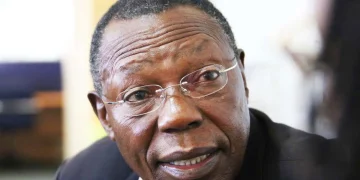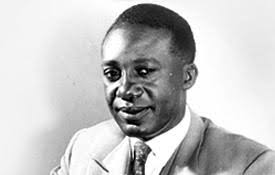
Yusuf Kironde Lule (10 April 1912 – 21 January 1985) was the 4th President of Uganda, serving from 13 April 1979 to 20 June 1979. His presidency was one of the shortest in the nation’s history, lasting just 68 days. Despite his brief tenure, Lule played a pivotal role in Uganda’s transition after the brutal Idi Amin regime. His leadership helped guide the country through a fragile post-Amin phase, even though his presidency ended amid political turmoil. This article explores Yusuf Lule’s life, his political career, and his legacy in Uganda’s political history.
Early Life and Career
Yusuf Lule was born on 10 April 1912 in Kampala, Uganda, under the British Protectorate. Lule’s educational journey took him to several prestigious institutions. He attended King’s College Budo, Makerere University College, Fort Hare University in South Africa, and the University of Edinburgh in the United Kingdom. Although born a Muslim, Lule converted to Christianity while studying at King’s College Budo.
In 1947, Lule married Hannah Namuli Wamala, a fellow student at King’s College Budo. Lule’s career as a civil servant began shortly after Uganda’s independence in 1962, where he became the Chairman of the Public Service Commission. Lule went on to become the first black principal of Makerere University from 1964 to 1970, a significant achievement during Uganda’s early years of independence.
Chairman of the Uganda National Liberation Front (UNLF)
In the late 1970s, as the Uganda-Tanzania War unfolded, Lule found himself at the center of the political shift in Uganda. After the fall of Idi Amin, Uganda’s exiled opposition leaders and rebel groups began making preparations for a new government. Tanzanian President Julius Nyerere played a significant role in organizing the rebel groups and supported Lule’s rise as a moderate leader who could unite Uganda.
Lule was appointed Chairman of the Uganda National Liberation Front (UNLF) at the Moshi Conference in March 1979, after a heated debate among the various factions. Lule’s moderate and non-corrupt political image made him a favorable choice. His leadership was seen as a means to avoid another military dictatorship and establish peace after Amin’s reign of terror.
President of Uganda
Inauguration and Early Challenges
Lule became President of Uganda on 13 April 1979 following the capture of Kampala by the Tanzania People’s Defence Force (TPDF). However, his presidency began in a state of chaos. Uganda’s national institutions were left in disarray, with lawlessness and violence rampant across the country. Lule’s leadership was tested as he tried to restore order and peace to a nation shattered by Amin’s brutal dictatorship.
Presidential Tenure and Policy Challenges
Lule’s leadership quickly faced challenges from both internal and external forces. While he attempted to assert presidential powers beyond the terms agreed upon in the Moshi Conference, Lule’s authoritarian style led to a breakdown in cooperation with the National Consultative Committee (NCC). He dismissed key members of the NCC and made major decisions unilaterally, which angered his allies and undermined the delicate political balance of the time.
Additionally, Lule’s government struggled with economic instability. Uganda’s economy had already been decimated by Amin’s policies, and Lule’s efforts to tackle inflation and curb the black market were largely unsuccessful. The lack of funds from the government and political infighting further hampered his ability to implement reforms. Despite these challenges, Lule sought to redistribute property and address ethnic imbalances, though his administration was seen as benefiting his ethnic group, the Baganda.
Demise and Removal from Office
Crisis Within the UNLF
As Lule’s tenure continued, tensions within the UNLF escalated. His unilateral actions and failure to consult the National Consultative Committee (NCC) led to growing discontent. Lule’s removal of Paulo Muwanga, a prominent member of the UNLF, and the refusal to comply with the Moshi Conference agreements resulted in his removal from office.
On 20 June 1979, after an internal no-confidence motion, Lule was ousted from power, marking the end of his short presidency. His departure was a significant moment in Uganda’s political history, and his removal led to a series of protests and violent clashes in Kampala, particularly from the Baganda, who felt betrayed by his ousting.
Later Life and Legacy
After his removal from office, Lule went into exile, initially in Tanzania, and later in London. In 1980, Lule attempted to regain political influence in Uganda, founding the Uganda Freedom Fighters (UFF), which later merged with Yoweri Museveni’s Popular Resistance Army (PRA) to form the National Resistance Movement (NRM). This merger played a key role in the eventual rise to power of Yoweri Museveni in 1986.
Death and Reburial
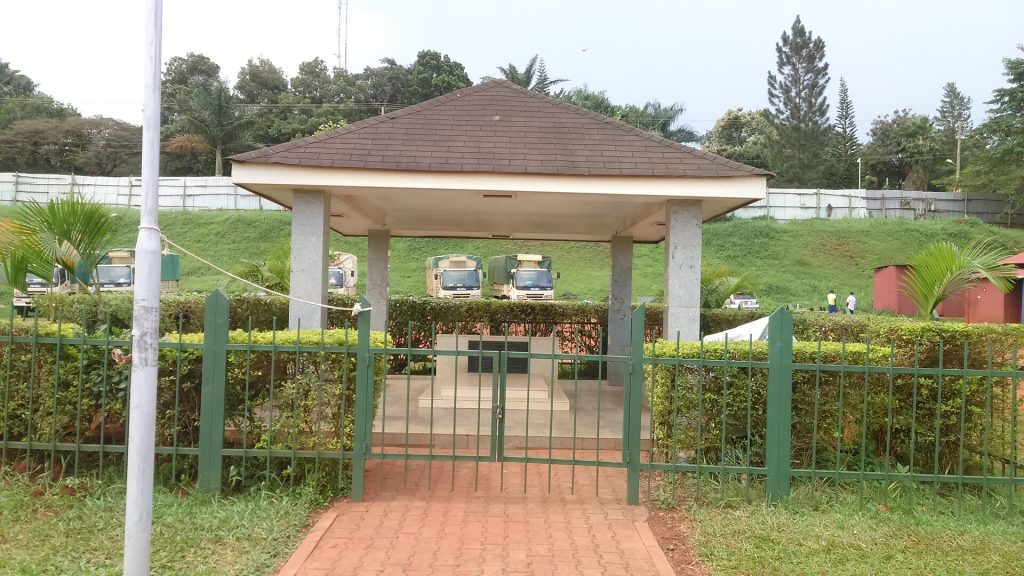
Lule died on 21 January 1985 in London from complications related to a kidney disorder. He was buried there, but in 1987, after Museveni’s government came to power, his body was repatriated to Uganda and reburied in Kampala with full state honors.
Lule’s legacy is mixed. While his short presidency was marked by challenges and controversies, he is remembered for his role in helping to liberate Uganda from Amin’s regime. Despite criticisms of his leadership, Yusuf Lule remains a significant figure in Uganda’s post-Amin political landscape.
Legacy and Recognition
Lule’s son, Wasswa Lule, went on to serve as a Member of Parliament for Rubaga North. Although Lule’s presidency was brief, his efforts in moderating Uganda’s political climate and his fight for Uganda’s post-Amin recovery are recognized in the history of Ugandan politics.