When people refer to the “Arab Union,” they are usually talking about the League of Arab States, commonly known as the Arab League. The organization serves as the primary regional body bringing together Arab-majority countries across the Middle East, North Africa and parts of the Horn of Africa.
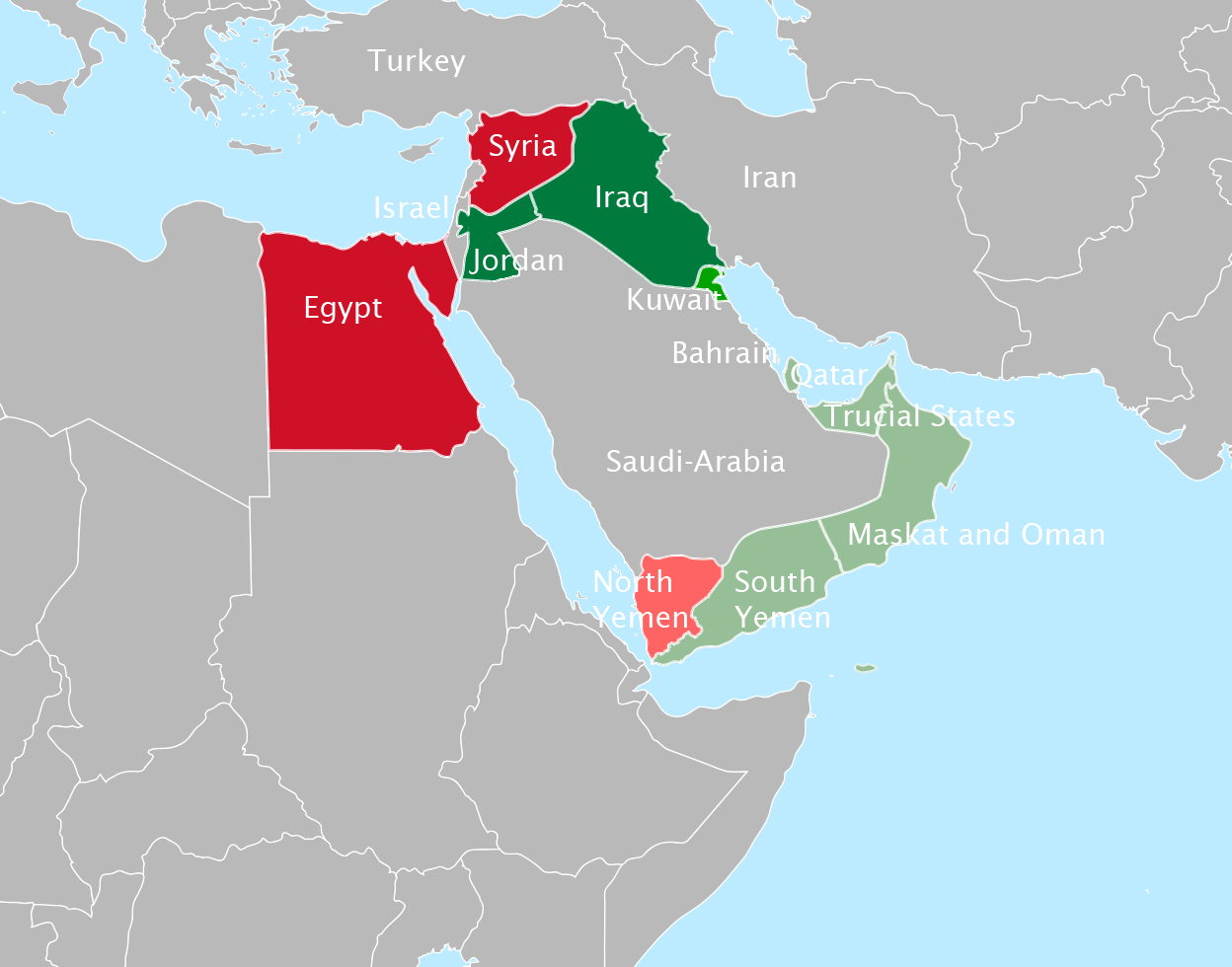
The Arab Union is a theoretical political union of the Arab states. The term was first used when the British Empire and French empire promised the Arabs a united independent state in return for revolting against the Ottoman Empire, with which the United Kingdom and France were at war. It never came to fruition following the Sykes–Picot Agreement. Despite this, many in the Arab world have since called for the creation of a pan-Arab state. Egyptian President Gamal Abdel Nasser made several unsuccessful attempts to unite Egypt with other Arab countries (including Iraq and North Yemen), and briefly succeeded in forming the United Arab Republic with Syria in 1958, which dissolved in 1971.[1] The union is considered as one of the solutions to end the Israeli–Palestinian conflict.[2]
Similar attempts were made by other Arab leaders, such as Hafez al-Assad, Ahmed Hassan al-Bakr, Faisal I of Iraq, Muammar Gaddafi, Saddam Hussein, Gaafar Nimeiry and Anwar Sadat.
Read Also: Arthur Ochwada Trade Union Legacy
The Arab Union Countries currently consist of 22 member states that cooperate politically, economically, culturally and diplomatically under the framework of the Arab League.
Founded in 1945, the organization has become one of the world’s oldest regional political alliances and remains central to discussions involving regional security, economic cooperation, Arab identity, diplomacy and international relations.
Understanding the Arab Union Countries is important for students, researchers, diplomats and anyone interested in Middle Eastern and North African geopolitics.
In the 2004 Arab League summit in Cairo, Yemeni President Ali Abdullah Saleh proposed the creation of an Arab Union replacing the Arab League for a stronger political and geographical body, capable of dealing with world issues. However, the proposal failed to reach the League’s agenda.[3]
During the Arab Spring in 2011, Saudi Arabia raised a proposal to transform the Gulf Cooperation Council into a “Gulf Union” with tighter economic, political and military coordination, regarded as a move to counterbalance the Iranian influence in the region.[4][5] Objections were raised against the proposal by other countries.[6][7] In 2014, Bahrain Prime minister Khalifa bin Salman Al Khalifa said that current events in the region highlighted the importance of the proposal.
What the Arab Union Actually Is
Although the phrase “Arab Union” is commonly used informally, the official organization is called the League of Arab States.
The Arab League was founded on March 22, 1945, in Cairo by six original member states:
- Egypt
- Iraq
- Jordan (then Transjordan)
- Lebanon
- Saudi Arabia
- Syria
Yemen joined shortly afterward.
The organization was created to strengthen political cooperation among Arab-speaking nations while preserving sovereignty and promoting shared regional interests.
Unlike political unions such as the European Union, the Arab League does not operate as a supranational government.
Instead, it functions as a diplomatic and coordination platform for Arab Union Countries.
Full List of Arab Union Countries
The Arab Union Countries currently include 22 member states spread across North Africa, the Arabian Peninsula, the Levant and the Horn of Africa.
Complete List of Arab League Member States
North Africa and Maghreb
- Algeria
- Egypt
- Libya
- Mauritania
- Morocco
- Sudan
- Tunisia
Horn of Africa and Indian Ocean
- Comoros
- Djibouti
- Somalia
Arabian Peninsula and Middle East
- Bahrain
- Iraq
- Jordan
- Kuwait
- Lebanon
- Oman
- Palestine
- Qatar
- Saudi Arabia
- Syria
- United Arab Emirates
- Yemen
These 22 Arab Union Countries collectively represent hundreds of millions of Arabic-speaking people across multiple continents.
Regional Distribution of Arab Union Countries
The Arab League spans an enormous geographic area connecting Africa and Asia.
North Africa
North African Arab Union Countries include some of the region’s largest and most historically influential states.
Egypt
Egypt plays a central role because Cairo hosts the Arab League headquarters.
Algeria and Morocco
Algeria and Morocco remain major political and economic powers in the Maghreb region.
Sudan and Mauritania
Sudan and Mauritania connect Arab North Africa with Sub-Saharan Africa.
Horn of Africa
Several Arab Union Countries are located in the Horn of Africa.
Somalia
Somalia joined the Arab League in 1974.
Djibouti
Djibouti became a member in 1977.
Comoros
Comoros joined in 1993 and remains the newest Arab League member.
These countries combine African geography with strong Arab-Islamic cultural and linguistic ties.
Arabian Peninsula and Levant
The Arabian Peninsula includes many of the wealthiest Arab Union Countries due to major oil and gas resources.
Gulf States
These include:
- Bahrain
- Kuwait
- Oman
- Qatar
- Saudi Arabia
- United Arab Emirates
Levant States
The Levant region includes:
- Jordan
- Lebanon
- Palestine
- Syria
These countries hold enormous historical, cultural and religious importance within the Arab world.
Origins and Expansion of Membership
The Arab League expanded steadily after its founding.
Read Also: The Top 10 Richest African Countries by Foreign Reserves in 2025
Key membership milestones included:
1953
Libya joined.
1956
Sudan became a member.
1958
Morocco and Tunisia joined.
1961
Kuwait entered the organization.
1971
The Gulf states of Bahrain, Oman, Qatar and United Arab Emirates joined.
1974
Somalia became a member.
1977
Djibouti joined.
1993
Comoros completed the current list of 22 Arab Union Countries.
Palestine and Political Representation
One unique aspect of the Arab Union Countries involves Palestine’s membership status.
Palestine is represented within the Arab League through the Palestine Liberation Organization (PLO).
Its inclusion reflects the organization’s long-standing political support for Palestinian statehood and regional representation.
Observer States in the Arab League
In addition to the Arab Union Countries, the Arab League also includes several observer states.
These include:
- Brazil
- Eritrea
- India
- Venezuela
Observers participate in selected activities but do not possess full voting rights.
Countries With Arab Influence but No Membership
Some countries with significant Arabic-speaking populations are not members of the Arab League.
One example is Chad.
Although Arabic is widely spoken in Chad and the country has applied for membership previously, it has not been admitted.
This demonstrates that cultural Arab identity alone does not automatically guarantee membership among Arab Union Countries.
How the Arab League Functions Politically
The Arab League operates through several institutional structures.
Council of the League
The main governing body consists of representatives from each member state.
Annual Summits
Arab leaders meet regularly to discuss regional crises, diplomacy and economic cooperation.
Secretariat-General
The organization’s administrative headquarters are located in Cairo.
Key Political Functions
The Arab League focuses on:
- Diplomatic coordination
- Conflict mediation
- Regional cooperation
- Economic agreements
- Cultural preservation
- Arab identity promotion
However, the organization’s effectiveness often varies depending on political divisions among member states.
Economic and Cultural Cooperation
Beyond politics, Arab Union Countries cooperate extensively in cultural and developmental areas.
Arabic Language Promotion
The organization actively promotes Arabic language and cultural heritage.
Development Programs
Arab League initiatives include cooperation involving:
- Education
- Healthcare
- Technology
- Infrastructure
- Trade
Regional Alliances
Several Arab Union Countries also participate in sub-regional organizations including:
- Gulf Cooperation Council (GCC)
- Arab Maghreb Union
These institutions operate alongside the broader Arab League framework.
Challenges Facing Arab Union Countries
The Arab League faces several ongoing challenges.
Political Disagreements
Member states often hold differing positions on major regional conflicts.
Economic Inequality
Significant wealth disparities exist between oil-rich Gulf countries and lower-income states.
Regional Conflicts
Wars and instability in countries such as Syria, Sudan and Yemen continue affecting regional unity.
External Influence
Global powers heavily influence Middle Eastern and North African geopolitics.
These issues complicate efforts to create a fully unified Arab political bloc.
Why Arab Union Countries Matter Globally
The Arab Union Countries collectively occupy one of the world’s most strategically important regions.
The region contains:
- Major global energy reserves
- Key maritime trade routes
- Historic religious centers
- Critical geopolitical corridors
Arab League member states therefore play enormous roles in:
- Global energy markets
- International diplomacy
- Security policy
- Migration issues
- Economic development
Future of the Arab League
The future of Arab Union Countries cooperation will likely focus increasingly on:
- Economic diversification
- Digital transformation
- Climate adaptation
- Regional security
- Artificial intelligence
- Infrastructure integration
As global politics evolve, the Arab League continues seeking ways to balance national sovereignty with regional coordination.
Conclusion
The Arab Union Countries consist of the 22 member states of the League of Arab States, stretching across North Africa, the Middle East and the Horn of Africa.
Since its founding in 1945, the Arab League has remained the central political and diplomatic organization representing Arab-speaking nations.
Although internal political differences sometimes limit unified action, the organization continues serving as a major framework for regional cooperation involving diplomacy, economics, culture and security.
Understanding the Arab Union Countries provides valuable insight into one of the world’s most strategically important and historically influential regions.