The Gulf Cooperation Council remains one of the most influential regional alliances in the Middle East. Known commonly as the GCC, the organization plays a major role in regional geopolitics, energy markets, trade integration and economic development across the Arabian Peninsula.
Website www.gcc-sg.org/en/Pages/default.aspx
The Cooperation Council for the Arab States of the Gulf (Arabic: مَجلِس التَّعَاوُن لِدُوَلِ الْخَلِيْجِ الْعَرَبِيَّة), also known as the Gulf Cooperation Council (GCC; Arabic: مجلس التعاون الخليجي), is a regional, intergovernmental, political, and economic union and military alliance comprising Bahrain, Kuwait, Oman, Qatar, Saudi Arabia, and the United Arab Emirates. The council’s main headquarters is located in Riyadh, the capital of Saudi Arabia.[5] The Charter of the GCC was signed on 25 May 1981, formally establishing the institution.
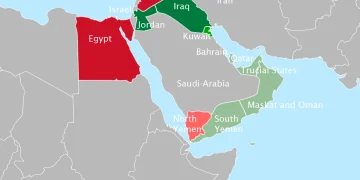
All current member states are monarchies, including three constitutional monarchies (Qatar, Kuwait, and Bahrain), two absolute monarchies (Saudi Arabia and Oman), and one federal monarchy (the United Arab Emirates, which is composed of seven member states, each of which is an absolute monarchy with its own emir). There have been discussions regarding the future membership of Jordan, Morocco, and Yemen. Iraq is the only Gulf Arab state that is not a GCC member.
During the Arab Spring in 2012, Saudi Arabia proposed transforming the Gulf Cooperation Council (GCC) into a “Gulf Union.” The plan aimed to introduce tighter economic, political, and military coordination, a move considered to be intended to counterbalance Iranian influence in the region. The proposal received support from Bahrain, Kuwait, and Qatar. However, Oman raised objections to the plan. In 2014, Bahraini prime minister Khalifa bin Salman Al Khalifa said that current events in the region highlighted the importance of the proposal. The Peninsula Shield Force is the military arm of the GCC, formed in 1984. Since the Arab Spring, the GCC has a Security Pact whereby members coordinate efforts to repress their domestic political opposition.
For businesses, investors, service providers and policymakers, understanding the GCC countries is essential because the bloc collectively represents one of the world’s most economically significant regions.
The GCC countries possess enormous strategic influence due to:
- Oil and gas production
- Sovereign wealth funds
- Infrastructure investment
- Global trade routes
- Aviation hubs
- Financial markets
The alliance also continues shaping regional cooperation involving security, taxation, standards, logistics and labor mobility.
Today, the GCC countries remain central to international energy markets and Middle Eastern diplomacy while simultaneously pursuing economic diversification beyond oil dependence.
What Is the GCC?
The Gulf Cooperation Council was established in 1981 as a regional intergovernmental organization focused on cooperation among Gulf Arab states.
The alliance promotes coordination across several areas including:
- Economic integration
- Security cooperation
- Infrastructure development
- Trade facilitation
- Regulatory standardization
- Social cooperation
The GCC headquarters is located in Riyadh, Saudi Arabia.
Unlike broader Arab organizations, GCC membership remains limited to six Gulf monarchies.
Sheikh Jaber Al-Ahmad Al-Sabah of Kuwait, alongside the support of Sheikh Zayed bin Sultan Al Nahyan of the UAE, played a crucial role in fostering the idea of closer cooperation among the Arab states of the Persian Gulf, laying the groundwork for the formation of the Gulf Cooperation Council. The members’ shared vision for regional unity, security, and economic integration led to the official establishment of the GCC in 1981, strengthening the collective power and influence of the Gulf countries.[19] The charter was signed in Arabic in Abu Dhabi, United Arab Emirates, on 21 Rajab 1401 on the Islamic calendar (corresponding to 25 May 1981 on the Gregorian calendar).
The signatory states on the founding document are the only current members of the GCC. An economic agreement between the countries of the Gulf Cooperation Council was signed on 11 November 1981 in Abu Dhabi, UAE. These countries are often referred to as “the GCC states”.
Which Countries Constitute the GCC?
The GCC countries consist of six member states located on the Arabian Peninsula.
Saudi Arabia
Saudi Arabia is the largest and most economically powerful member of the GCC.
As the world’s largest oil exporter and home to Islam’s holiest cities, Saudi Arabia plays a dominant role in regional politics and global energy markets.
Key Characteristics
- Largest GCC economy
- Major oil producer
- Home to Riyadh and Jeddah
- Vision 2030 economic reforms
- Leading infrastructure investments
Saudi Arabia also hosts the GCC headquarters in Riyadh.
United Arab Emirates (UAE)
United Arab Emirates is one of the world’s leading business, aviation and tourism hubs.
The UAE transformed itself into a diversified economy focused on:
- Finance
- Tourism
- Logistics
- Real estate
- Technology
- Aviation
Key Cities
- Dubai
- Abu Dhabi
- Sharjah
The UAE remains one of the most internationally connected GCC countries.
Kuwait
Kuwait possesses one of the world’s largest sovereign wealth funds and remains heavily dependent on oil exports.
The country plays an important diplomatic role within the Gulf region.
Key Characteristics
- High per-capita income
- Strong welfare system
- Major oil reserves
- Active regional diplomacy
Kuwait also maintains one of the Gulf’s more active parliamentary political systems.
Qatar
Qatar emerged as one of the world’s wealthiest countries due to massive natural gas reserves.
The country gained international prominence through:
- LNG exports
- Global investments
- Sports diplomacy
- Media influence
Major Global Assets
- Al Jazeera
- Qatar Airways
- FIFA World Cup legacy projects
Qatar continues investing heavily in international infrastructure, finance and technology.
Bahrain
Bahrain is the smallest GCC member by land size but remains an important financial and banking center.
The country was among the first Gulf states to diversify beyond oil.
Key Economic Sectors
- Banking
- Financial services
- Tourism
- Manufacturing
Bahrain also maintains strong regional connectivity through the King Fahd Causeway linking it to Saudi Arabia.
Oman
Oman occupies a strategically important location along major maritime trade routes near the Arabian Sea.
Unlike some neighboring Gulf states, Oman developed a reputation for diplomatic neutrality and balanced foreign policy.
Key Characteristics
- Strategic port infrastructure
- Tourism potential
- Maritime trade importance
- Diverse geography
Oman continues investing heavily in logistics, tourism and industrial development.
Quick Facts About GCC Countries
| Category | Details |
|---|---|
| Founded | 1981 |
| Headquarters | Riyadh, Saudi Arabia |
| Members | 6 |
| Official Language | Arabic |
| Main Economic Driver | Oil and gas |
| Organization Type | Regional intergovernmental alliance |
Why These Six Countries Formed the GCC
The GCC countries share several important similarities that encouraged regional cooperation.
Geographic Proximity
All six states are located on the Arabian Peninsula near the Persian Gulf.
Similar Political Systems
Each GCC country operates under monarchical governance structures.
Shared Culture and Language
Arabic language, Islamic traditions and Gulf cultural heritage create strong regional connections.
Energy Wealth
All GCC countries possess major oil and gas reserves.
These similarities helped create strong incentives for economic and security cooperation.
Economic Importance of GCC Countries
The GCC countries collectively represent one of the world’s most strategically important economic regions.
Oil and Gas Production
The Gulf region contains some of the world’s largest hydrocarbon reserves.
GCC countries play major roles in:
- Global oil exports
- LNG markets
- Energy pricing
- Petrochemical industries
Sovereign Wealth Funds
Several GCC countries operate massive sovereign wealth funds investing globally across sectors including:
- Real estate
- Technology
- Infrastructure
- Sports
- Finance
Logistics and Aviation
The GCC hosts some of the world’s busiest international aviation hubs.
Major airlines include:
- Emirates
- Qatar Airways
- Etihad Airways
- Saudia
Infrastructure Development
The region continues investing heavily in:
- Smart cities
- Ports
- Railways
- Airports
- Tourism megaprojects
GCC Integration and Trade Cooperation
The GCC countries pursue increasing economic integration through coordinated policies and trade facilitation measures.
Customs Cooperation
The GCC introduced customs arrangements aimed at simplifying regional trade.
Standardization
Harmonized technical standards help businesses operate more efficiently across member states.
Infrastructure Connectivity
Joint investments in logistics corridors improve transportation and trade flows.
Cross-Border Commerce
Businesses increasingly benefit from easier regional expansion within GCC markets.
GCC Countries and Business Opportunities
The GCC countries remain attractive for businesses across multiple sectors.
Technology and AI
Governments increasingly invest in:
- Artificial intelligence
- Smart infrastructure
- Digital transformation
Tourism
Massive tourism projects continue expanding across the region.
Real Estate
Urban development remains a major economic driver.
Consumer Services
High purchasing power supports strong demand for:
- Electronics
- Hospitality
- Retail
- Appliance repair services
The region therefore attracts companies seeking high-income consumer markets.
Labor Mobility and Workforce Dynamics
The GCC countries rely heavily on expatriate labor across sectors including:
- Construction
- Healthcare
- Hospitality
- Technology
- Domestic services
While GCC nationals often enjoy relatively easier regional movement, expatriate workers still face country-specific visa and licensing regulations.
This creates both opportunities and administrative complexities for businesses operating regionally.
VAT and Taxation in GCC Countries
Several GCC countries introduced Value Added Tax (VAT) systems in recent years.
Although rates vary, taxation reforms reflect broader efforts to diversify government revenue beyond oil exports.
Businesses operating across GCC countries increasingly must navigate:
- VAT registration
- Customs duties
- Import regulations
- Service taxation
Understanding these systems remains important for regional expansion.
Common Misconceptions About GCC Countries
Several misconceptions frequently arise regarding the GCC.
The GCC Is Not the Arab League
The GCC is separate from the broader Arab League.
Membership Is Limited
Only six countries belong to the GCC.
It Is Not a Political Union
Unlike the European Union, GCC countries maintain independent sovereignty over most major policies.
Labor Mobility Has Limits
Work permits and regulations still differ significantly for expatriates.
Challenges Facing GCC Countries
Despite economic success, GCC countries face several important challenges.
Economic Diversification
Reducing dependence on oil remains a long-term priority.
Youth Employment
Rapidly growing populations create labor market pressure.
Climate Conditions
Extreme temperatures and water scarcity affect sustainability planning.
Geopolitical Tensions
Regional security concerns continue influencing diplomacy and investment.
These issues shape future GCC policy directions.
Future of GCC Cooperation
The GCC countries continue pursuing deeper regional integration.
Future priorities likely include:
- Green energy investment
- Artificial intelligence
- Digital economies
- Smart infrastructure
- Regional tourism
- Logistics modernization
As global energy markets evolve, GCC countries increasingly position themselves as diversified economic and technological hubs rather than purely oil exporters.
Why GCC Countries Matter Globally
The GCC countries matter because they influence:
- Global energy supply
- Financial markets
- International logistics
- Aviation networks
- Infrastructure investment
- Geopolitical stability
Their sovereign wealth funds and international investments affect economies worldwide.
The region also serves as a major commercial gateway connecting Asia, Europe and Africa.
Conclusion
The Gulf Cooperation Council remains one of the world’s most strategically important regional alliances.
The GCC countries — Saudi Arabia, United Arab Emirates, Kuwait, Qatar, Bahrain and Oman — collectively shape regional politics, energy markets and global commerce.
Although challenges remain involving diversification, taxation and geopolitical tensions, the GCC continues expanding its influence through economic modernization, infrastructure investment and regional cooperation.
For businesses, investors and policymakers, understanding the GCC countries remains essential for navigating one of the world’s most dynamic economic regions.
The associate membership of Iraq in certain GCC-related institutions was cancelled after the invasion of Kuwait.
Yemen was in negotiations for GCC membership in 2007 and hoped to join by 2016. Yemen is already a member of the GCC Standardization Authority, the Gulf Organization for Industrial Consulting (GOIC), the GCC Auditing and Accounting Authority, the Gulf Radio and TV Authority, the GCC Council of Health Ministers, the GCC Education and Training Bureau, the GCC Council of Labour & and Social Affairs Ministers, and The Gulf Cup Football Tournament. The Council issued directives that all the necessary legal measures be taken, so that Yemen would have the same rights and obligations of GCC member states in those institutions
Read Also: GCC Foreign Workers Explained