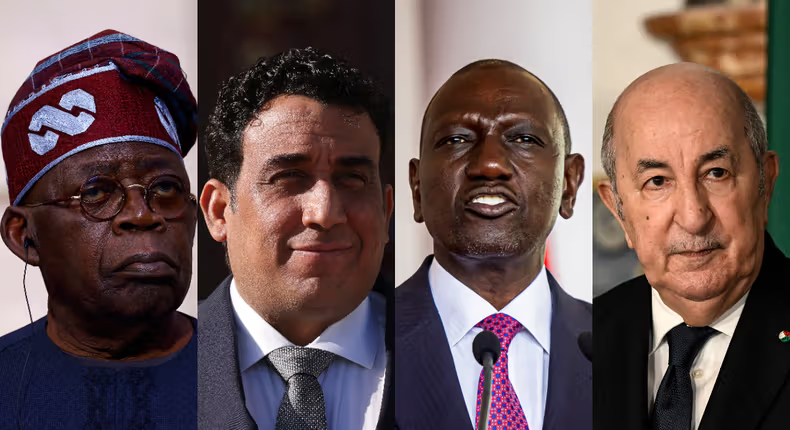
As Africa continues to navigate economic challenges and opportunities, one of the key indicators of a nation’s financial strength is its foreign exchange and gold reserves. In 2025, several African countries have emerged as financial leaders on the continent, bolstered by their strategic economic policies, natural resources, and growing sectors. The rankings of foreign reserves reveal significant disparities between North African nations and other regions, with countries like Libya, Algeria, and South Africa leading the charge. This article breaks down the top 10 African countries holding the largest foreign reserves in 2025, highlighting the continent’s economic anchors and rising players.
1. Libya: The Resilient Oil Powerhouse
At the top of the list is Libya, which leads Africa with over $92 billion in foreign reserves. Despite years of political instability, Libya’s vast oil wealth continues to generate substantial foreign currency earnings. The country’s strong oil sector, combined with limited imports due to internal disruptions, has allowed Libya to maintain one of the largest reserve cushions in the region. This reserve cushion positions Libya as a key player in North Africa’s financial landscape and underscores the resilience of its oil-driven economy.
2. Algeria: A Strategic Economic Player
Algeria takes second place with more than $81 billion in reserves. Like Libya, Algeria is heavily reliant on hydrocarbons for its economic strength. However, recent economic reforms and policy adjustments have helped the country rebuild its foreign assets after years of strain. Higher global energy prices, reduced external debt, and stricter import regulations have all played a role in strengthening Algeria’s financial position. Despite facing social and economic pressures, Algeria’s substantial reserves offer a vital buffer to weather external shocks.
3. South Africa: The Region’s Economic Anchor
South Africa ranks third with $62.4 billion in foreign reserves, thanks to its diversified economy, deep banking system, and strong institutional frameworks. South Africa’s financial markets are among the most liquid in Africa, and its substantial reserve levels help to stabilize the country’s economy during periods of global uncertainty. While the country still faces significant structural economic challenges, its reserves provide a necessary cushion, allowing it to remain a financial anchor for the Southern African region.
4. Nigeria: West Africa’s Economic Titan
Nigeria ranks fourth with $41.3 billion in reserves. As Africa’s most populous country and one of its largest oil exporters, Nigeria’s reserves hold significant importance not only for its own economy but for West Africa’s financial stability. Despite challenges related to currency reforms, fluctuating oil prices, and high import demands, Nigeria’s foreign assets remain crucial in supporting economic adjustments and stabilizing its financial outlook.
5. Morocco: A Strong Regional Economy
Morocco ranks fifth with $36.3 billion in foreign reserves. The country has experienced significant economic growth driven by its diverse exports, including automotive products, agriculture, and a thriving tourism sector. Morocco’s proactive monetary policy and flexible exchange rate management have helped stabilize its external balance, maintaining healthy reserves. These reserves are a critical component of the country’s financial strategy, especially as Morocco continues to emerge as a key player in North Africa’s economy.
6. Egypt: Pursuing Economic Stability
Egypt takes sixth place with $33.07 billion in reserves. The country’s ongoing economic reforms, in partnership with international lenders, have bolstered its financial position. While Egypt faces external pressures, including debt obligations and high import demands, its reserves provide a critical pillar of support. These reserves are central to Egypt’s strategy of maintaining currency stability and managing external economic challenges.
7. Angola: Recovering Through Oil and Fiscal Discipline
Angola holds $13.9 billion in foreign reserves, securing seventh place. The country has made strides in diversifying its economy away from a heavy reliance on oil, but the sector still remains dominant in its export earnings. Angola’s fiscal discipline, alongside oil price recoveries, has contributed to the growth of its reserves, offering a stronger foundation for long-term diversification and economic stability.
8. Tunisia: A Stable Financial Backbone
Tunisia ranks eighth with $9.24 billion in foreign reserves. Despite facing political and economic challenges, Tunisia’s reserves have remained stable, aided by international support packages, currency controls, and efforts to revive key sectors like tourism and agriculture. The country’s strategic location in North Africa and its role in regional trade contribute to its ability to maintain a solid financial base.
9. Ivory Coast: A Fast-Growing Economy
Ivory Coast, the world’s largest cocoa producer, ranks ninth with $7.58 billion in foreign reserves. The country has seen rapid economic growth, fueled by strong exports in cocoa, cashew nuts, and oil products. Stability within the West African monetary union has also helped strengthen the country’s external reserves, further supporting its position as one of West Africa’s leading economies.
10. Kenya: The East African Giant
Kenya rounds out the top 10 with $5.29 billion in reserves. The country’s mining sector received a boost with a significant gold discovery, further strengthening its position. Kenya’s reserve levels reflect steady growth in sectors such as transport, ICT, and financial services. Despite facing external debt pressures, Kenya’s reserves offer a vital buffer against currency shocks, allowing the Central Bank to manage the economy more effectively.
Conclusion: Shifting Economic Patterns in Africa
The top 10 African countries holding the largest foreign exchange and gold reserves in 2025 highlight the continent’s shifting economic patterns. While North African countries like Libya and Algeria remain dominant in terms of reserves, countries in West Africa and East Africa, such as Nigeria, Morocco, and Kenya, are steadily growing their financial positions. This shift is influenced by commodity prices, economic reforms, and global market pressures. As African nations continue to build their financial reserves, they are better positioned to weather global economic shocks, attract investment, and ensure long-term economic stability.