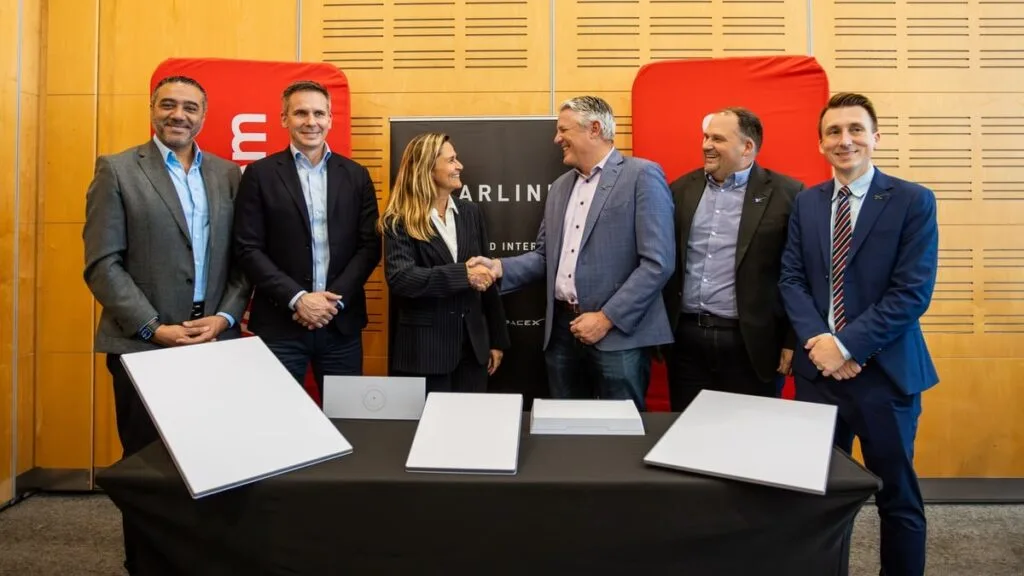
The Vodacom Starlink partnership marks a major step toward closing Africa’s long-standing digital divide. Vodacom Group has announced a landmark agreement with Starlink to deliver high-speed, low-latency internet to underserved regions across the continent. The collaboration will support connectivity for schools, hospitals, small businesses, and remote communities that have struggled for years with unreliable network coverage. By leveraging Starlink’s satellite backhaul, Vodacom aims to strengthen its presence in regions where traditional infrastructure has been slow to develop. Vodacom Starlink partnership
This move aligns with Vodacom’s broader goal of accelerating Africa’s digital transformation. Satellite-based internet offers a practical solution for areas where fibre, microwave, and terrestrial networks are difficult or too expensive to deploy. The partnership supports innovations across education, healthcare, agriculture, and financial inclusion by enabling more people to access reliable online services.
A Strategic Step in Vodacom’s Vision 2030 Framework
Vodacom says the Starlink integration is a central part of its Vision 2030 strategy, which aims to reach 260 million customers and 120 million financial-services users within five years. The company plans to use Starlink’s high-performance satellite backhaul to boost capacity across its 4G and 5G networks. This hybrid network model combines fibre, microwave, MPLS, GEO satellites, and now low-Earth orbit satellites to build a more resilient and accessible system.
The agreement also allows Vodacom to sell Starlink equipment and connectivity directly to businesses across Africa. This flexibility is expected to help enterprises of all sizes access reliable internet, supporting innovation, cloud adoption, and digital commerce. Local adaptation of service packages will also ensure affordability in different markets.
Starlink’s Growing Role in Africa’s Connectivity
Starlink has already established a growing footprint across the continent. According to the announcement, the service operates in 25 African countries, offering high-speed satellite internet to households, organizations, and businesses. The collaboration with Vodacom significantly expands Starlink’s reach, unlocking new opportunities for communities that remain unconnected.
Chad Gibbs, Vice President of Starlink Operations at SpaceX, emphasized that the partnership will transform lives and businesses. By pairing its low-latency satellite network with Vodacom’s large customer base, Starlink can extend access to regions previously considered too remote for viable internet deployment.
Potential Impact on Safaricom and Kenyan Users
The partnership also raises questions about the future of Safaricom, which Vodacom co-owns and operates as Kenya’s largest telecommunications provider. Industry analysts have long speculated about a future alliance between Safaricom and Starlink. This new development strengthens the possibility, especially as Kenya continues to invest in digital infrastructure and rural expansion.
A collaboration in Kenya could dramatically improve connectivity in northern, coastal, and inland regions that still rely on weak or inconsistent networks. It would also support Kenya’s tech ecosystem, which depends heavily on stable internet access for cloud services, fintech, e-commerce, and digital education.
A Milestone for Africa’s Digital Future
Vodacom CEO Shameel Joosub stated that the partnership accelerates the company’s mission to connect every African to the internet. He highlighted that low-Earth orbit satellites provide a transformative solution for communities where traditional infrastructure is not feasible. This combination of technologies promises more inclusive access to digital services.
The Vodacom Starlink partnership represents a major leap forward for Africa. It blends reliability, speed, and wide-reach capabilities to build one of the continent’s strongest connectivity ecosystems. As implementation progresses, millions of people may gain stable access to the digital world for the first time, unlocking opportunities for growth, education, and innovation.