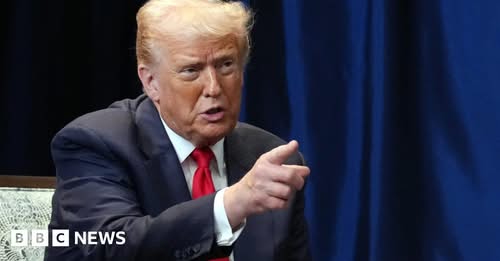
In a bold speech at the World Economic Forum in Davos, Switzerland, US President Donald Trump reiterated his desire for the United States to acquire Greenland, a move he argued was crucial for national security and global peace. Trump’s comments, delivered over a 74-minute address, also touched on his administration’s foreign policy achievements, NATO relations, and the ongoing Russia-Ukraine crisis.
Trump’s proposal to acquire Greenland was framed around two main points: strategic military advantage and economic justification. He argued that Greenland’s location is pivotal for global security, particularly in the event of conflict, suggesting that it could serve as a critical defense point in the Arctic region. “It’s not defensible that way, totally,” Trump said, referring to Greenland’s current strategic positioning, adding that the US’s contribution to NATO has not been reciprocated adequately. He went on to frame the acquisition as an economically sound move, noting that Denmark, which currently governs Greenland, spends considerable resources on managing the island.
“There’s a choice here,” Trump concluded, expressing frustration that the US had not previously retained Greenland after World War II. “We want a piece of ice for world protection, and they won’t give it,” he said, referencing the US’s historical contribution to global peace efforts. Trump made it clear that his desire to acquire the island was not rooted in territorial expansion but in the belief that the US could provide better security and use the land for strategic purposes.
The conversation about Greenland comes amid broader discussions on NATO’s role in global security. Trump criticized NATO for what he perceived as an unfair burden on the US, stating that European allies have not contributed enough financially or militarily. He argued that NATO countries need to step up their commitments and that the US should not bear the brunt of global defense responsibilities.
Additionally, Trump highlighted his administration’s stance on the Russia-Ukraine conflict, claiming that he inherited a complex situation and suggesting that his leadership would have prevented the current crisis. His remarks underscore his “America First” approach to foreign policy, one that prioritizes US interests over multilateral agreements.
Trump’s speech, which also touched on energy policies and economic challenges in Europe, sparked debate about his confrontational foreign policy style. Critics argue that his approach could alienate key allies, while supporters believe that his assertiveness is necessary to address global security issues and trade imbalances.