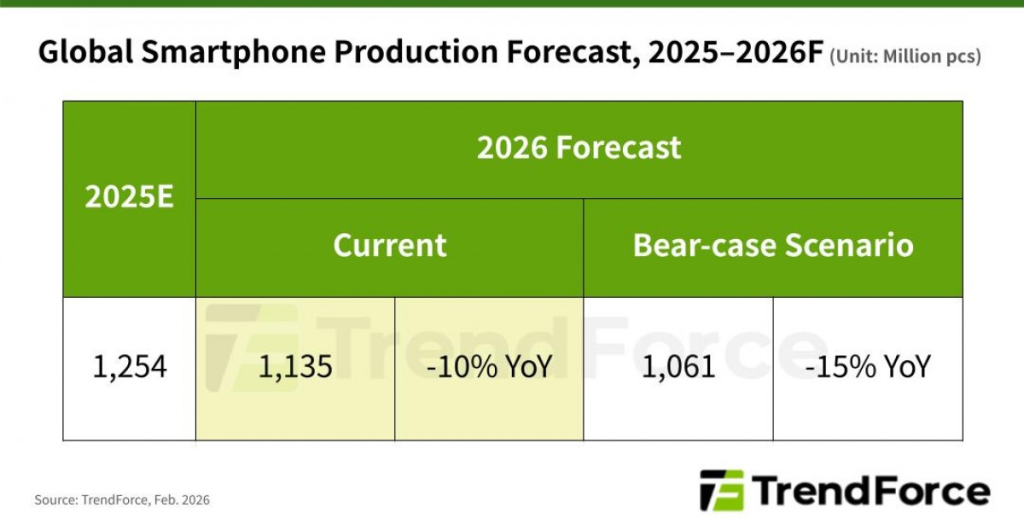
The global smartphone market is poised for a challenging year in 2026, according to TrendForce’s latest forecast. The memory chip shortage continues to affect production, and combined with soaring memory prices, TrendForce predicts a 10% drop in global smartphone shipments, potentially reaching only 1.135 billion units for the year.
The situation could get even worse under the “bear-case scenario,” where the drop in shipments could reach as much as 15%, with smartphone shipments estimated to fall to 1.061 billion units. This would be a stark contrast to 2025, where smartphone shipments ended on a positive note with 2% growth, estimated to reach 1.24-1.26 billion units.
A major factor contributing to the drop in smartphone shipments is the sharp increase in memory prices. Historically, memory components accounted for 10-15% of a smartphone’s bill of materials (BOM), but now that number has surged to 30-40%, significantly increasing production costs. As a result, manufacturers are faced with rising costs, which could lead to a decline in production and higher smartphone prices in 2026.
Rising Memory Prices and Their Impact on Smartphone Shipments
The memory chip shortage continues to exert pressure on smartphone makers, leading to higher production costs and reduced shipment volumes. Memory chips play a critical role in smartphone manufacturing, and the surge in prices is directly affecting smartphone manufacturers. The dramatic increase in memory component prices will likely result in higher average selling prices (ASPs) for smartphones in 2026.
According to TrendForce, the rise in memory costs will have different impacts depending on the manufacturer. Some brands will be better equipped to absorb the increased costs, while others, particularly those focused on the budget and mid-range market, will be more vulnerable.
Brand Impact: Who Will Weather the Storm?
The impact of rising memory prices will vary significantly across brands. Samsung stands to benefit from its vertical integration and its position as a key memory supplier. This strategy allows Samsung to better control its supply chain, which will help mitigate the effects of price hikes.
Apple, known for its loyal customer base, is also in a relatively strong position. Historically, Apple users have been more tolerant of price increases, which could make them more willing to absorb the higher costs without significantly affecting demand for iPhones.
However, Chinese OEMs such as Xiaomi may face more significant challenges. Their customers are typically more price-sensitive, especially for entry-level devices. For brands like Xiaomi, which rely heavily on budget-friendly smartphones, the rising memory prices could severely impact their ability to compete on price, leading to a drop in their overall market share.
TrendForce’s Forecast for 2026 Smartphone Shipments
The smartphone market is expected to face major obstacles in 2026, driven primarily by the memory chip shortage and soaring memory prices. According to TrendForce, the global smartphone shipment forecast has been revised down to 1.135 billion units, a 10% decline from previous expectations. If the worst-case scenario plays out, the market could see a 15% drop, reaching just 1.061 billion units.
The memory price surge has placed additional strain on manufacturers, forcing them to raise prices, which will ultimately affect smartphone shipments. As memory costs now account for a larger percentage of the smartphone bill of materials, companies will have to adjust their strategies to cope with these rising costs.
Conclusion
The 2026 smartphone market is set to face significant challenges, with memory prices playing a central role in the predicted drop in shipments. TrendForce’s forecast reveals a 10% decline in global smartphone shipments, with the possibility of a 15% drop in the worst-case scenario. Apple and Samsung are expected to fare better due to their strong brand loyalty and vertical integration, but Chinese OEMs with more price-sensitive consumers may struggle.
As manufacturers adjust to the new reality of rising costs, smartphone prices will likely increase, which could further limit the market’s growth potential. The next year will be crucial in determining how the market adapts to these new challenges.