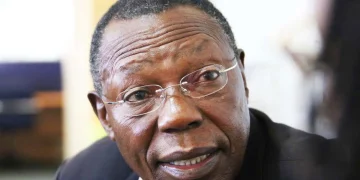
Swaleh Mdoe is a Kenyan journalist, editor, and television news anchor recognized for his long-standing contribution to Swahili broadcasting. Known for his distinctive voice, storytelling ability, and cultural insight, he has become one of the most respected figures in Kenyan media, particularly through his work at Citizen TV.
Early Life and Background
Swaleh Mdoe was born on May 23, 1968, in Tudor, Mombasa County, Kenya. Growing up along the coast, he was immersed in Swahili culture, language, and traditions, which later shaped his communication style and storytelling approach.
His early environment played a significant role in nurturing his passion for media and cultural expression.
Education
Mdoe began his education at Tudor Day School before pursuing further studies at the Media Institute, where he earned a Diploma in Human Rights and Media.
He later advanced his education internationally at Vancouver Island University (formerly Malaspina University College), where he graduated in 2005 with a Bachelor of Communication in Media Studies.
This blend of local and international education strengthened his expertise and broadened his perspective in journalism.
Career
Early Career
Mdoe began his journalism career in 1991, working in both print and broadcast media. His early roles included positions at Kenya Times, Standard Newspapers, Weekly Mail, and contributions to BBC content.
These experiences helped him develop strong reporting skills and a comprehensive understanding of news production.
Rise in Television Media
In 1999, he joined NTV Kenya as a news anchor, marking his entry into mainstream television. He later moved to Kenya Television Network (KTN), where he served as a Kiswahili News Editor and anchor.
His work in these roles established him as a credible and authoritative voice in Swahili journalism.
Leadership at Citizen TV
Mdoe later joined Royal Media Services’ Citizen TV, where he serves as Managing Editor and Swahili news anchor. In this capacity, he oversees editorial operations while maintaining an on-screen presence.
His long tenure at Citizen TV reflects consistency, leadership, and professional excellence.
Tafakari ya Babu
One of his most notable contributions is the segment Tafakari ya Babu, where he shares moral reflections, proverbs, and cultural narratives. The segment has become a defining feature of his career, resonating with audiences for its educational and cultural value.
Personal Profile
As of 2025, Swaleh Mdoe is 57 years old. While his specific ethnic affiliation has not been widely documented, his identity is strongly associated with Swahili culture and language.
Earnings and Net Worth
Mdoe’s estimated monthly salary ranges between KSh 300,000 and KSh 750,000. His income is derived from journalism, editorial leadership, and media-related engagements.
Although his exact net worth has not been publicly disclosed, it is widely believed to be substantial due to his long and successful career in media.
Personal Life
Mdoe is married and has children, though he maintains a private personal life and does not publicly disclose detailed information about his family.
His ability to separate personal and professional life has contributed to his respected public image.
Writing and Publications
In addition to journalism, Mdoe is an author with several publications focusing on Swahili literature and social themes. His notable works include:
- Fumbo La Hadaa (2005)
- Nachora Kwa Maneno (2009)
- Michezo Yetu (2010)
These works reflect his commitment to language, storytelling, and cultural preservation.
Influence and Impact
Swaleh Mdoe has played a significant role in promoting Swahili journalism and cultural storytelling in Kenya. His work has helped preserve language and traditions while making them accessible to modern audiences.
He is widely regarded as a mentor and inspiration to journalists, particularly those interested in vernacular and culturally rooted media.
Legacy
Mdoe’s legacy lies in his ability to combine journalism with cultural education. Through his reporting and storytelling, he has contributed to the development of Swahili media and the preservation of cultural values.
He remains one of the most influential figures in Kenyan journalism.