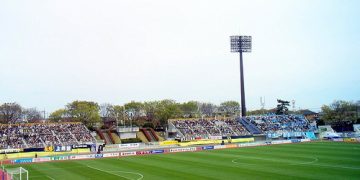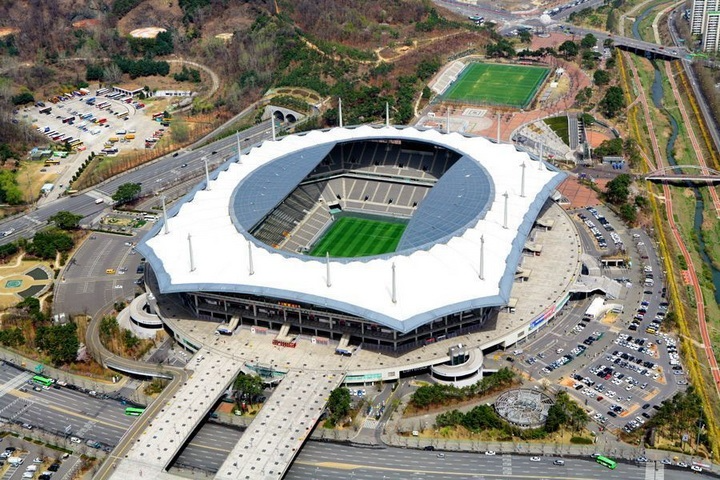
Journey through South Korea’s top sports venues, where state-of-the-art facilities meet the fervor of sports fans. These stadiums not only serve as grounds for thrilling sports action but also stand as architectural marvels and cultural icons, reflecting South Korea’s advanced infrastructure and deep-rooted sports culture. From the colossal Seoul World Cup Stadium to regional sports complexes, explore the top stadiums that are landmarks in South Korea’s sports history.
Seoul World Cup Stadium
- Location: Seoul, South Korea
- Capacity: 66,704
- Constructed: 2001 As a centerpiece of the 2002 FIFA World Cup, Seoul World Cup Stadium is a monument in South Korean football, hosting international matches and significant events with its impressive design and large seating capacity.
Sangam Stadium
- Location: Seoul, South Korea
- Capacity: 66,704
- Constructed: 2001 Also known as Seoul World Cup Stadium, Sangam Stadium is renowned for its modern architecture and is a hub for football and cultural events in the capital city.
Incheon Munhak Stadium
- Location: Incheon, South Korea
- Capacity: 50,256
- Constructed: 2002 Built for the 2002 World Cup and later used in the 2014 Asian Games, Incheon Munhak Stadium boasts top-tier facilities for athletics and football, playing a significant role in South Korea’s sports scene.
Daegu Stadium
- Location: Daegu, South Korea
- Capacity: 66,422
- Constructed: 2001 Daegu Stadium, with its large capacity and advanced facilities, has hosted major events like the 2002 World Cup and the 2011 World Championships in Athletics, making it a key venue in South Korean sports.
Busan Asiad Main Stadium
- Location: Busan, South Korea
- Capacity: 53,864
- Constructed: 2001 As part of the Asiad Sports Complex, this stadium was a main venue for the 2002 Asian Games and continues to host significant sports and cultural events in Busan.
Gwangju World Cup Stadium
- Location: Gwangju, South Korea
- Capacity: 44,118
- Constructed: 2001 Gwangju World Cup Stadium is an important sports and cultural venue in the southwestern part of South Korea, known for its distinct design and role in the 2002 FIFA World Cup.
Jeonju World Cup Stadium
- Location: Jeonju, South Korea
- Capacity: 42,477
- Constructed: 2001 Home to the Jeonbuk Hyundai Motors football club, Jeonju World Cup Stadium is a focal point for football in the region, with a design inspired by traditional Korean hats.
Suwon World Cup Stadium
- Location: Suwon, South Korea
- Capacity: 43,959
- Constructed: 2001 Known as the “Big Bird,” Suwon World Cup Stadium is famous for its bird nest-like design and is a premier venue for football, hosting both domestic and international matches.
Ulsan Munsu Football Stadium
- Location: Ulsan, South Korea
- Capacity: 44,102
- Constructed: 2001 Also known as the Big Crown Stadium, it is renowned for its unique crown-like design and hosts Ulsan Hyundai FC, playing a significant role in South Korean football.
Daejeon World Cup Stadium
- Location: Daejeon, South Korea
- Capacity: 40,535
- Constructed: 2001 Daejeon Stadium, with its impressive design and capacity, has been a key venue for international football events, including the 2002 FIFA World Cup, and continues to support local and national sports events.
These stadiums in South Korea are not just arenas for sporting events; they are landmarks of the nation’s architectural innovation, cultural pride, and sports enthusiasm, showcasing the country’s commitment to excellence in sports infrastructure.