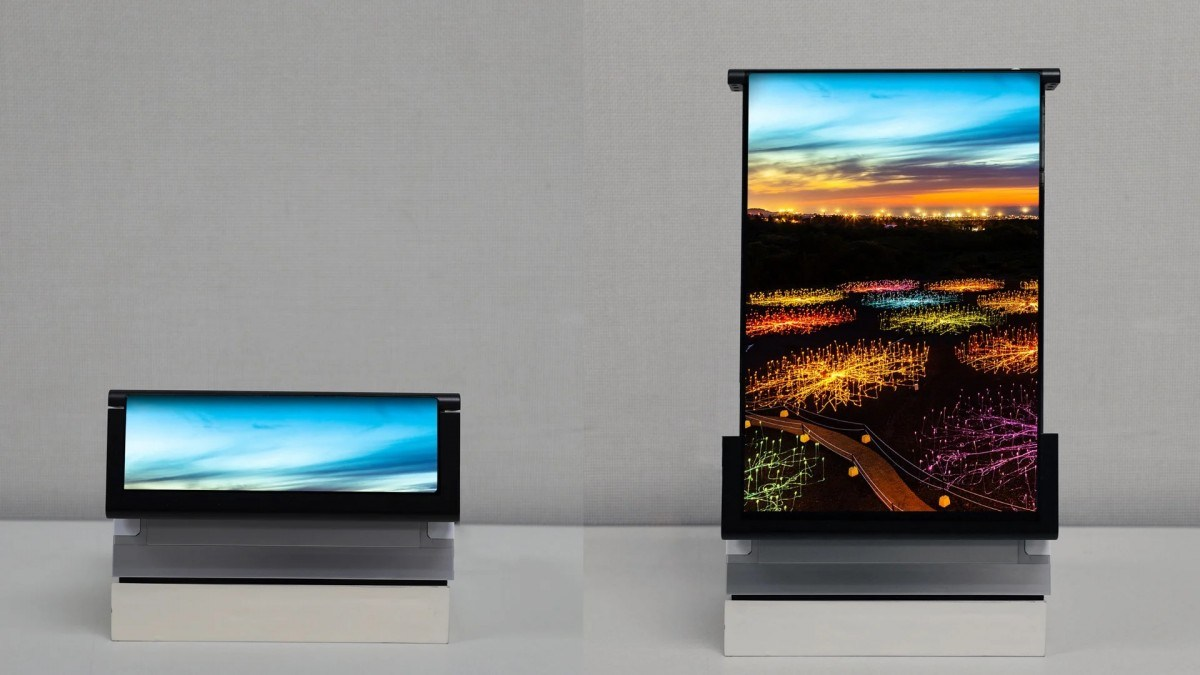
Samsung may finally be preparing to move beyond foldable smartphones and into rollable-screen devices. A new report from South Korea claims the company is targeting the first half of 2028 for the launch of its first rollable-screen smartphone, a device that could expand from a normal phone into a tablet-sized screen.
The reported product is said to use a rollable OLED panel supplied by Samsung Display. The device may launch under a name such as Galaxy Z Slide, although Samsung has also trademarked Galaxy Z Roll, making the final branding uncertain.
The rumoured specifications are ambitious. Market research estimates cited in the report suggest a 10-inch OLED display with a 16:9 aspect ratio and around 440 pixels per inch. If accurate, that would make the device much larger than today’s book-style foldables when fully extended, while still aiming to remain portable when rolled in.
Nothing has been officially confirmed by Samsung Electronics as a commercial launch announcement. That matters. Rollable phones have been discussed for years, and several companies have shown prototypes without bringing a mainstream device to market. Samsung itself has demonstrated rollable display concepts, but it has not yet sold a rollable smartphone.
Still, the latest report is important because it suggests Samsung’s display and mobile divisions may be aligning around a commercial target. If the timeline holds, Samsung’s first rollable phone could arrive roughly ten years after the company’s first Galaxy Fold and mark the next major phase in flexible-screen smartphone design.
What Is a Rollable-Screen Smartphone?
A rollable-screen smartphone is a device with a flexible display that expands by sliding or rolling out from inside the body of the phone. Instead of opening like a book-style foldable or flipping like a clamshell, a rollable phone uses a display that can extend outward to create a larger screen.
The idea is simple but technically difficult. In compact mode, the device behaves like a normal smartphone. When expanded, the screen becomes larger, potentially approaching tablet size. This gives users more screen space for video, multitasking, reading, gaming, productivity and creative work without carrying a separate tablet.
A rollable design could solve some of the weaknesses of foldables. Foldable phones have hinges, screen creases and two physical halves. Rollable phones may avoid a central crease because the display does not fold sharply in the same way. They may also feel closer to a slab phone when closed.
However, rollable phones introduce their own challenges. The screen must roll and unroll repeatedly without damage. The internal mechanism must be strong, thin and reliable. The body must protect the hidden display. Software must adapt smoothly between screen sizes. Battery, cameras, durability and cost must all fit inside a complex moving device.
That is why rollable phones remain rare as commercial products. They are attractive in theory, but difficult to build at scale.
Why Samsung Is Interested in Rollable Phones
Samsung has dominated the foldable phone market for years, but competition has increased sharply. Chinese smartphone brands and display suppliers have improved foldable hardware, reduced thickness, improved hinges and introduced aggressive designs. This has put pressure on Samsung to find the next major form factor advantage.
A rollable phone could help Samsung regain a clear innovation lead. Foldables are no longer surprising in the same way they were when the original Galaxy Fold arrived. Consumers now expect thinner designs, better cameras, stronger durability and lower prices. Rollables, by contrast, still feel futuristic.
Samsung Display also has a strategic reason to push rollable technology. Display panel makers compete not only on volume but also on technical leadership. If Chinese panel makers continue closing the gap in foldable OLED screens, Samsung Display may want to establish early dominance in the next category before rivals catch up.
A commercial rollable phone would also give Samsung Electronics a new premium product story. The Galaxy Z Fold line is expensive and productivity-focused, but it still uses a foldable book design. A Galaxy Z Slide or Galaxy Z Roll could create a new ultra-premium category above or alongside the Fold.
For Samsung, the goal would not simply be to make a strange phone. It would be to create a device that makes the phone-tablet hybrid more practical.
Galaxy Z Slide or Galaxy Z Roll: What Could It Be Called?
The latest report suggests the device may be called Galaxy Z Slide. That name would make sense if Samsung wants to emphasise the sliding expansion mechanism rather than the display technology itself.
However, Samsung has also trademarked names connected to rollable branding, including Galaxy Z Roll. That name may be more direct and easier for consumers to understand. A “Roll” device clearly suggests a screen that rolls out, while “Slide” suggests the physical motion of the device.
Samsung’s Galaxy Z brand already covers its foldable devices. The Galaxy Z Fold is the book-style foldable, while the Galaxy Z Flip is the clamshell foldable. A Galaxy Z Roll or Galaxy Z Slide would fit naturally into that family as a third flexible-screen category.
The final name may depend on marketing strategy. If Samsung wants to highlight the user action, “Slide” may work. If it wants to highlight the display form factor, “Roll” may be stronger.
There is also a possibility that neither name will be used. Companies often trademark multiple names before deciding on final branding. Until Samsung announces the product officially, the name should be treated as uncertain.
The Rumoured 10-Inch Display
The most eye-catching rumour is the 10-inch display. Today’s foldable phones usually open into screens around the size of a small tablet, often between seven and eight inches. A 10-inch rollable OLED panel would push the category much closer to a true tablet experience.
A 10-inch screen with a 16:9 aspect ratio could be especially useful for video, gaming, document editing, split-screen multitasking and remote work. It would also make the device more useful for people who want one gadget that can serve as both phone and tablet.
The reported 440ppi pixel density would also be high enough for a sharp viewing experience. Pixel density matters because a larger screen can look less sharp if resolution does not scale properly. At around 440ppi, the display would remain in premium smartphone territory.
The challenge is size management. A 10-inch screen must roll into a phone-sized body. That means the device needs internal space for the rolled display, mechanical supports, battery, cameras, speakers, antennas and heat management. The bigger the display, the more difficult the engineering becomes.
If Samsung can make a 10-inch rollable phone that is not too thick, heavy or fragile, it would be a major achievement. If the device becomes bulky or expensive, it may remain a niche product for early adopters.
How a Rollable Phone Could Differ From the Galaxy Z Fold
The Galaxy Z Fold opens like a book. It has an outer screen and a large inner screen. When closed, users interact with a narrow or normal-sized cover display. When opened, the device becomes tablet-like.
A rollable phone could work differently. It may have one main screen that extends outward when needed. Instead of switching from an outer screen to an inner screen, the same display area may expand from phone mode to tablet mode.
That could create a more seamless experience. Apps may simply resize as the display extends. Users could start reading an article in phone mode, then expand the screen to continue in tablet mode. A video could grow larger without moving to a separate inner display.
A rollable design may also avoid the visible central crease that foldables still struggle with. Because the display rolls rather than folds sharply at one point, the screen surface may look more continuous. However, rollables can have other visual or durability issues, including tension marks, mechanical wear or uneven extension.
The Fold has the advantage of being proven. Samsung has spent years improving hinges, software and durability. A rollable would be new territory. It may feel more futuristic, but it will need to prove reliability.
Why Rollable Displays Are Hard to Build
Rollable displays are harder to commercialise than they look. A concept demonstration can be impressive on stage, but a smartphone must survive daily use for years.
The flexible OLED panel must bend repeatedly without cracking, creasing, delaminating or losing brightness uniformity. It must be protected from dust, pressure, scratches and internal stress. The rolling mechanism must extend smoothly and stay aligned. The display must remain flat when expanded and secure when retracted.
The device also needs structural support. A normal phone screen rests on a rigid body. A rollable display must move, so it needs a support system that can extend with the panel and hold it steady. If the screen feels soft, wobbly or uneven, users may not trust it.
Durability is a major challenge. Foldable phones already require careful engineering to protect the hinge and flexible screen. Rollables add motors or sliding mechanisms, rails, tension control and internal storage for the rolled part of the display.
Battery capacity is another issue. A larger screen consumes more power, yet a rollable phone may have less internal space because part of the body must house the display mechanism. Heat management can also be harder in a compact device with moving parts.
This is why a 2028 target sounds plausible. Samsung may need years to refine materials, mechanical design, software and manufacturing yield before selling a rollable phone widely.
Samsung Display’s Rollable Work Is Already Real
Although Samsung has not launched a rollable smartphone, Samsung Display’s rollable technology is not just a rumour. The company has already developed and commercialised rollable OLED technology for laptops.
At CES 2025, Samsung Display announced a rollable OLED panel for Lenovo’s ThinkBook Plus G6 Rollable laptop. The screen expands vertically from a 14-inch display to a 16.7-inch display, giving users more space for multitasking. Samsung Display said it would begin mass production of the rollable OLED laptop screen in April 2025.
That matters because it shows Samsung Display is already moving rollable OLED from concept to commercial production in at least one product category. A laptop is not the same as a phone, but it gives Samsung experience with rollable panel durability, manufacturing, tension control and software-driven screen expansion.
Samsung Display has also shown concept panels such as Rollable Flex, demonstrating that the company has been working on flexible screen forms beyond foldables for years.
A rollable smartphone would be more difficult than a laptop panel in some ways because it must fit into a smaller, lighter and more pocketable device. But Samsung’s laptop work provides evidence that the company is not starting from zero.
Why Lenovo’s Rollable Laptop Matters
Lenovo’s ThinkBook Plus G6 Rollable is important because it is one of the first real commercial products to use a rollable OLED display from Samsung Display. It demonstrates that rollable screens can move beyond trade-show concepts.
In the Lenovo device, the screen expands vertically, giving users extra space for documents, browser windows, coding, video calls or multitasking. This is different from a phone that would likely expand horizontally or outward to create a tablet-like experience, but the underlying concept is similar: a compact display becomes larger when needed.
The laptop also gives Samsung Display a real-world test case. Commercial products reveal issues that prototypes do not. Users will test durability, brightness, software scaling, repairability, power consumption and reliability in everyday conditions.
If Samsung Display learns from rollable laptops, it can apply some of that knowledge to smartphones. That does not guarantee a phone launch, but it strengthens the credibility of the 2028 rumour.
The phone market is much larger and more competitive than the niche rollable laptop market. If Samsung can make the technology work at smartphone scale, it could create a new premium category.
Why Chinese Display Competition Matters
The report says Samsung Display is feeling pressure from Chinese display panel makers in foldables. This is an important part of the story.
For years, Samsung Display was the clear leader in mobile OLED and foldable OLED technology. Samsung Electronics benefited from that relationship by launching the Galaxy Fold and Galaxy Z series earlier than most competitors. But Chinese suppliers such as BOE, Visionox, Tianma and TCL CSOT have continued improving their OLED capabilities.
Chinese smartphone brands have also become aggressive in foldables. Devices from Huawei, Honor, Oppo, Vivo and Xiaomi have pushed thinner designs, larger screens and competitive hardware. In some areas, Chinese foldables have challenged Samsung’s pace of innovation.
That pressure matters because display technology is central to the future of premium smartphones. If foldable OLED becomes widely available from multiple suppliers, Samsung’s advantage narrows. Rollable OLED could become a new frontier where Samsung Display tries to stay ahead.
At the same time, Samsung Display remains a major player. Industry data shows Samsung Display continues to hold a leading share in smartphone OLED shipments. But leadership can change quickly when rivals invest heavily.
A successful rollable phone would give Samsung Display and Samsung Electronics a new category where they can define expectations before competitors mature.
Why Samsung Electronics Must Get On Board
Samsung Display can build advanced panels, but Samsung Electronics must turn those panels into real consumer products. A rollable screen alone is not enough. The phone division must design the chassis, software, battery, cameras, durability system, user interface and product strategy.
This is why the reported discussions between Samsung Display and Samsung Electronics matter. For a rollable phone to launch, the display supplier and the mobile device team must be aligned early.
A rollable phone requires deep hardware-software integration. Apps must resize smoothly. The device must know when the screen is extended or retracted. The operating system must adapt layouts instantly. Multitasking features must make sense on different screen sizes. Samsung’s One UI software would need to handle a new class of dynamic display.
Samsung Electronics would also have to decide where the device sits in the lineup. Would it replace the Galaxy Z Fold? Would it sit above it as an ultra-premium model? Would it launch in limited quantities? Would it be sold globally or only in selected markets?
The answers will determine whether a rollable phone becomes a serious product or a showcase device.
Could the Samsung Rollable Phone Replace Foldables?
A rollable phone is unlikely to replace foldables immediately. It is more likely to sit alongside the Galaxy Z Fold and Galaxy Z Flip at first.
Foldables have already reached commercial maturity. Samsung has years of experience selling them, supporting them, repairing them and improving them. Consumers understand the basic foldable idea. App developers have also adapted better to foldable screens.
A rollable phone would be a first-generation product. It would likely be expensive, produced in limited quantities and aimed at early adopters. Samsung may use it to show technical leadership rather than immediately replace the Fold.
Over time, rollables could become more important if they solve real problems. If a rollable phone can offer a larger screen, less visible crease, better portability and reliable durability, it could challenge book-style foldables. If it is too expensive, fragile or bulky, it may remain a niche category.
The most likely scenario is coexistence. The Galaxy Z Flip serves users who want compact style. The Galaxy Z Fold serves productivity users who want a proven tablet-like foldable. A Galaxy Z Roll or Galaxy Z Slide could serve users who want the most futuristic large-screen phone.
Why 2028 Is a Realistic Target
A first-half 2028 target sounds far away, but it may be realistic for a device this complex.
Samsung would need time for display development, hinge or rolling-mechanism design, durability testing, software optimisation, supplier coordination, manufacturing yield improvement, repair planning and market strategy. The company would also need to decide whether the device is ready for mass-market release or limited launch.
Rollable phones must meet expectations for daily use. Consumers will expect water resistance, strong battery life, good cameras, durability, high brightness, reliable software and long-term updates. These are difficult to deliver in a first-generation form factor.
A 2028 launch would also allow Samsung to watch the foldable market and potential Apple competition. If Apple enters foldables before then, Samsung may want a new product category to maintain its innovation edge.
The timing could also line up symbolically with the tenth anniversary period of Samsung’s foldable smartphone journey. The original Galaxy Fold era began in 2019. A rollable device in 2028 would give Samsung a new design chapter after nearly a decade of foldable development.
What a 10-Inch Rollable Phone Could Be Used For
A 10-inch rollable phone would be useful only if the larger screen enables experiences that a normal phone cannot provide comfortably.
Video is an obvious use case. A 16:9 display would be well suited for watching movies, YouTube videos, sports highlights and streaming content with fewer awkward aspect-ratio compromises.
Productivity is another major use. A 10-inch display could make document editing, spreadsheets, presentations, email, multitasking and web research more practical. Samsung could connect the device to DeX-style productivity features or split-screen workflows.
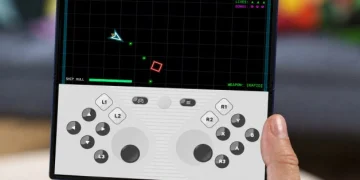
Gaming could also benefit. A larger display creates a more immersive experience, especially for cloud gaming or controller-based play. However, gaming would also test battery life and heat management.
Reading and browsing would improve as well. News articles, PDFs, websites and e-books are easier to view on a larger screen.
Creators could use the device for photo review, video editing, social media management and note-taking if Samsung supports stylus input. Whether S Pen support appears would be a major question.
The biggest challenge is making these use cases feel natural. If expanding the screen is slow, fragile or awkward, users may not do it often.
Software Will Be Just as Important as Hardware
Samsung’s rollable phone will need excellent software. Hardware may attract attention, but daily usefulness depends on how smoothly the interface adapts.
Apps must resize instantly as the display expands or retracts. Samsung will need strong continuity between phone mode and expanded mode. If users are watching a video, reading a page or editing a document, the app should adjust without crashing or restarting.
Multitasking will be central. A 10-inch display should support multiple windows, split-screen layouts and drag-and-drop workflows. Samsung already has experience with foldable multitasking through the Galaxy Z Fold line, but rollables may require more dynamic resizing.
Developers may also need guidance. Android supports different screen sizes, but not every app is optimised for foldable or rollable displays. Poor app scaling could make the device feel unfinished.
Samsung may also need to create new gestures or controls for expanding the screen. Will the user press a button? Pull the device physically? Use a motorised mechanism? Will the screen stop at intermediate sizes? The software must understand each state.
A rollable phone is not just a phone with a bigger screen. It is a device with changing physical dimensions. That makes software design critical.
Durability Will Decide Everything
Durability may be the biggest factor in whether consumers trust a Samsung rollable phone.
Foldable phones faced early criticism over fragile screens, hinge issues and dust exposure. Samsung improved the category over several generations, but some consumers still worry about long-term durability. A rollable phone will face even more skepticism.
The display must survive thousands of roll-and-unroll cycles. The mechanism must resist dust and debris. The extended screen must be supported well enough to touch, type and swipe without feeling weak. The device must handle being placed in a pocket, carried in a bag and used in normal daily environments.
Water resistance will also be a question. Samsung has added water resistance to foldables, but rollables may be harder to seal because of moving screen sections and internal cavities.
Repairability and warranty terms will matter. If a rollable screen is extremely expensive to repair, buyers may hesitate. Samsung may need strong protection plans or clear durability claims to build confidence.
For early adopters, novelty may be enough. For mainstream consumers, durability must be proven.
Battery Life and Weight Could Be Major Challenges
A 10-inch OLED screen needs power. A rollable phone must also power the processor, cameras, radios, speakers, sensors and possibly a motorised mechanism. Battery life could be difficult if the device remains thin and compact.
Samsung would need to balance screen size, battery capacity and weight. A large battery makes the device heavier. A smaller battery may disappoint users who buy the phone for media and productivity. The rolling mechanism itself also takes internal space that could otherwise be used for battery cells.
Weight is another concern. Foldable phones are often heavier than regular smartphones. A rollable with a 10-inch display could become even heavier unless Samsung uses advanced materials and efficient internal design.
If the device is too heavy, users may not want to carry it daily. If it is too thick, it may feel less like a phone and more like a gadget experiment.
Power efficiency from the OLED panel will therefore matter. Samsung Display’s use of technologies that reduce thickness and power consumption in other rollable products suggests that efficiency will be a major development priority.
Cameras and Design Trade-Offs
A rollable phone may face difficult camera design trade-offs. In a normal flagship phone, the rear camera system has space for multiple sensors and lenses. In a rollable phone, internal space must be shared with the display mechanism.
Samsung will need to decide whether the rollable device should have flagship cameras or whether the screen technology is the main selling point. If the device costs more than a Galaxy Z Fold, consumers may expect premium cameras. But adding large camera sensors and periscope lenses could increase thickness and complexity.
Front camera placement is also interesting. A rollable display may have different screen states, and Samsung must decide where the selfie camera sits. It could use a punch-hole camera, under-display camera or camera on a fixed part of the body.
Design durability matters as well. The camera module must not interfere with the rolling mechanism. The body must remain balanced in both compact and expanded modes.
Samsung has experience making complex foldable designs, but rollables introduce new spatial constraints. Every millimetre will matter.
Price: Expect an Ultra-Premium Device
If Samsung launches a rollable phone in 2028, it will almost certainly be expensive. First-generation flexible-screen devices usually carry premium prices because of low production volume, complex engineering, expensive displays and high development costs.
The original Galaxy Fold was expensive when it launched, and even mature Fold models remain premium devices. A rollable phone with a 10-inch OLED display, advanced mechanism and new software would likely cost more than standard flagship phones.
Samsung may initially target enthusiasts, professionals, creators and early adopters. A limited launch could help the company test demand and refine production before wider release.
Price will influence the product’s public reception. If the device costs far more than a Galaxy Z Fold, consumers will expect meaningful advantages. A larger screen alone may not be enough. Samsung will need to prove that the rollable design offers real daily value.
Over time, if rollable technology matures, prices could fall. But the first generation will likely be a showcase of what is possible rather than a mass-market model.
Could Apple Beat Samsung to the Next Form Factor?
The report arrives amid ongoing rumours that Apple may eventually enter the foldable phone market. If Apple launches a foldable iPhone before Samsung’s rollable phone, Samsung may want to respond with a more advanced form factor.
Samsung has long used foldables to differentiate itself from Apple. While iPhones dominate premium slab phones, Samsung can point to the Galaxy Z Fold and Z Flip as categories where Apple has no direct product. A rollable phone would extend that advantage.
However, Apple entering foldables could also validate the broader flexible-screen market. If Apple launches a foldable, consumer interest in large-screen phones may grow. Samsung could then use a rollable device to show that it is already thinking beyond the first wave of foldables.
Samsung’s challenge is timing. Launch too early and the product may feel unfinished. Launch too late and competitors may catch up. A 2028 target suggests Samsung is trying to balance readiness with strategic urgency.
Why This Is Still Only a Rumour
Despite the excitement, this remains a rumour. Samsung has not officially announced a Galaxy Z Slide, Galaxy Z Roll or any commercial rollable smartphone.
Supply-chain reports can be accurate, but timelines can change. Companies often test devices that never launch. Product names can change. Display specifications can change. Internal targets can slip. A first-half 2028 target could become late 2028, 2029 or be cancelled entirely.
Rollable phones are especially uncertain because the engineering challenge is high. Samsung may continue development but decide that durability, cost or user demand is not ready for commercial release.
Consumers should therefore treat the report as a credible development signal, not a confirmed product launch. The best interpretation is that Samsung appears to be seriously exploring rollable phones and may be targeting 2028, but nothing is guaranteed until Samsung announces the device.
For now, the Galaxy Z Fold remains Samsung’s practical large-screen phone. The rollable phone is the possible next chapter.
What Samsung Must Get Right
For a rollable phone to succeed, Samsung must get several things right.
First, durability must be convincing. Users need to trust the screen and mechanism. The device must survive daily use, pocket pressure, repeated expansion and long-term wear.
Second, the software must feel seamless. Apps should resize smoothly, multitasking should be useful and the screen expansion should feel natural.
Third, the device must not be too thick or heavy. A phone that becomes a tablet is useful only if it remains comfortable to carry.
Fourth, battery life must be strong. A 10-inch screen will invite heavy media and productivity use, so weak battery performance would hurt the experience.
Fifth, the price must make sense for the target audience. Early adopters will pay more, but even they need clear value.
Sixth, Samsung must explain why rollable is better than foldable. If consumers cannot understand the benefit, the product may be dismissed as a gimmick.
Finally, Samsung must support the device with service, warranty, repair options and long-term software updates. Buyers of a first-generation premium device will expect reassurance.
What This Could Mean for the Future of Smartphones
If Samsung successfully launches a rollable phone, it could reshape the premium smartphone market.
The smartphone industry has struggled with design stagnation. Most slab phones look similar, and improvements often focus on cameras, chips, displays and AI features. Foldables created a new category, but they remain expensive and not fully mainstream.
Rollables could create a new direction. Instead of choosing between phone and tablet, users could carry one device that changes size when needed. That could appeal to professionals, students, creators, gamers and travellers who want flexibility without carrying multiple screens.
The impact would depend on execution. A durable, polished rollable phone could push other brands to develop similar devices. Display suppliers would invest more. Android software would adapt. App developers would optimise layouts. Accessory makers would create new cases and keyboards.
But if the first rollable phones are fragile, heavy and extremely expensive, the category may remain niche.
Samsung has the experience, display supply chain and brand power to give rollables a serious attempt. Whether consumers are ready is the bigger question.
Final Thoughts
Samsung’s rumoured rollable-screen smartphone is one of the most interesting mobile stories to watch over the next two years. Reports suggest the company is targeting the first half of 2028 for a device that could feature a 10-inch rollable OLED display, possibly under the Galaxy Z Slide or Galaxy Z Roll name.
The idea is exciting because it promises a phone that can become a tablet without the traditional foldable hinge and central crease. It could give users a larger display for video, productivity, multitasking and gaming while still fitting into a pocket-sized form factor.
But the challenges are serious. Rollable screens are more complex than foldable screens. Samsung must solve durability, battery life, thickness, weight, software scaling, repairability and price. The technology has to be more than impressive on a demo table; it must work reliably in everyday life.
Samsung Display’s rollable laptop OLED work makes the rumour more credible, because it shows the company is already commercialising rollable displays in other devices. Competition from Chinese display makers also gives Samsung a strong reason to move quickly into the next flexible-screen category.
For now, the Samsung rollable phone remains unconfirmed. But if the 2028 target is real, the Galaxy Z family may be preparing for its biggest evolution since the original Galaxy Fold.
FAQs About the Samsung Rollable Phone
Is Samsung launching a rollable phone?
Samsung has not officially announced a commercial rollable phone. However, a new Korea-sourced report claims Samsung is targeting the first half of 2028 for its first rollable-screen smartphone. The device is reportedly being developed with a rollable OLED panel from Samsung Display. Until Samsung confirms it, the launch should be treated as a rumour.
When could Samsung’s first rollable phone launch?
The latest report claims Samsung is targeting the first half of 2028. Product timelines can change, especially for complex new form factors. Rollable phones are harder to build than regular smartphones and even foldables, so a delay would not be surprising if durability, production yield or cost issues remain.
What could Samsung’s rollable phone be called?
The phone is reportedly being discussed under the Galaxy Z Slide name. Samsung has also trademarked Galaxy Z Roll, which could be another possible name. The final branding is not confirmed. Samsung often trademarks multiple names before deciding which one to use for a commercial product.
What screen size is rumoured?
Reports suggest the device could have a 10-inch rollable OLED display when fully expanded. Market estimates also point to a 16:9 aspect ratio and around 440 pixels per inch. If accurate, this would make the device much larger than today’s foldable phones when opened.
How is a rollable phone different from a foldable phone?
A foldable phone opens on a hinge, usually like a book or clamshell. A rollable phone uses a flexible display that extends or rolls out from inside the body. This could create a larger screen without a central fold crease, but it requires a more complex sliding or rolling mechanism.
Will the Samsung rollable phone replace the Galaxy Z Fold?
It is unlikely to replace the Galaxy Z Fold immediately. A first-generation rollable phone would probably sit alongside the Fold as an ultra-premium experimental or flagship device. Foldables are already proven, while rollables still need to prove durability, software usefulness and consumer demand.
Why does Samsung want to make a rollable phone?
Samsung likely wants to maintain leadership in flexible-screen devices. Competition in foldables has increased, especially from Chinese brands and display makers. A rollable phone could help Samsung create a new premium category and show that it is moving beyond current foldable designs.
Is Samsung Display already making rollable screens?
Yes. Samsung Display has already commercialised rollable OLED technology for laptops. It announced mass production of a rollable OLED panel for Lenovo’s ThinkBook Plus G6 Rollable laptop in 2025. A rollable smartphone would still be more difficult, but Samsung Display has real rollable display experience.
Why are rollable phones difficult to make?
Rollable phones require a flexible OLED screen, a reliable rolling or sliding mechanism, strong internal support, durable materials and software that adapts smoothly between screen sizes. The display must survive repeated expansion and retraction while remaining thin, bright and touch-responsive.
Could a rollable phone avoid the foldable crease?
A rollable phone may avoid the central crease seen on book-style foldables because the display does not fold sharply in one place. However, rollables can have other challenges, such as tension marks, mechanical wear, screen support issues or durability concerns.
Would a rollable phone be expensive?
Yes, a first-generation Samsung rollable phone would likely be very expensive. New display technology, complex mechanisms, low production volume and premium positioning usually push early devices into ultra-premium pricing. It would likely target enthusiasts and professionals before becoming mainstream.
What would a 10-inch rollable screen be useful for?
A 10-inch screen could be useful for video, gaming, reading, web browsing, document editing, spreadsheets, multitasking and creative work. It could give users a tablet-like experience without carrying a separate tablet, provided the device remains portable and durable.
Will apps work properly on a rollable phone?
Samsung would need strong software optimisation. Apps must resize smoothly as the screen expands or retracts. Android already supports different screen sizes, but Samsung would need to ensure continuity, multitasking and app layouts feel natural on a changing display.
Could Apple launch a foldable before Samsung’s rollable phone?
Apple is widely rumoured to be working on foldable devices, but nothing has been officially confirmed. If Apple enters foldables before 2028, Samsung may use a rollable phone to show that it is already moving to the next form factor beyond foldables.
Should I wait for Samsung’s rollable phone?
Most buyers should not wait unless they are specifically interested in experimental future devices. The phone is not confirmed, and the rumoured launch window is still years away. If you need a large-screen phone now, current foldables such as Samsung’s Galaxy Z Fold line are the practical option.
Source (in Korean)
Read Also: Al Fresco Summer Evenings? Meet the Elegant Fan That Keeps Your Garden Gathering Cool